Retractable Sensor Holder
Retractable Sensor Holder
In modern industrial process control, the ability to maintain, calibrate, and replace sensors without interrupting the flow of production is a critical requirement for operational efficiency. A retractable sensor holder serves as the mechanical interface that allows a probe—whether it be for pH, ORP, dissolved oxygen, or specific level measurement technologies—to be inserted into and withdrawn from a pressurized process pipe or tank while the system remains fully operational.
For engineers and plant managers, selecting the correct retractable sensor holder is not merely a matter of mechanical fit; it is a decision that impacts safety, maintenance costs, and the longevity of sensitive instrumentation. This guide examines the engineering principles, selection criteria, and installation best practices for these essential components in B2B industrial environments.
Measurement Principles and Mechanical Integration
The primary function of a retractable sensor holder is process isolation. When a sensor requires cleaning or calibration, it must be moved from the "measuring" position (within the process stream) to the "service" position (isolated from the process).
The Isolation Mechanism
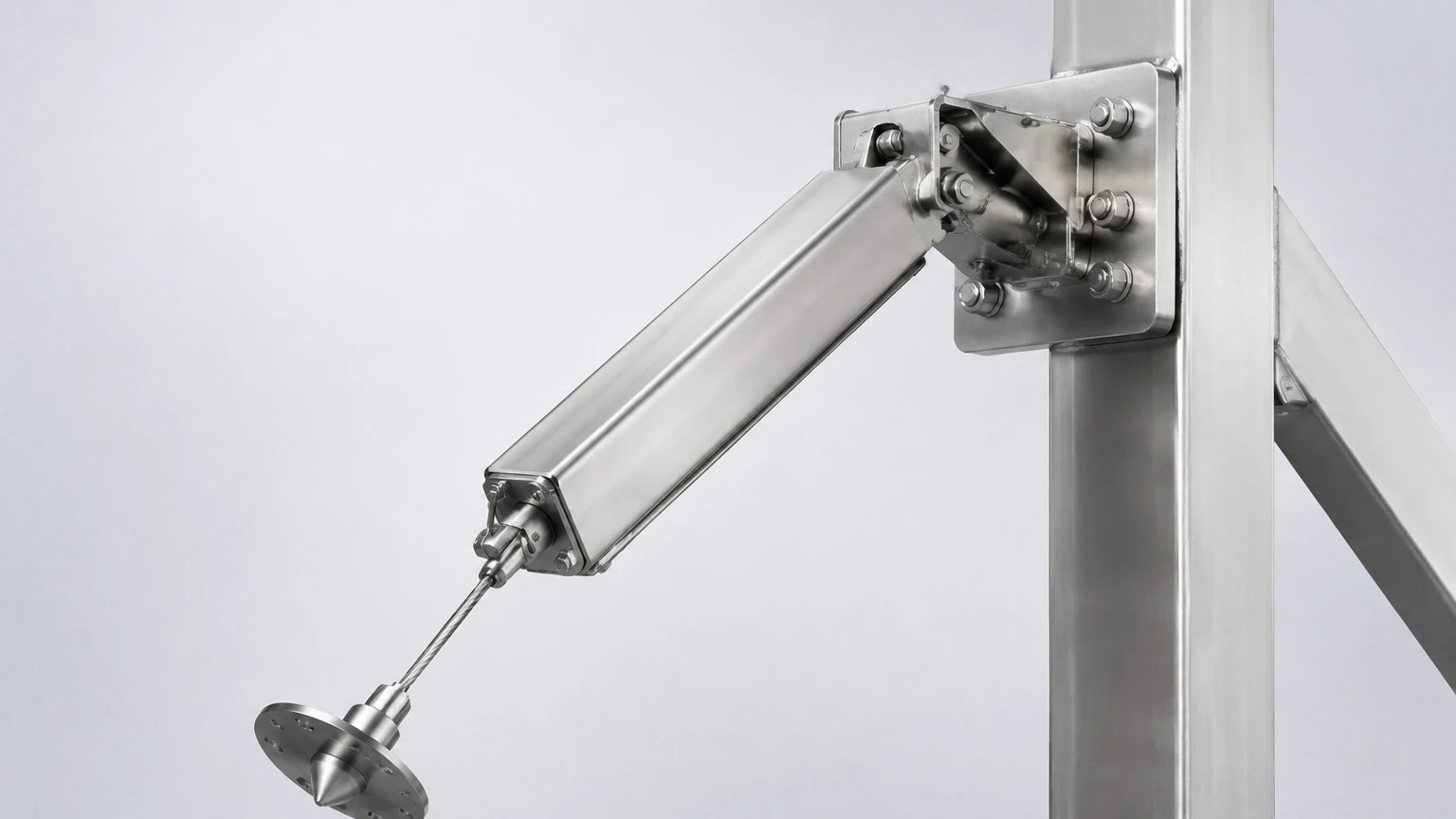
Most retractable holders utilize a telescopic or sliding drive system. The sensor is mounted within an immersion tube. As the drive is actuated, the tube moves through a sealing assembly. To prevent the process medium from escaping during this movement, the holder typically incorporates a ball valve or a specialized stopcock mechanism. Once the sensor is retracted past the valve, the valve closes, creating a physical barrier between the internal process pressure and the external environment.
Manual vs. Pneumatic Actuation
There are two primary methods for moving the sensor holder:
1. Manual Drive: These units use a hand-crank or a simple push-pull handle. They are cost-effective and ideal for processes where maintenance is infrequent. However, they are limited by process pressure; if the internal pressure is too high (typically above 2 bar or 29 psi), the force required to push the sensor back into the stream manually becomes a safety risk.
2. Pneumatic Drive: These systems use compressed air to automate the retraction and insertion. Pneumatic holders are essential for automated cleaning cycles and for high-pressure applications where manual operation is physically impossible or unsafe. They can be integrated into a Distributed Control System (DCS) for scheduled maintenance.
Key Evaluation Criteria for Selection
When specifying a retractable sensor holder for a project, several technical parameters must be confirmed to ensure compatibility with the existing infrastructure and the chemical nature of the media. For comprehensive instrumentation support and to explore compatible level measurement technologies, engineers often consult the Main Page of specialized manufacturers to align sensor holders with specific probe geometries.
Process Pressure and Temperature
The mechanical integrity of the holder must exceed the maximum possible process pressure (including surges). Most industrial retractable holders are rated for pressures up to 10 bar (145 psi) or 16 bar (232 psi). Temperature is equally critical, as it dictates the type of seals (O-rings) required. Standard EPDM seals may handle up to 130°C, while specialized FFKM (Kalrez) seals are necessary for extreme chemical environments and higher temperatures.
Material Compatibility
The "wetted parts"—those components in direct contact with the process—must be chemically resistant to the medium.
* Stainless Steel (316L/1.4404): The standard for water treatment, food and beverage, and mild chemical applications.
* Titanium or Hastelloy: Required for highly corrosive media, such as concentrated acids or seawater.
* Polymers (PVDF/PEEK): Used in applications where metal contamination must be avoided or where aggressive chemicals would corrode even high-grade steels.
Insertion Depth
The length of the immersion tube must be sufficient to place the sensor's sensing element in a representative part of the flow, avoiding "dead zones" near the pipe wall where sediment might accumulate or flow may stagnate.
Practical Selection Table
The following table provides a general guideline for selecting a retractable sensor holder based on common industrial process conditions:
| Process Condition | Recommended Material | Drive Type | Typical Application |
| :— | :— | :— | :— |
| Low Pressure (<2 bar), Non-Corrosive | PVC / Stainless Steel | Manual | Municipal Wastewater |
| High Pressure (>6 bar), Automated | 316L Stainless Steel | Pneumatic | Chemical Processing |
| Highly Corrosive (Acids) | PVDF / Hastelloy | Pneumatic | Pickling Lines / Mining |
| Hygienic / Sanitary | 316L (Electropolished) | Manual/Pneumatic | Pharmaceutical / Dairy |
| High Temperature (>140°C) | Stainless Steel w/ FFKM | Pneumatic | Steam Condensate / Oil |
Installation Considerations and Safety Protocols
Correct installation is paramount to ensure the retractable sensor holder functions as intended and does not become a point of failure.
Mounting Orientation
While many holders can be installed in any orientation, the preferred position is usually horizontal or at a slight upward angle (15° to 90° from the horizontal). This prevents air bubbles from being trapped around the sensor tip, which could lead to inaccurate readings. In level measurement applications, vertical installation on top of a tank is standard, but the retraction path must be clear of internal tank obstructions like baffles or agitators.
Sealing and Safety Locks
Every retractable holder should feature a safety locking mechanism. This prevents the sensor from being accidentally ejected under process pressure if the drive is disengaged. For pneumatic units, a fail-safe position should be defined (usually "retracted") so that if plant air is lost, the sensor is protected from the process.
Rinse Chambers
Advanced retractable holders include an integrated rinse chamber. This allows the sensor tip to be washed with water or a cleaning solution while it is in the retracted position. This is particularly useful in applications involving sticky media, such as paper pulp or calcium carbonate slurries, where buildup on the sensor would otherwise require frequent manual intervention.
Limitations and Common Risks
Despite their versatility, retractable sensor holders are not suitable for every application. Engineers should be aware of the following limitations:
1. Abrasive Media: In processes with high concentrations of sand or grit, the sliding seals of the holder can wear down rapidly. This leads to leaks and may cause the immersion tube to seize.
2. Space Constraints: These units require significant "swing space" or clearance outside the pipe to allow the sensor to be fully withdrawn. In cramped plant layouts, this can be a major hurdle.
3. Maintenance Complexity: A retractable holder adds mechanical complexity to the system. The O-rings and seals within the holder are wear parts and must be included in the plant’s preventative maintenance schedule.
4. Cost: Compared to a fixed sensor mount, a retractable holder represents a significantly higher initial investment. This cost must be weighed against the savings in downtime and labor.
Frequently Asked Questions (FAQ)
Q: Can I use a retractable sensor holder for level measurement probes?
A: Yes, they are frequently used for ultrasonic or radar level sensors in tanks containing aggressive chemicals or pressurized gases. This allows the sensor to be serviced without venting the tank.
Q: How often should the seals in the holder be replaced?
A: This depends entirely on the process. In clean water applications, seals may last 12-24 months. In aggressive chemical processes with high temperatures, replacement every 3-6 months may be necessary.
Q: What is the maximum pressure a manual retractable holder can handle?
A: Generally, manual operation is recommended only up to 2 bar (approx. 30 psi). Above this, the force required to insert the probe against the process pressure becomes dangerous for the operator, and a pneumatic drive or a geared manual drive should be used.
Q: Do I need a specific type of ball valve for the holder?
A: Most retractable holders are designed to work with full-bore ball valves. A reduced-bore valve will obstruct the path of the immersion tube and prevent the sensor from reaching the process stream.
Conclusion
The retractable sensor holder is an indispensable tool for maintaining continuous process monitoring in demanding industrial environments. By allowing for sensor maintenance without process interruption, these devices reduce downtime and improve the accuracy of data by facilitating regular calibration. When selecting a holder, prioritize material compatibility and pressure ratings, and always ensure that the installation allows for safe operator access. For those looking to integrate these holders with advanced industrial measurement systems, reviewing the latest product options on the Main Page of an established manufacturer is the recommended next step to ensure total system compatibility.