Coriolis Measurement
Coriolis Measurement
In the landscape of industrial process control, Coriolis measurement stands as a premier technology for high-precision mass flow and density determination. Unlike volumetric flow meters that require compensation for temperature and pressure variations, Coriolis meters measure mass directly. This characteristic makes them indispensable in industries where accuracy and repeatability are critical, such as chemical processing, oil and gas, and pharmaceutical manufacturing. For engineers evaluating measurement solutions, understanding the underlying physics and the practical application of this technology is essential for optimizing process efficiency.
The Principle of Coriolis Measurement
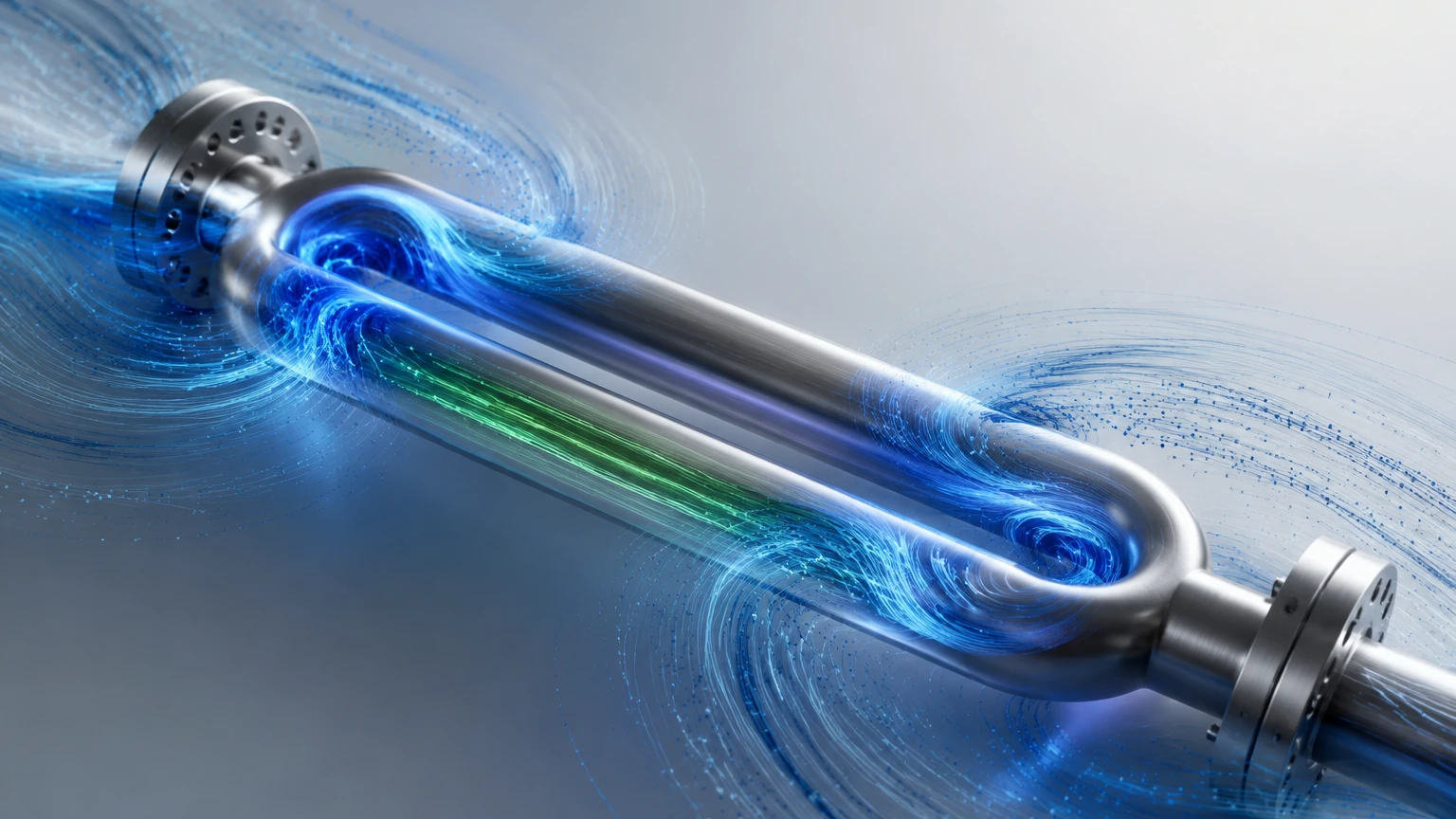
Coriolis measurement is based on the Coriolis effect, a phenomenon of physics first described by Gaspard-Gustave de Coriolis in the 19th century. In an industrial meter, this principle is applied by inducing a controlled vibration in one or more flow tubes through which the process fluid passes.
When there is no flow, the tubes vibrate in a uniform, symmetrical manner. However, as fluid begins to move through the vibrating tubes, the inertia of the fluid causes the tubes to twist or experience a phase shift. The inlet side of the tube resists the upward motion, while the outlet side resists the downward motion (or vice versa, depending on the vibration cycle). This resulting twist is directly proportional to the mass flow rate of the fluid.
Simultaneously, the resonant frequency at which the tubes vibrate is used to determine the fluid's density. A denser fluid increases the mass of the vibrating system, thereby lowering the frequency. By measuring both the phase shift and the frequency, a single Coriolis instrument can provide real-time data on mass flow, density, and temperature (via an internal RTD), allowing for the calculation of volume flow and concentration.
Industrial Applications and Versatility
Coriolis measurement is valued for its ability to handle a wide range of fluids, from clean liquids and gases to highly viscous slurries and non-Newtonian fluids. Because the measurement is independent of the fluid’s Reynolds number, it remains accurate even in laminar or transitional flow regimes where other technologies might fail.
In the chemical industry, these meters are used for precise batching and blending, ensuring that chemical reactions occur with the correct stoichiometric ratios. In the oil and gas sector, Coriolis meters are often employed in custody transfer applications, where even a 0.1% error in measurement can result in significant financial discrepancies. Furthermore, the ability to measure density in real-time allows operators to monitor product quality and detect interface changes between different fluids in a pipeline.
While Coriolis meters are primarily known for flow, they are frequently used in conjunction with other instruments. For instance, when managing complex tank farms, engineers often visit the Main Page of specialized instrument providers to find complementary level measurement technologies that work alongside Coriolis systems to provide a complete mass balance of the facility.
Selection Criteria for Coriolis Meters
Choosing the right Coriolis meter requires a thorough evaluation of the process conditions and the physical properties of the fluid. The following table provides a comparison of common tube geometries and their typical application strengths.
| Feature | U-Shaped Tube | Straight Tube |
| :— | :— | :— |
| Sensitivity | High; better for low flow rates. | Moderate; requires higher velocity for accuracy. |
| Pressure Drop | Higher due to the curved path. | Lower; ideal for gravity-fed or low-pressure systems. |
| Cleanability | More difficult; potential for trapped air/solids. | Excellent; suitable for hygienic (CIP/SIP) applications. |
| Installation Space | Requires more vertical or horizontal clearance. | Compact; easy to fit into existing piping. |
| Solids Handling | Prone to erosion at the bends. | Less prone to erosion; better for slurries. |
When selecting a meter, engineers must also consider the "Zero Stability" of the device. This is the small amount of flow the meter might report when the fluid is perfectly still. For low-flow applications, a meter with a very low zero stability value is required to maintain accuracy at the bottom end of the measurement range.
Installation Considerations
Proper installation is paramount for the accuracy of Coriolis measurement. Because the device relies on detecting minute vibrations and phase shifts, external mechanical noise can interfere with the signal.
1. Mechanical Support: The meter should be supported by the adjacent piping, and the piping itself must be rigidly anchored. This prevents external vibrations from the plant environment (such as pump pulsations) from reaching the sensor tubes.
2. Orientation: For liquid applications, the meter is ideally installed with the tubes pointing downward (in a "U" configuration) to prevent gas bubbles from becoming trapped. For gas applications, the tubes should point upward to prevent condensate buildup. Straight-tube meters are often installed vertically with an upward flow to ensure the tubes remain full.
3. Stress-Free Mounting: Flanges must be aligned correctly. Forcing a meter into a gap that is too small or misaligned introduces mechanical stress on the sensor housing, which can shift the zero point and degrade accuracy.
4. Upstream/Downstream Piping: Unlike many other flow technologies, Coriolis meters do not strictly require long straight runs of pipe before or after the meter. However, avoiding valves or pumps immediately upstream is still considered best practice to minimize turbulence and cavitation risks.
Technical Limitations and Risks
Despite its high accuracy, Coriolis measurement is not a universal solution for every application. Engineers should be aware of the following limitations:
* Entrained Gas: The presence of gas bubbles in a liquid (two-phase flow) can dampen the vibration of the tubes, leading to a "stalling" of the meter or significant measurement errors. Advanced digital signal processing in modern meters has mitigated this, but high gas fractions remain a challenge.
* Initial Cost: Coriolis meters generally have a higher upfront capital cost compared to magnetic, vortex, or ultrasonic meters. The ROI must be justified by the need for mass accuracy or density data.
* Size Constraints: As the pipe diameter increases, the size and weight of a Coriolis meter grow exponentially. For pipes larger than 250 mm (10 inches), the meters become extremely heavy and expensive, often making other technologies more practical.
* Pressure Limits: The thin-walled tubes required for sensitivity may have lower pressure ratings than the surrounding heavy-walled piping, necessitating careful safety reviews in high-pressure processes.
Coriolis Measurement vs. Level Measurement
In the context of process automation, there is often a choice between measuring the contents of a vessel using level sensors or measuring the mass entering/leaving the vessel using Coriolis meters. While level sensors (such as radar or ultrasonic) provide a direct measurement of the volume or height of the product, Coriolis measurement provides the mass balance.
In applications where the fluid density changes due to temperature or concentration fluctuations, a level sensor alone may not provide an accurate inventory of the mass. Conversely, a Coriolis meter cannot detect if a tank is leaking or if there is an undeclared withdrawal. Therefore, the most robust engineering designs often integrate both technologies. For those specializing in tank inventory, reviewing the latest radar and ultrasonic options on the Main Page can help determine the best secondary measurement to pair with a Coriolis system.
Frequently Asked Questions
Q: Does the viscosity of the fluid affect Coriolis measurement?
A: Generally, no. Coriolis meters are highly resistant to viscosity changes. However, extremely high viscosity can lead to a significant pressure drop across the meter, which must be accounted for during the pump sizing phase.
Q: How often does a Coriolis meter need to be calibrated?
A: Coriolis meters are known for their long-term stability because they have no moving parts that wear out. In many non-critical applications, they can go years without recalibration. However, for custody transfer or highly regulated industries, annual or biennial calibration is standard.
Q: Can Coriolis meters measure steam?
A: While they can measure gases, steam is challenging due to high temperatures and the risk of two-phase flow (condensate). Specialized vortex meters are often preferred for steam, though Coriolis can be used for high-pressure dry steam in specific cases.
Q: What is "Zero Verification"?
A: This is a field procedure where the flow is stopped, the tubes are ensured to be completely full of stagnant fluid, and the meter is checked to ensure it reads zero. This compensates for any installation stresses or environmental factors unique to the site.
Conclusion
Coriolis measurement remains the gold standard for mass flow and density applications where precision is non-negotiable. By understanding the interaction between fluid dynamics and the mechanical vibration of the sensor, engineers can implement systems that provide deep insights into their process. Whether used for chemical dosing, food production, or fuel loading, the technology offers a level of reliability that volumetric meters struggle to match. When combined with traditional level measurement tools, Coriolis meters form the backbone of modern, high-efficiency industrial automation.