Steam Cycle Ph Probe
Steam Cycle Ph Probe
In industrial steam generation and power plant operations, the chemistry of the steam-water cycle is a critical factor in determining the longevity and efficiency of the infrastructure. A steam cycle pH probe is not merely a monitoring tool; it is a primary defense mechanism against the catastrophic effects of corrosion and scale. Maintaining the alkalinity of boiler feedwater and condensate prevents the dissolution of protective magnetite layers on steel surfaces, a process that is highly sensitive to even minor fluctuations in pH levels.
This guide examines the technical principles of pH measurement within high-purity steam cycles, the challenges posed by low-conductivity water, and the engineering criteria for selecting and installing effective measurement systems.
Measurement Principles in High-Purity Water
The measurement of pH in a steam cycle typically relies on the potentiometric method. This involves measuring the potential difference between a glass sensing electrode and a reference electrode. The relationship is governed by the Nernst equation, which states that the potential produced is proportional to the logarithm of the hydrogen ion activity.
However, the steam cycle presents a unique environment. Unlike standard process water, steam condensate and boiler feedwater are often demineralized to extremely high purity levels, resulting in very low conductivity—frequently less than 2 μS/cm. This lack of ions creates several technical hurdles for standard pH probes:
1. High Impedance: Low-conductivity water increases the electrical resistance of the measuring circuit, making it susceptible to noise and static interference.
2. Liquid Junction Potential: In a standard reference electrode, the electrolyte (typically KCl) must make contact with the sample through a junction. In high-purity water, the concentration gradient between the electrolyte and the sample is massive, leading to unstable junction potentials and significant measurement errors.
3. Streaming Potential: High flow rates across the probe in a low-conductivity medium can generate static charges, known as streaming potentials, which fluctuate and cause "drift" in the pH reading.
To overcome these, a specialized steam cycle pH probe often utilizes a flowing reference junction or a large-surface-area junction to stabilize the electrical path.
The Role of pH in Corrosion Control
The primary objective of pH control in the steam cycle is the prevention of Flow-Accelerated Corrosion (FAC) and general acid/alkaline corrosion. Most power cycles operate with an "All-Volatile Treatment" (AVT) or "Oxygenated Treatment" (OT) regime.
In AVT systems, ammonia or organic amines are added to raise the pH of the feedwater to a range of 9.2 to 9.6. If the pH drops below 9.0, the protective oxide layer on the carbon steel piping begins to erode, leading to wall thinning and eventual pipe failure. Conversely, if the pH is too high, it can lead to caustic embrittlement in the boiler tubes. Therefore, the accuracy of the steam cycle pH probe is paramount for maintaining this narrow chemical window.
Technical Selection Criteria
When specifying a pH probe for steam cycle applications, engineers must evaluate the hardware based on the specific conditions of the sampling point. The following table outlines the primary considerations for different stages of the cycle.
Selection Table: pH Probe Specifications by Application Point
| Application Point | Typical pH Range | Conductivity | Temperature (Sampled) | Recommended Probe Features |
| :— | :— | :— | :— | :— |
| Condensate Polisher Outlet | 8.5 – 9.2 | < 0.1 μS/cm | 25°C – 45°C | Flowing junction, low-noise cable, stainless steel flow cell. |
| Boiler Feedwater | 9.2 – 9.6 | 1.0 – 5.0 μS/cm | 25°C – 50°C | Solid-state reference or pressurized electrolyte. |
| Boiler Drum Water | 9.0 – 10.5 | 10 – 100 μS/cm | 25°C – 60°C | High-alkalinity glass, robust junction to handle solids. |
| Main Steam (Reheat) | 9.0 – 9.7 | < 0.2 μS/cm | 25°C – 45°C | High-purity specialized electrode with shielding. |
Material Compatibility and Pressure Ratings
While the steam itself may be at pressures exceeding 100 bar and temperatures over 500°C, pH probes cannot operate at these extremes. Measurement must occur after the sample has passed through a Sample Conditioning System (SCS). The probe housing and flow cell must be compatible with the conditioned sample pressure (typically < 5 bar) and temperature (ideally 25°C).
Installation and Sample Conditioning
The reliability of a steam cycle pH probe is 20% dependent on the sensor and 80% dependent on the installation and sample conditioning. Direct insertion into high-pressure steam lines is not possible; a representative sample must be extracted and cooled.
Sample Cooling and Temperature Compensation
Temperature is the most significant variable in pH measurement. The pH of pure water changes by approximately 0.03 pH units for every 1°C change in temperature.
1. Primary Cooling: A sample cooler (heat exchanger) reduces the sample temperature from process levels to near-ambient.
2. Secondary Cooling: To achieve the high precision required (±0.05 pH), a secondary chiller is often used to maintain the sample at exactly 25°C (77°F).
3. Algorithm Compensation: The transmitter must use specialized algorithms (such as the NEN 6411 standard) that account for the dissociation constant of water and the specific conditioning chemicals (ammonia/amines) used in the cycle.
Flow Control and Grounding
To minimize streaming potentials, the flow rate through the pH flow cell should be kept constant and relatively low, typically between 50 and 150 mL/min. Furthermore, the flow cell must be properly grounded to the transmitter's common ground to dissipate any static charge built up by the movement of high-purity water.
Integration with Level Measurement Systems
In industrial boiler management, chemical analysis (pH/conductivity) and physical measurement (level/pressure) are intrinsically linked. For instance, in a boiler drum, the water level must be precisely maintained to ensure that the chemical concentrations remain within the designed limits. A sudden drop in level can lead to the concentration of corrosive salts, while an excessively high level can lead to "carryover," where liquid water enters the steam turbine, carrying pH-adjusting chemicals that can damage turbine blades.
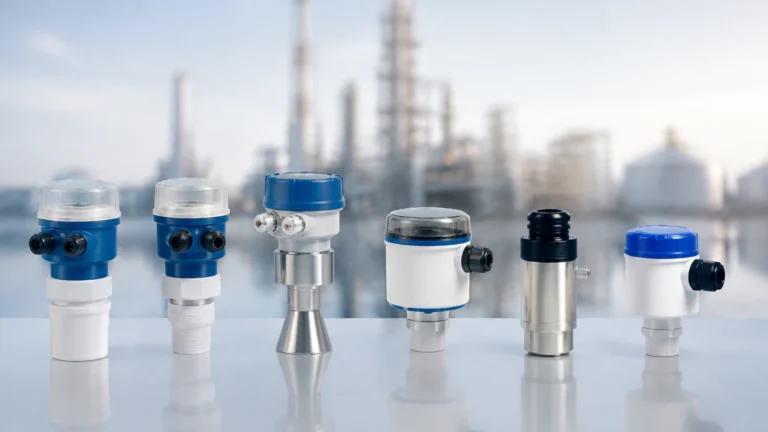
Reliable level instrumentation, such as radar or hydrostatic transmitters, provides the foundational stability required for chemical monitoring to be effective. For comprehensive process monitoring, including the integration of level and chemical analysis, engineers often consult the Main Page for technical specifications on compatible industrial sensors that withstand the rigors of steam-generating environments.

Common Risks and Limitations
Despite advancements in probe technology, several risks can compromise the accuracy of a steam cycle pH probe:
* Electrode Poisoning: Trace contaminants in the steam cycle, such as organics or heavy metals, can coat the glass membrane, slowing the response time or causing a permanent offset.
* Reference Depletion: In non-refillable probes, the electrolyte will eventually leach out. In high-purity water, this process is accelerated. Once the electrolyte is depleted, the sensor will exhibit erratic readings.
* Carbon Dioxide Absorption: If the sample is exposed to the atmosphere before measurement, it will absorb $CO_2$, which forms carbonic acid and lowers the pH. Always use a closed-loop flow cell for high-purity measurements.
Maintenance and Calibration Best Practices
Because steam cycle pH probes operate in clean, low-conductivity water, they do not suffer from the heavy fouling seen in wastewater applications. However, they require meticulous calibration.
1. Two-Point Calibration: Use standard buffers (usually pH 7 and pH 10 or 4). Ensure the buffers are fresh, as alkaline buffers absorb $CO_2$ rapidly when opened.
2. Equilibration Time: After placing a probe in high-purity water after calibration, allow at least 30 to 60 minutes for the junction potential to stabilize before trusting the readings.
3. Verification: Periodically compare the online probe reading with a grab sample measured using a portable, high-purity pH meter. If the discrepancy exceeds 0.1 pH, recalibration or probe maintenance is required.
Frequently Asked Questions
Q: Why can't I use a standard laboratory pH probe in my steam cycle?
A: Standard probes are designed for high-conductivity liquids. In the low-conductivity environment of a steam cycle, the high electrical resistance and unstable junction potential of a standard probe will result in errors of up to 1.0 pH unit, which is unacceptable for corrosion control.
Q: How often should a steam cycle pH probe be replaced?
A: In a well-maintained system with proper sample conditioning, a high-quality pH probe typically lasts 12 to 24 months. Probes should be replaced when the slope falls below 90% or when the response time becomes sluggish (taking more than 3 minutes to stabilize in a buffer).
Q: Is conductivity a better measurement than pH for steam cycles?
A: They are complementary. Conductivity (specifically cation conductivity) is excellent for detecting ionic impurities (leaks), while pH is the direct measure of the acidity or alkalinity required to protect the metal surfaces. You cannot manage a steam cycle effectively without both.
Q: Does the flow rate affect the pH reading?
A: Yes. In high-purity water, excessive flow rates generate streaming potentials (static electricity) that can shift the pH reading by 0.2 to 0.5 units. Maintaining a steady, low flow rate as specified by the probe manufacturer is essential.
Summary of Confirmation Steps for Engineers
Before finalizing the specification for a steam cycle pH monitoring system, project teams should confirm the following:
* Sample Temperature: Ensure the sample conditioning system can consistently deliver water at 25°C ± 1°C.
* Conductivity Range: Verify if the probe is rated for the specific conductivity (e.g., < 0.1 μS/cm for condensate).
* Transmitter Intelligence: Confirm the transmitter supports Nernstian and solution temperature compensation (STC) for high-purity water.
* Mounting Requirements: Determine if a stainless steel flow-through cell is required to prevent atmospheric contamination.
By adhering to these engineering standards, operators can ensure that their steam cycle pH probe provides the accurate data necessary to prevent costly corrosion and maintain the structural integrity of the steam-water circuit.