Ultrasonic Air Line Sensor Market
Ultrasonic Air Line Sensor Market
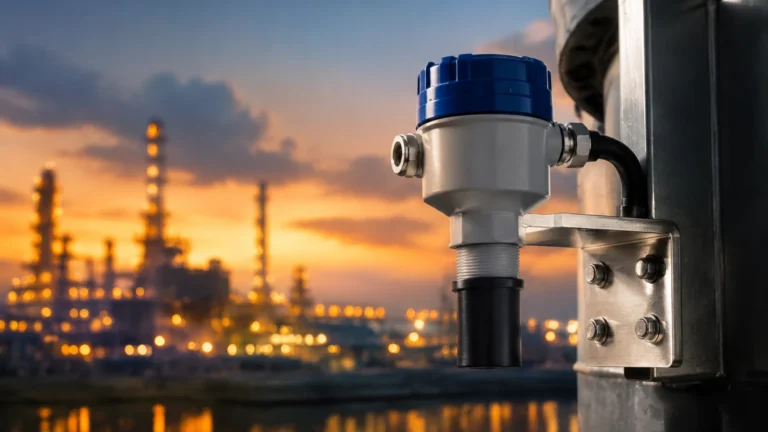
The global ultrasonic air line sensor market is currently experiencing a significant transformation, driven by the increasing demand for non-contact measurement solutions in industrial automation. As industries such as water treatment, chemical processing, and oil and gas seek to improve efficiency and safety, the reliance on ultrasonic technology has grown. These sensors, which utilize high-frequency sound waves to measure distance or level through an air medium, offer a versatile and cost-effective alternative to traditional mechanical or contact-based instruments.
In the context of modern process control, an "air line" sensor typically refers to ultrasonic devices designed to measure the distance between the sensor face and a target (liquid or solid) through the air space within a tank, vessel, or open channel. Understanding the dynamics of the ultrasonic air line sensor market requires a deep dive into the underlying physics of the technology, the specific application requirements of various industries, and the engineering considerations that ensure long-term reliability.
Understanding the Measurement Principles of Ultrasonic Sensors
Before exploring market trends, it is essential to understand how these devices function. Ultrasonic sensors operate on the "Time-of-Flight" (ToF) principle. The sensor head contains a piezoelectric transducer that, when excited by an electrical signal, vibrates at a specific frequency—typically between 20 kHz and 200 kHz—to produce ultrasonic pulses.
The Time-of-Flight Calculation
These pulses travel through the air at the speed of sound. When they encounter a surface with a different acoustic impedance than air (such as a liquid surface or a solid bulk material), a portion of the energy is reflected back toward the sensor. The sensor then switches to "receiving mode" to detect the returning echo. The distance ($D$) is calculated using the formula:
$$D = \frac{c \times t}{2}$$
Where:
* $c$ is the speed of sound in air (approximately 344 m/s at 20°C).
* $t$ is the total time elapsed between the emission of the pulse and the reception of the echo.
Temperature Compensation
A critical factor in the ultrasonic air line sensor market is the accuracy of these measurements relative to environmental changes. The speed of sound is not constant; it varies significantly with air temperature. For every 1°C change in temperature, the speed of sound changes by approximately 0.6 m/s. To maintain accuracy, professional-grade sensors, such as those manufactured by Welk, include integrated temperature sensors to provide real-time compensation for the air column between the sensor and the target.
Dynamics of the Ultrasonic Air Line Sensor Market
The growth of this market is fueled by several key industrial drivers. As companies move toward Industry 4.0, the need for continuous, digital data from the field has become paramount. Ultrasonic sensors are favored because they provide a non-contact solution, meaning the instrument does not touch the medium being measured. This reduces maintenance costs and prevents contamination, which is vital in the food, beverage, and pharmaceutical sectors.
Key Market Drivers
1. Water and Wastewater Management: With increasing global focus on water conservation and efficient sewage treatment, there is a rising demand for level monitoring in open channels, wet wells, and chemical dosing tanks.
2. Chemical Resistance: Modern ultrasonic sensors are often housed in chemically resistant materials like PVDF or PTFE, allowing them to operate in the harsh air environments found above corrosive acids or bases.
3. Cost-Effectiveness: Compared to guided wave radar (GWR) or high-end laser level meters, ultrasonic sensors offer a competitive price-to-performance ratio for standard atmospheric pressure applications.
4. OEM/ODM Customization: The market is also seeing a rise in customized solutions. Manufacturers are increasingly providing tailored sensor frequencies and housing designs to fit specific machinery or narrow "air lines" in specialized industrial equipment.
Key Technical Specifications and Selection Criteria
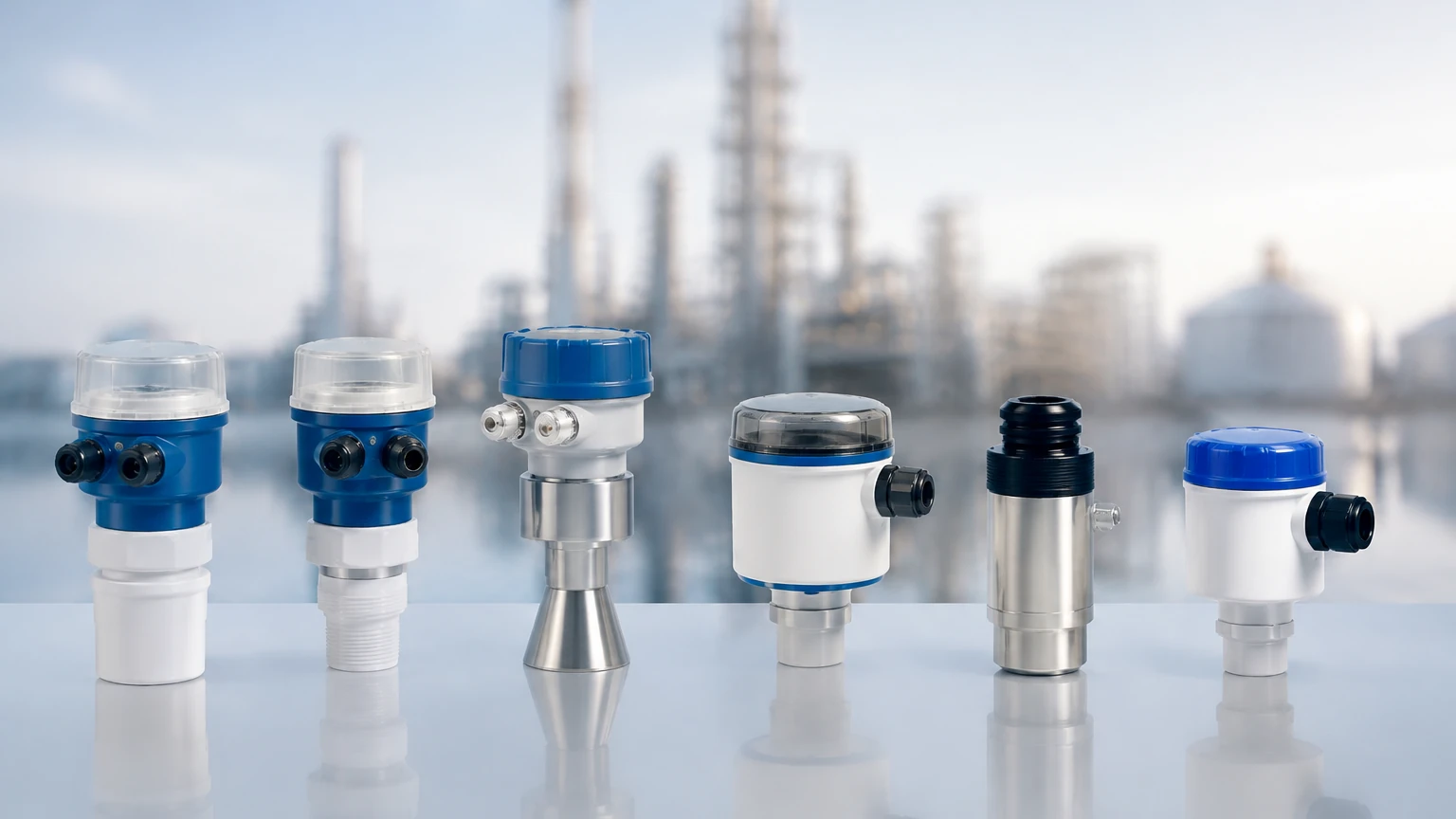
Selecting the right instrument within the ultrasonic air line sensor market requires a thorough evaluation of technical parameters. Not all ultrasonic sensors are created equal; a sensor designed for a 2-meter range in a small tank will have different characteristics than one designed for a 15-meter range in a large silo.
Selection Table for Industrial Ultrasonic Sensors
| Parameter | Small-Scale Tanks | Standard Process Vessels | Large Silos/Open Water |
| :— | :— | :— | :— |
| Measurement Range | 0.25m – 4m | 0.4m – 12m | 0.5m – 30m |
| Ultrasonic Frequency | 60 kHz – 80 kHz | 40 kHz – 50 kHz | 20 kHz – 30 kHz |
| Beam Angle | 8° – 12° | 10° – 15° | 10° – 12° |
| Accuracy | ±2mm or 0.2% | ±0.25% of range | ±0.5% of range |
| Output Options | 4-20mA, RS485 | 4-20mA/HART, Modbus | 4-20mA, Relay, RS485 |
| IP Rating | IP66/IP67 | IP67/IP68 | IP68 |
Frequency vs. Range
There is an inverse relationship between the frequency of the ultrasonic pulse and the maximum measurement distance. Higher frequencies (e.g., 80 kHz) attenuate more quickly in the air but provide higher resolution and smaller "dead zones." Lower frequencies (e.g., 20 kHz) can travel much further but require larger transducers and have longer minimum detection distances.
For engineers looking for specific product details and application support, it is advisable to visit the Main Page of reputable manufacturers to review the latest technical datasheets.
Installation Best Practices for Air Line and Tank Applications
Even the most advanced sensor in the ultrasonic air line sensor market will fail if installed incorrectly. Proper mounting is the most significant factor in achieving stable and accurate readings.
1. Avoiding the Dead Zone (Blocking Distance)
Every ultrasonic sensor has a "dead zone" immediately below the transducer face where it cannot receive an echo because the transducer is still vibrating from the emission. If the liquid level enters this zone, the sensor will provide erratic or maximum-value readings. Always mount the sensor high enough so that the maximum expected level remains below the dead zone (typically 0.2m to 0.5m depending on the model).
2. Beam Angle and Obstructions
The ultrasonic pulse spreads out in a cone shape. Any internal tank structures—such as ladders, pipes, or agitators—that enter this cone will create "false echoes." To prevent this:
* Install the sensor at least 200mm away from the tank wall.
* Ensure the path to the target is clear of obstructions.
* If obstructions are unavoidable, use a sensor with "false echo suppression" software that can be programmed to ignore static reflections.
3. Orientation and Alignment
The sensor face must be installed parallel to the surface of the medium. In liquid applications, this usually means perfectly vertical. If the sensor is tilted, the sound wave may reflect away from the transducer rather than back to it, resulting in a "Lost Echo" error.
Environmental Limitations and Mitigation Strategies
While the ultrasonic air line sensor market offers robust solutions, certain environmental factors can interfere with sound wave propagation. Understanding these limitations is crucial for successful deployment.
Vapor and Humidity
High concentrations of steam or heavy chemical vapors can change the density of the air medium, affecting the speed of sound and absorbing the ultrasonic energy. In applications with heavy steam, a radar level meter might be more appropriate, or a lower-frequency ultrasonic sensor with high power may be required.
Foam and Turbulence
Surface foam acts as an acoustic absorber. If a liquid surface is covered in thick, light foam, the ultrasonic pulse may not reflect at all. Similarly, extreme turbulence can scatter the signal. In these cases, installing a "stillpipe" (a vertical pipe that acts as a guide for the sound and a stabilizer for the liquid surface) can solve the problem.
Temperature Gradients and Wind
In outdoor applications, such as reservoir monitoring, strong winds can "blow" the ultrasonic pulse away from the receiver path. Additionally, significant temperature gradients (where the air is much hotter at the top of a tank than at the bottom) can refract the sound wave. Using a sunshade and ensuring the sensor has a fast response time can help mitigate these effects.
Frequently Asked Questions (FAQs)
Q: Can ultrasonic air line sensors be used in vacuum tanks?
A: No. Ultrasonic waves require a medium (air or gas) to travel. In a vacuum, there are no molecules to transmit the sound vibration, making ultrasonic measurement impossible.
Q: How does dust affect the performance of these sensors?
A: Moderate dust does not significantly impact the speed of sound, but heavy dust can attenuate the signal. For very dusty environments, such as cement silos, specialized high-power, low-frequency ultrasonic sensors or radar sensors are preferred.
Q: What is the typical lifespan of an ultrasonic sensor?
A: With no moving parts and non-contact operation, a high-quality ultrasonic sensor can last 10 years or more, provided the housing material is compatible with any corrosive vapors present in the air line.
Q: Is it possible to measure the level of solids with these sensors?
A: Yes, but with caveats. Solids often have an uneven surface that scatters the sound wave. When measuring solids, it is usually necessary to use a sensor with a higher power output and to consider the angle of repose of the material.
Conclusion
The ultrasonic air line sensor market continues to be a cornerstone of industrial process control due to its reliability and adaptability. By understanding the physical principles of sound propagation in air and following rigorous installation standards, engineers can implement level measurement solutions that provide years of maintenance-free service. As technology advances, the integration of smarter algorithms and better environmental compensation will only further solidify the position of ultrasonic sensing in the global industrial landscape. For those seeking to integrate these technologies into their operations, consulting with a professional manufacturer like Welk ensures that the selected instrument meets the specific demands of the application environment.