Beverage Blending
Beverage Blending
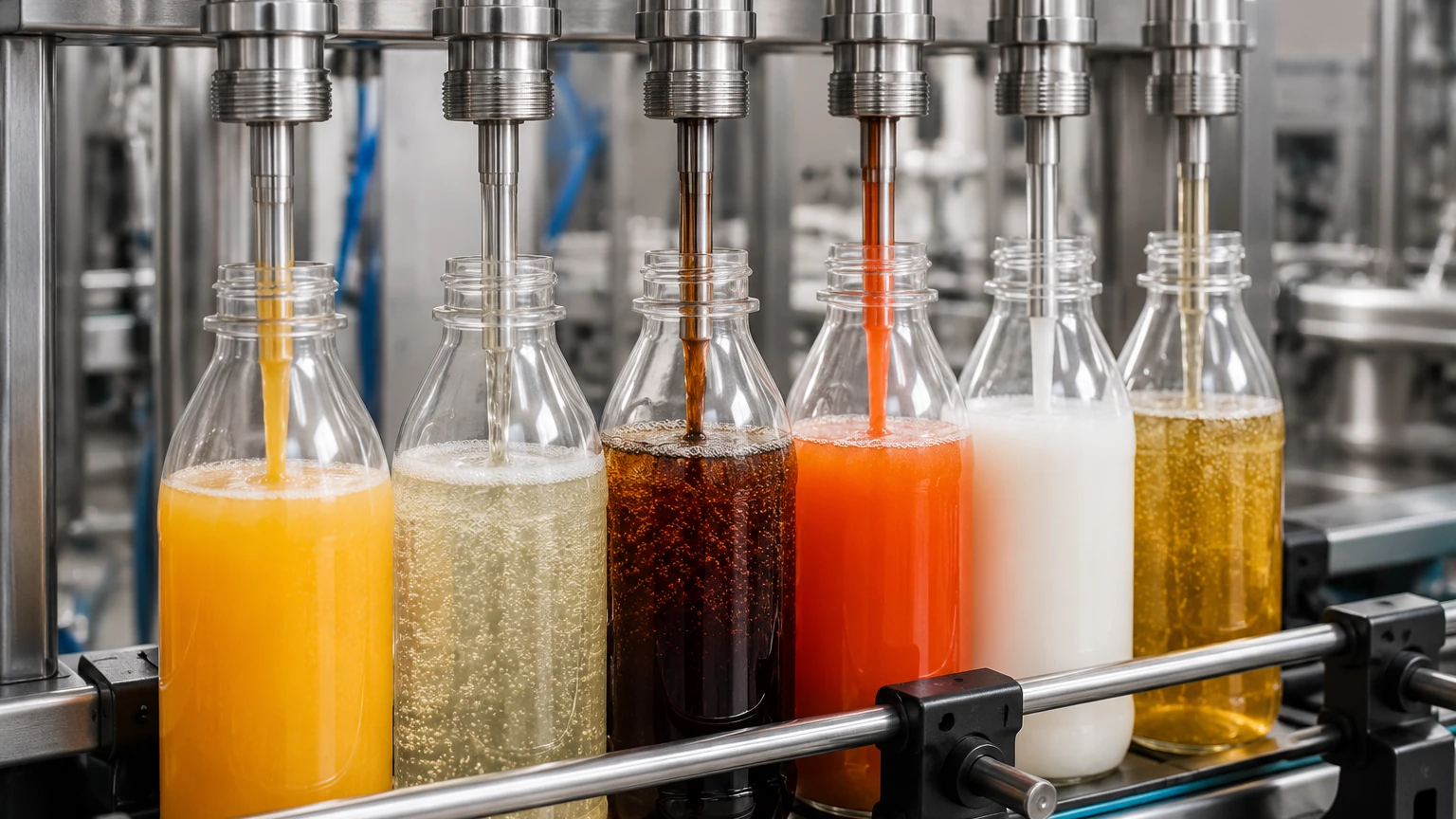
In the industrial production of juices, soft drinks, dairy products, and alcoholic beverages, blending is a critical process stage where multiple ingredients—such as concentrates, water, sweeteners, acids, and flavorings—are combined to create a consistent final product. Achieving the correct ratio is not only a matter of taste and quality control but also a regulatory requirement and a significant factor in cost management.
Reliable level measurement is the backbone of automated beverage blending systems. It ensures that mixing tanks are filled to precise volumes, prevents dry-running of agitators, and manages the inventory of expensive concentrates. This guide examines the technical principles of level measurement within the context of beverage blending, providing engineering insights into technology selection, installation, and common process challenges.
Measurement Principles in Blending Applications
Before selecting an instrument for a beverage blending line, it is essential to understand the physics behind the most common measurement technologies. Each principle interacts differently with the physical properties of the liquid, such as density, dielectric constant, and surface turbulence.
Radar Level Measurement (Non-Contact)
Radar transmitters, specifically those operating on the Frequency Modulated Continuous Wave (FMCW) principle, are widely regarded as the gold standard for blending tanks. The device emits a high-frequency microwave signal toward the liquid surface. The time taken for the signal to reflect back (Time of Flight) is used to calculate the distance.
In beverage blending, radar is preferred because it is independent of changes in liquid density or viscosity. Whether the tank contains a light water-based solution or a thick syrup, the radar signal remains accurate. Modern 80GHz radar sensors offer narrow beam angles, which are crucial for avoiding interference from internal tank components like agitator blades or baffles.
Ultrasonic Level Measurement
Ultrasonic sensors function by emitting sound pulses. The sensor measures the time interval between the emission of the pulse and the reception of the echo. While cost-effective, ultrasonic measurement is sensitive to the air medium through which the sound travels. In beverage blending, factors such as high temperatures (during CIP cycles), heavy steam, or carbon dioxide layers can alter the speed of sound, leading to measurement errors unless temperature compensation is integrated.
Hydrostatic Pressure Measurement
Hydrostatic transmitters measure the pressure exerted by the liquid column at the bottom of the tank. The pressure is directly proportional to the liquid height and its density ($P = \rho gh$). In blending processes where the density of the mixture changes as ingredients are added (e.g., adding high-density sugar syrup to water), hydrostatic sensors must be paired with a control system that can compensate for these density fluctuations to maintain volumetric accuracy.
Magnetic Level Gauges
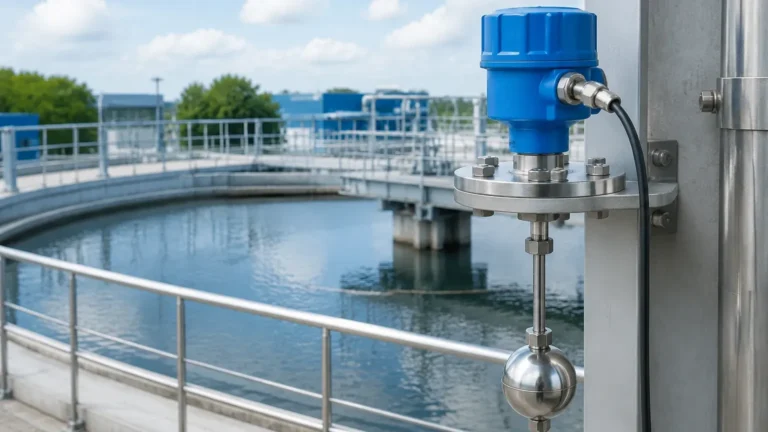
For bypass applications or visual verification, magnetic level gauges utilize a float containing a magnet that moves with the liquid level inside a chamber. This magnet flips colored flags on an external scale and can be equipped with reed switches or transmitters for electronic feedback. These are often used as secondary redundant systems in large-scale storage or mixing vessels.
Technology Selection for Beverage Blending
Selecting the right instrument requires balancing accuracy requirements against the physical constraints of the blending process. The following table provides a comparison of technologies based on typical beverage industry criteria.
| Feature | Radar (80GHz) | Ultrasonic | Hydrostatic | Magnetic Gauge |
| :— | :— | :— | :— | :— |
| Accuracy | High (±1mm) | Moderate (±0.25% of range) | Moderate (±0.1% to 0.5%) | Moderate |
| Sanitary Suitability | Excellent (Flush Diaphragm) | Good | Excellent | Fair (Bypass required) |
| Foam Resistance | High | Low | High | High |
| Density Independence | Yes | Yes | No | No |
| Cost | Higher | Lower | Moderate | Moderate |
For most high-precision blending operations, non-contact radar is the recommended primary technology due to its maintenance-free nature and high repeatability. For simpler applications or atmospheric storage of water and base liquids, hydrostatic or ultrasonic sensors provide a reliable, cost-effective alternative. You can Review product options and application support to see specific configurations for these technologies.
Addressing Beverage Industry Challenges
Beverage blending presents several unique environmental challenges that can interfere with level measurement accuracy.
1. Foam and Surface Turbulence
Blending often involves high-speed agitation, which creates surface vortexes and foam. Foam can absorb ultrasonic sound waves or scatter radar signals. In these environments, choosing a radar sensor with a high dynamic range is critical to ensure the signal can penetrate the foam or distinguish the liquid surface from the foam layer. If the foam is exceptionally thick and conductive, a guided wave radar (GWR) or a hydrostatic pressure sensor may be more appropriate.
2. Carbonation and Outgassing
In the production of carbonated soft drinks or beer, the presence of $CO_2$ can create a gas layer above the liquid. This gas layer affects the speed of sound, making standard ultrasonic sensors unreliable unless they are specifically calibrated for the gas composition. Radar, being an electromagnetic wave, is unaffected by the gas composition in the tank headspace.
3. Sanitary Standards and CIP/SIP
Beverage equipment must adhere to strict sanitary standards (such as 3-A or EHEDG). Level sensors must feature stainless steel (316L) construction and high-quality surface finishes (typically $Ra < 0.8$ μm) to prevent bacterial growth. Furthermore, the sensors must withstand Cleaning-in-Place (CIP) and Steam-in-Place (SIP) cycles, which involve temperatures up to 130°C to 150°C and aggressive chemical cleaning agents.
Installation Considerations
Proper installation is as important as technology selection. Even the most advanced sensor will fail if placed incorrectly.
* Agitator Interference: When installing non-contact sensors (radar or ultrasonic), the beam should be positioned to avoid hitting agitator blades. If the beam cannot avoid the blades, the sensor's software must support "false signal suppression" to map out the rotating blades as static noise.
* Nozzle Geometry: For radar sensors, the mounting nozzle should be as short as possible. If the nozzle is too long or narrow, it can create internal reflections that interfere with the measurement of the actual liquid level, especially when the tank is nearly full.
* Dead Zones (Blocking Distance): Every non-contact sensor has a "dead zone" directly below the sensor face where measurement is impossible. For blending tanks that are filled to the top, ensure the sensor is mounted high enough or select a device with a minimal dead zone (e.g., 50mm to 100mm).
* Positioning: Sensors should not be mounted directly above the inlet pipe. The turbulence and splashing from the incoming liquid will cause erratic readings and may damage the sensor diaphragm over time.
Limitations of Common Technologies
While modern sensors are highly capable, they are not universal solutions.
* Radar: While highly accurate, radar can struggle with liquids that have an extremely low dielectric constant (e.g., certain oils or pure additives), as the signal reflection is weak. However, most beverages are water-based and have high dielectric constants, making this a minor concern.
* Ultrasonic: These are generally limited to atmospheric tanks. In pressurized blending vessels, the change in air density will cause significant measurement drift.
* Hydrostatic: These are sensitive to mounting height. If the sensor is moved or the tank is tilted, the zero-point must be recalibrated. They also require a secondary pressure sensor at the top of the tank if the vessel is pressurized (differential pressure measurement).
Frequently Asked Questions (FAQs)
Q: How do I measure the level in a tank with a heavy agitator?
A: The best approach is to use an 80GHz radar with a narrow beam angle (typically 3° to 6°). This allows the signal to pass between the agitator blades and the tank wall. Additionally, use the "echo masking" or "false signal suppression" feature in the transmitter's software to ignore the blades.
Q: Can I use the same sensor for both juice and milk blending?
A: Yes, provided the sensor is a sanitary-grade non-contact radar. Since radar is independent of density and viscosity, it will accurately measure both juice and milk without recalibration. Ensure the process connection is a sanitary tri-clamp or similar hygienic fitting.
Q: What is the impact of CIP chemicals on level sensors?
A: Standard beverage-grade sensors are designed with PFA or PTFE wetted parts and 316L stainless steel housings to resist caustic soda and nitric acid used in CIP. Always verify the chemical compatibility of the sensor's seal materials (e.g., EPDM or FKM) with your specific cleaning agents.
Q: Is it better to measure by weight or by level for blending?
A: Load cells (weight) are excellent for high-precision batching by mass. However, level sensors are often preferred for continuous blending and inventory management because they are easier to retrofit, do not require the tank to be physically isolated from piping, and are generally more cost-effective for large vessels.
Technical Summary
Successful beverage blending requires a deep understanding of how level measurement interacts with the process environment. By prioritizing sanitary design and selecting technologies like radar that are immune to density changes and vapor interference, manufacturers can ensure product consistency and minimize waste. For detailed specifications on industrial level instruments suitable for food and beverage applications, visit the Main Page for a comprehensive overview of available solutions.