Raman Instruments
Raman Instruments
In the landscape of industrial process control and material identification, Raman instruments have emerged as indispensable tools for non-destructive chemical analysis. Utilizing the phenomenon of inelastic light scattering, these instruments provide a molecular "fingerprint" that allows for the identification and quantification of substances in real-time. While physical sensors—such as those found on the Main Page—monitor parameters like volume and pressure, Raman instruments delve into the chemical composition of the media, offering a comprehensive view of the process environment.
Measurement Principles of Raman Spectroscopy
To understand the functionality of Raman instruments, one must first examine the Raman effect, discovered by C.V. Raman in 1928. When a monochromatic light source, typically a laser, interacts with a sample, the photons are scattered. The vast majority of these photons undergo elastic scattering (Rayleigh scattering), meaning they retain the same energy and wavelength as the incident light.
However, a tiny fraction (approximately 1 in 10 million photons) undergoes inelastic scattering. This is the Raman effect. During this interaction, energy is transferred between the photon and the molecular vibrations of the sample.
1. Stokes Scattering: The photon loses energy to the molecule, resulting in a scattered photon with a longer wavelength (lower frequency).
2. Anti-Stokes Scattering: The photon gains energy from a molecule already in an excited vibrational state, resulting in a shorter wavelength (higher frequency).
Because the energy shifts correspond directly to the specific vibrational modes of the molecular bonds within the sample, the resulting spectrum is unique to the chemical structure. This allows Raman instruments to distinguish between isomers, monitor crystalline phases, and detect specific chemical concentrations without direct contact or sample preparation.
Components and Types of Raman Instruments
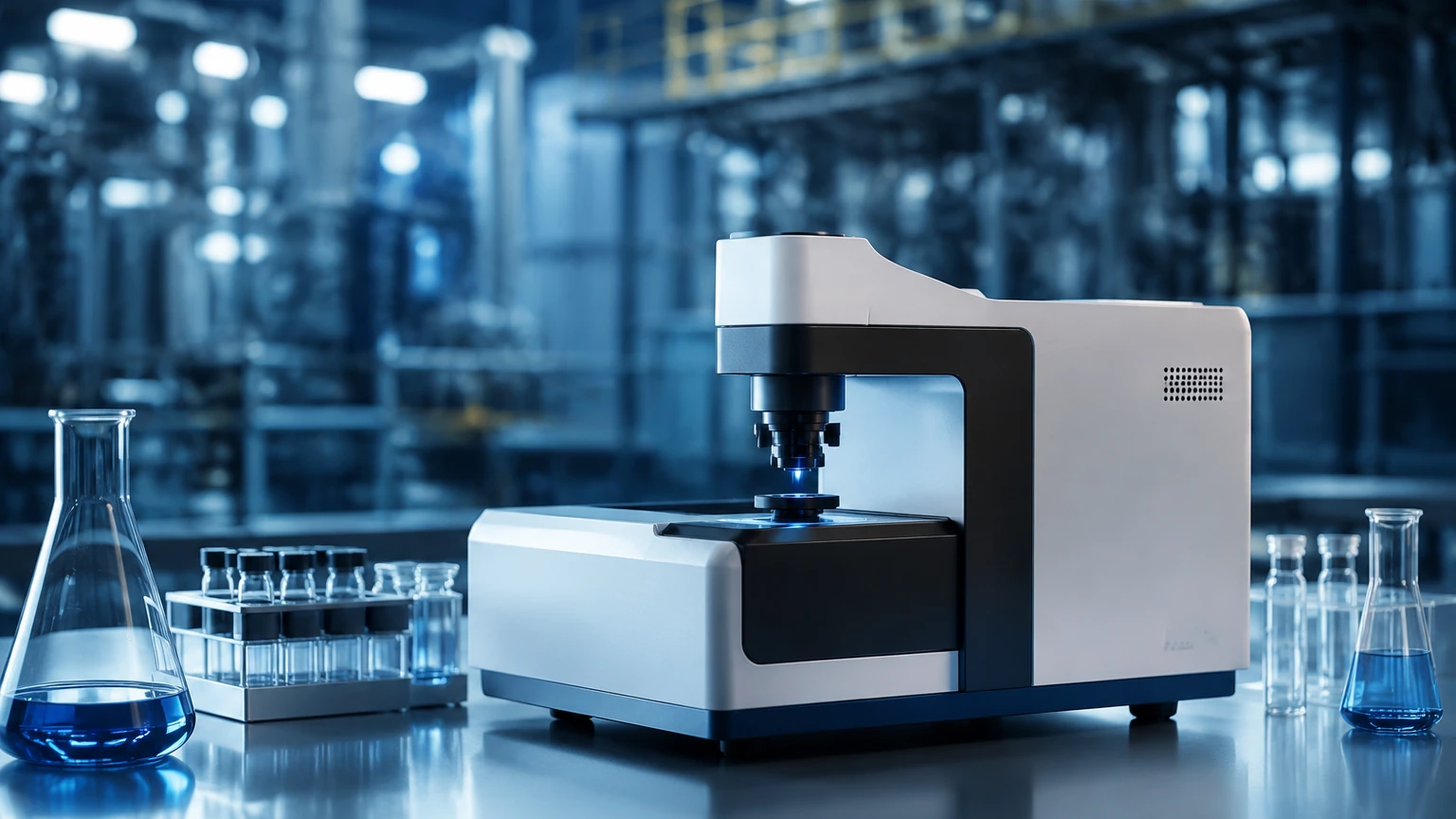
Modern Raman instruments are engineered for high precision and stability. The core architecture generally consists of four primary components:
* Excitation Source (Laser): Most industrial Raman systems use continuous-wave lasers. Common wavelengths include 532 nm (high energy, but prone to fluorescence), 785 nm (the industry standard for balancing signal strength and fluorescence suppression), and 1064 nm (minimal fluorescence, but weaker Raman signal).
* Sample Illumination and Collection System: This often involves fiber-optic probes or microscope objectives that direct the laser to the sample and collect the backscattered light.
* Wavelength Selector (Filter): Since Rayleigh scattering is orders of magnitude stronger than Raman scattering, high-performance notch or edge filters are required to block the laser line while allowing the Raman-shifted light to pass.
* Spectrometer and Detector: The light is dispersed by a diffraction grating onto a detector, usually a Charge-Coupled Device (CCD) cooled to low temperatures to reduce thermal noise.
Instrument Categories
| Type | Application Environment | Key Advantage |
| :— | :— | :— |
| Handheld/Portable | Field identification, warehouse receiving, hazardous material detection. | Immediate results, battery-powered, ruggedized. |
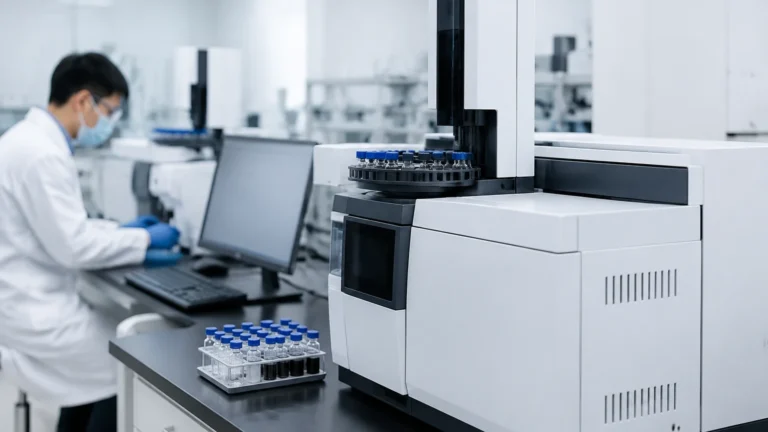
| Benchtop/Laboratory | R&D, quality control labs, complex mixture analysis. | Highest resolution and spectral range. |
| In-line/Process | Continuous reactor monitoring, pipeline analysis, pharmaceutical PAT. | Real-time data, fiber-optic integration, NEMA/ATEX rated. |
Industrial Applications
In the B2B sector, Raman instruments are utilized across diverse industries where chemical integrity is paramount.
Pharmaceutical Manufacturing
In the pharmaceutical industry, Raman instruments are a cornerstone of Process Analytical Technology (PAT). They are used for raw material identification (RMID) through packaging, monitoring polymorph transitions during crystallization, and ensuring the uniformity of active pharmaceutical ingredients (API) in blended powders.
Chemical and Petrochemical Processing
For chemical plants, in-line Raman probes monitor reaction kinetics in real-time. This allows operators to determine the exact end-point of a reaction, reducing cycle times and increasing yield. In petrochemical applications, Raman spectroscopy helps in determining the research octane number (RON) of gasoline or the composition of liquefied natural gas (LNG).
Water and Environmental Monitoring
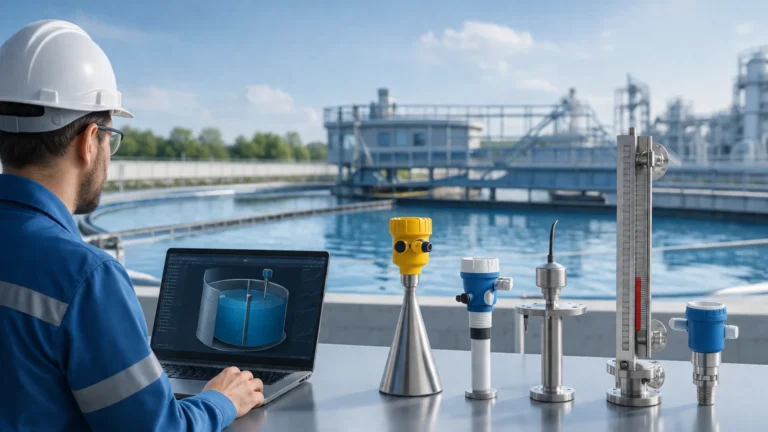
While level measurement instruments, such as those detailed on the Main Page, track the quantity of water in treatment facilities, Raman instruments can be deployed to detect micro-pollutants or monitor the concentration of treatment chemicals like flocculants and disinfectants.
Selection Criteria for Raman Instruments
Choosing the correct Raman instrument requires a technical evaluation of the specific application's constraints. Engineers should consider the following factors:
1. Laser Wavelength Selection:
* 532 nm: Ideal for inorganic materials and carbon nanotubes.
* 785 nm: The best all-rounder for organic chemicals and polymers.
* 1064 nm: Necessary for samples that exhibit high fluorescence, such as oils, colored polymers, or biological tissues.
2. Spectral Resolution: Measured in wavenumbers (cm⁻¹), resolution determines the ability to distinguish between closely spaced peaks. For most industrial identification tasks, a resolution of 4–8 cm⁻¹ is sufficient.
3. Probing Distance and Sampling: For in-line processes, the length of the fiber-optic cable and the design of the immersion probe (e.g., sapphire window material, pressure ratings) are critical. Probes must withstand the process temperature and pressure, which can exceed 200°C and 100 bar in some reactors.
4. Software and Chemometrics: The value of a Raman instrument is often tied to its software. Advanced chemometric models (like Partial Least Squares or Principal Component Analysis) are required to extract quantitative data from complex, overlapping spectra.
Comparison: Raman vs. NIR and FTIR
When selecting an analytical technology, it is helpful to compare Raman with Near-Infrared (NIR) and Fourier-Transform Infrared (FTIR) spectroscopy.
* Water Interference: Raman spectroscopy is relatively insensitive to water, making it superior for analyzing aqueous solutions. In contrast, FTIR and NIR are strongly affected by water absorption.
* Sample Preparation: Raman requires little to no sample preparation and can measure through transparent packaging (glass or plastic). FTIR often requires thin films or KBr pellets.
* Molecular Symmetry: Raman is sensitive to non-polar bonds (e.g., C=C, S-S, N=N), while FTIR is sensitive to polar bonds (e.g., C=O, O-H).
Installation and Maintenance Considerations
Integrating Raman instruments into an industrial process involves several engineering considerations:
* Safety Compliance: Since Raman instruments use high-power Class 3B or Class 4 lasers, proper shielding and interlocks are required. In explosive atmospheres, the system must be housed in explosion-proof enclosures or be intrinsically safe.
* Probe Fouling: In-line probes are susceptible to "window fouling," where material builds up on the sensor face. Automated cleaning systems or specialized coatings may be necessary to maintain signal integrity.
* Calibration: While Raman is inherently stable, periodic verification using standards like cyclohexane or polystyrene is required to ensure wavelength accuracy and intensity reproducibility.
* Integration with Control Systems: Modern Raman instruments communicate via standard industrial protocols such as Modbus, OPC UA, or 4-20 mA loops. This allows the chemical data to be integrated with physical data from level transmitters and pressure sensors found on the Main Page for holistic process automation.
Limitations and Practical Challenges
Despite their versatility, Raman instruments face certain limitations:
* Fluorescence: This is the most significant challenge. Some materials emit a broad fluorescence signal that can completely overwhelm the much weaker Raman peaks. Choosing a longer wavelength laser (1064 nm) is the primary mitigation strategy.
* Sample Heating: High-intensity laser light can potentially heat or even burn dark-colored or delicate samples. Adjusting laser power or using a moving sample stage can prevent degradation.
* Limit of Detection: Raman is generally not a trace analysis technique. It is best suited for components present at concentrations above 0.1% to 1%, depending on the Raman cross-section of the molecule.
Frequently Asked Questions (FAQ)
Q: Can Raman instruments measure through opaque containers?
A: Standard Raman requires a transparent or semi-transparent window. However, Spatially Offset Raman Spectroscopy (SORS) is a specialized technique that can identify materials through opaque plastic, paper, or even skin.
Q: How often does the laser need to be replaced?
A: Most industrial-grade diode lasers used in Raman instruments have an expected lifespan of 10,000 to 20,000 hours of continuous operation. Regular monitoring of laser power is recommended.
Q: Is Raman spectroscopy suitable for gases?
A: Yes, but because gas density is low, the Raman signal is very weak. Specialized high-pressure cells or long-pathlength capillaries are often required to obtain a usable spectrum.
Q: Can Raman instruments provide quantitative data?
A: Yes. By using chemometric modeling and internal standards, Raman instruments can accurately quantify the concentration of components in a mixture, often with precision comparable to HPLC or GC.
Conclusion
Raman instruments represent a peak of analytical engineering, providing deep insights into the molecular composition of industrial fluids and solids. By understanding the principles of light scattering and carefully selecting hardware based on laser wavelength and probe design, engineers can significantly enhance process transparency. When paired with reliable physical monitoring tools—such as the level measurement solutions available on the Main Page—Raman spectroscopy completes the data set necessary for safe, efficient, and high-quality industrial production.