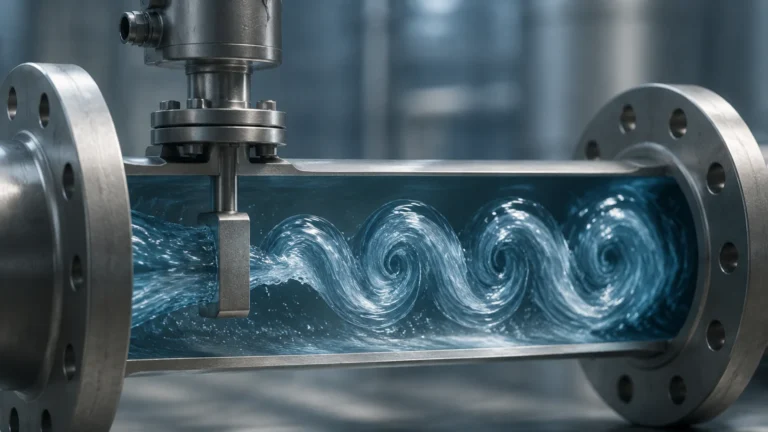
Sanitary Pressure Sensor
Sanitary Pressure Sensor
In the specialized fields of food and beverage production, pharmaceutical manufacturing, and biotechnology, the equipment used must meet rigorous hygiene standards to ensure product safety and process integrity. A sanitary pressure sensor is a precision instrument designed specifically for these environments. Unlike standard industrial pressure transmitters, these sensors feature a design that eliminates crevices where bacteria can grow and utilizes materials that withstand aggressive cleaning cycles.
For engineers and plant managers, selecting the right instrumentation is critical for maintaining high-quality standards. Reliable measurement solutions, such as those found on the Main Page of leading industrial suppliers, provide the accuracy needed for automated process control while adhering to strict sanitary regulations. This article explores the technical principles, selection criteria, and installation best practices for sanitary pressure sensors in modern process industries.
Measurement Principles of Sanitary Pressure Sensors
To understand how a sanitary pressure sensor functions, it is necessary to examine the internal architecture that separates the process media from the sensitive electronic components. The primary goal is to translate physical pressure into an electrical signal without contaminating the product.
The Flush Diaphragm Design
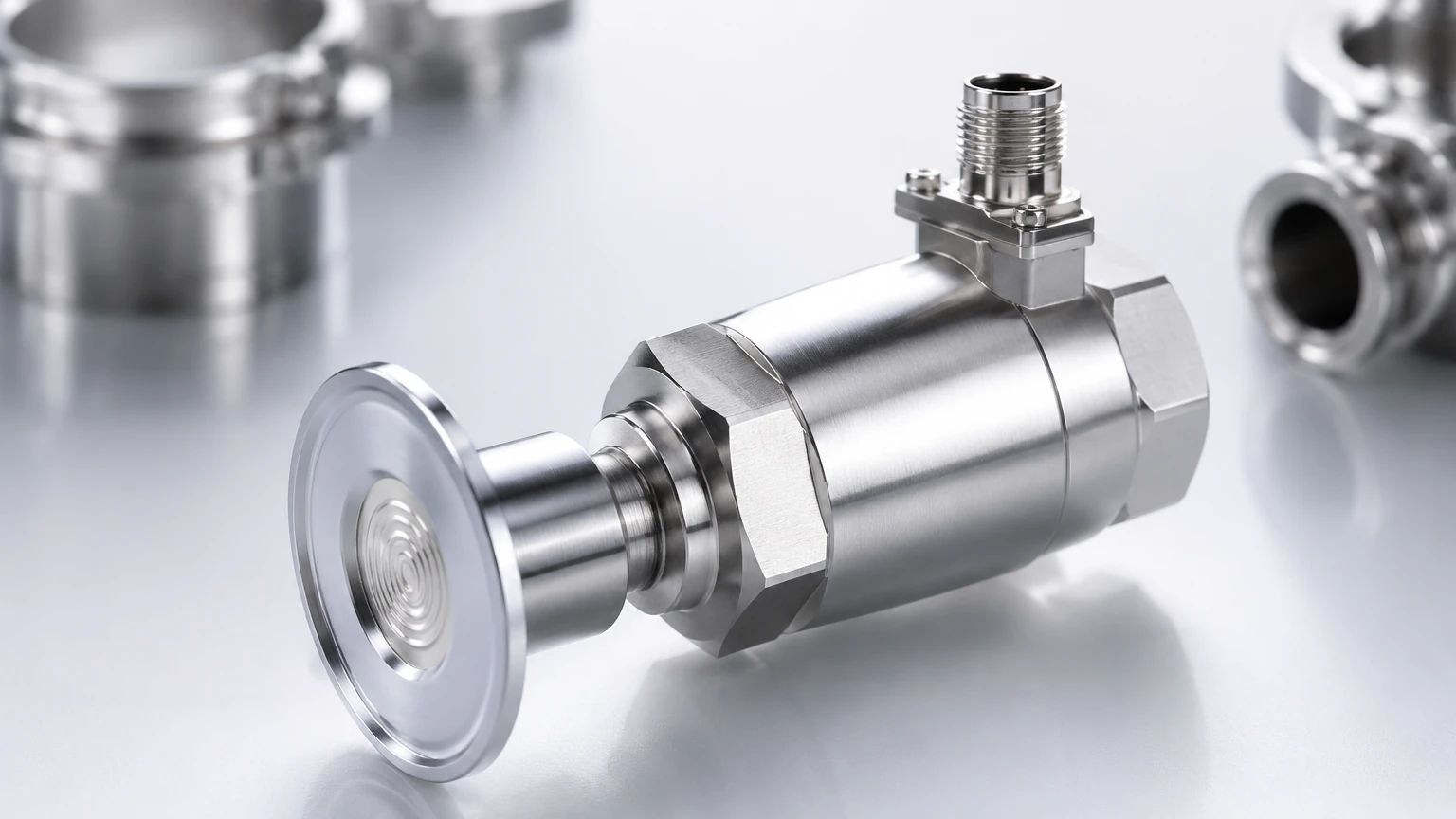
The most defining characteristic of a sanitary pressure sensor is the flush diaphragm. In standard sensors, the process fluid often enters a small cavity or "pressure port" to reach the sensing element. In hygienic applications, this cavity would act as a "dead zone" where product could stagnate, spoil, or harbor microbial growth.
A sanitary sensor uses a flat, flush-mounted diaphragm made of stainless steel (typically 316L) or high-performance alloys. The pressure of the media pushes against this diaphragm, which then transmits the force to the internal sensing element.
Pressure Transmission and Sensing Elements
There are three primary technologies used to convert the mechanical force on the diaphragm into an electrical output:
1. Piezo-resistive Sensors: These utilize a silicon-based strain gauge. When pressure is applied to the diaphragm, it is transmitted via a small volume of fill fluid (usually food-grade silicone oil or glycerin) to the silicon chip. The change in electrical resistance is proportional to the pressure. These are highly accurate and responsive.
2. Capacitive Sensors: These involve a ceramic or metallic sensing cell where the displacement of the diaphragm changes the capacitance between two plates. Capacitive sensors are known for their robustness and ability to handle significant overpressure and vacuum conditions.
3. Potentiometric/Strain Gauge: Similar to piezo-resistive, but often using foil or thin-film gauges bonded to a secondary structure. These are common in high-pressure sanitary applications.
The Role of Fill Fluids
Because the sensing element is often recessed for protection, a transmission fluid (fill fluid) is used to bridge the gap between the flush diaphragm and the internal sensor. In a sanitary pressure sensor, this fluid must be FDA-approved and non-toxic (e.g., Neobee M-20 or food-grade glycerin) so that in the rare event of a diaphragm rupture, the process media remains uncontaminated.
Key Features and Design Criteria
When evaluating a sanitary pressure sensor, several design factors must be considered to ensure compliance with international standards like 3-A Sanitary Standards or EHEDG (European Hygienic Engineering & Design Group).
Material Selection
* Wetted Parts: The parts in contact with the media must be non-reactive and corrosion-resistant. 316L Stainless Steel (1.4404 or 1.4435) is the industry standard. For highly acidic or corrosive media, alloys like Hastelloy C-276 may be required.
* Surface Finish: Hygiene is directly related to surface roughness. Sanitary sensors typically require a surface finish of Ra < 0.8 μm (32 μin), often achieved through electropolishing to ensure there are no microscopic pits where bacteria can lodge.
Process Connections
Standard threaded connections (like NPT or G-threads) are forbidden in sanitary applications because the threads create inaccessible areas. Instead, specialized hygienic connections are used:
* Tri-Clamp (ISO 2852): The most common connection, using a gasket and a heavy-duty clamp to create a seal.
* Varivent: A specialized flange system often used in brewery and beverage applications.
* DIN 11851: A "dairy pipe" union common in European food processing.
Environmental Protection
The exterior of the sensor must also be hygienic. This means the housing should be made of stainless steel and have an IP67 or IP69K rating to withstand high-pressure washdowns and chemical cleaning agents.
Selection Criteria for Industrial Applications
Choosing the correct sanitary pressure sensor requires a deep understanding of the specific process conditions. Engineers should use the following parameters as a checklist.
| Parameter | Consideration | Typical Sanitary Range |
| :— | :— | :— |
| Pressure Type | Gauge, Absolute, or Differential | -1 bar to 40 bar (-14.5 to 580 psi) |
| Temperature | Continuous process vs. cleaning peaks | -20°C to +150°C (-4°F to 302°F) |
| Accuracy | Total error band including linearity | 0.1% to 0.5% of Span |
| Output Signal | Integration with PLC/SCADA | 4-20mA, HART, IO-Link, Modbus |
| Certifications | Regulatory compliance | 3-A, EHEDG, FDA, ATEX |
Temperature and Thermal Shocks
One of the greatest challenges for a sanitary pressure sensor is the Clean-in-Place (CIP) and Steam-in-Place (SIP) cycle. During SIP, the sensor may be exposed to pressurized steam at temperatures up to 140°C (284°F). The sensor must not only survive this but also return to accurate measurement quickly after the temperature drops. Advanced sensors include active temperature compensation to mitigate "thermal drift."
Pressure Range and Overpressure
It is vital to select a sensor with a range that matches the process but also has a high overpressure rating. In food processing, rapid valve closures can cause "water hammer" effects, creating pressure spikes many times higher than the operating pressure. A robust capacitive sensor is often preferred for applications prone to these spikes.
Installation Considerations and Best Practices
Even the highest quality sanitary pressure sensor will fail or provide inaccurate data if installed incorrectly. Proper installation ensures both the longevity of the instrument and the safety of the product.
Orientation and Drainage
To maintain hygiene, the sensor must be installed in a way that allows it to be self-draining.
* Horizontal Pipes: The sensor should ideally be mounted on the side of the pipe. Mounting on the bottom can lead to sediment buildup on the diaphragm, while mounting on the top can result in air pockets that interfere with accurate readings.
* Vertical Pipes: This is often the preferred orientation, as it ensures the media flows across the diaphragm and drains away completely during cleaning cycles.
Avoiding Dead Legs
A "dead leg" is a pocket of stagnant fluid in a piping system. When installing a sensor via a T-junction, the length of the branch (L) should be minimized relative to the pipe diameter (D). The industry standard is often the "2D" or "3D" rule, meaning the length of the stagnant zone should not exceed two or three times the pipe diameter. Modern sanitary fittings are designed to bring the sensor diaphragm as close to the main flow as possible.
Gasket Selection
The gasket used in a Tri-Clamp or Varivent connection is a critical component. It must be made of food-grade materials such as EPDM, FKM (Viton), or PTFE (Teflon). The gasket must be inspected regularly; a degraded or improperly seated gasket can create a crevice that compromises the entire sanitary system.
Limitations and Common Risks
While sanitary pressure sensors are highly engineered, they are not indestructible. Understanding their limitations is key to effective maintenance.
1. Diaphragm Fragility: The flush diaphragm is necessarily thin to remain sensitive to pressure changes. It can be easily dented or scratched by abrasive particles in the media or by improper handling during manual cleaning. A damaged diaphragm can lead to measurement drift or leakage of the fill fluid.
2. Vacuum Sensitivity: Some thin-diaphragm sensors can be "pulled" outward during vacuum conditions (common during cool-down phases after steam cleaning), causing permanent deformation. If vacuum conditions are expected, a sensor rated for full vacuum must be specified.
3. Ambient Humidity: In washdown environments, moisture can enter the sensor housing through the cable entry or venting port if not properly sealed. This leads to internal corrosion and electronic failure. Using vented cables with high-quality seals or using absolute pressure sensors (which don't require venting) can mitigate this risk.
Frequently Asked Questions (FAQ)
1. What is the difference between a standard and a sanitary pressure sensor?
A standard sensor often has an internal cavity (pressure port) and threaded connections. A sanitary sensor has a flush diaphragm, no internal crevices, polished surfaces, and hygienic connections like Tri-Clamps to prevent bacterial growth.
2. Can I use a sanitary pressure sensor for level measurement?
Yes. This is known as hydrostatic level measurement. By measuring the pressure at the bottom of a tank, the sensor can calculate the height of the liquid based on its density. This is a common application in milk silos and juice tanks.
3. How often should a sanitary pressure sensor be calibrated?
Calibration frequency depends on the criticality of the process. In pharmaceutical applications, sensors may be calibrated every six months. In food and beverage, once a year is common. However, if the sensor undergoes frequent SIP cycles, more frequent checks are recommended to monitor for thermal drift.
4. What is Ra 0.8, and why does it matter?
Ra (Roughness Average) 0.8 micrometers is a measure of surface smoothness. A surface smoother than 0.8 μm is considered "hygienic" because it lacks the deep microscopic valleys where bacteria and proteins can hide from cleaning agents.
5. Are all fill fluids safe for food contact?
No. Only specific fluids like food-grade silicone oil, glycerin, or white oil that meet FDA requirements are used in sanitary sensors. Always check the manufacturer's data sheet for compliance.
Conclusion
The sanitary pressure sensor is an indispensable tool for any industry where hygiene and precision are paramount. By selecting instruments with the appropriate materials, surface finishes, and pressure-sensing technologies, engineers can ensure their processes remain efficient and compliant with global safety standards.
When planning a new installation or upgrading an existing line, it is essential to consult with experts who understand the nuances of industrial level and pressure measurement. Reliable manufacturers like Welk offer a range of solutions tailored to these demanding environments. For further technical details and to explore available instrumentation options, refer to the Main Page for comprehensive product support and engineering guidance. Proper selection and maintenance of these sensors not only protect the consumer but also safeguard the operational efficiency of the facility.