Stainless Thermowell
Stainless Thermowell
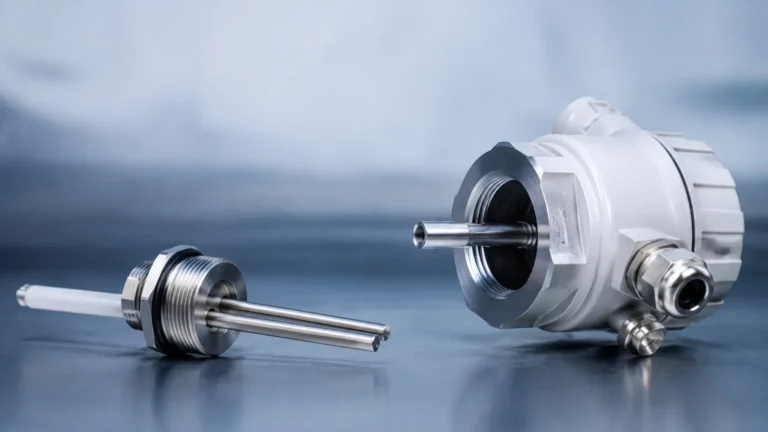
In industrial process control, the accuracy of temperature measurement is as critical as the protection of the sensing element itself. A stainless thermowell serves as a pressure-tight receptacle that shields temperature sensors—such as Resistance Temperature Detectors (RTDs), thermocouples, and bimetal thermometers—from the harsh conditions of a process environment. By providing a physical barrier against high pressures, corrosive chemicals, and high-velocity flows, the thermowell ensures the longevity of the instrument while allowing for sensor replacement or maintenance without depressurizing the process line.
For engineers and plant operators, selecting the correct stainless thermowell is a matter of balancing thermal responsiveness with structural integrity. This guide explores the engineering principles, material considerations, and installation protocols necessary for integrating these components into modern industrial systems.
Understanding the Function of a Stainless Thermowell
The primary role of a thermowell is to act as a heat exchanger. While it is a protective barrier, its design must facilitate the efficient transfer of thermal energy from the process fluid to the internal sensor.
Measurement Principles and Thermal Lag
Temperature measurement via a thermowell relies on conduction. As the process fluid flows around the exterior of the thermowell, heat is conducted through the stainless steel wall and into the internal cavity where the sensor is housed. Because the thermowell adds mass and a physical barrier between the fluid and the sensor, it introduces a "thermal lag" or a delay in response time.
To minimize this lag, engineers must consider the wall thickness and the fit of the sensor. A tighter fit between the sensor probe and the internal diameter of the thermowell reduces the insulating air gap, thereby improving response speed. In high-accuracy applications, heat transfer paste may be used to further enhance conductivity.
Structural Protection
Beyond heat transfer, the thermowell must withstand the mechanical stresses of the process. This includes:
* Static Pressure: The ability to resist the internal pressure of the pipe or vessel.
* Dynamic Stress: The forces exerted by flowing fluid, particularly the phenomenon of von Kármán vortices, which can cause vibrational failure if the thermowell's natural frequency is matched by the vortex shedding frequency.
* Chemical Erosion: The gradual thinning of the wall due to the abrasive or corrosive nature of the medium.
Material Science: Why Stainless Steel is Preferred
Stainless steel is the industry standard for thermowells due to its excellent mechanical strength, temperature resistance, and versatility. While various alloys exist, two specific grades dominate the market.
304/304L Stainless Steel
Grade 304 is a versatile, general-purpose stainless steel with good resistance to atmospheric corrosion and many organic and inorganic chemicals. It is frequently used in the food and beverage industry, HVAC systems, and general water treatment applications. However, it is susceptible to chloride pitting and is generally avoided in high-salinity or highly acidic environments.
316/316L Stainless Steel
Grade 316 contains molybdenum, which significantly enhances its resistance to pitting and crevice corrosion in chloride-rich environments. The "L" designation (316L) indicates a lower carbon content, which minimizes carbide precipitation during welding, making it the preferred choice for welded thermowell assemblies. It is the standard for chemical processing, oil and gas, and pharmaceutical applications.
Comparison of Common Stainless Alloys
| Feature | 304 Stainless Steel | 316/316L Stainless Steel | 310 Stainless Steel |
| :— | :— | :— | :— |
| Corrosion Resistance | Moderate | High (Chloride resistant) | High (Oxidation resistant) |
| Max Operating Temp | ~870°C (1600°F) | ~925°C (1700°F) | ~1100°C (2010°F) |
| Typical Application | Food/Water | Chemical/Marine | High-Heat Furnaces |
| Weldability | Excellent | Excellent (316L) | Good |
Types of Thermowell Constructions and Connections
The method by which a stainless thermowell is attached to a process vessel or piping system determines its pressure rating and ease of maintenance.
1. Threaded Thermowells
Threaded models are the most common for smaller pipes and non-critical applications. They are screwed into a tapped pipe tee or a weld-o-let. While cost-effective and easy to install, they are generally limited to lower pressure ranges and are prone to leakage if subjected to significant vibration or thermal cycling.
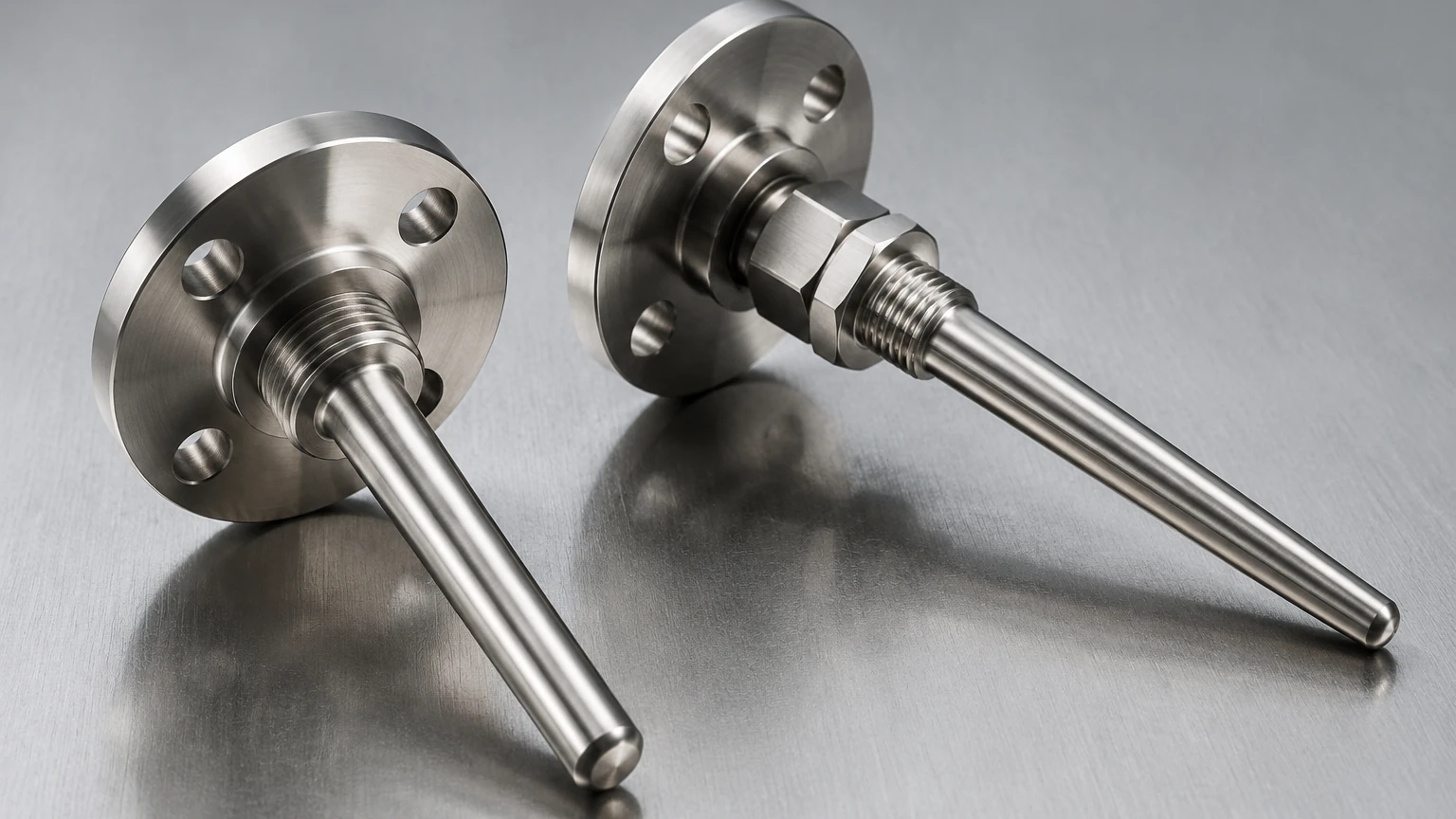
2. Flanged Thermowells
Flanged thermowells are bolted to a mating flange on the process equipment. This design is the standard for high-pressure, high-temperature, and highly corrosive applications. They offer the highest structural integrity and allow for easier removal during scheduled plant shutdowns. Common flange sizes range from 1 inch (25 mm) to 3 inches (75 mm) in various pressure classes (e.g., ANSI 150, 300, 600).
3. Weld-in Thermowells
Weld-in versions are permanently welded directly into the process piping. This eliminates the risk of leaks associated with threads or gaskets. These are typically used in high-velocity steam lines or high-pressure power generation applications where a permanent, hermetic seal is required.
4. Van Stone (Lap Joint) Thermowells
These are used in conjunction with a lap joint flange. The thermowell itself is machined with a "Van Stone" style shoulder that is compressed between the flange faces. This allows the use of a carbon steel flange with a stainless thermowell, reducing material costs in large-scale installations.
Engineering Selection Criteria and Technical Specifications
When specifying a stainless thermowell, engineers must define several critical dimensions and parameters to ensure both performance and safety.
Insertion Length (U-Length)
The insertion length is the distance from the tip of the thermowell to the underside of the threads or flange face. For accurate measurement, the sensing element must be placed in the middle third of the pipe flow. A common rule of thumb is that the insertion length should be at least 10 times the outer diameter of the thermowell to minimize error caused by thermal conduction along the shank (stem conduction error).
Shank Profile
* Straight: The diameter is uniform along the entire insertion length. These are robust but have a slower response time.
* Stepped: The diameter is reduced at the tip (e.g., from 1/2" to 1/4"). This reduces the mass around the sensor, significantly improving response time while maintaining strength at the base.
* Tapered: The diameter gradually decreases from the base to the tip. This design provides the best compromise between high structural strength (to resist velocity-induced vibration) and a fast response time.
Wake Frequency Calculations
In high-velocity flows, the fluid passing the thermowell creates vortices. If the frequency of these vortices matches the natural frequency of the thermowell, resonance occurs, leading to rapid fatigue and catastrophic failure. Engineers use the ASME PTC 19.3 TW standard to calculate the safe limits for insertion length and diameter based on the specific fluid velocity, density, and viscosity of the process.
Installation Best Practices for Process Integrity
Proper installation is essential to ensure the stainless thermowell provides accurate data and remains structurally sound.
1. Orientation: In small-diameter pipes, thermowells should be installed at an angle or in a pipe elbow, pointing against the direction of flow. This increases the effective insertion length and ensures the tip is fully immersed in the moving fluid.
2. Insulation: The external portion of the thermowell and the pipe should be insulated. If the base of the thermowell is exposed to ambient air, heat will "leak" out of the process, causing the sensor to read lower than the actual process temperature.
3. Bore Fit: Ensure the internal bore of the thermowell is clean and free of debris. The sensor should slide in easily but without excessive clearance.
4. Lagging Extension: For insulated pipes, a lagging extension (T-length) is required to extend the connection head beyond the insulation layer, preventing the electronics from overheating.
Limitations and Maintenance Requirements
Despite their durability, stainless thermowells are not indestructible.
* Corrosion Monitoring: In aggressive chemical environments, thermowells should be inspected periodically for thinning. Ultrasonic thickness testing can be performed during maintenance cycles.
* Response Time Constraints: In processes requiring near-instantaneous temperature feedback (such as safety shutdown systems), the inherent lag of a thermowell may be a limitation. In these cases, specialized thin-walled or high-conductivity designs must be used.
* Sediment Buildup: In slurry or wastewater applications, material can build up on the exterior of the thermowell, acting as an insulator and further slowing response times. Regular cleaning or the use of polished stainless finishes can mitigate this.
Integrating Temperature and Level Measurement Solutions
In many industrial tanks and vessels, temperature measurement is performed alongside level measurement. The density of a liquid changes with temperature, which directly impacts the accuracy of hydrostatic level transmitters. Furthermore, ultrasonic and radar level meters may require temperature compensation to account for changes in the vapor space's dielectric constant or the speed of sound.
Welk provides a comprehensive range of industrial instrumentation designed to work in tandem. For technical specifications on how temperature data integrates with automated level control systems, users can visit the Main Page to review product options and application support. Understanding the synergy between a stainless thermowell and a level sensor is vital for maintaining mass balance and inventory accuracy in chemical and oil storage applications.
Frequently Asked Questions (FAQ)
Q: Can I use a 304 stainless thermowell for sulfuric acid?
A: Generally, no. Grade 304 has poor resistance to sulfuric acid. Grade 316L is better for low concentrations, but for high concentrations or temperatures, specialized alloys like Hastelloy or Monel are required.
Q: What is the difference between a fabricated and a bar-stock thermowell?
A: A fabricated thermowell is made from a tube with a welded end-cap. It is cheaper but rated for lower pressures. A bar-stock thermowell is machined from a single solid piece of hexagonal or round bar, providing much higher pressure ratings and structural integrity.
Q: How do I prevent the sensor from vibrating inside the thermowell?
A: Use a spring-loaded sensor insert. The spring ensures the sensor tip maintains constant contact with the bottom of the thermowell, which both prevents vibration damage and improves thermal conduction.
Q: Is there a maximum flow velocity for stainless thermowells?
A: There is no universal limit; it depends on the thermowell's dimensions and the fluid's properties. A wake frequency calculation according to ASME PTC 19.3 TW must be performed for any high-velocity application to determine the specific safe limit.