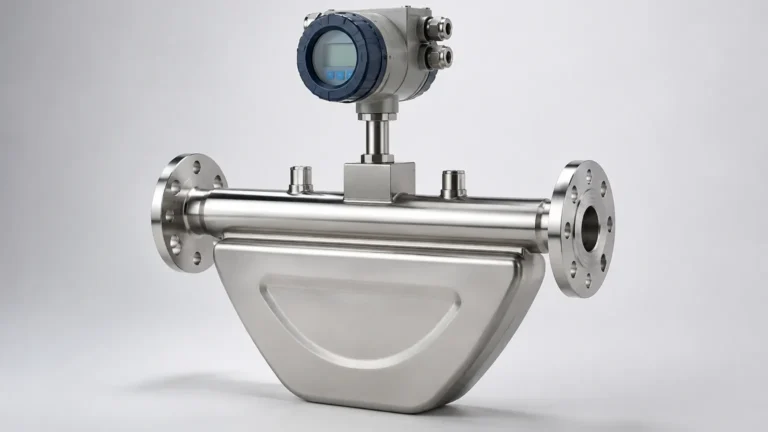
Low Temperature Fluid Flow Meter
Low Temperature Fluid Flow Meter
In industrial process engineering, measuring the movement of fluids at sub-zero temperatures presents a unique set of technical challenges. A low temperature fluid flow meter must not only maintain accuracy under extreme thermal stress but also ensure structural integrity when materials become brittle. These instruments are vital in applications ranging from cryogenic gas production and liquefied natural gas (LNG) transport to specialized chemical processing and aerospace testing.
Selecting the correct flow measurement technology requires an understanding of how low temperatures affect fluid density, viscosity, and the mechanical properties of the meter itself. This guide examines the primary measurement principles, selection criteria, and installation best practices for low-temperature applications.
Measurement Principles for Low-Temperature Fluids
Unlike standard industrial applications, low-temperature environments—often defined as temperatures below -40°C (-40°F) and reaching down to cryogenic levels of -196°C (-320.8°F) for liquid nitrogen—require specific sensor physics. The following technologies are most commonly adapted for these conditions.
Coriolis Mass Flow Meters
Coriolis meters are often considered the gold standard for low-temperature applications because they measure mass flow directly. The principle involves vibrating a tube (or tubes) through which the fluid flows. The mass of the fluid causes a phase shift in the vibration, which is proportional to the mass flow rate.
In low-temperature scenarios, the density of fluids like LNG can fluctuate significantly with minor temperature changes. Because Coriolis meters are independent of density and viscosity, they provide high accuracy (typically ±0.1% to ±0.2%). However, engineers must account for the change in the Young’s Modulus (stiffness) of the metal tubes at extreme cold, which requires specialized temperature compensation algorithms.
Turbine Flow Meters
Turbine meters utilize a rotor suspended in the fluid stream. As the fluid moves, it turns the rotor at a speed proportional to the flow velocity. For low-temperature service, these meters are equipped with specialized cryogenic bearings, often made of ceramic or self-lubricating alloys, as standard lubricants would freeze.
Turbine meters are highly effective for low-viscosity fluids like liquid oxygen or nitrogen. They offer excellent repeatability, though they are sensitive to changes in fluid velocity profiles and require straight pipe runs to ensure accuracy.
Differential Pressure (DP) Meters
Differential pressure measurement, using orifice plates or Venturi tubes, is a traditional and robust method. By creating a constriction in the flow path, a pressure drop is generated that is proportional to the square of the flow rate.
In low-temperature applications, the primary advantage of DP meters is their lack of moving parts. However, the impulse lines—the small tubes connecting the process pipe to the pressure transmitter—are a common failure point. If the fluid in these lines boils due to ambient heat gain, it creates "vapor lock," leading to erratic readings.
Ultrasonic (Transit-Time) Flow Meters
Ultrasonic meters measure the time difference between sound pulses sent upstream and downstream. They are increasingly popular because they can be non-intrusive (clamp-on). For low temperatures, specialized transducers and acoustic couplants are required to maintain signal integrity through the pipe wall. While they offer no pressure drop, the accuracy can be affected by thermal gradients within the fluid.
Technical Selection Criteria
Choosing a low temperature fluid flow meter requires a balance between precision, durability, and cost. The following table summarizes the performance of common technologies in cold-service environments.
| Technology | Typical Temp Range | Accuracy (Typical) | Pressure Drop | Moving Parts |
| :— | :— | :— | :— | :— |
| Coriolis | -240°C to +200°C | ±0.1% | Medium | No |
| Turbine | -196°C to +150°C | ±0.5% | Medium | Yes |
| Differential Pressure | -250°C to +400°C | ±1.0% to 2.0% | High | No |
| Ultrasonic | -196°C to +200°C | ±1.0% | None | No |
| Vortex | -200°C to +400°C | ±1.0% | Medium | No |
Material Compatibility
At low temperatures, carbon steel becomes brittle and prone to catastrophic failure. Most low-temperature flow meters utilize 316L stainless steel, Hastelloy, or Monel. For cryogenic service, the instrument body and flanges must be rated for the specific temperature to prevent cracking under thermal shock.
Sealing and Gaskets
Standard elastomeric seals (like Nitrile or Viton) fail in cold environments. Engineers must specify PTFE (Teflon), reinforced graphite, or metal-to-metal seals. In many cryogenic flow meters, the sensor electronics are housed in an extended neck (bonnet) to distance the sensitive transmitters from the extreme cold of the process line.
Installation Considerations for Low-Temperature Systems
Proper installation is as critical as the choice of the meter itself. Failure to account for the physical realities of cold fluids can lead to measurement errors or mechanical failure.
1. Thermal Expansion and Contraction: Pipes will shrink significantly when cooled from ambient to -160°C. Flow meters must be installed with expansion loops or bellows to prevent the meter body from being crushed or stretched by the piping system.
2. Insulation and Vacuum Jacketing: To prevent the fluid from boiling (flashing) and to protect the surrounding environment from heavy icing, low-temperature lines are usually heavily insulated. Many high-precision meters are integrated into vacuum-jacketed piping sections.
3. Orientation: For liquid service, the meter must remain full of liquid. For gas service, it must remain full of gas. In low-temperature liquids, any heat gain can cause gas bubbles to form. Meters should generally be installed in a vertical rise to ensure any evolved gas moves away from the sensor.
4. Zero-Point Calibration: For Coriolis meters, performing a "zero" at the actual operating temperature is essential. The mechanical properties of the meter change as it cools, and a zero performed at 20°C (68°F) will not be accurate at -150°C (-238°F).
Limitations and Common Risks
Cavitation and Flashing
Low-temperature fluids are often stored near their boiling point. A small pressure drop across a flow meter can cause the liquid to flash into vapor. This not only destroys measurement accuracy but can also cause mechanical damage to turbine blades or Coriolis tubes through cavitation. Maintaining sufficient backpressure is a requirement for stable measurement.
Ice Formation
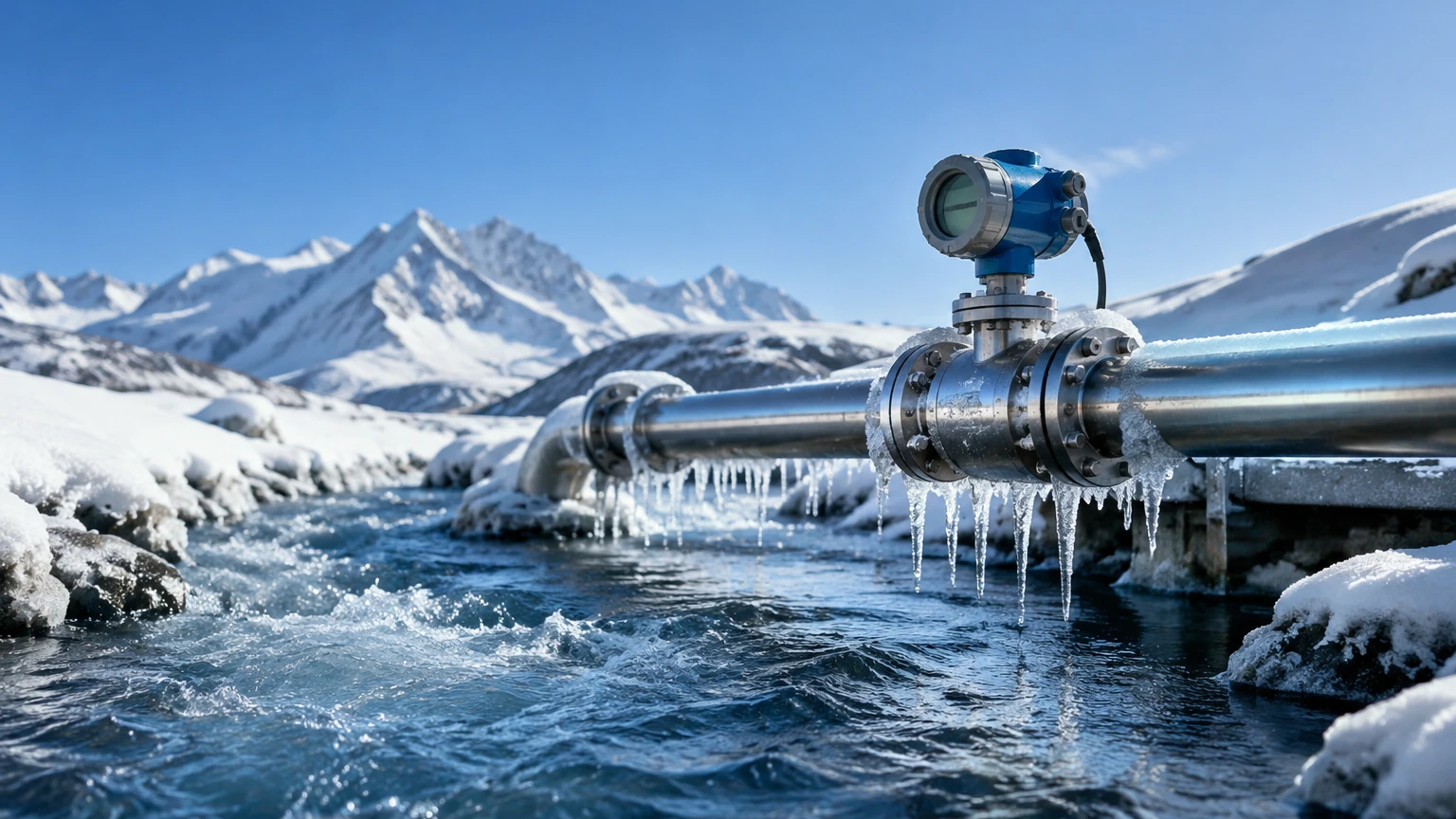
If moisture from the atmosphere reaches the cold surfaces of the meter, ice will form. This can seize moving parts in turbine meters or interfere with the vibration of Coriolis tubes. Proper sealing of the insulation (vapor barriers) is mandatory.
Signal Drift
Electronics are sensitive to temperature. Even if the sensor is in the cold stream, the transmitter must be kept within its rated operating temperature, typically above -40°C. Using remote-mounted electronics or extended stems is the standard solution.
Integration with Level Measurement
In many B2B industrial settings, flow measurement is only one part of the mass balance equation. While a low temperature fluid flow meter tracks the movement of product through a pipe, level measurement instruments are required to monitor the inventory within storage tanks.
For instance, in an LNG storage facility, radar level meters or hydrostatic transmitters provide the primary data for tank volume. By cross-referencing the flow rate from the pipeline with the change in tank level, operators can detect leaks and verify the accuracy of the flow meter. For comprehensive solutions in industrial level monitoring, engineers often consult the Main Page of specialized manufacturers to find instruments that complement their flow systems.
Frequently Asked Questions (FAQ)
Q: Can I use a standard flow meter for low-temperature fluids if I insulate it?
No. Standard meters often use materials that become brittle at low temperatures. Furthermore, the internal clearances and electronic compensations are not designed for the density changes associated with extreme cold. Always use a meter specifically rated for the target temperature range.
Q: What is the most cost-effective meter for liquid nitrogen?
For non-custody transfer applications where moderate accuracy is acceptable, a differential pressure meter or a specialized turbine meter is often the most cost-effective. For custody transfer (buying/selling), Coriolis is preferred despite the higher initial cost.
Q: How do I prevent the transmitter from freezing?
Most low-temperature meters use an "extended neck" design. This places the electronic transmitter 150mm to 300mm (6 to 12 inches) away from the cold pipe, allowing ambient air to keep the electronics within their operating range.
Q: Why is mass flow preferred over volume flow in cold applications?
Because the density of low-temperature fluids (especially liquefied gases) changes drastically with small fluctuations in pressure and temperature. Measuring mass (kg/h) provides a consistent value regardless of these environmental changes, whereas volume (m³/h) would require constant correction.
Conclusion
Successfully implementing a low temperature fluid flow meter requires a rigorous assessment of the fluid properties and the environmental conditions. By selecting the appropriate measurement principle—whether it be the precision of Coriolis or the robustness of differential pressure—and adhering to strict installation standards regarding insulation and thermal expansion, engineers can ensure reliable data in the most demanding cold-chain applications. For those managing complex industrial tanks, integrating these flow solutions with high-quality level sensors found on the Main Page ensures a complete and accurate picture of process dynamics.