Flowline Ug01-0001-40 Level Sensor Reflective Ultrasonic
Flowline Ug01-0001-40 Level Sensor Reflective Ultrasonic
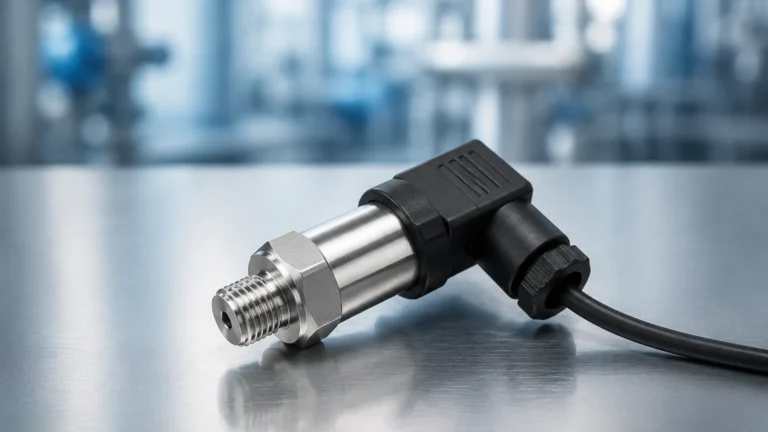
In the field of industrial automation, selecting the correct level measurement technology is critical for process efficiency and safety. The Flowline UG01-0001-40 level sensor reflective ultrasonic is a specialized instrument designed for small-tank applications where condensation and environmental interference often compromise standard ultrasonic sensors. This article provides a comprehensive technical overview of reflective ultrasonic technology, the specific capabilities of the UG01-0001-40, and practical engineering considerations for its deployment in industrial environments.
Understanding Reflective Ultrasonic Measurement Principles
To appreciate the utility of the flowline ug01-0001-40 level sensor reflective ultrasonic, one must first understand the fundamental physics of ultrasonic level measurement and the specific challenges it faces.
Standard Ultrasonic vs. Reflective Technology
Traditional ultrasonic sensors operate on the Time-of-Flight (ToF) principle. The sensor transmits a high-frequency sound pulse that travels through the air, reflects off the liquid surface, and returns to the transducer. The distance is calculated based on the time elapsed and the speed of sound. However, a significant limitation of standard ultrasonic sensors is condensation. When moisture accumulates on the transducer face, it dampens the signal, leading to "lost echoes" or erratic readings.
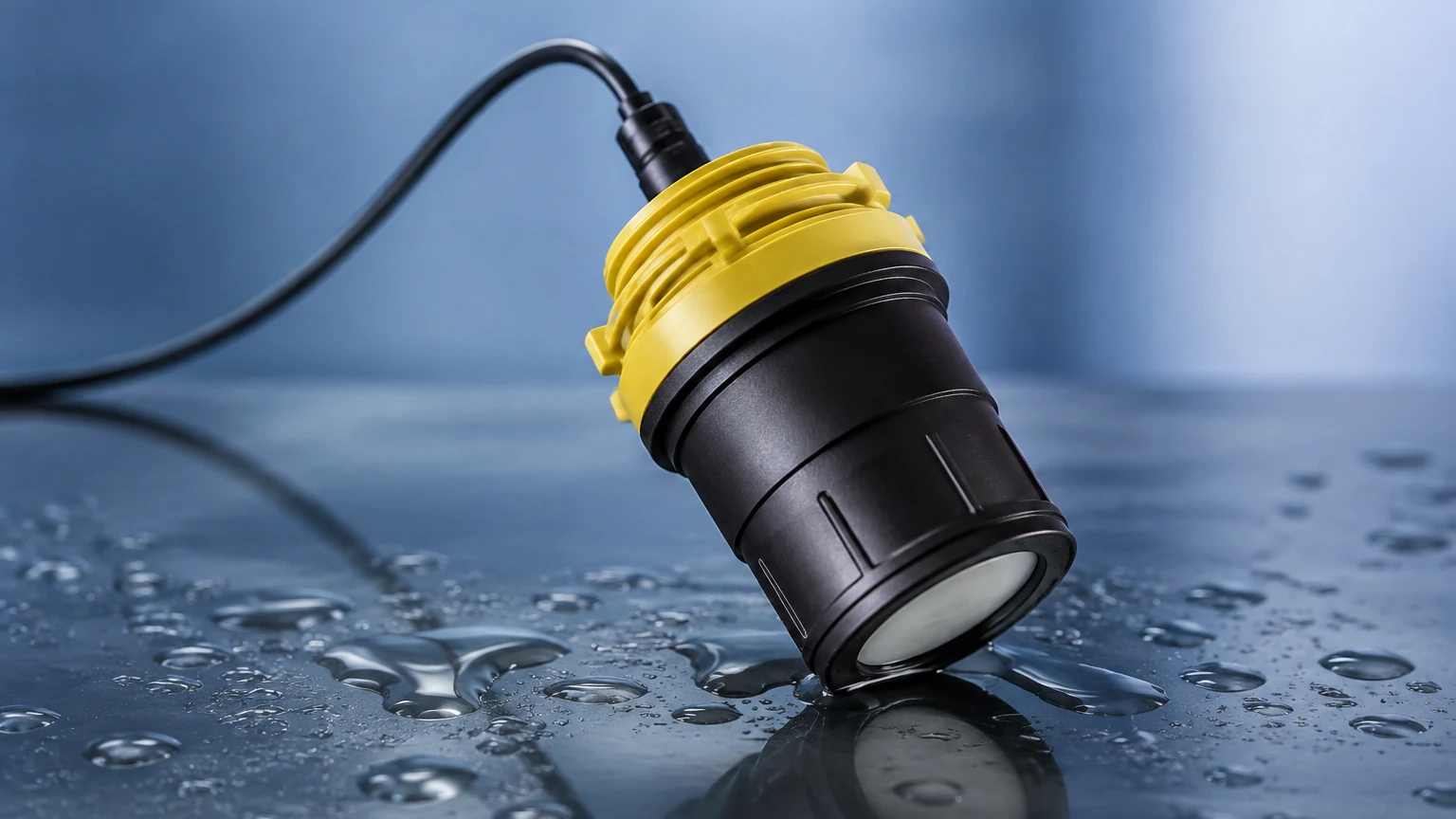
Reflective ultrasonic technology, as utilized in the UG01 series, addresses this by optimizing the transducer surface and signal processing. The "reflective" aspect refers to the sensor's ability to maintain signal integrity even when the transducer face is wet. By using a curved or specifically oriented transducer face, the sensor ensures that condensation droplets do not block the acoustic path, allowing the signal to reflect off the liquid surface and return accurately to the receiver.
The Role of Signal Processing
Modern sensors like the UG01-0001-40 utilize advanced digital signal processing (DSP). This allows the unit to filter out "noise" from agitators, internal tank structures, or turbulence. By analyzing the echo curve, the sensor can distinguish between the true liquid level and parasitic reflections, a feature essential for maintaining accuracy in cramped industrial vessels.
Technical Specifications of the UG01-0001-40
The Flowline UG01-0001-40 is engineered for short-range applications, typically in small tanks, sumps, or IBCs (Intermediate Bulk Containers). Below are the primary technical parameters:
* Measurement Range: 1.5 meters (approximately 4.9 feet).
* Output Signal: 4-20 mA (two-wire), which is the industry standard for integration into PLC and SCADA systems.
* Beam Width: 2 inches (50.8 mm), allowing for installation in narrow spaces or close to tank walls.
* Dead Band: 2 inches (50.8 mm). This is the minimum distance required between the sensor face and the maximum liquid level.
* Supply Voltage: 14-28 VDC.
* Enclosure Rating: NEMA 6P (IP68), making it suitable for submerged or high-moisture environments.
* Mounting Thread: 1" NPT or 1" G thread options.
For facilities requiring a broader range of measurement technologies, including long-range radar or magnetic gauges, visiting the Main Page of professional manufacturers like Welk can provide additional context on scaling level measurement solutions across an entire plant.
Practical Selection Criteria
Choosing the flowline ug01-0001-40 level sensor reflective ultrasonic requires an evaluation of the process media and the physical environment. Use the following table as a general guide for technology selection:
| Application Feature | Reflective Ultrasonic (UG01) | Standard Ultrasonic | Radar (60GHz/80GHz) |
| :— | :— | :— | :— |
| Condensation | High Resistance | Low Resistance | Excellent |
| Foam Presence | Limited Capability | Poor | Moderate to Good |
| Vessel Height | Up to 1.5m | Up to 10m+ | Up to 30m+ |
| Cost | Economical | Economical | Higher Investment |
| Accuracy | ±0.125" (3mm) | ±0.25% of range | ±1mm to 2mm |
| Chemical Resistance | Excellent (PVDF) | Varies | Excellent (PTFE/PFA) |
When to Select the UG01-0001-40
This specific model is ideal for corrosive liquids, such as acids or bases, because the transducer is often encased in PVDF (Polyvinylidene Fluoride). It is best suited for:
1. Chemical Feed Tanks: Where small volumes of reagents are stored.
2. Skid Systems: Compact industrial equipment where space is at a premium.
3. Wastewater Sumps: Where humidity is constantly at 100%.
Installation Considerations and Best Practices
Correct installation is the most significant factor in the long-term reliability of an ultrasonic sensor. Even the advanced reflective technology of the UG01-0001-40 can be compromised by poor placement.
1. The Dead Band Requirement
The dead band of 50.8 mm must be respected. If the liquid level rises into this zone, the sensor will provide an error code or hold the last known value. Engineers should install the sensor on a standpipe or a riser if the tank must be filled to the absolute top.
2. Vertical Alignment
The sensor must be mounted perpendicular to the liquid surface. A deviation of even a few degrees can cause the ultrasonic pulse to reflect away from the transducer rather than back to it, resulting in signal loss. For plastic tanks, ensure the mounting bung is not warped.
3. Avoiding Obstructions
Despite the narrow 2-inch beam, the "clear path" requirement remains. The sensor should be placed away from:
* Inflow pipes (to avoid turbulence and splashing).
* Internal ladders or bracing.
* Submersible pumps.
4. Temperature Gradients
Ultrasonic waves travel at different speeds depending on air temperature. While the UG01-0001-40 includes internal temperature compensation, rapid shifts in temperature or heavy vapor layers can still affect accuracy. In such cases, non-contact radar solutions found on the Main Page may be a more robust alternative.
Limitations and Environmental Constraints
While the flowline ug01-0001-40 level sensor reflective ultrasonic is a versatile tool, it is not a universal solution. Understanding its limitations prevents costly specification errors.
* Vacuum and Pressure: Ultrasonic sensors rely on air (or another gas) to transmit sound. They cannot function in a vacuum and are generally limited to atmospheric pressure or very low-pressure vessels (typically up to 2 bar / 30 psi).
* Heavy Foam: Foam acts as an acoustic absorber. If the liquid surface is covered in thick, dense foam, the ultrasonic pulse will be absorbed rather than reflected. In these instances, a hydrostatic pressure transmitter or a guided wave radar is preferred.
* Dust and Bulk Solids: While some ultrasonic sensors are designed for solids, the UG01 series is optimized for liquids. Dust in the air can scatter the sound signal, leading to inconsistent data.
Maintenance and Troubleshooting
One of the primary advantages of non-contact sensors is the reduced need for maintenance. However, periodic checks are recommended to ensure optimal performance.
Common Troubleshooting Steps
* Erratic Readings: Often caused by turbulence. Increasing the "averaging" or "damping" setting in the sensor configuration can smooth out the 4-20 mA signal.
* 0 mA or 22 mA Output: This usually indicates a "Lost Echo" condition. Check for obstructions in the beam path or excessive foam on the liquid surface.
* Scaling/Build-up: Even though the reflective technology sheds water, heavy chemical scaling or crystallized deposits on the transducer face will eventually require manual cleaning with a soft cloth and mild solvent.
Frequently Asked Questions (FAQ)
Q: Can the UG01-0001-40 be used in flammable environments?
A: You must check the specific hazardous area rating of the unit. Many Flowline sensors are available in Intrinsically Safe (IS) versions, but the standard UG01-0001-40 must be installed with an appropriate safety barrier if used in Zone 0 or Zone 1 environments.
Q: How do I program the sensor?
A: The UG01 series is typically programmed via a USB interface and specialized software (such as WebCal) or through a push-button interface on the sensor head. This allows the user to set the 4mA (empty) and 20mA (full) points precisely.
Q: What is the maximum cable length for the 4-20 mA signal?
A: Because it is a current loop, the signal can travel several hundred meters (up to 1000m depending on wire gauge and power supply voltage) without significant degradation, provided there is no excessive electromagnetic interference (EMI).
Q: Is reflective ultrasonic better than radar for small tanks?
A: For very small plastic tanks containing corrosive liquids at atmospheric pressure, reflective ultrasonic is often more cost-effective. However, for high-pressure or high-temperature applications, radar is technically superior. You can compare these technologies in detail at the Main Page.
Conclusion
The Flowline UG01-0001-40 level sensor reflective ultrasonic represents a significant advancement in small-tank level monitoring. By effectively managing the challenge of condensation through reflective technology, it provides a reliable, non-contact solution for demanding industrial environments. When integrated with a clear understanding of its 1.5m range and installation requirements, it serves as a cornerstone for precise liquid management. For engineers looking to expand their instrumentation toolkit beyond ultrasonic tech, exploring the wider catalog of radar and hydrostatic sensors at the Main Page is a recommended next step in optimizing process automation.
Download Flowline Ug01-0001-40 Level Sensor Reflective Ultrasonic as a PDF