Sewer Monitoring Systems
Sewer Monitoring Systems
Sewer monitoring systems are essential components of modern municipal and industrial infrastructure. These systems provide the critical data necessary to manage wastewater flow, prevent overflows, and ensure environmental compliance. By integrating advanced level measurement sensors with data logging and telemetry technology, operators can gain real-time visibility into the performance of underground networks that are otherwise difficult to inspect.
In both municipal wastewater management and industrial effluent monitoring, the primary goal of sewer monitoring systems is to provide early warning of potential blockages, monitor inflow and infiltration (I&I), and manage Combined Sewer Overflows (CSO). Achieving these goals requires a deep understanding of the measurement technologies available and the specific challenges posed by the sewer environment, such as corrosive gases, high humidity, and varying liquid compositions.
Core Measurement Principles in Sewer Monitoring
Before selecting a system, it is vital to understand the physical principles used to measure liquid levels in sewers. Each technology offers distinct advantages depending on the physical constraints of the manhole or channel.
Ultrasonic Level Measurement
Ultrasonic sensors operate on the "time-of-flight" principle. The device emits a high-frequency sound pulse that travels through the air, reflects off the surface of the liquid, and returns to the sensor. By measuring the time taken for the pulse to return, the system calculates the distance to the liquid surface.
In sewer monitoring systems, ultrasonic sensors are popular because they are non-contact, meaning they do not come into direct contact with the wastewater. This reduces maintenance requirements related to fouling or corrosion. However, ultrasonic waves can be affected by air temperature fluctuations, heavy steam, or dense foam on the surface of the water, which may attenuate the signal or cause false readings.
Radar Level Measurement
Radar level meters also use time-of-flight but utilize high-frequency microwave pulses (often at 26GHz or 80GHz) rather than sound waves. These pulses travel at the speed of light and are virtually unaffected by temperature changes, vacuum, or the presence of steam and vapor.
For sewer monitoring, 80GHz radar technology is particularly effective. The narrow beam angle allows the sensor to be installed in tight manholes without interference from the walls or internal ladders. Like ultrasonic sensors, radar is non-contact, but it offers higher precision and greater reliability in the volatile atmospheres often found in deep sewer lines.
Hydrostatic Pressure Measurement
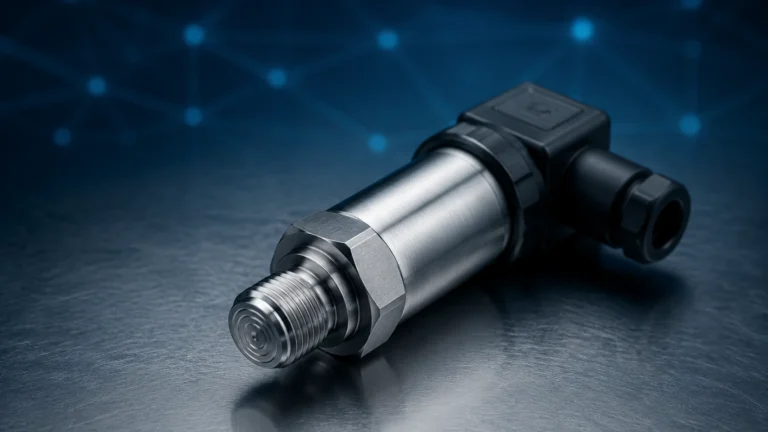
Hydrostatic level transmitters are contact-based sensors. They are submerged at the bottom of the sewer channel or wet well and measure the pressure exerted by the liquid column above them. This pressure is directly proportional to the liquid level (based on the density of the fluid).
Hydrostatic sensors are ideal for applications where surface foam or heavy turbulence makes non-contact measurement difficult. However, because they are submerged, they are susceptible to fouling from grease, rags, and debris. They require robust diaphragms, often made of ceramic or high-grade stainless steel, to withstand the corrosive nature of wastewater.
Selection Criteria for Sewer Monitoring Systems
Choosing the right technology requires an evaluation of the specific site conditions. The following table provides a comparison of the three primary technologies used in sewer monitoring systems.
| Feature | Ultrasonic Sensors | Radar Level Meters | Hydrostatic Transmitters |
| :— | :— | :— | :— |
| Measurement Type | Non-contact | Non-contact | Contact (Submerged) |
| Accuracy | High (±0.25% – 0.5%) | Very High (±2mm) | High (±0.1% – 0.5%) |
| Vapor/Steam Resistance | Low to Moderate | Excellent | Excellent |
| Foam Sensitivity | High (may lose signal) | Moderate | Unaffected |
| Installation | Top-mounted | Top-mounted | Bottom-mounted |
| Maintenance | Low | Very Low | Moderate (cleaning required) |
| Typical Range | 0.3m to 15m | 0.1m to 30m+ | 1m to 100m |
System Architecture and Data Integration
A complete sewer monitoring system consists of more than just the level sensor. To be effective for remote monitoring, the system must include several integrated components:
1. The Sensor: The primary instrument (Radar, Ultrasonic, or Hydrostatic) providing the raw level data.
2. Data Logger: A device that records the sensor readings at set intervals. In many modern sewer monitoring systems, the logger is integrated into the sensor housing or a nearby junction box.
3. Telemetry/Communication: Since sewers are often in remote or subterranean locations, wireless communication is essential. Technologies such as NB-IoT, LoRaWAN, and GPRS are commonly used to transmit data to a central server or cloud platform.
4. Power Supply: Many sewer monitoring points lack grid power. Systems must operate on high-capacity lithium batteries or solar power where feasible. Low-power electronics are critical to ensure a battery life of 2 to 5 years.
5. Software Platform: A web-based interface where operators can view real-time levels, historical trends, and receive SMS or email alerts when levels exceed pre-defined thresholds (e.g., high-level alarms for overflow prevention).
Installation Considerations and Best Practices
Proper installation is the most significant factor in the long-term accuracy of sewer monitoring systems. Engineers should consider the following during the design and deployment phase:
Dead Zone (Blocking Distance)
Non-contact sensors (ultrasonic and radar) have a "dead zone" or "blocking distance" directly beneath the sensor face where measurements cannot be taken. For example, if a sensor has a 0.3m (approx. 1 ft) dead zone, it must be mounted at least 0.3m above the maximum expected water level. Failure to account for this can lead to incorrect data during high-flow events.
Mounting and Alignment
Sensors must be mounted perpendicular to the liquid surface. In sewer pipes, this usually means mounting the sensor over the center of the flow channel. If the sensor is tilted, the signal may reflect off the pipe walls rather than the water surface, leading to signal loss or "ghost" echoes.
Hazardous Area Certifications
Sewers are classified as hazardous environments due to the potential presence of methane (CH4) and hydrogen sulfide (H2S). It is mandatory that sewer monitoring systems used in these areas carry appropriate certifications, such as ATEX or IECEx (Ex ia or Ex d), to ensure they do not become an ignition source.
Turbulence and Flow Profiles
Avoid installing sensors directly above areas of high turbulence, such as immediately downstream of a vertical drop or a junction where two pipes meet. Turbulent water creates an unstable surface that can scatter ultrasonic or radar signals. If turbulence is unavoidable, a stilling well or a hydrostatic pressure sensor may be a better choice.
Limitations and Common Challenges
While modern sewer monitoring systems are highly advanced, they are not without limitations. Understanding these challenges helps in designing a more resilient monitoring network.
* Condensation: In the high-humidity environment of a sewer, condensation often forms on the face of the sensor. While 80GHz radar is highly resistant to this, ultrasonic sensors may experience signal degradation. Some sensors feature a "drip-off" design on the antenna to minimize the impact of water droplets.
* H2S Corrosion: Hydrogen sulfide is highly corrosive. All exposed parts of the monitoring system, including brackets, cables, and sensor housings, should be made of corrosion-resistant materials like PVDF, PP, or high-grade stainless steel (316L).
* Signal Penetration: For remote units located deep underground or under heavy cast-iron manhole covers, wireless signal strength can be an issue. External antennas or high-gain antennas mounted just below the manhole cover are often required to ensure data reaches the surface.
Frequently Asked Questions (FAQs)
Q: How often do sewer level sensors need to be calibrated?
A: Most modern digital sensors are calibrated at the factory and do not require frequent re-calibration. However, it is recommended to perform a physical check (manual dip tape measurement) every 6 to 12 months to verify the accuracy against the sensor's output.
Q: Can these systems measure flow rate as well as level?
A: Yes. By using the level data in conjunction with the known geometry of the pipe or a flume/weir (using Manning's equation or specific discharge curves), the monitoring system can calculate the volumetric flow rate.
Q: What happens to the data if the wireless network goes down?
A: Robust sewer monitoring systems include internal memory (data logging) that stores readings locally. Once the network connection is restored, the device will "backfill" the missing data to the central server.
Q: Are radar sensors worth the extra cost compared to ultrasonic?
A: In environments with heavy steam, narrow manholes, or where high precision is required for billing or regulatory compliance, radar is generally the superior and more cost-effective choice over the long term due to its reliability and lower maintenance.
Conclusion and Next Steps
Implementing effective sewer monitoring systems is a strategic investment in infrastructure longevity and environmental protection. By selecting the appropriate measurement technology—whether it be the precision of radar, the cost-effectiveness of ultrasonic, or the ruggedness of hydrostatic sensors—operators can significantly reduce the risk of overflows and optimize maintenance schedules.
When planning a monitoring project, it is essential to confirm the chemical compatibility of the sensors with the expected effluent and to ensure that the telemetry solution is compatible with the local network infrastructure. For engineers and facility managers looking to upgrade their current capabilities, reviewing the latest technical specifications and application-specific configurations is the next logical step.
To explore specific sensor configurations for your infrastructure, visit the Main Page for detailed technical specifications and to review product options and application support.