Wireless Fuel Tank Level Monitoring
Wireless Fuel Tank Level Monitoring
In modern industrial operations, the transition from manual measurement to automated, wireless fuel tank level monitoring represents a significant leap in operational efficiency and safety. For facilities managing bulk fuel storage—such as backup generator sets, logistics hubs, and chemical processing plants—real-time visibility into inventory levels is no longer a luxury but a requirement for lean supply chain management. This guide explores the technical foundations, communication protocols, and selection criteria essential for implementing a robust wireless monitoring system.
Understanding the Core Measurement Principles
Before selecting a wireless transmission method, it is critical to understand the sensing technology that captures the physical level data. In fuel applications, three primary technologies dominate the market, each with specific strengths based on the fuel's chemical properties and the tank's geometry.
1. Radar Level Measurement (Non-Contact)
Radar transmitters, particularly those operating at 26GHz or 80GHz frequencies, are the gold standard for high-precision fuel monitoring. These devices emit a high-frequency electromagnetic pulse that travels to the fuel surface and reflects back to the sensor. The distance is calculated based on the "Time of Flight" (ToF).
* Advantages: Radar is unaffected by temperature fluctuations, pressure changes, or the presence of vapors and dust in the tank's headspace. This makes it ideal for volatile fuels like gasoline or aviation kerosene.
* Limitations: Highly dependent on the dielectric constant (εr) of the fuel. While most hydrocarbons have a low dielectric constant, modern radar sensors are sensitive enough to track these surfaces accurately.
2. Ultrasonic Level Measurement (Non-Contact)
Ultrasonic sensors use sound waves rather than electromagnetic waves. The sensor emits a mechanical sound pulse that bounces off the fuel surface.
* Advantages: Cost-effective and easy to install. Excellent for standard diesel or heavy fuel oil (HFO) in atmospheric tanks.
* Limitations: Sound speed is affected by air temperature and vapor density. In tanks with heavy fuel vapors or high-pressure environments, ultrasonic signals can attenuate or provide inaccurate readings if not properly temperature-compensated.
3. Hydrostatic Pressure Measurement (Contact)
Hydrostatic transmitters are submerged at the bottom of the tank or mounted to a bottom flange. They measure the pressure exerted by the liquid column above them. Since pressure is directly proportional to the height of the liquid ($P = \rho \cdot g \cdot h$), the level can be derived if the fuel density ($\rho$) is known.
* Advantages: Extremely reliable for very deep tanks or underground storage where top-down access is limited.
* Limitations: Changes in fuel density (often caused by temperature shifts) can introduce errors unless a multi-variable sensor or temperature compensation algorithm is used.
For a comprehensive overview of industrial hardware options and specific sensor datasheets, engineers can consult the Main Page of the manufacturer’s technical catalog.
Wireless Communication Protocols for Industrial Applications
The "wireless" component of wireless fuel tank level monitoring refers to how the data moves from the sensor to the end-user's dashboard. In an industrial B2B context, several protocols are commonly deployed:
LoRaWAN (Long Range Wide Area Network)
LoRaWAN is a low-power, long-range protocol designed for battery-operated devices. It can transmit data over several kilometers in open areas and has high penetration through metal and concrete, making it suitable for fuel farms spread across large industrial sites.
NB-IoT (Narrowband Internet of Things)
NB-IoT utilizes existing cellular infrastructure but is optimized for low data rates and long battery life. It is an excellent choice for remote sites where local IT infrastructure (like Wi-Fi or Ethernet) is unavailable but cellular coverage exists.
Cellular (4G LTE/5G)
For applications requiring high-frequency data updates or integrated GPS tracking for mobile fuel bowsers, standard cellular modems are used. While they consume more power than LoRaWAN, they offer the highest data throughput and global compatibility.
Key Evaluation Criteria for B2B Procurement
When evaluating a wireless fuel tank level monitoring system, procurement and engineering teams must look beyond the initial purchase price. The following criteria determine the long-term Total Cost of Ownership (TCO):
1. Battery Longevity: Most wireless sensors are battery-powered to avoid the high cost of running explosion-proof conduit. Look for devices with a battery life of 3 to 5 years based on a standard reporting interval (e.g., once per hour).
2. Data Integration (API & Software): The hardware is only as useful as the data it provides. Ensure the system can integrate with existing ERP or SCADA systems via REST APIs or MQTT protocols.
3. Measurement Accuracy: For inventory accounting, an accuracy of ±2mm to ±5mm is often required. For simple "low level" alerts, a wider tolerance may be acceptable.
4. Environmental Resilience: Sensors must be rated for the local climate. This includes IP67/IP68 ingress protection for outdoor use and the ability to operate in temperatures ranging from -40°C to +70°C.
Practical Selection Guide
The following table provides a general recommendation based on common fuel storage scenarios:
| Tank Type | Recommended Technology | Preferred Wireless Protocol | Key Consideration |
| :— | :— | :— | :— |
| Small Diesel Day Tank | Ultrasonic | LoRaWAN / Wi-Fi | Low cost, easy mounting |
| Large Bulk Storage (Above Ground) | 80GHz Radar | NB-IoT / 4G | High precision, vapor resistance |
| Underground Storage (UST) | Hydrostatic or Radar | NB-IoT | Signal penetration through manhole |
| Mobile Fuel Bowsers | Hydrostatic | 4G LTE with GPS | Vibration resistance and tracking |
| Chemical/Corrosive Fuel Additives | Radar (PTFE Flange) | LoRaWAN | Material compatibility |
Installation Requirements and Hazardous Area Safety
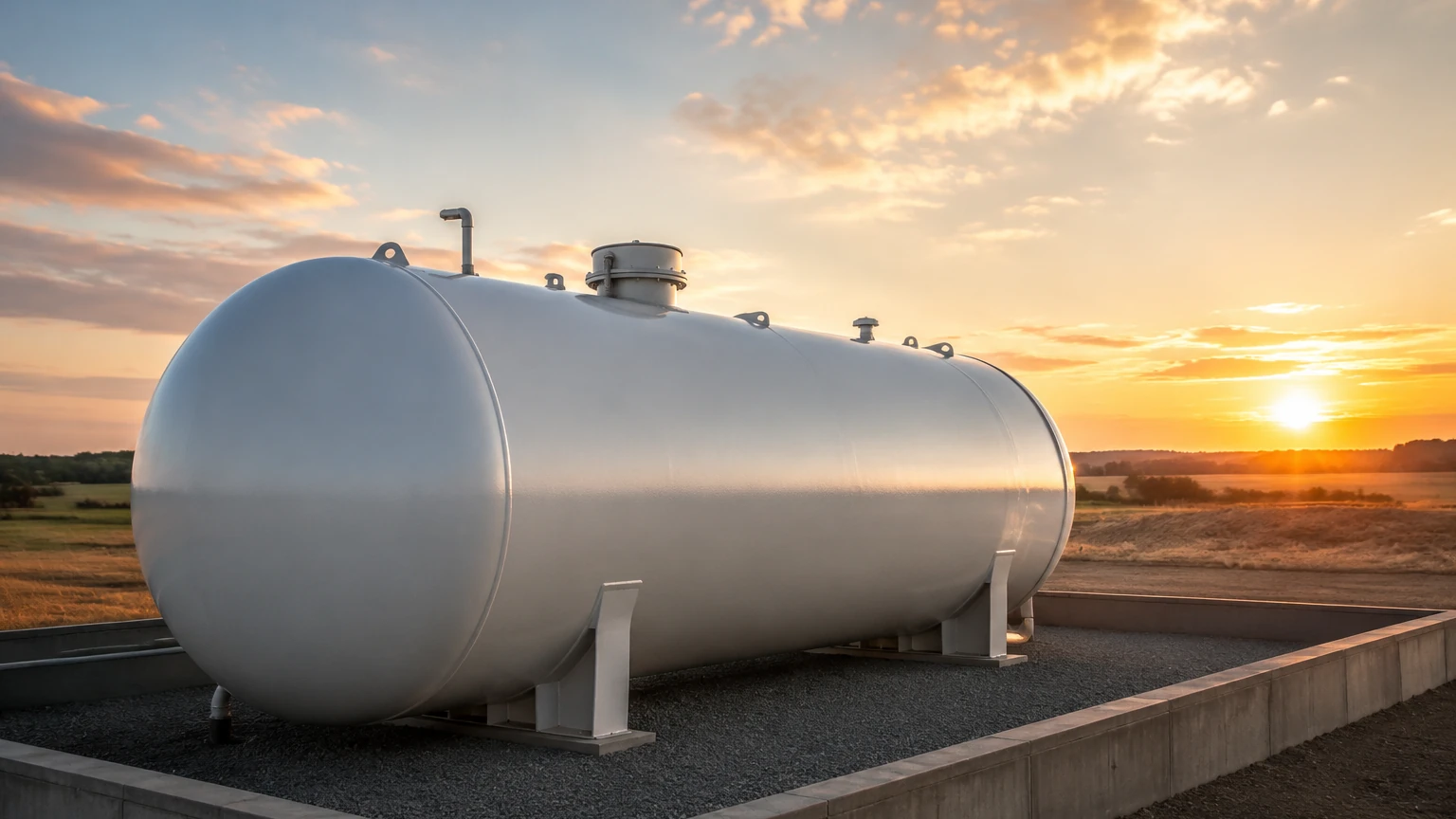
Fuel tanks are classified as hazardous environments due to the presence of flammable vapors. Installation of wireless fuel tank level monitoring systems must adhere to strict safety standards:
* Intrinsically Safe (IS) Ratings: Any electronic device installed in or near the tank must be certified (e.g., ATEX, IECEx, or UL Class I, Div 1). These devices are designed to operate with such low energy that they cannot spark an explosion.
* Sensor Placement: Sensors should be mounted away from the tank's fill inlet to avoid turbulence and false readings during filling operations. For radar and ultrasonic sensors, ensure there is a clear "view" of the fuel surface, free from internal obstructions like baffles or heating coils.
* Signal Path: For wireless units, the antenna should ideally have a line-of-sight to the gateway or cellular tower. If the sensor is located inside a heavy steel enclosure, an external antenna may be required to ensure reliable data transmission.
Common Risks and Mitigation Strategies
Implementing wireless technology introduces variables that wired systems do not face. Identifying these risks early is essential for project success.
* Signal Interference: In dense industrial environments, electromagnetic interference (EMI) can disrupt wireless signals. Mitigation: Use frequency-hopping spread spectrum (FHSS) protocols like LoRaWAN or perform a site survey to identify potential dead zones.
* Data Security: Wireless transmissions can be vulnerable to interception. Mitigation: Ensure the system uses end-to-end encryption (AES-128 or higher) and secure authentication for cloud-based dashboards.
* Battery Failure in Cold Climates: Extreme cold can significantly reduce the capacity of standard lithium batteries. Mitigation: Specify industrial-grade batteries rated for low-temperature performance or utilize solar-assisted power kits for high-draw cellular units.
Frequently Asked Questions (FAQ)
Q: How often does a wireless fuel sensor transmit data?
A: This is usually configurable. For stationary storage, once every 1 to 4 hours is standard. For high-turnover tanks, intervals can be set to every 15 minutes, though this will reduce battery life.
Q: Can these sensors detect water at the bottom of the fuel tank?
A: Standard radar and ultrasonic sensors measure the top surface. To detect water bottoms, a dual-float magnetic level gauge or a specialized hydrostatic sensor with water-finding capabilities is required.
Q: What happens if the wireless signal is lost?
A: Most professional-grade sensors have internal logging capabilities. They will store the time-stamped level data and "backfill" it to the server once the connection is restored.
Q: Is it difficult to retrofit an existing tank?
A: No. One of the primary benefits of wireless monitoring is the ease of retrofitting. Most sensors can be mounted on existing 1.5-inch or 2-inch NPT/BSP threaded ports without the need for hot work or new wiring.
Conclusion
Wireless fuel tank level monitoring offers a scalable, cost-effective solution for industrial fuel management. By selecting the appropriate measurement principle—whether radar for precision or hydrostatic for depth—and pairing it with a robust wireless protocol like LoRaWAN or NB-IoT, organizations can eliminate manual errors and optimize their logistics. Before proceeding, project managers should confirm the hazardous area classification of their site and ensure that the chosen hardware carries the necessary certifications for the specific fuel type being stored.