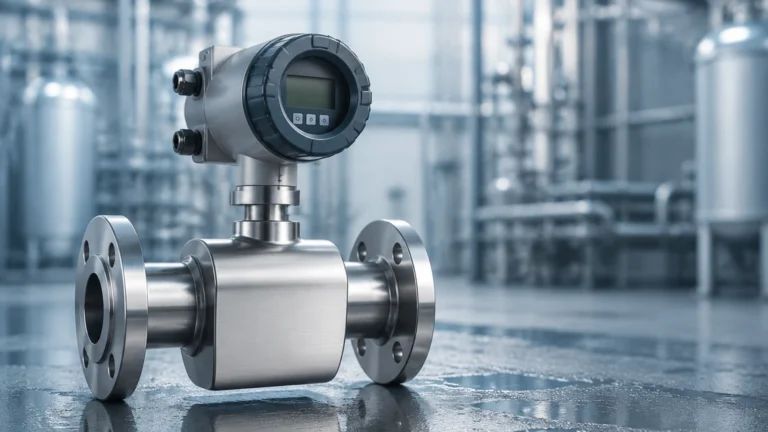
Coriolis Mass Flow Meter Manufacturers
Coriolis Mass Flow Meter Manufacturers
In the landscape of industrial process control, the precision of fluid measurement is a critical factor for operational efficiency, safety, and profitability. Coriolis mass flow meters represent the pinnacle of flow measurement technology, offering direct mass flow readings without the need for complex temperature and pressure compensation. For procurement teams and process engineers, identifying the right coriolis mass flow meter manufacturers involves more than just comparing price points; it requires a deep understanding of the underlying physics, the manufacturer’s technical capabilities, and the specific demands of the application environment.
While many industrial facilities focus heavily on level measurement—utilizing technologies such as those found on the Main Page of leading instrumentation providers—the integration of mass flow measurement is equally vital for comprehensive mass balance and process optimization.
Understanding the Coriolis Measurement Principle
Before evaluating manufacturers, it is essential to understand how these instruments function. Unlike volumetric flow meters (such as turbine or ultrasonic meters), which measure the space a fluid occupies, a Coriolis meter measures the actual mass moving through the system.
The Coriolis Effect in Action
The measurement is based on the principles of motion mechanics. Inside the meter, one or two measuring tubes are vibrated at their resonant frequency by an electromagnetic drive coil. When a fluid (liquid or gas) flows through these vibrating tubes, it is subjected to a Coriolis force.
1. Inlet Side: As the fluid moves toward the point of peak vibration, it resists being pushed upward (or downward) by the tube, exerting a force that causes the tube to lag behind its natural vibration cycle.
2. Outlet Side: As the fluid moves away from the peak vibration point, it resists the slowing motion of the tube, pushing it ahead of its natural cycle.
3. Phase Shift: This creates a "twist" in the measuring tubes. Highly sensitive electrodynamic sensors (pick-offs) at the inlet and outlet measure the time difference between these vibrations. This time difference is known as the "phase shift."
The phase shift is directly proportional to the mass flow rate. Because the mass of the fluid remains constant regardless of changes in temperature or pressure, the measurement is inherently more stable and accurate than volumetric methods. Additionally, the resonant frequency at which the tubes vibrate changes depending on the density of the fluid, allowing Coriolis meters to provide real-time density and temperature data simultaneously.
The Landscape of Coriolis Mass Flow Meter Manufacturers
The market for Coriolis technology is divided between large-scale global conglomerates and specialized niche manufacturers. When vetting coriolis mass flow meter manufacturers, it is important to categorize them based on their engineering focus and the industries they serve.
Tier 1: Global Process Automation Leaders
These manufacturers offer highly standardized products with extensive global support networks. They are often the preferred choice for massive infrastructure projects in the oil and gas or petrochemical sectors where global interoperability is required.
Tier 2: Specialized Instrumentation Firms
These manufacturers often provide more flexibility in terms of customization and material selection. They may focus on specific niches, such as high-pressure hydrogen dispensing, ultra-low flow rates for laboratory research, or hygienic designs for the pharmaceutical industry. For many regional industrial players, these manufacturers offer a better balance of cost-effectiveness and technical accessibility.
Tier 3: Emerging Technology Manufacturers
As the technology matures, new manufacturers are entering the market with innovative tube designs and digital signal processing (DSP) capabilities. These firms often compete on lead times and the integration of advanced diagnostic software that can predict tube wear or coating build-up before it affects measurement accuracy.
Key Evaluation Criteria for Selecting a Manufacturer
Choosing a vendor is a long-term commitment to a specific technology platform. Engineers should confirm the following criteria before finalizing a procurement decision:
1. Accuracy and Repeatability
Most high-quality Coriolis meters offer mass flow accuracy of ±0.1% or ±0.05% for liquids. However, accuracy for gas applications is typically lower (around ±0.35% to ±0.5%). Manufacturers should provide detailed calibration certificates traceable to national standards (such as NIST or equivalent).
2. Material Compatibility
The wetted parts of the meter must be compatible with the process fluid. While 316L stainless steel is the industry standard, specialized manufacturers offer:
* Hastelloy C22/C276: For highly corrosive acids.
* Tantalum: For extreme chemical resistance.
* Titanium: For high strength-to-weight ratios in aerospace or subsea applications.
3. Tube Geometry
Manufacturers generally offer two types of tube designs:
* Bent/U-Tube: Highly sensitive and generally more accurate for low-flow applications. However, they can be harder to drain and may have a larger installation footprint.
* Straight-Tube: Easier to clean (CIP/SIP) and drain, with lower pressure drops. They are preferred in the food and beverage industry but require more sophisticated compensation for thermal expansion.
4. Digital Signal Processing (DSP)
Modern coriolis mass flow meter manufacturers utilize advanced DSP to filter out external plant vibrations. If your facility has heavy machinery or pumps near the installation point, the manufacturer’s ability to handle "noise" is a critical differentiator.
Practical Selection Table
| Application Requirement | Preferred Tube Design | Key Manufacturer Metric |
| :— | :— | :— |
| High Accuracy (Liquid) | Bent / U-Tube | Zero Stability Value |
| Hygienic / Food & Bev | Straight Tube | Surface Roughness (Ra) |
| High Pressure (Gas) | Dual Bent Tube | Pressure Rating / Burst Pressure |
| Slurries / Abrasives | Single Straight Tube | Wall Thickness / Material Hardness |
| Low Pressure Drop | Large Bore Straight | K-factor / Pressure Loss Curves |

Installation Considerations and Best Practices
Even a meter from the world's best coriolis mass flow meter manufacturers will perform poorly if installed incorrectly. Unlike level measurement instruments, which might be mounted at the top or side of a tank (as detailed in various product options), flow meters are integral to the piping system.
Mechanical Stress and Support
Coriolis meters are sensitive to external mechanical stress. The piping should be properly aligned and supported on both the inlet and outlet sides to ensure that the weight of the pipe does not distort the measuring tubes. Most manufacturers recommend avoiding the use of the meter itself as a support point for the piping.
Orientation
* Liquids: The meter should ideally be installed in a vertical pipe with the flow moving upward. This ensures the tubes remain full and prevents air bubbles from becoming trapped.
* Gases: Vertical installation with downward flow is often preferred to allow any condensed liquids to drain out of the meter.
* Horizontal: If horizontal installation is necessary, the "tubes down" orientation is best for liquids (to avoid air pockets), while "tubes up" is best for gases (to avoid liquid accumulation).
Zero Point Calibration
After installation and under actual process conditions (temperature and pressure), a "zero calibration" must be performed. This involves filling the meter with the process fluid, ensuring there is zero flow (using shut-off valves), and then triggering the zero-calibration routine on the transmitter. This accounts for the specific mechanical stresses of the installation environment.
Limitations of Coriolis Technology
While highly versatile, Coriolis meters are not a universal solution for every application. Understanding these limitations helps in making an informed choice:
1. Initial Cost: The capital expenditure for a Coriolis meter is significantly higher than for electromagnetic or vortex flow meters. The ROI must be justified by the need for high accuracy or mass-based measurement.
2. Size Constraints: Coriolis meters become prohibitively heavy and expensive at larger line sizes (typically above 250 mm or 10 inches).
3. Pressure Drop: Bent-tube designs can introduce a significant pressure drop in the system, which may require larger pumps or higher energy consumption.
4. Entrained Air: While modern DSP can handle some air entrainment, high percentages of gas in a liquid stream (slug flow) can cause the meter to "stall" or lose its measurement signal.
Frequently Asked Questions (FAQs)
Q: Can Coriolis meters measure steam?
A: While they can measure mass flow, the high temperatures and velocities of steam often make other technologies (like vortex meters) more cost-effective. However, for specialized high-accuracy steam applications, some manufacturers offer hardened versions.
Q: How often should a Coriolis meter be recalibrated?
A: This depends on the industry regulations. In custody transfer (oil & gas), recalibration may be required annually. In stable chemical processes, many meters operate for 5-10 years without a significant shift in the calibration factor, provided there is no erosion or corrosion of the tubes.
Q: Do Coriolis meters require straight run piping?
A: Generally, no. Unlike turbine or ultrasonic meters, Coriolis meters are largely unaffected by flow profiles (swirl or turbulence). This makes them ideal for compact skids where space is limited.
Conclusion
Selecting from the available coriolis mass flow meter manufacturers requires a systematic approach that balances technical specifications with long-term operational support. By focusing on the measurement principle, material integrity, and proper installation, engineers can ensure that their mass flow data is as reliable as their level measurement data. For those looking to integrate these flow solutions into a broader instrumentation strategy, reviewing comprehensive application support is a recommended next step to ensure all process variables—from tank levels to pipe flow—are accurately monitored and controlled.