Ultrasonic Water Level Detector
Ultrasonic Water Level Detector
In industrial water management and process automation, the ability to monitor liquid levels without physical contact is a significant operational advantage. An ultrasonic water level detector serves as a non-contact electronic instrument designed to measure the distance between a sensor and the surface of water or other liquids. By utilizing high-frequency sound waves, these devices provide reliable data for inventory management, pump control, and environmental monitoring. This article examines the technical principles, selection criteria, and installation requirements for integrating ultrasonic technology into industrial water systems.
Measurement Principles of Ultrasonic Technology
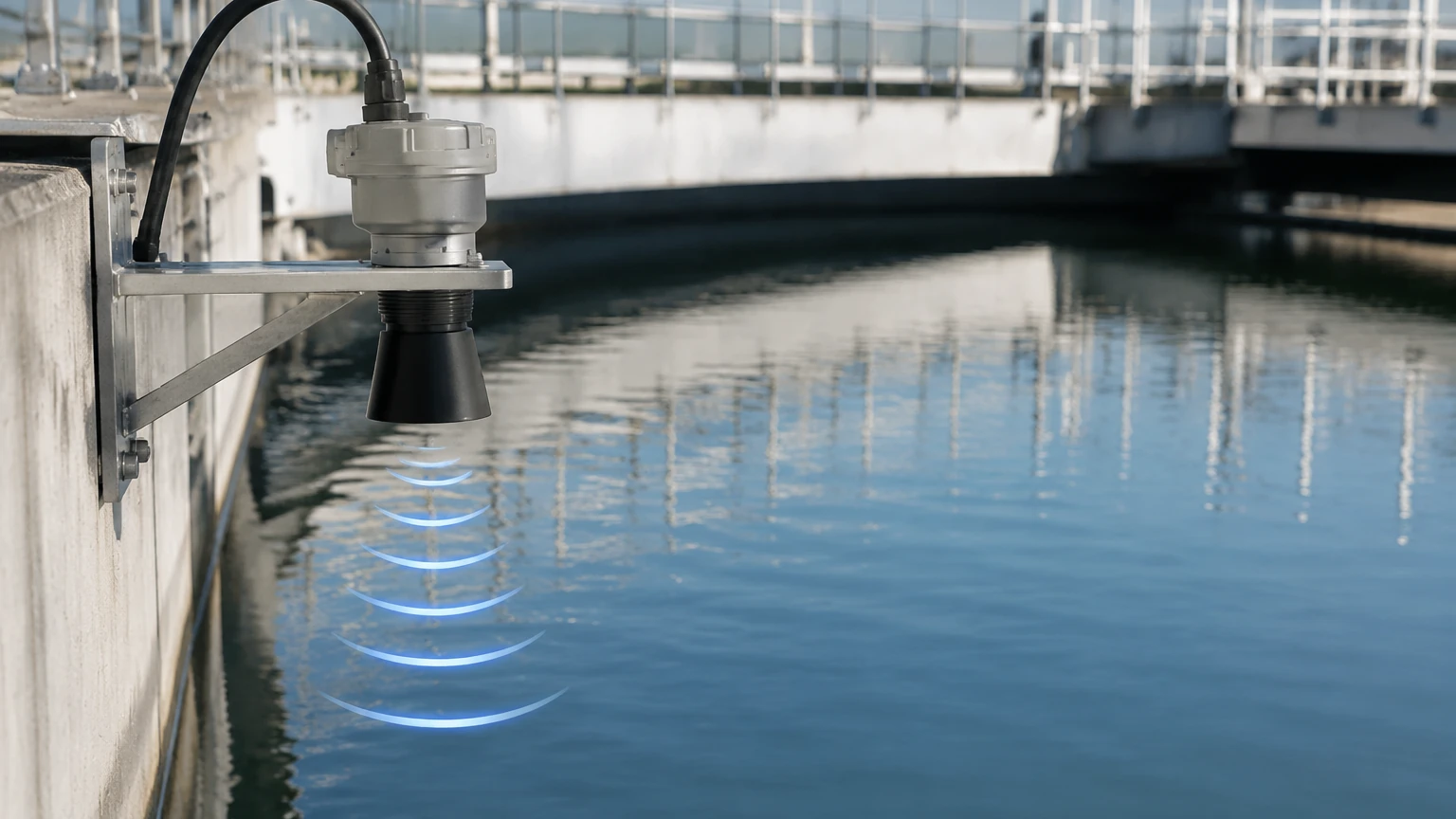
To effectively deploy an ultrasonic water level detector, it is essential to understand the physics of acoustic measurement. The core of the device is a transducer containing a piezoelectric crystal. This crystal converts electrical energy into mechanical vibrations, creating ultrasonic sound pulses—typically in the range of 20 kHz to 200 kHz—which are then directed toward the water surface.
The Time-of-Flight (ToF) Calculation
The measurement process follows a "Time-of-Flight" principle. The sensor emits a sound pulse and then switches to a receiving mode to listen for the echo reflected back from the water surface. The distance is calculated using the following formula:
Distance = (Speed of Sound × Time Delay) / 2
Because the sound must travel to the target and back, the total time is divided by two. Modern instruments, such as those found on the Welk Main Page, utilize advanced digital signal processing to filter out background noise and identify the correct return signal among multiple reflections.
The Role of Temperature Compensation
The speed of sound in air is not constant; it varies primarily with temperature. At 0°C, sound travels at approximately 331.5 m/s, while at 20°C, it increases to about 343.4 m/s. Without compensation, a temperature shift of just a few degrees can lead to significant measurement errors. Industrial-grade ultrasonic water level detectors include integrated temperature sensors to automatically adjust the calculation based on the ambient air temperature between the sensor and the water surface.
Key Evaluation Criteria for Selection
Selecting the correct ultrasonic water level detector requires a detailed analysis of the application environment. Not all sensors are suitable for every water-based application, such as open channels, pressurized tanks, or wastewater sumps.
Measuring Range and Dead Zone
Every ultrasonic sensor has a specified maximum range (e.g., 5 meters, 10 meters, or 15 meters) and a minimum distance known as the "Dead Zone" or "Blocking Distance." The dead zone is the area immediately in front of the transducer face where the sensor cannot accurately process a return signal because the crystal is still vibrating from the initial pulse. If the water level enters this zone, the detector will provide an error or an incorrect reading.
Beam Angle and Vessel Geometry
The ultrasonic pulse does not travel in a straight line like a laser; it spreads out in a cone shape, referred to as the beam angle. A typical beam angle ranges from 8° to 15°. When selecting a sensor, engineers must ensure that the beam does not intercept tank walls, ladders, or internal pipes, as these obstructions will create "false echoes."
Output Signals and Integration
For industrial automation, the detector must communicate with a PLC (Programmable Logic Controller) or SCADA system. Common output options include:
- 4-20 mA Analog: The standard for most industrial loops.
- RS485/Modbus: Ideal for digital networking and remote configuration.
- Relay Outputs: Used for direct pump control (Start/Stop) or high/low level alarms.
Technical Selection Table
| Feature | Standard Water Sump | Chemical Storage Tank | Open Channel Flow |
| :— | :— | :— | :— |
| Measuring Range | 0.3m to 10m | 0.25m to 5m | 0.1m to 3m |
| Housing Material | ABS or PVC | PVDF or PTFE | Weatherproof Aluminum/ABS |
| Accuracy | ±0.5% of range | ±0.25% of range | ±1mm to 2mm |
| Protection Class | IP66 | IP67/IP68 | IP68 (Submersible option) |
| Typical Output | 4-20mA | Modbus RTU | 4-20mA + Pulse |
Installation Considerations and Best Practices
The reliability of an ultrasonic water level detector is heavily dependent on proper physical installation. Even the most advanced sensor will fail to perform if placed incorrectly.
1. Perpendicular Alignment: The transducer face must be mounted perfectly parallel to the water surface. If the sensor is tilted, the sound waves will reflect away from the transducer instead of back to it, resulting in signal loss.
2. Avoiding Turbulence: In applications where water is pumped into a tank, the sensor should be located away from the inlet. Turbulent water or splashing creates an uneven surface that scatters the sound waves. If turbulence is unavoidable, a stilling well (a vertical pipe) can be used to provide a calm surface for measurement.
3. Distance from Walls: To prevent interference from wall reflections, the sensor should be mounted at a distance from the wall at least equal to 1/10th of the total tank height, depending on the beam angle.
4. Sunlight and Weather Shields: For outdoor installations, such as reservoir monitoring, a sunshade is recommended. Direct sunlight can heat the sensor housing significantly above the actual air temperature, leading to inaccurate temperature compensation.
Limitations and Common Risks
While highly versatile, ultrasonic technology has physical limitations that B2B buyers must recognize during the engineering phase.
Surface Foam and Vapor
Heavy foam on the surface of the water acts as an acoustic absorber. Instead of reflecting the sound pulse, the foam absorbs the energy, leading to a "Lost Echo" error. Similarly, dense steam or heavy chemical vapors can change the density of the air medium, significantly altering the speed of sound and causing measurement drift.
Vacuum and Pressure
Ultrasonic waves require a medium (air or gas) to travel. Therefore, these sensors cannot function in a vacuum. In high-pressure environments, the density of the gas changes the speed of sound, requiring specialized calibration that may exceed the capabilities of standard ultrasonic units. In such cases, radar level meters are often a more stable alternative.
Acoustic Noise
High-frequency mechanical noise from nearby machinery can occasionally interfere with the sensor’s ability to detect the return echo. While most modern detectors use digital filtering to mitigate this, placement near loud pneumatic valves or high-speed motors should be evaluated carefully.
Frequently Asked Questions (FAQ)
Q: Can an ultrasonic water level detector measure through a plastic tank lid?
A: No. The ultrasonic pulse cannot penetrate solid materials like plastic or metal lids. A hole must be cut, and the sensor must be mounted so the transducer has a clear line of sight to the liquid.
Q: How often does an ultrasonic sensor require calibration?
A: Under stable conditions, these sensors are very low-maintenance. However, it is good practice to verify the accuracy annually or whenever there is a significant change in the process temperature or the composition of the gas in the tank.
Q: What is the maximum distance an ultrasonic sensor can measure?
A: Most industrial ultrasonic sensors are effective up to 15 or 20 meters (approx. 49 to 65 feet). For distances greater than 30 meters, radar technology is typically preferred due to the attenuation of sound waves over long distances.
Q: Does the color or transparency of the water affect the measurement?
A: No. Unlike optical sensors or lasers, ultrasonic waves reflect based on the density change at the surface. Whether the water is clear, opaque, or stained does not affect the measurement accuracy.
Summary for Project Planning
An ultrasonic water level detector is a cost-effective and reliable solution for a wide range of industrial water applications, provided the environmental conditions are within the technology's operating parameters. By eliminating contact with the medium, these sensors reduce maintenance costs and prevent contamination, making them ideal for clean water treatment and corrosive wastewater processes.
Before finalizing a purchase, project engineers should confirm the following:
- The maximum and minimum (dead zone) water levels.
- The presence of internal obstructions within the beam angle.
- Potential for foam or steam formation.
- Integration requirements for existing control systems.
For detailed specifications and to explore various models tailored to specific industrial needs, professionals can Review product options and application support to ensure the selected instrument aligns with their operational requirements. Proper planning and adherence to installation guidelines will ensure a long service life and high measurement precision for any water management project.