Tiny Float Switch
Tiny Float Switch
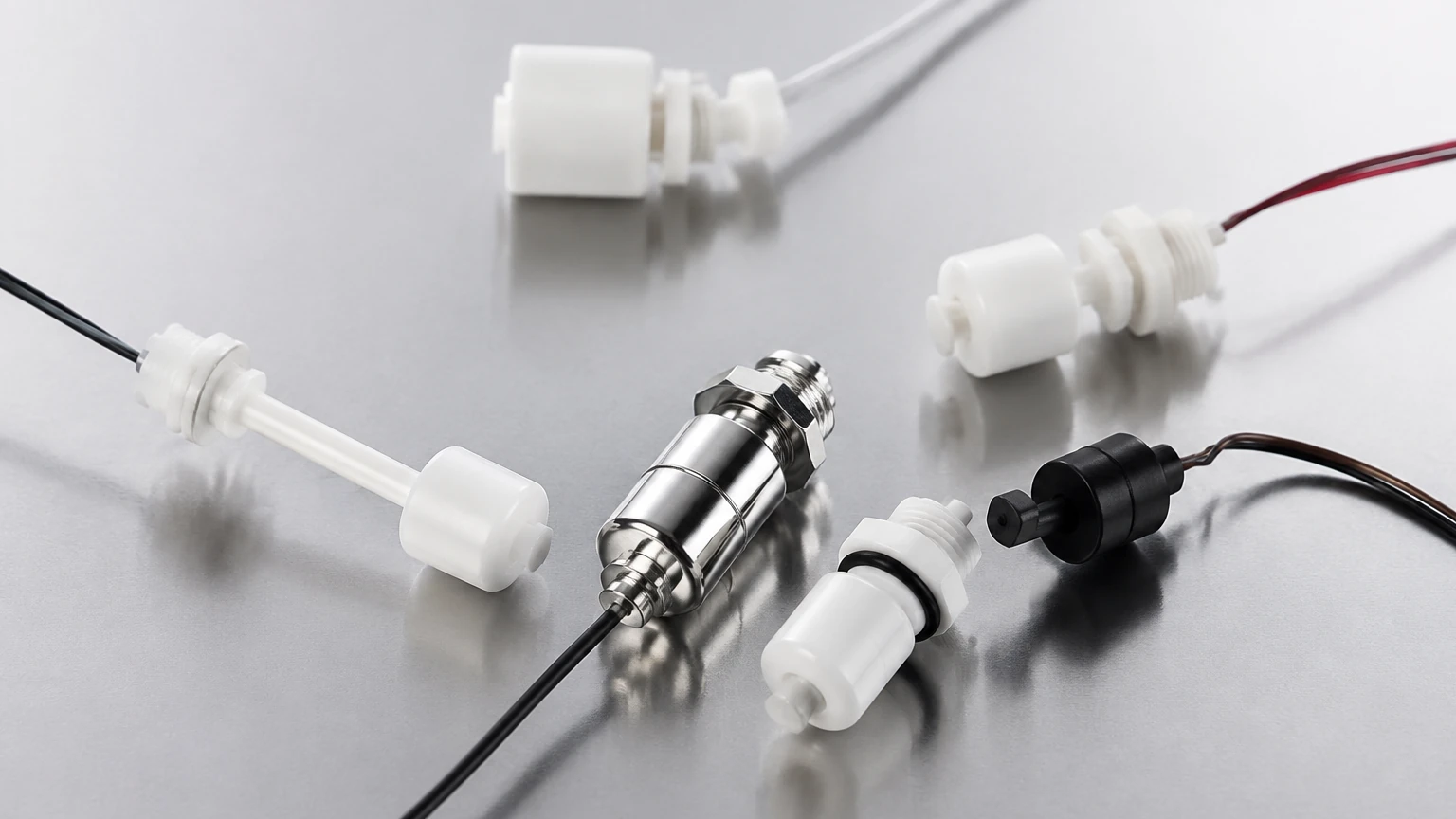
In the landscape of industrial automation and fluid management, the requirement for compact, reliable, and cost-effective level detection is ubiquitous. The tiny float switch, often referred to as a miniature or small-bore float level sensor, serves as a critical component in systems where space is at a premium but accuracy cannot be compromised. These devices provide a simple binary output (on/off) based on the liquid level, making them ideal for integration into medical equipment, food service machinery, small chemical dosing tanks, and HVAC systems.
Measurement Principles of Tiny Float Switches
The fundamental operation of a tiny float switch is electromechanical, relying on the interaction between a permanent magnet and a reed switch. Understanding this principle is essential for correct application and troubleshooting.
The Reed Switch Mechanism
At the core of the stationary stem is a reed switch—a pair of flexible, ferromagnetic metal reeds sealed within a glass envelope. This envelope is typically filled with an inert gas to prevent oxidation of the contacts. When a magnetic field is brought into proximity, the reeds are magnetized and either attract (closing the circuit) or repel (opening the circuit) one another.
Magnetic Interaction
The moving part of the assembly is a hollow float containing a permanent magnet. This float is designed to slide up and down the stem as the liquid level changes. As the float reaches a predetermined point on the stem, its internal magnet aligns with the reed switch, triggering the electrical state change. Because the reed switch is hermetically sealed, it is protected from the liquid, preventing corrosion and ensuring a long operational life in various environments.
N/O and N/C Logic
Most tiny float switches are designed to be "Normally Open" (N/O) or "Normally Closed" (N/C). A unique feature of many miniature vertical float switches is their reversible logic. By removing a small retaining clip and flipping the float 180 degrees, the user can change the switch from N/O to N/C or vice-versa. This flexibility is a significant advantage in inventory management and field adjustments.
Material Selection and Chemical Compatibility
Choosing the right material for a tiny float switch is the most critical factor in ensuring longevity and preventing system failure. The material must withstand the chemical properties of the liquid, the operating temperature, and the pressure of the environment.
| Material | Temperature Range | Pressure Rating | Common Applications |
| :— | :— | :— | :— |
| Polypropylene (PP) | -10°C to +80°C | 5 bar (approx. 72 psi) | Water, mild acids, alkaline solutions, and general-purpose use. |
| Stainless Steel (304/316) | -30°C to +120°C+ | 10 to 30 bar | Food and beverage, oils, high-temperature liquids, and high-pressure tanks. |
| PVDF (Kynar) | -10°C to +100°C | 5 bar | Highly corrosive chemicals, bromine, and chlorine applications. |
| NBR (Buna-N) | -10°C to +80°C | 10 bar | Fuel tanks, hydraulic oils, and petroleum-based fluids. |
Stainless steel variants are preferred for food-grade applications due to their hygienic properties and resistance to high-temperature cleaning cycles. Conversely, Polypropylene is the standard for cost-sensitive water treatment and appliance applications.
Technical Specifications and Electrical Considerations
Despite their small size, tiny float switches must be integrated into electrical circuits with precision. Failure to adhere to electrical limits is the leading cause of reed switch failure.
1. Contact Rating: Tiny float switches typically have low contact ratings, often between 10W and 50W. They are signal-level devices, not power-switching devices.
2. Switching Voltage: Common ratings include 100V DC/AC or 250V DC/AC. However, the current must be scaled accordingly to not exceed the wattage rating.
3. Inductive Loads: If the switch is used to directly drive a motor, solenoid, or relay, the back-EMF (electromotive force) generated during switching can weld the reed contacts together. In such cases, a protection circuit (like a snubbing diode for DC or a varistor for AC) or an intermediate power relay is mandatory.
4. Hysteresis: There is a small distance between the point where the switch activates and the point where it deactivates. In tiny switches, this differential is usually between 2mm and 5mm. This must be accounted for in applications requiring extremely tight level control.
Installation Considerations for Compact Systems
Proper installation ensures that the tiny float switch operates without mechanical interference. Engineers should consider the following factors:
* Mounting Orientation: Tiny float switches are available in vertical and horizontal configurations. Vertical switches are mounted through the top or bottom of a tank via a threaded hole (e.g., M8, M10, or 1/8" NPT). Horizontal switches are mounted through the side wall.
* Clearance: The float must have enough radial clearance to move freely. In narrow pipes or small chambers, ensure that the float does not touch the walls, as surface tension or debris could cause it to stick.
* Turbulence: In tanks with high agitation or inflow, the float may bounce, causing "chatter" in the electrical signal. This can be mitigated by using a stilling well (a small tube around the switch) or by implementing a time-delay in the control software.
* Wiring Protection: Since these switches often use thin-gauge wire (e.g., UL1007 AWG22 or AWG24), the exit point from the tank should be sealed with appropriate cable glands or potting to prevent moisture ingress into the wiring conduit.
Limitations and Common Risks
While highly effective, tiny float switches are not universal solutions. Certain conditions can lead to premature failure or inaccurate readings:
* Viscosity and Coating: Highly viscous liquids (like heavy syrups or thick oils) can impede the movement of the float. Similarly, liquids that crystallize or leave a film can cause the float to stick to the stem.
* Magnetic Interference: Because the switch relies on a magnet, the presence of iron filings or magnetic particles in the liquid can cause buildup on the float, eventually weighing it down or jamming the mechanism.
* Vibration: Excessive mechanical vibration can cause the reed switch contacts to oscillate, leading to false signals or accelerated wear.
* Pressure Extremes: In high-pressure environments, hollow plastic floats may collapse. For applications exceeding 5-10 bar, stainless steel floats are generally required.
Application Engineering: Where Tiny Float Switches Excel
In the B2B sector, these sensors are frequently integrated into larger OEM (Original Equipment Manufacturer) assemblies. Examples include:
* Medical Diagnostic Equipment: Monitoring reagent levels in small laboratory analyzers where space is extremely limited.
* Industrial Coffee Machines: Ensuring the boiler has sufficient water before activating the heating element to prevent dry firing.
* Condensate Pumps: In HVAC systems, a tiny float switch triggers the pump when the condensate reservoir is full.
* Coolant Reservoirs: In CNC machining centers, they monitor the level of cutting fluid to prevent tool damage.
For engineers designing these systems, reviewing the broader spectrum of level measurement technologies is often beneficial. You can Review product options and application support to compare how miniature float switches perform relative to ultrasonic or radar-based sensors in specific industrial contexts.
Frequently Asked Questions (FAQs)
Q: Can I use a tiny float switch to directly start a 220V pump?
A: Generally, no. Most tiny float switches are rated for low power (10W-50W). Directly connecting a pump motor will likely weld the reed switch contacts instantly. You should use the float switch to trigger a relay or a PLC input, which then controls the pump.
Q: How do I clean a tiny float switch if it becomes fouled?
A: If the material is stainless steel or PP, you can usually clean it with a mild detergent or a solvent compatible with the material. Be careful not to use abrasive tools that could scratch the stem, as scratches can become catch points for future debris.
Q: Is there a minimum liquid density required for the float to work?
A: Yes. The float must be less dense than the liquid it is measuring. Most standard floats are designed for liquids with a specific gravity (SG) of 0.8 or higher. For very light fluids like certain hydrocarbons, a specialized low-density float may be required.
Q: Can these switches be used in hazardous (Ex) areas?
A: Standard tiny float switches are considered "simple apparatus" in many jurisdictions, but for use in explosive atmospheres, they must be used in conjunction with an intrinsically safe (IS) barrier. Always check local regulations and the manufacturer’s certification (ATEX/IECEx) before installation in hazardous zones.
Conclusion for Project Procurement
Before finalizing a purchase or design specification, project managers and engineers should confirm the following:
1. Chemical Compatibility: Does the float and stem material match the MSDS of the process liquid?
2. Electrical Load: Is there a relay in place to protect the reed switch?
3. Physical Dimensions: Is there sufficient "swing" or travel room for the float within the tank geometry?
4. Maintenance Access: Can the switch be easily reached for cleaning or replacement if the liquid is prone to scaling?
By addressing these factors during the design phase, the tiny float switch becomes a reliable, set-and-forget component in the industrial automation chain.