Ultrasonic Liquid Level Sensor
Ultrasonic Liquid Level Sensor
In the landscape of industrial process control, the ultrasonic liquid level sensor has established itself as a cornerstone technology for non-contact measurement. By utilizing high-frequency sound waves to determine the distance to a liquid surface, these instruments provide a balance of accuracy, ease of installation, and cost-effectiveness. For engineers and facility managers, understanding the nuances of ultrasonic technology is essential for ensuring reliable data acquisition in water treatment, chemical processing, and general industrial automation.
As a professional manufacturer, Welk provides a comprehensive range of level measurement instruments designed to meet the rigorous demands of global industries. Whether dealing with open channels or enclosed storage tanks, selecting the correct Main Page configuration is the first step toward optimizing operational efficiency.
Understanding the Measurement Principle
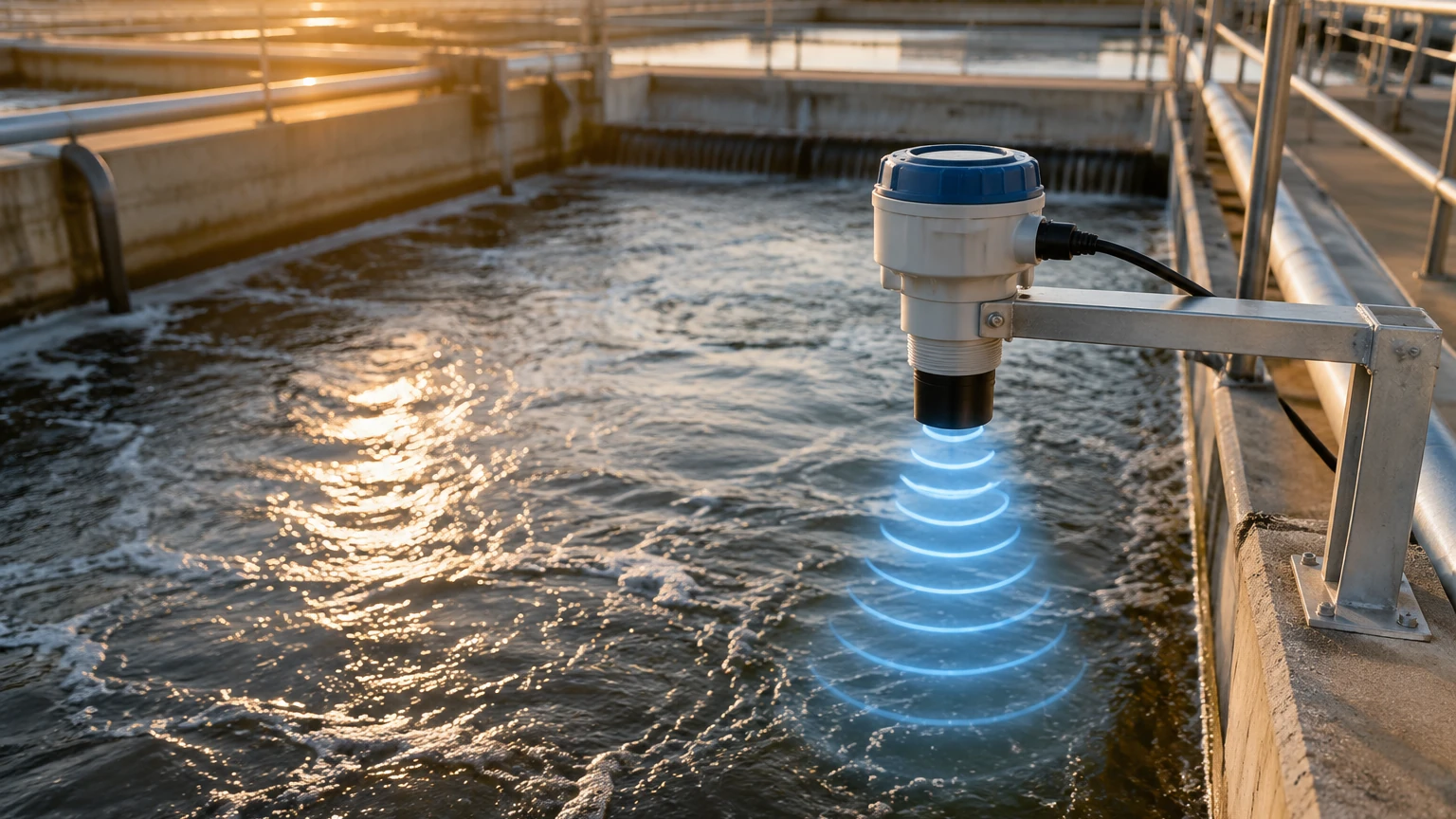
The operation of an ultrasonic liquid level sensor is based on the "Time of Flight" (ToF) principle. The device contains a transducer, typically housing a piezoelectric crystal, which serves two purposes: it acts as a transmitter of acoustic energy and a receiver of reflected echoes.
The Acoustic Cycle
1. Emission: The sensor emits a burst of ultrasonic pulses (typically in the range of 20 kHz to 200 kHz) toward the target surface.
2. Propagation: These sound waves travel through the air or gas medium above the liquid.
3. Reflection: Upon hitting the liquid surface, a portion of the acoustic energy is reflected back toward the sensor.
4. Detection: The transducer detects the returning echo and converts the mechanical vibration back into an electrical signal.
The Calculation
The distance ($D$) from the sensor to the liquid surface is calculated using the formula:
$$D = \frac{c \times t}{2}$$
Where:
* $c$ is the speed of sound in the medium (approximately 343 m/s in air at 20°C).
* $t$ is the total time elapsed between emission and reception.
Since the sensor is mounted at a known height (the reference point), the actual liquid level is derived by subtracting the measured distance from the total tank height.
Temperature Compensation
The speed of sound is not constant; it varies significantly with the temperature of the medium through which it travels. For instance, sound travels faster in warmer air. To maintain accuracy, high-quality ultrasonic liquid level sensors include an integrated temperature sensor. The internal microprocessor uses this data to adjust the distance calculation in real-time, ensuring that fluctuations in ambient temperature do not lead to measurement errors.
Key Advantages of Non-Contact Ultrasonic Measurement
Choosing an ultrasonic liquid level sensor offers several distinct advantages over contact-based methods such as float switches or hydrostatic pressure transmitters.
* Zero Media Contact: Because the sensor never touches the liquid, it is immune to the corrosive effects of acids, alkalis, and other aggressive chemicals. This also prevents contamination in food and beverage or pharmaceutical applications.
* No Moving Parts: Unlike mechanical floats or paddles, ultrasonic sensors have no components that can wear out, jam, or become coated with debris. This significantly reduces long-term maintenance requirements.
* Ease of Retrofitting: These sensors are typically mounted at the top of a vessel. This means they can be installed or replaced without draining the tank or breaching the bottom/side walls, minimizing process downtime.
* Versatility: Modern sensors can handle a wide range of liquids, from clean water to wastewater and various industrial oils, provided the surface characteristics allow for a clear echo.
Technical Selection Criteria for Industrial Applications
Selecting the right ultrasonic liquid level sensor requires a detailed analysis of the application environment. Engineers should evaluate several key parameters before procurement.
1. Measurement Range and Dead Zone
Every ultrasonic sensor has a "dead zone" (also known as the blocking distance) directly beneath the transducer face. In this zone, the sensor cannot accurately measure because the transducer is still vibrating from the emission pulse when the echo returns.
* Typical Dead Zones: 0.2m to 0.5m (approx. 8" to 20"), depending on the frequency.
* Maximum Range: Industrial models can typically measure from 2 meters up to 30 meters (approx. 6.5 ft to 98 ft).
2. Beam Angle
The ultrasonic pulse spreads out in a cone shape. The beam angle (usually between 5° and 12°) determines the footprint of the signal at a given distance. If the beam is too wide, it may hit tank walls, ladders, or agitators, resulting in false echoes.
3. Output Requirements
Integration into a PLC or SCADA system requires specific signal outputs. Common options include:
* Analog: 4-20mA or 0-10V.
* Digital: RS485 (Modbus RTU), HART, or Profibus.
* Switching: Programmable relay outputs for high/low level alarms.
Practical Selection Table
| Feature | Standard Model | Extended Range Model | Chemical Resistant Model |
| :— | :— | :— | :— |
| Measurement Range | 0.4m – 5m | 0.8m – 15m | 0.3m – 10m |
| Dead Zone | < 0.3m | < 0.6m | < 0.35m |
| Accuracy | 0.25% – 0.5% FS | 0.25% – 0.5% FS | 0.5% FS |
| Housing Material | ABS / Nylon | Aluminum Alloy | PVDF / PTFE |
| Beam Angle | 8° – 10° | 6° – 9° | 8° – 12° |
| Protection Rate | IP66 / IP67 | IP67 | IP68 |
Installation Guidelines and Best Practices
Proper installation is critical to the performance of an ultrasonic liquid level sensor. Even the most advanced instrument will fail to provide accurate data if positioned incorrectly.
Positioning and Clearance
* Avoid the Center: In cylindrical tanks with domed tops, mounting the sensor in the exact center can cause multiple reflections (parabolic effect) that confuse the signal. It is generally recommended to mount the sensor at 1/2 or 1/3 of the tank radius.
* Wall Distance: Ensure the beam cone does not intersect with the tank wall. A general rule is to keep the sensor at least 200mm (approx. 8") away from the wall for every meter of depth.
* Inflow Obstruction: Never install the sensor directly above the liquid inlet. The turbulence and falling liquid will disrupt the ultrasonic pulse and cause erratic readings.
Mounting Orientation
The transducer face must be perfectly parallel to the liquid surface. If the sensor is tilted, the reflected pulse may bounce away from the transducer rather than back toward it, leading to a "Loss of Echo" (LOE) error.
Nozzle Considerations
If mounting the sensor on a standpipe or nozzle, ensure the nozzle is as short and wide as possible. If the nozzle is too long or narrow, the ultrasonic pulse may reflect off the inside of the pipe before reaching the liquid, creating a false high-level reading.
Limitations and Environmental Interference Factors
While highly versatile, ultrasonic technology is not a universal solution. Certain environmental factors can attenuate the signal or distort the measurement.
1. Surface Foam and Turbulence
Heavy foam acts as an acoustic absorber. Instead of reflecting the sound wave, the foam dissipates the energy, resulting in a weak or non-existent echo. Similarly, extreme turbulence can scatter the signal. In these cases, a stilling well or a transition to radar technology may be necessary.
2. Pressure and Vacuum
Ultrasonic waves require a medium (gas) to travel. Therefore, they cannot function in a vacuum. Furthermore, high-pressure environments change the density of the air, which affects the speed of sound beyond what standard temperature compensation can handle. Most ultrasonic sensors are limited to near-atmospheric pressures (typically -0.5 to 3 bar).
3. Dust and Vapor
Heavy dust (in solids measurement) or dense steam/vapor can absorb or refract the acoustic signal. While light vapor is usually manageable, thick steam in high-temperature tanks often necessitates the use of radar level meters, which use electromagnetic waves that are unaffected by gas-phase conditions.
Comparison with Alternative Technologies
To provide a comprehensive engineering reference, it is helpful to compare the ultrasonic liquid level sensor with other common industrial technologies.
Ultrasonic vs. Radar
Radar level meters use high-frequency radio waves. Unlike sound, radio waves can travel through a vacuum and are largely unaffected by temperature, pressure, or heavy vapor. However, radar is generally more expensive. Ultrasonic sensors remain the preferred choice for water/wastewater and simple chemical storage where environmental conditions are stable.
Ultrasonic vs. Hydrostatic
Hydrostatic sensors measure the pressure exerted by the liquid column. While highly accurate, they are contact-based and require mounting at the bottom of the tank. They are also sensitive to changes in liquid density. Ultrasonic sensors are superior when the liquid density varies or when a top-down, non-contact approach is required for hygiene or maintenance reasons.
Frequently Asked Questions (FAQ)
Q: Can an ultrasonic liquid level sensor be used for solids?
A: Yes, but with limitations. Solids like grain or plastic pellets do not have a flat surface; they form cones and valleys. This scatters the sound waves. Sensors for solids usually require higher power and specialized software to process the "noisy" echoes.
Q: How does wind affect the measurement in open-air applications?
A: Strong winds can "blow" the ultrasonic pulse away or create air density fluctuations that affect the speed of sound. For outdoor open-channel flow or reservoir monitoring, using a sunshade/windshield and ensuring the sensor is mounted close to the maximum liquid level can mitigate these effects.
Q: What is the lifespan of a typical ultrasonic sensor?
A: With no moving parts and proper housing selection (e.g., PVDF for corrosive environments), an ultrasonic liquid level sensor can easily operate for 7 to 10 years without significant degradation in performance.
Q: Can I use an ultrasonic sensor in a tank with an agitator?
A: Yes, provided the sensor is positioned so the beam does not hit the agitator blades. Many modern sensors also feature "false echo suppression" software, allowing the user to map out fixed obstructions like internal bracing or agitator shafts.
Conclusion and Next Steps
The ultrasonic liquid level sensor remains a primary choice for industrial level monitoring due to its non-invasive nature and reliability. By carefully considering the dead zone, beam angle, and environmental factors like foam or vapor, engineers can implement a measurement solution that requires minimal intervention over its operational life.
For those seeking to integrate these instruments into their facility, it is vital to confirm the chemical compatibility of the sensor housing and the specific communication protocols required by your control system. For detailed product specifications and application support, please visit the Welk Main Page to explore our full range of industrial level measurement solutions.