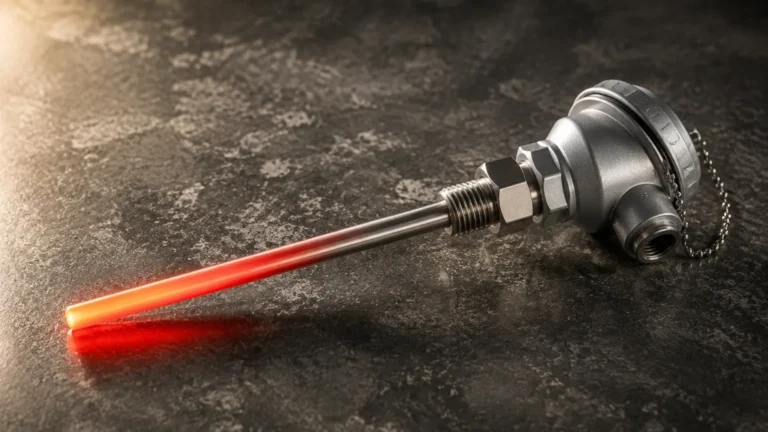
Interstitial Leak Detection
Interstitial Leak Detection
In modern industrial fluid management, the prevention of environmental contamination and the protection of high-value assets are paramount. Interstitial leak detection represents a critical layer of defense in secondary containment systems, such as double-walled tanks and piping. By monitoring the space between the primary and secondary barriers—known as the interstitial or annular space—operators can identify breaches before hazardous materials reach the external environment. This article provides a comprehensive engineering reference for selecting, installing, and maintaining interstitial leak detection systems, utilizing advanced instrumentation such as hydrostatic transmitters, ultrasonic sensors, and specialized level switches.
Understanding Interstitial Spaces and Leak Detection
Interstitial leak detection is the process of monitoring the gap between two walls of a containment vessel. In a double-walled tank, the inner wall holds the product (the primary containment), while the outer wall (the secondary containment) acts as a fail-safe. The space between them, the interstice, is designed to remain free of the stored product. If liquid is detected in a "dry" interstice, or if a specific fluid level changes in a "wet" interstice, it indicates a failure in either the primary or secondary wall.
This method is a cornerstone of regulatory compliance, particularly for Underground Storage Tanks (UST) and Aboveground Storage Tanks (AST) handling petroleum, chemicals, and hazardous waste. Effective monitoring ensures that leaks are caught in the "interstitial" stage, preventing soil and groundwater remediation costs that can reach millions of dollars.
Principles of Interstitial Monitoring Technologies
Before selecting a specific instrument, it is essential to understand the underlying measurement principles employed in interstitial leak detection. These are generally categorized into dry and wet monitoring systems.
Dry Interstitial Monitoring
In a dry system, the annular space is filled with air or an inert gas at atmospheric pressure. Sensors are placed at the lowest point of the interstice. The detection of any liquid—whether it is the stored product leaking from the inner tank or groundwater entering from a breach in the outer tank—triggers an alarm.
Technologies used here include:
* Conductivity Probes: These detect the presence of conductive liquids (like water) by completing an electrical circuit.
* Float Switches: Mechanical floats that rise when liquid enters the space, activating a reed switch.
* Optical Sensors: These use infrared light refraction to distinguish between air and liquid.
Wet Interstitial Monitoring (Hydrostatic)
Wet systems involve filling the interstitial space with a monitoring fluid, typically a brine solution or a water-glycol mixture. A small reservoir or standpipe is installed above the tank to maintain a constant head of pressure. A level sensor monitors the height of this fluid.
* Hydrostatic Level Transmitters: These measure the pressure exerted by the column of monitoring fluid. If the inner wall leaks, the fluid level will typically rise (if the tank is pressurized) or fall. If the outer wall leaks, the monitoring fluid will drain out, causing a drop in level. This provides continuous, high-precision data.
Vacuum and Pressure Monitoring
While less common for standard level sensors, some systems maintain a vacuum or positive pressure in the interstice. A drop in vacuum or pressure indicates a breach. However, level-based sensors are often preferred for their ability to distinguish between a loss of integrity and a simple change in atmospheric conditions.
Comparative Analysis of Monitoring Methods
Choosing the right technology depends on the tank geometry, the nature of the stored medium, and the required sensitivity. The following table outlines the primary characteristics of common interstitial leak detection methods.
| Method | Principle | Suitable Fluids | Advantages | Limitations |
| :— | :— | :— | :— | :— |
| Dry – Level Switch | Point level detection | Non-viscous chemicals, oils | Low cost, easy installation | Cannot quantify leak rate; single-point only |
| Wet – Hydrostatic | Continuous pressure measurement | Brine, Glycol solutions | High accuracy, detects very small leaks | Requires monitoring fluid and reservoir |
| Ultrasonic/Radar | Non-contact distance measurement | Various chemicals | No moving parts, highly reliable | Limited by narrow annular spaces |
| Optical/Refractive | Light refraction | Hydrocarbons, clear liquids | Compact, fast response | Sensitive to coating or fouling |
Selection Criteria for Industrial Applications
When specifying hardware for a project, engineers must evaluate several technical factors to ensure the longevity and reliability of the interstitial leak detection system.
Chemical Compatibility
Sensors must be resistant to both the stored product and the external environment. For instance, in the chemical industry, sensors made of PTFE or high-grade stainless steel are required. If using a wet system, the monitoring fluid must be chemically compatible with the tank materials and must not react violently with the stored product in the event of a primary wall breach.
Hazardous Area Classifications
Many interstitial spaces are classified as Zone 0 or Zone 1 (Class I, Div 1) environments because they may contain flammable vapors. In these cases, sensors must be intrinsically safe (IS) or explosion-proof. Welk provides a range of level switches and transmitters designed for these rigorous safety standards, ensuring that the detection system itself does not become an ignition source.
Sensitivity and Response Time
Regulatory bodies often dictate the minimum detectable leak rate. Hydrostatic monitoring is generally considered the most sensitive, as it can detect changes in fluid volume as small as a few milliliters. For dry systems, the sensor must be positioned at the absolute lowest point of the secondary containment to ensure the fastest possible response time.

Installation and Maintenance Best Practices
Proper installation is as critical as the technology itself. A poorly placed sensor may fail to detect a leak until a significant volume of fluid has escaped.
Sensor Placement
In horizontal tanks, the interstice should be monitored at the lowest point (the 6 o'clock position). For vertical tanks, sensors are typically placed in a sump or a dedicated monitoring well at the base of the annular space. If the tank is tilted for drainage, the sensor must be located at the low end.
Wiring and Signal Integration
Interstitial sensors should be integrated into a centralized monitoring panel or a PLC/SCADA system. Using 4-20mA signals for hydrostatic transmitters allows for continuous monitoring and the setting of multiple alarm thresholds (e.g., Low, Low-Low). Point-level switches should be wired in a fail-safe configuration (normally closed), where a broken wire or loss of power triggers an alarm.
Maintenance and Testing
Interstitial leak detection systems are "passive" until a failure occurs, which means they can sit idle for years. Regular functional testing is mandatory.
1. Manual Testing: For dry sensors, this involves removing the sensor and immersing it in the target fluid to verify the alarm.
2. Level Verification: For wet systems, the reservoir level should be checked monthly against a calibrated scale.
3. Calibration: Hydrostatic transmitters should be re-calibrated annually to account for any sensor drift or changes in the specific gravity of the monitoring fluid.
Limitations and Troubleshooting
While interstitial leak detection is highly effective, it is not without challenges. Engineers should be aware of the following limitations:
* Condensation in Dry Systems: In regions with high humidity and temperature fluctuations, moisture can condense in the dry interstice, leading to false alarms. Using sensors with a "water vs. product" discrimination capability can mitigate this.
* Temperature Effects in Wet Systems: The volume of the monitoring fluid in a wet system will expand and contract with temperature changes. Without temperature compensation, this can trigger false high or low-level alarms. High-quality hydrostatic transmitters can be paired with temperature sensors to provide compensated level readings.
* Obstructions: In some older double-walled tanks, the annular space may be narrow or contain structural reinforcements that prevent a sensor from reaching the lowest point. In these scenarios, vacuum or pressure monitoring may be the only viable alternative.
Frequently Asked Questions
Q: Can I use an ultrasonic sensor for interstitial monitoring?
A: Yes, provided the annular space is wide enough. Ultrasonic sensors are excellent for monitoring sumps or large secondary containment basins where non-contact measurement is preferred to avoid corrosion or fouling.
Q: What is the difference between a leak sensor and a level transmitter?
A: A leak sensor (like a float or optical switch) is a point-level device that only tells you if liquid is present. A level transmitter (like a hydrostatic or radar unit) provides a continuous measurement of the fluid level, allowing you to track the rate of a leak over time.
Q: Is interstitial monitoring required for all tanks?
A: Requirements vary by jurisdiction and the type of fluid stored. However, for underground storage of hazardous substances, interstitial monitoring of double-walled tanks is generally a global standard for environmental protection.
Q: How do I handle false alarms caused by condensation?
A: For dry interstices, use a sensor that can distinguish between water and hydrocarbons. Alternatively, ensure the interstice is properly sealed and, if necessary, use a desiccant dryer on the vent line.
Conclusion
Interstitial leak detection is a vital component of industrial safety and environmental stewardship. By understanding the nuances of dry and wet monitoring and selecting the appropriate instrumentation—whether it be a simple level switch for a dry interstice or a high-precision hydrostatic transmitter for a wet system—operators can ensure their containment systems remain secure.
Selecting the right equipment requires a balance of chemical compatibility, sensitivity, and regulatory compliance. For engineers and procurement professionals looking to implement or upgrade their monitoring systems, it is essential to consult with experts who understand the complexities of level measurement in restricted spaces. To explore a wide range of industrial sensors suitable for these applications, including radar, ultrasonic, and hydrostatic solutions, please visit the Main Page for detailed technical specifications and application support.
By prioritizing accurate interstitial monitoring, facilities can move from reactive spill management to proactive leak prevention, safeguarding both the environment and their operational integrity.