2.65m to Feet
2.65m to Feet
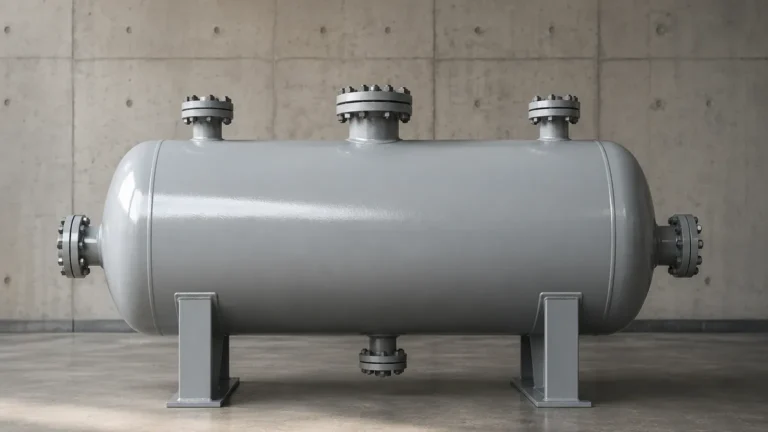
In the field of industrial process control and fluid management, precision in measurement is the cornerstone of operational safety and efficiency. When designing or retrofitting storage tanks, sumps, or process vessels, engineers frequently encounter the need to convert metric specifications into imperial units for documentation, standardized fittings, or regional compliance. A common measurement encountered in medium-sized process vessels is a height or depth of 2.65 meters. Converting 2.65m to feet yields approximately 8.6942 feet (or roughly 8 feet, 8 and 5/16 inches).
While the mathematical conversion is straightforward, the application of this measurement in level instrumentation requires a deep understanding of sensor physics, installation geometry, and environmental variables. Whether you are monitoring a chemical dosing tank or a water treatment basin, selecting the right technology for a 2.65-meter range involves more than just unit conversion; it requires an evaluation of how different measurement principles perform at this specific scale.
Understanding the Conversion: 2.65m to Feet in Industrial Contexts
The conversion factor for meters to feet is 3.28084. Therefore:
* 2.65 meters × 3.28084 = 8.69423 feet
In practical engineering, 2.65 meters (8.69 ft) often represents the "Full Scale" or "Span" of a level transmitter. This height is typical for:
1. Intermediate Bulk Containers (IBC) and Custom Totes: While standard IBCs are shorter, custom chemical totes often reach heights near 2.6 meters to maximize floor space.
2. Water Treatment Sumps: Lift stations and small wet wells frequently operate within a 2-to-3-meter depth range.
3. Dosing Tanks: In chemical processing, secondary containment or day tanks are often sized around this height to ensure a 24-hour supply of reagents.
When specifying equipment on the Main Page of a technical catalog, understanding the relationship between 2.65m and feet is essential for ensuring that the sensor’s "Dead Zone" or "Blocking Distance" does not interfere with the required measurement range.
Measurement Technologies for a 2.65-Meter Range
Choosing the correct instrument for a vessel with a 2.65m (8.69 ft) depth depends on the media properties, pressure, and temperature. Below are the primary technologies used for this range.
1. Radar Level Measurement (Non-Contact)
Radar transmitters, particularly those operating at 80 GHz, are highly effective for a 2.65m range. They emit high-frequency electromagnetic pulses that reflect off the product surface.
* Principle: The instrument measures the time of flight between the emission of the pulse and the reception of the echo. Since the speed of light is constant, the distance is calculated with extreme precision.
* Suitability for 2.65m: Radar is ideal here because it is unaffected by vapor, vacuum, or temperature shifts. At a range of 8.69 feet, an 80 GHz radar can provide accuracy within ±1mm.
2. Ultrasonic Level Sensors
Ultrasonic sensors are a cost-effective solution for liquid level measurement in open or vented tanks.
* Principle: These devices emit sound waves. The time it takes for the sound to bounce back from the surface determines the level.
* Suitability for 2.65m: This is the "sweet spot" for many ultrasonic transducers. However, engineers must account for the speed of sound changing with air temperature. Most high-quality sensors, like those from Welk, include integrated temperature compensation to maintain accuracy across the 2.65m span.
3. Hydrostatic Pressure Transmitters
For vented tanks, hydrostatic pressure is a reliable way to measure level based on the weight of the liquid column.
* Principle: Level = Pressure / (Density × Gravity).
* Suitability for 2.65m: If the tank contains water (density 1000 kg/m³), a 2.65m depth exerts approximately 0.26 bar (3.77 psi) of pressure at the bottom. This is a relatively low pressure, so a sensitive diaphragm is required to ensure a high signal-to-noise ratio.
Selecting the Right Sensor for 2.65m (8.69 ft) Applications
When evaluating sensors for a 2.65-meter application, use the following table to compare the most common technologies provided by professional manufacturers like Welk.
| Feature | Radar (Non-Contact) | Ultrasonic | Hydrostatic | Magnetic Level Gauge |
| :— | :— | :— | :— | :— |
| Accuracy | Highest (±1-2mm) | Moderate (±0.25% of range) | High (±0.1% to 0.5%) | Visual Reliability |
| Cost | Premium | Economical | Mid-range | Mid-to-High |
| Media Impact | Unaffected by density | Affected by foam/vapor | Dependent on density | Dependent on density |
| Maintenance | Low (No moving parts) | Low | Moderate (Clogging risk) | Low |
| Range Suitability | Excellent for 2.65m | Excellent for 2.65m | Good for 2.65m | Excellent for 2.65m |
Evaluation Criteria
1. Media Characteristics: If the liquid is corrosive or prone to coating, non-contact radar is preferred. If the density of the liquid fluctuates (e.g., mixing different oils), hydrostatic sensors will require constant recalibration, making radar or ultrasonic better choices.
2. Tank Geometry: In a 2.65m (8.69 ft) tank, internal obstructions like agitators or ladders can create false echoes. Radar sensors with narrow beam angles (e.g., 3°) are better at avoiding these obstacles than ultrasonic sensors, which typically have wider beam angles (8° to 12°).
3. Environmental Conditions: For outdoor tanks where wind or heavy condensation is present, ultrasonic signals may be attenuated. Radar is generally immune to these factors.
Installation and Calibration Best Practices
Correct installation is critical when working with a 2.65m to feet conversion. Small errors in mounting height can lead to significant volume calculation errors.
The Blocking Distance (Dead Zone)
Every non-contact sensor has a "Dead Zone" directly beneath the sensor face where it cannot measure. For a sensor rated for 5 meters, the dead zone might be 0.2 meters (approx. 8 inches). If your tank is exactly 2.65m high and you mount the sensor flush with the top, you will not be able to measure the top 0.2m of the tank. To measure the full 2.65m (8.69 ft), you may need to install the sensor on a nozzle or standpipe to move the dead zone outside the actual tank volume.
Scaling the 4-20mA Signal
Most industrial level meters use a 4-20mA analog output. Calibration involves setting the "Zero" and "Span":
* 4mA (Empty): This is usually set at the bottom of the tank (0 meters / 0 feet).
* 20mA (Full): This is set at the 2.65m (8.69 ft) mark.
It is vital to confirm whether the sensor measures "Level" (distance from the bottom up) or "Distance" (distance from the sensor down). For a 2.65m tank, if the sensor is measuring distance and the tank is half full, the reading will be 1.325m (4.347 ft).
Mounting Location
Avoid mounting sensors in the direct center of a circular tank, as this can concentrate reflected signals and cause interference (parabolic effect). Instead, mount the sensor at 1/2 to 1/3 of the tank radius from the wall. Ensure the sensor beam does not hit the tank wall before reaching the 2.65m bottom mark.
Factors Influencing Accuracy at 2.65m
While 2.65 meters is a manageable distance for most modern sensors, certain factors can degrade performance:
1. Vapor Space Composition: In ultrasonic measurement, if the space above the liquid is filled with nitrogen or carbon dioxide instead of air, the speed of sound changes significantly. This would cause a 2.65m reading to be inaccurate unless the sensor is calibrated for that specific gas.
2. Surface Turbulence: If the liquid surface is turbulent due to an agitator, the echo might scatter. Radar handles this better than ultrasonic, but both may require "damping" settings in the software to provide a stable reading.
3. Temperature Gradients: Significant temperature differences between the liquid and the air in the 2.65m space can cause refractive errors in ultrasonic waves. Welk ultrasonic sensors mitigate this with high-speed temperature probes located near the transducer face.
Frequently Asked Questions (FAQ)
Q: How many inches are in 2.65 meters?
A: There are 104.33 inches in 2.65 meters. (2.65 * 39.3701 = 104.33).
Q: Can I use a hydrostatic submersible sensor for a 2.65m deep well?
A: Yes. A submersible pressure transmitter is ideal for this. You would specify a range of 0-3 meters or 0-10 feet to ensure the sensor covers the full 2.65m depth with some safety margin.
Q: What is the volume of a tank that is 2.65m high?
A: Volume depends on the cross-sectional area. For a cylindrical tank with a 2-meter diameter and a height of 2.65m, the volume is approximately 8.32 cubic meters (8,320 liters or 2,198 US gallons).
Q: Is 80 GHz radar overkill for a 2.65m range?
A: Not necessarily. While lower frequencies work, 80 GHz allows for a much smaller antenna and a narrower beam, which is beneficial if the 2.65m tank has internal pipes or narrow openings.
Summary and Engineering Recommendations
Converting 2.65m to feet is the first step in a larger engineering process. At 8.69 feet, the measurement range is perfectly suited for a wide variety of technologies, provided the environmental conditions are accounted for.
* For clean liquids in vented tanks, ultrasonic sensors offer the best value.
* For aggressive chemicals or pressurized vessels, non-contact radar is the gold standard for reliability.
* For clog-free continuous monitoring in open basins, hydrostatic transmitters remain a robust choice.
When selecting your next level instrument, ensure you verify the mounting requirements and the specific dielectric constant or density of your media. For a comprehensive look at available sensor configurations and technical specifications, visit the Main Page to review product options and application support. By choosing a high-quality instrument from a manufacturer like Welk, you ensure that your 2.65m measurement remains accurate, repeatable, and safe for years of operation.