4-methylcyclohexan-1-olate Hydroxide Propionate Methanol Ethanethiolate
4-methylcyclohexan-1-olate Hydroxide Propionate Methanol Ethanethiolate
In the complex landscape of industrial chemical processing, the management of multi-component fluid streams presents significant engineering challenges. Monitoring the level of a mixture containing 4-methylcyclohexan-1-olate hydroxide propionate methanol ethanethiolate requires a sophisticated understanding of both chemical properties and instrumentation physics. Such a mixture typically involves volatile organic compounds (VOCs), corrosive alkaline components, and sulfur-bearing reagents, all of which influence the reliability of level measurement sensors.
For process engineers and plant managers, selecting the correct instrumentation for 4-methylcyclohexan-1-olate hydroxide propionate methanol ethanethiolate is not merely about measuring a height; it is about ensuring process safety, preventing overfills in hazardous environments, and maintaining the integrity of the sensor against aggressive chemical attack. This guide explores the technical considerations, measurement principles, and selection criteria for level transmitters in these demanding applications.
Measurement Principles for Complex Chemical Mixtures
Before selecting a specific device, it is essential to understand how different technologies interact with a fluid like 4-methylcyclohexan-1-olate hydroxide propionate methanol ethanethiolate. The physical state of the surface, the dielectric constant (εr) of the mixture, and the presence of vapors are the primary factors.
Time-of-Flight (ToF) Principles
Most modern level solutions for chemical storage utilize Time-of-Flight technology. This includes both Radar (Radio Detection and Ranging) and Ultrasonic sensors. The device emits a pulse (either electromagnetic or sound), which reflects off the liquid surface and returns to the sensor. The distance is calculated based on the speed of the pulse and the time taken for the round trip.
In a mixture containing methanol and ethanethiolate, the dielectric constant is a critical variable. Methanol has a relatively high dielectric constant (~33 at 20°C), which provides an excellent reflective surface for radar waves. However, the presence of 4-methylcyclohexan-1-olate and various hydroxides can alter the conductivity and reflectivity of the bulk liquid, requiring a sensor with a high dynamic range to distinguish the true level from signal noise.
Hydrostatic Pressure Principle
Hydrostatic level measurement relies on the relationship between the height of the liquid column and the pressure exerted at the bottom of the tank. The formula $P = \rho \cdot g \cdot h$ (where $P$ is pressure, $\rho$ is density, $g$ is gravity, and $h$ is height) is used. When dealing with 4-methylcyclohexan-1-olate hydroxide propionate methanol ethanethiolate, the density may fluctuate based on the concentration of methanol or the temperature of the hydroxide solution. If the density is not constant, hydrostatic sensors may require compensation via a secondary pressure transmitter or a PLC-based calculation.
Technology Comparison for 4-methylcyclohexan-1-olate Hydroxide Propionate Methanol Ethanethiolate
Choosing the right technology involves weighing the pros and cons of contact versus non-contact measurement, especially when corrosive or volatile substances are present.
80GHz High-Frequency Radar
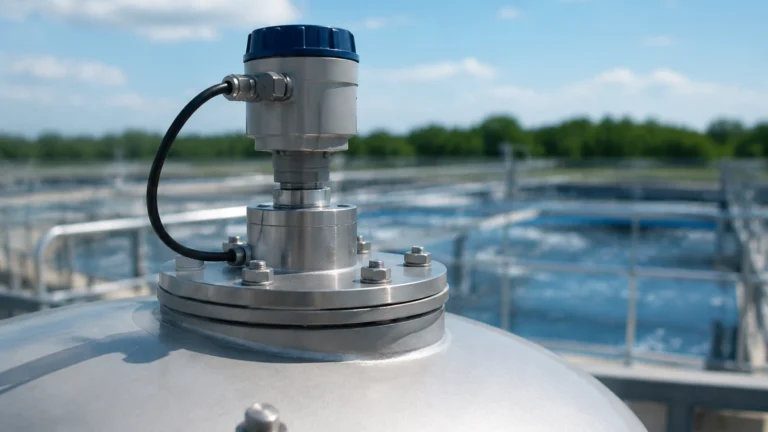
Non-contact radar, particularly operating at the 80GHz frequency, is often the preferred choice for 4-methylcyclohexan-1-olate hydroxide propionate methanol ethanethiolate. The high frequency allows for a narrow beam angle (often as low as 3 degrees), which avoids internal tank obstructions like agitators or heating coils. Because it is non-contact, the sensor is not subjected to the corrosive effects of the hydroxides or the fouling potential of the organic salts.
Guided Wave Radar (GWR)
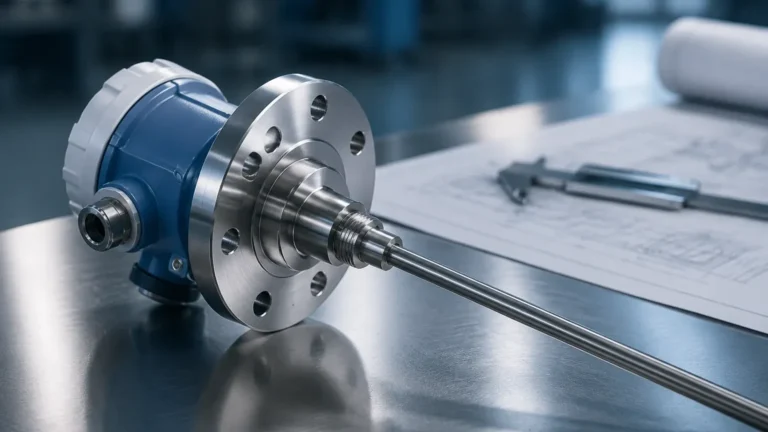
Guided Wave Radar utilizes a probe (rod or cable) that extends into the liquid. The radar pulse travels along the probe, making it highly resistant to foam or heavy vapor layers. However, when measuring 4-methylcyclohexan-1-olate hydroxide propionate methanol ethanethiolate, the probe material must be carefully selected. Standard 316L stainless steel may not suffice if the hydroxide concentration is high or if the propionate components create an acidic environment. PFA or PTFE-coated probes are typically required.
Ultrasonic Level Sensors
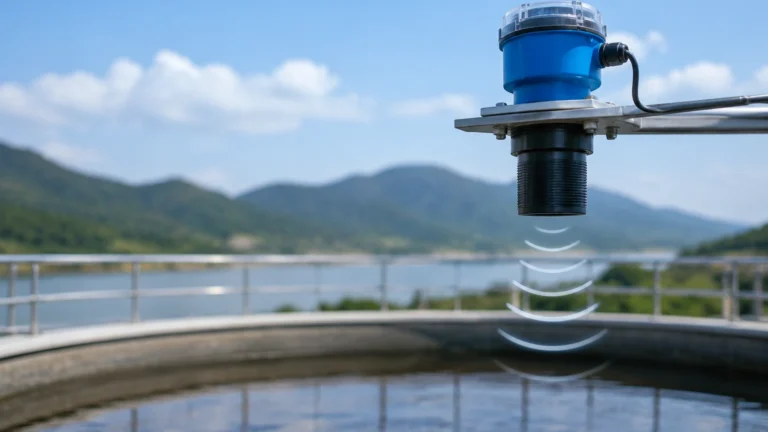
Ultrasonic sensors are cost-effective but face significant limitations in this application. The presence of methanol and ethanethiolate often results in a heavy vapor space above the liquid. Since sound waves are affected by the density and temperature of the gas through which they travel, vapors can cause significant measurement errors or even a total loss of signal. Consequently, ultrasonic technology is generally reserved for open-air sumps rather than enclosed process tanks containing these chemicals.
Selection Table for Chemical Level Instrumentation
| Technology | Suitability | Wetted Materials | Advantages | Limitations |
| :— | :— | :— | :— | :— |
| 80GHz Radar | Excellent | PTFE / PFA (Lens) | Non-contact, ignores vapors, high precision. | Higher initial cost. |
| Guided Wave Radar | Good | Hastelloy / PTFE Coated | Reliable in foam, unaffected by turbulence. | Contact-based, probe fouling potential. |
| Hydrostatic | Fair | Ceramic / Monel | Simple installation, low cost. | Density dependent, requires chemical seal. |
| Ultrasonic | Poor | PVDF | Low cost, simple setup. | Failed by vapors and vacuum conditions. |
| Magnetic Gauge | Good | 316L / PFA Lined | Local visual indication, no power needed. | Mechanical moving parts, cleaning required. |
Material Compatibility and Corrosion Resistance
The presence of hydroxide and ethanethiolate in the 4-methylcyclohexan-1-olate mixture introduces specific material compatibility requirements. Hydroxides (such as Sodium or Potassium Hydroxide) are highly aggressive toward aluminum, zinc, and certain glass types.
1. Polymers: PTFE (Polytetrafluoroethylene) and PFA (Perfluoroalkoxy) are the gold standards for this application. They offer near-universal chemical resistance to methanol, organic salts, and strong bases.
2. Metals: While 316L stainless steel is common, the sulfur content in ethanethiolates may necessitate the use of Hastelloy C-276 or similar high-nickel alloys to prevent pitting and stress corrosion cracking.
3. Seals: FKM (Viton) or FFKM (Kalrez) O-rings should be specified for any process connections to ensure the volatile methanol does not leak into the electronics housing.

Installation Considerations
Correct installation is as critical as sensor selection when handling 4-methylcyclohexan-1-olate hydroxide propionate methanol ethanethiolate. Engineers should follow these guidelines to ensure long-term reliability:
* Nozzle Height and Diameter: For radar sensors, ensure the nozzle height does not exceed the diameter in a way that creates internal reflections. A 100mm (4-inch) diameter nozzle is typically sufficient for most 80GHz units.
* Vapor Management: If the tank is pressurized or under vacuum to manage methanol vapors, the level meter must be rated for the specific process pressure (e.g., -1 to 16 bar).
* Agitation: If the mixture is being stirred to keep the 4-methylcyclohexan-1-olate in solution, use a damping function in the transmitter software to filter out surface turbulence.
* Stilling Wells: In cases of extreme foam or turbulence, installing a GWR or a non-contact radar inside a stilling well (a vertical pipe) can provide a calm surface for measurement. However, ensure the pipe has vent holes to allow the liquid level and vapor pressure to equalize.
Limitations and Risks
Despite the advanced nature of modern level meters, certain conditions can still pose risks to measurement accuracy in a 4-methylcyclohexan-1-olate hydroxide propionate methanol ethanethiolate environment:
* Condensation: Methanol vapors can condense on the sensor face. While 80GHz radars are better at "seeing through" condensation than lower-frequency models, a PTFE drop antenna design is recommended to encourage droplets to run off.
* Crystallization: If the temperature drops, components like 4-methylcyclohexan-1-olate or certain hydroxides may crystallize or precipitate out of the solution. If this buildup occurs on a GWR probe, it can cause "ghost" echoes.
* Safety Ratings: Because methanol is flammable, all instrumentation must carry appropriate explosion-proof or intrinsically safe certifications, such as ATEX, IECEx, or Class I, Div 1.
Frequently Asked Questions (FAQs)
Q: Can I use a standard pressure transmitter for this mixture?
A: Only if the density of the 4-methylcyclohexan-1-olate hydroxide propionate methanol ethanethiolate mixture remains constant. If the ratio of methanol to other components changes, the pressure reading will not accurately reflect the level. A diaphragm seal with a resistant coating (like gold or PTFE) is also necessary.
Q: How does temperature affect the measurement?
A: Temperature affects the density of the liquid and the dielectric constant. While radar is largely unaffected by temperature changes in the vapor space, the physical expansion of the liquid must be accounted for in volume calculations.
Q: Is maintenance required for non-contact radar in these tanks?
A: Generally, very little. If the sensor is mounted correctly, there are no moving parts and no contact with the corrosive fluid. Periodic checks of the flange bolts and the integrity of the cable glands are recommended.
Conclusion
Measuring the level of 4-methylcyclohexan-1-olate hydroxide propionate methanol ethanethiolate requires a robust approach that balances chemical compatibility with advanced signal processing. By prioritizing non-contact technologies like 80GHz radar and utilizing high-performance materials like PTFE and Hastelloy, industrial facilities can achieve precise control over their chemical inventories while minimizing maintenance and safety risks. For more detailed specifications and to Review product options and application support, engineers should consult with specialized instrumentation providers who understand the nuances of complex chemical processing. You may find further technical resources on our Main Page to assist in your selection process.
Download 4-methylcyclohexan-1-olate Hydroxide Propionate Methanol Ethanethiolate as a PDF