Hydropower Maintenance
Hydropower Maintenance
Effective hydropower maintenance is the cornerstone of operational longevity and safety for any hydroelectric facility. Unlike standard industrial plants, hydropower stations operate in demanding environments where water levels, flow rates, and pressure must be monitored with extreme precision to prevent catastrophic structural failure and optimize energy production. A significant portion of a maintenance program focuses on the instrumentation that monitors these hydraulic parameters. Without accurate data from level sensors and transmitters, maintenance teams cannot make informed decisions regarding gate control, turbine scheduling, or reservoir management.
In the context of industrial automation, level measurement instruments—including radar, ultrasonic, and hydrostatic sensors—serve as the "eyes" of the facility. Ensuring these instruments are correctly selected, installed, and maintained is a primary objective for plant engineers. This guide explores the technical principles of level measurement within the scope of hydropower maintenance and provides a framework for selecting the right technology for specific applications.
Core Measurement Principles for Hydropower Level Sensors
Before implementing a maintenance schedule or selecting new hardware, it is essential to understand the physics behind the three primary level measurement technologies used in hydropower environments.
Hydrostatic Level Measurement
Hydrostatic transmitters measure the pressure exerted by a liquid column. The principle is based on the formula $P = \rho × g × h$, where $P$ is pressure, $\rho$ is the density of the liquid, $g$ is the gravitational constant, and $h$ is the height of the liquid. In hydropower maintenance, these sensors are often submerged at the bottom of a reservoir or within a stilling well.
To ensure accuracy, these sensors must compensate for atmospheric pressure. This is typically achieved through a vent tube within the sensor cable that connects the back of the sensing diaphragm to the atmosphere. Maintenance of these sensors often involves checking the vent tube for blockages or moisture, which can cause significant drift in readings.
Ultrasonic Level Measurement
Ultrasonic sensors are non-contact devices that emit high-frequency sound pulses. These pulses reflect off the surface of the water and return to the sensor. The distance is calculated based on the time of flight: $D = (c × t) / 2$, where $c$ is the speed of sound and $t$ is the time taken.
Because the speed of sound is affected by air temperature, ultrasonic sensors include built-in temperature compensation. However, in hydropower applications, heavy mist or surface foam can absorb or scatter the sound waves, leading to signal loss. Maintenance for these units involves cleaning the transducer face and verifying that the temperature compensation remains accurate.
Radar Level Measurement
Radar sensors operate similarly to ultrasonic devices but use high-frequency electromagnetic waves (microwaves) rather than sound. Radar is generally preferred in hydropower maintenance for long-range reservoir monitoring because microwaves are unaffected by air temperature, pressure, vapor, or wind.
Modern 80GHz radar sensors offer narrow beam angles, which allow them to be installed in cramped spaces or near dam walls without interference from structural reflections. Since there is no physical contact with the water, these sensors require significantly less routine cleaning than hydrostatic or ultrasonic alternatives.
The Relationship Between Level Monitoring and Hydropower Maintenance
Reliable level data is the foundation of any hydropower maintenance strategy. Level sensors are used in several critical areas of the plant, each with specific maintenance implications:
1. Reservoir Management: Monitoring the headwater level is critical for calculating potential energy and ensuring the dam does not exceed its design capacity. Maintenance of these sensors prevents overtopping events.
2. Tailrace Monitoring: The tailrace level affects the net head of the turbine. Accurate monitoring ensures the turbine operates within its efficiency curve and prevents cavitation damage, which would otherwise lead to expensive mechanical repairs.
3. Trash Rack Differential Pressure: Level sensors are placed both before and after the trash racks. A significant difference in level indicates that the racks are clogged with debris. Routine maintenance schedules use this data to trigger cleaning cycles, protecting the intake system from structural collapse due to pressure imbalances.
4. Sump and Leakage Control: Smaller level switches and hydrostatic sensors monitor drainage sumps within the dam gallery. Maintenance of these sensors is vital for early detection of structural leaks.
Key Evaluation Criteria for Sensor Selection
When upgrading or replacing instrumentation during a maintenance outage, engineers should evaluate sensors based on the following criteria:
* Measurement Range: Reservoirs may require ranges exceeding 70 meters, whereas tailrace monitoring might only require 5 to 10 meters.
* Accuracy Requirements: For billing or official water reporting, high-precision radar (accuracy of ±2mm or better) is often required.
* Environmental Resilience: Sensors must withstand humidity, potential submersion, and lightning strikes. For hydrostatic sensors, the cable material (e.g., PUR or FEP) must be compatible with the water chemistry.
* Signal Output: Integration with the plant SCADA system usually requires 4-20mA HART, Modbus RS485, or Profibus protocols.
Technology Comparison Table for Maintenance Planning
The following table provides a comparison of common level measurement technologies used in hydropower applications to assist in selection and maintenance planning.
| Feature | Hydrostatic Transmitters | Ultrasonic Sensors | Radar (26GHz/80GHz) |
| :— | :— | :— | :— |
| Measurement Type | Contact (Submerged) | Non-contact | Non-contact |
| Maintenance Frequency | Moderate (Cleaning/Venting) | Moderate (Cleaning face) | Low |
| Accuracy | ±0.25% to ±0.5% FS | ±0.25% of range | ±2mm to ±5mm |
| Influence of Foam/Mist | None | High | Minimal |
| Influence of Temp Change | Minimal | High (Requires Comp) | None |
| Typical Range | Up to 200m | 0.5m – 15m | Up to 120m |
| Best Application | Deep wells, sumps | Open channels, tanks | Reservoirs, tailraces |
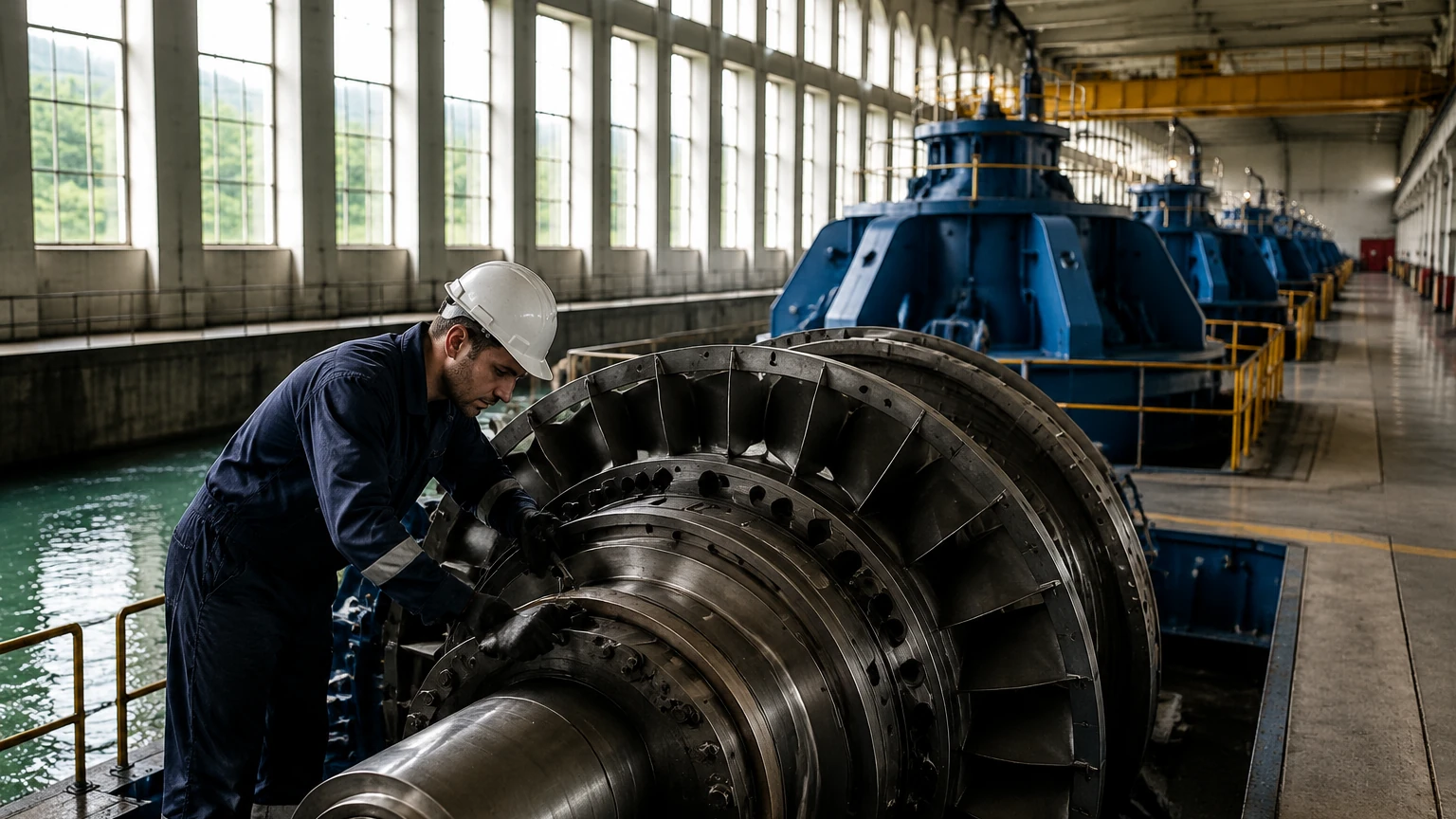
Installation Guidelines to Minimize Maintenance Requirements
Proper installation is the most effective way to reduce the long-term burden of hydropower maintenance. Even the most advanced sensor will fail or provide inaccurate data if installed incorrectly.
Stilling Wells and Bypass Pipes
In areas with high turbulence, such as near the turbine intake or in fast-flowing tailraces, level sensors should be installed inside a stilling well. A stilling well is a vertical pipe that dampens surface waves and protects the sensor from floating debris. For hydrostatic sensors, this prevents the "venturi effect" where moving water creates a false low-pressure reading.
Lightning and Surge Protection
Hydropower plants are often located in mountainous regions prone to lightning. Level sensors mounted on dam crests are particularly vulnerable. Maintenance teams should ensure that sensors have internal surge protection and that the external shielding is correctly grounded to the plant's main grounding grid.
Mounting Positioning
For radar and ultrasonic sensors, the beam must have a clear path to the water surface. Maintenance issues often arise when sensors are mounted too close to the wall, causing "ghost" echoes. Using an adjustable mounting bracket allows for fine-tuning the beam alignment during the commissioning phase.
Common Risks and Mitigation Strategies in Hydropower Level Sensing
During routine hydropower maintenance inspections, engineers often encounter the following risks:
* Siltation and Sediment: Hydrostatic sensors can become buried in silt at the bottom of a reservoir. Mitigation involves mounting the sensor at a slight elevation from the floor or using a flush-diaphragm design that resists clogging.
* Ice Formation: In cold climates, ice can damage submerged sensors or block the signal of non-contact sensors. Maintenance teams may need to install heating elements or air-bubbler systems to keep the area around the sensor ice-free.
* Cable Damage: Submerged cables are subject to abrasion and rodent damage. Using armored cables or running the cable through stainless steel conduit significantly reduces the need for emergency repairs.
To explore specific hardware configurations for these challenges, engineers can Review product options and application support on our Main Page.
Frequently Asked Questions (FAQ)
Q: How often should hydrostatic level transmitters be calibrated?
A: In most hydropower applications, a yearly calibration check is recommended. However, if the sensor is used for safety-critical dam monitoring, semi-annual verification against a manual staff gauge is preferred.
Q: Can radar sensors measure through heavy fog on the reservoir?
A: Yes. Unlike ultrasonic sensors, radar waves are not significantly attenuated by fog or water vapor, making them the superior choice for outdoor hydropower maintenance in humid or misty environments.
Q: What is the benefit of 80GHz radar over 26GHz radar in dam monitoring?
A: 80GHz radar has a much narrower beam angle (often as low as 3 degrees). This allows the sensor to be mounted further back from the water's edge or in narrower stilling wells without picking up interference from the surroundings.
Q: How do I protect level sensors from debris in the river?
A: For non-contact sensors, mounting them high above the maximum flood level is the best protection. For submerged sensors, heavy-duty cages or stilling wells are essential to prevent physical impact from logs or stones.
Conclusion
Maintaining a hydropower facility requires a deep understanding of how environmental factors interact with sensitive instrumentation. By prioritizing the correct measurement principle—whether it be the robust simplicity of hydrostatic pressure or the high-precision, low-maintenance nature of radar—operators can ensure their hydropower maintenance programs are proactive rather than reactive. Accurate level monitoring not only protects the structural integrity of the dam but also ensures that every drop of water is utilized efficiently for power generation. For technical specifications and custom solutions, visit our Main Page to find the ideal instrumentation for your specific hydraulic application.