Ultrasonic Level Sensor China
In the landscape of industrial automation, the demand for non-contact measurement technology has grown exponentially. Among the various technologies available, ultrasonic level measurement remains a cornerstone for liquid and solid monitoring due to its balance of accuracy, cost-effectiveness, and ease of installation. For procurement managers and engineers searching for a reliable ultrasonic level sensor china offers a robust manufacturing ecosystem capable of delivering high-precision instruments that meet international standards.
This guide explores the technical principles, selection criteria, and practical installation considerations for Ultrasonic Level Meters, providing a comprehensive reference for those integrating these sensors into industrial processes.
Measurement Principles of Ultrasonic Technology
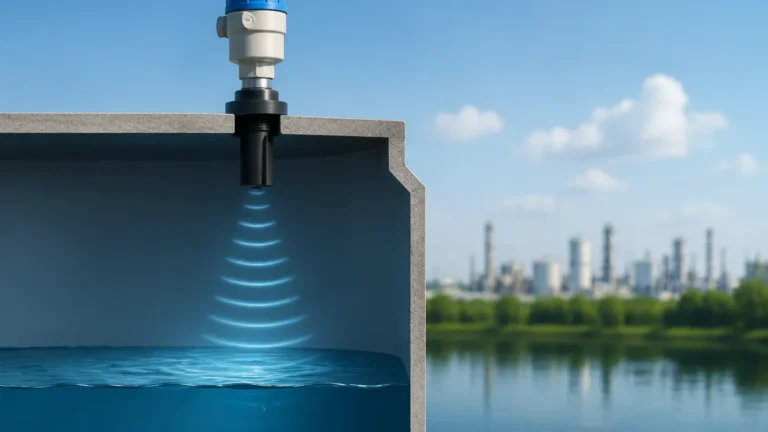
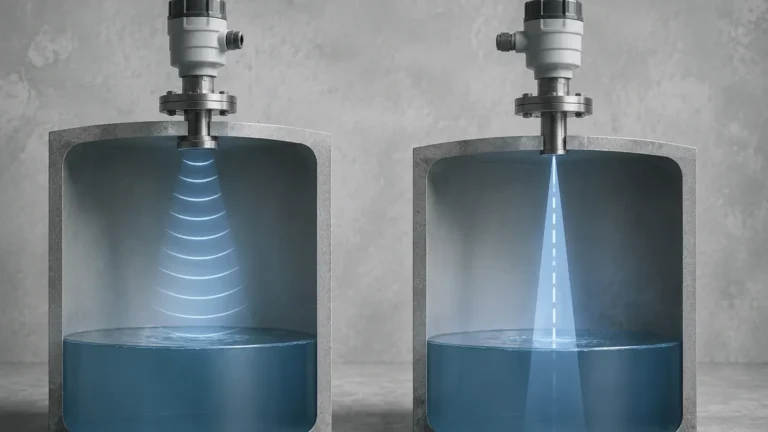
Before selecting a sensor, it is essential to understand the physics of ultrasonic wave propagation. Ultrasonic level meters operate on the Time-of-Flight (ToF) principle. The device’s transducer emits a high-frequency acoustic pulse, typically in the range of 20 kHz to 200 kHz. This sound wave travels through the air, reflects off the surface of the medium (liquid or solid), and returns to the transducer.
The sensor’s internal electronics measure the time interval between the emission of the pulse and the reception of the echo. The distance ($D$) between the sensor and the material surface is calculated using the formula:
$$D = \frac{c \times t}{2}$$
Where:
* c is the speed of sound in the air (approximately 340 m/s at 20°C).
* t is the total travel time of the pulse.
Since the speed of sound is affected by air temperature, professional-grade sensors, such as those manufactured by Welk, include integrated temperature compensation. An internal thermistor measures the ambient temperature within the vessel or surrounding area to adjust the calculation in real-time, ensuring accuracy across varying environmental conditions.
Why Source an Ultrasonic Level Sensor from China?
China has become a global hub for industrial instrumentation, particularly for ultrasonic technology. When evaluating an ultrasonic level sensor china manufacturers provide several strategic advantages for B2B buyers:
1. Advanced Manufacturing Infrastructure: Modern facilities utilize automated SMT (Surface Mount Technology) for circuit boards and precision molding for transducers, ensuring high consistency across large production batches.
2. Customization (OEM/ODM): Chinese manufacturers are highly flexible, offering customized cable lengths, specialized housing materials (such as PVDF for corrosive environments), and specific communication protocols (Modbus RTU, HART, or Profibus).
3. Cost-to-Performance Ratio: By optimizing supply chains for components like piezoelectric ceramics and microprocessors, these sensors provide high-end features—such as false echo suppression and digital filtering—at a competitive price point compared to traditional European or North American brands.
4. Compliance and Certification: Leading suppliers ensure their products meet CE, RoHS, and often explosion-proof certifications (Ex d or Ex ia), making them suitable for hazardous industrial environments.
Key Technical Selection Criteria
Choosing the right ultrasonic level meter requires a detailed analysis of the application environment. The following factors are critical for performance:
Measurement Range and Frequency
The frequency of the ultrasonic pulse determines the sensor's range and resolution. Higher frequencies (e.g., 60 kHz – 80 kHz) allow for smaller transducers and better resolution but have a shorter range (typically up to 5-10 meters). Lower frequencies (e.g., 20 kHz – 30 kHz) can penetrate dust and travel further, reaching distances of up to 30 or 40 meters.
Beam Angle
The beam angle defines the spread of the ultrasonic pulse. A narrower beam angle (e.g., 5° to 8°) is preferable for narrow tanks or vessels with internal obstructions like ladders or agitators. A wider beam angle may pick up "false echoes" from the tank walls.
Housing Materials
* ABS/Nylon: Standard for water treatment and non-corrosive liquids.
* PVDF (Polyvinylidene Fluoride): Essential for chemical processing involving aggressive acids or bases.
* Stainless Steel: Used in food and beverage applications or where high mechanical durability is required.
Selection Table for Ultrasonic Level Meters
The following table provides a comparison of common configurations for industrial applications.
| Feature | Integrated Type | Remote/Split Type | High-Precision Series |
| :— | :— | :— | :— |
| Measurement Range | 0.4m – 15m | 0.4m – 30m | 0.2m – 10m |
| Output Signal | 4-20mA, RS485 | 4-20mA, Relays, RS485 | 4-20mA (High Resolution) |
| Power Supply | 24V DC / 2-wire | 220V AC or 24V DC | 24V DC |
| Protection Class | IP66 / IP67 | IP68 (Sensor) / IP65 (Host) | IP67 |
| Accuracy | 0.5% of full scale | 0.25% – 0.5% | 0.2% of full scale |
| Best Use Case | Open channels, small tanks | Deep sumps, hazardous areas | Process control, dosing |
Installation Best Practices
Correct installation is the most significant factor in the long-term reliability of an ultrasonic level sensor china sourcing projects often fail not because of hardware quality, but due to improper mounting. Engineers should follow these guidelines:
1. Blocking Distance (Dead Zone)
Every ultrasonic sensor has a "dead zone" directly beneath the transducer where it cannot measure level. This is because the transducer cannot switch from "transmit" to "receive" mode instantaneously. Ensure the maximum liquid level never enters this zone (typically 0.2m to 0.5m depending on the model).
2. Positioning and Alignment
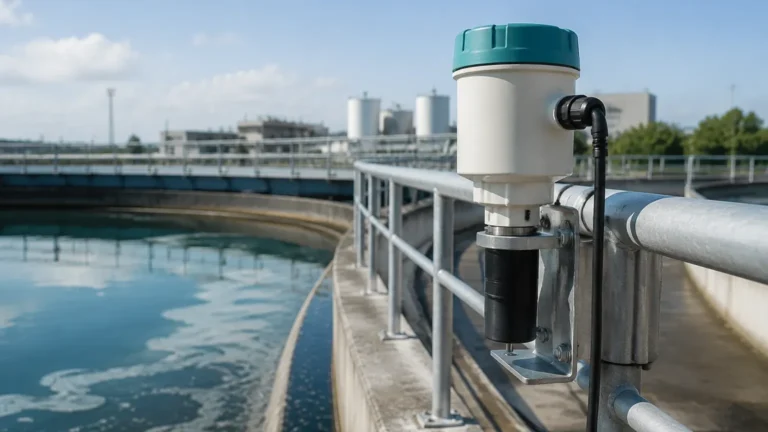
* Perpendicularity: The sensor must be mounted perfectly perpendicular to the liquid surface. Even a few degrees of tilt can cause the echo to reflect away from the transducer, resulting in signal loss.
* Wall Distance: Do not mount the sensor too close to the tank wall. The rule of thumb is to maintain a distance from the wall equal to at least 1/6th of the tank height to avoid interference from wall echoes.
* Inlet Avoidance: Never install the sensor directly above the tank inlet. The turbulence and falling liquid will disrupt the ultrasonic signal.
3. Use of Standpipes
In applications with heavy foam or surface turbulence, installing the sensor inside a plastic or metal standpipe (stillwell) can help. The pipe acts as a waveguide, providing a calm surface for the ultrasonic pulse to reflect from.

Limitations and Environmental Considerations
While versatile, Ultrasonic Level Meters are not universal solutions. They have specific physical limitations:
* Vacuum Conditions: Sound waves require a medium (air or gas) to travel. Ultrasonic sensors will not function in a vacuum.
* High Pressure/Temperature: Extreme pressure changes the density of the air, affecting the speed of sound beyond what standard compensation can handle. Generally, these sensors are limited to 0.3 MPa (3 bar) of pressure.
* Heavy Foam: Thick, dense foam absorbs the acoustic pulse rather than reflecting it. In these cases, a radar level meter or a hydrostatic transmitter is a better choice.
* Heavy Vapor and Dust: While some low-frequency sensors can penetrate light dust, heavy steam or dense dust clouds will attenuate the signal, leading to unreliable readings.
Troubleshooting Common Issues
When commissioning an ultrasonic level sensor, technicians may encounter specific challenges:
* "Lost Echo" Error: Often caused by the liquid level entering the dead zone or the sensor being tilted. Check the mounting angle and the distance to the highest liquid point.
* Fluctuating Readings: This is usually due to surface turbulence or electrical interference. Increasing the sensor's damping (averaging) time in the software settings can stabilize the output.
* Incorrect Level Display: If the reading is consistently off by a specific percentage, check the temperature compensation settings or verify if there is a heavy gas other than air (like CO2) in the tank, which changes the speed of sound.
Frequently Asked Questions (FAQ)
Q: Can ultrasonic sensors measure the level of solids like grain or sand?
A: Yes, but with caveats. Solids do not reflect sound as efficiently as liquids and often create a conical surface. A sensor with a higher power output and a lower frequency is typically required for solids, and the effective range is usually reduced by 50% compared to liquids.
Q: What is the difference between a 2-wire and a 4-wire ultrasonic meter?
A: A 2-wire sensor uses the same two wires for both power (24V DC) and the 4-20mA signal, making it easier to wire. A 4-wire sensor has separate wires for power (often allowing for 220V AC options) and signals, which usually allows for stronger pulse emission and more relay outputs.
Q: How do I handle internal obstructions in the tank?
A: Modern Ultrasonic Level Meters from professional manufacturers like Welk feature "False Echo Storage." During commissioning, the user can map the empty tank, and the sensor will identify and ignore echoes from fixed objects like pipes or agitator blades.
Conclusion
Selecting an ultrasonic level sensor china manufactured provides a high-performance solution for a wide array of industrial level monitoring tasks. By understanding the underlying acoustic principles, respecting the installation requirements regarding beam angles and dead zones, and choosing the appropriate housing materials, engineers can ensure long-term accuracy and minimal maintenance. Whether for municipal water treatment, chemical storage, or industrial sumps, these instruments offer a reliable window into process conditions.