Ultrasonic Level Meter Nus 4
Understanding the Ultrasonic Level Meter NUS 4: A Comprehensive Engineering Guide
In the realm of industrial process control, the demand for non-contact level measurement has grown significantly due to the need for reduced maintenance and high reliability. Among the various technologies available, Ultrasonic Level Meters remain a cornerstone for liquid and bulk solid monitoring. The ultrasonic level meter NUS 4 represents a specific class of compact, integrated transmitters designed to bridge the gap between simple level detection and complex process automation.
This guide explores the technical principles, selection criteria, and practical installation requirements for these instruments, providing engineers and procurement specialists with the factual foundation needed for successful implementation.
The Physics of Ultrasonic Level Measurement
Before selecting a specific model like the NUS 4, it is essential to understand the underlying Time-of-Flight (ToF) principle. Ultrasonic sensors operate by emitting high-frequency sound pulses—typically between 20 kHz and 200 kHz—from a transducer. These waves travel through the air or vapor space above the medium, reflect off the surface, and return to the sensor.
Time-of-Flight Calculation
The instrument measures the time interval ($t$) between the emission of the pulse and the reception of the echo. Since the speed of sound ($v$) in air is known (approximately 344 m/s at 20°C), the distance ($D$) to the surface is calculated using the formula:
$$D = \frac{v \times t}{2}$$
By subtracting this distance from the total tank height (the calibration zero point), the meter determines the actual level of the material.
The Role of Temperature Compensation
The speed of sound is not constant; it fluctuates based on the temperature of the medium through which it travels. An increase in temperature typically increases the speed of sound, which could lead to significant measurement errors if not corrected. Professional-grade Ultrasonic Level Meters include an integrated temperature sensor within the transducer head to provide real-time compensation, ensuring accuracy across varying ambient conditions.
Technical Profile of the Ultrasonic Level Meter NUS 4
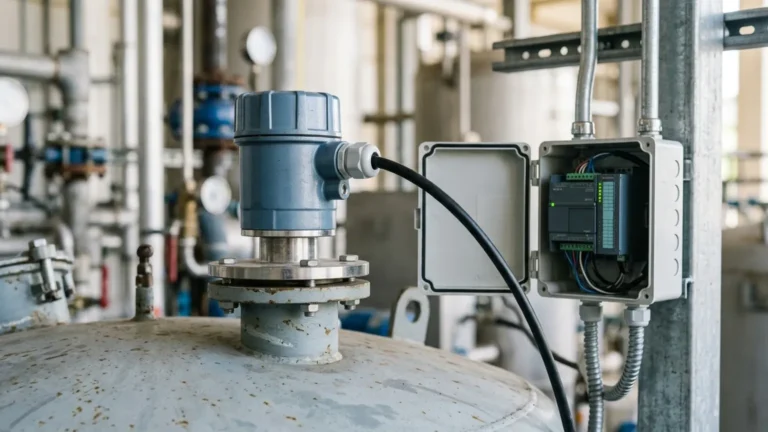
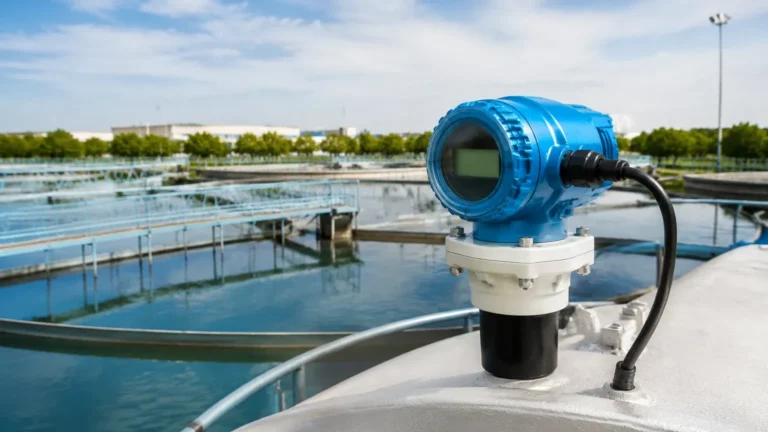
The ultrasonic level meter NUS 4 is characterized by its compact, "all-in-one" design. Unlike older systems that required a separate remote evaluation unit, the NUS 4 integrates the transducer, processing electronics, and local display into a single housing. This design is particularly favored in water treatment and chemical dosing applications where space is limited and ease of wiring is a priority.
Key Features and Capabilities
1. Measurement Range: Typically covers distances from 0.2 meters up to 25 meters, depending on the transducer frequency.
2. Output Signals: Standard 4-20 mA analog outputs are common, often supplemented by HART protocol or RS485 Modbus for digital integration.
3. Programming: Most units feature a plug-in display module or can be configured via PC software, allowing for the mapping of tank shapes (linearization) for volume calculation.
4. Material Compatibility: Transducers are often constructed from PVDF or PP to resist corrosive chemical vapors.
Selection Criteria for Industrial Applications
Choosing the right ultrasonic instrument requires an analysis of the process environment. The following table provides a reference for evaluating the suitability of the ultrasonic level meter NUS 4 against standard application requirements.
Selection Table: Application Suitability
| Parameter | Requirement | Ultrasonic Suitability | Notes |
| :— | :— | :— | :— |
| Medium Type | Clean Liquids | Excellent | Ideal for water, oils, and diluted chemicals. |
| Medium Type | Heavy Foam | Poor | Foam absorbs the sound pulse, leading to signal loss. |
| Surface Profile | Turbulent/Agitated | Fair | Requires software damping or a stilling well. |
| Pressure | Vacuum or > 3 Bar | Not Recommended | Sound requires a medium; vacuum prevents transmission. |
| Temperature | -40°C to +80°C | Good | Standard range for most piezoelectric transducers. |
| Accuracy | +/- 2mm to 0.2% FS | High | Sufficient for most inventory and process tasks. |
Installation Guidelines and Best Practices
The performance of an ultrasonic level meter NUS 4 is heavily dependent on its physical placement. Incorrect mounting is the leading cause of "lost echo" errors in industrial settings.
1. The Blocking Distance (Dead Zone)
Every ultrasonic sensor has a "Dead Zone" directly beneath the transducer face where measurement is impossible. This is because the transducer cannot receive an echo while it is still vibrating from the emission. For a standard NUS 4 unit, this zone is typically between 0.2m and 0.5m. The instrument must be mounted high enough so that the maximum liquid level never enters this zone.
2. Positioning and Orientation
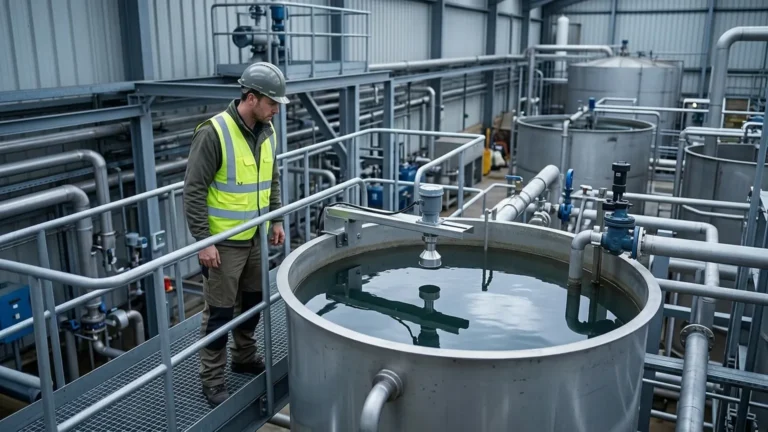
* Avoid the Center: In cylindrical tanks with domed tops, do not mount the sensor in the exact center, as this can create multiple reflections that confuse the signal processing.
* Stay Clear of Inlets: Mounting the sensor near a fill pipe will result in the meter measuring the falling stream of liquid rather than the actual tank level.
* Perpendicularity: The transducer face must be perfectly parallel to the liquid surface. Even a few degrees of tilt can cause the reflected signal to bounce away from the receiver.
3. Obstruction Management
Internal tank structures such as ladders, heating coils, or agitators can create "false echoes." Modern ultrasonic level meter NUS 4 units include an "Echo Masking" or "False Echo Suppression" feature. During commissioning, the engineer can tell the meter to ignore specific reflections at fixed distances, allowing the unit to track only the true surface level.

Limitations and Environmental Considerations
While highly versatile, ultrasonic technology has factual boundaries that must be respected to ensure process safety.
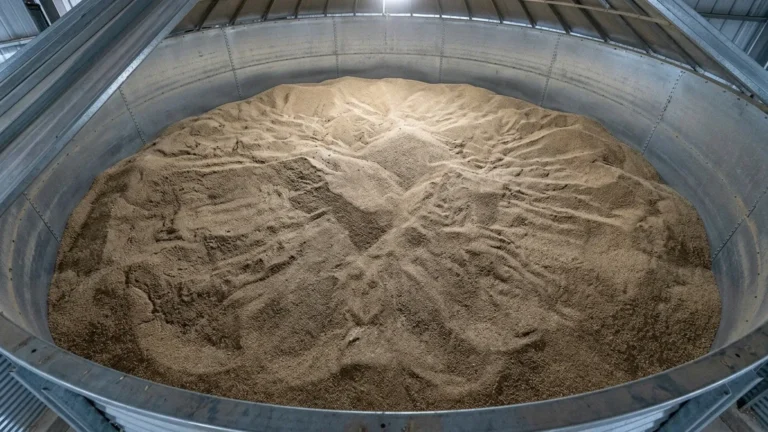
* Dust and Vapor: While light dust is manageable, heavy concentrations of dust (as seen in some grain silos) or extremely thick steam can attenuate the ultrasonic signal. In these cases, high-frequency radar may be a more robust alternative.
* Gas Composition: Ultrasonic meters are calibrated for the speed of sound in air. If the tank contains a heavy gas blanket (like CO2 or Nitrogen), the speed of sound changes significantly, requiring manual calibration factors to be entered into the device.
* Acoustic Noise: High-frequency mechanical noise from nearby machinery can occasionally interfere with the sensor’s ability to distinguish its own echo.
Maintenance and Troubleshooting
One of the primary B2B advantages of the ultrasonic level meter NUS 4 is its low maintenance requirement. Because there are no moving parts and no contact with the medium, mechanical wear is non-existent. However, periodic checks are recommended:
1. Transducer Cleaning: In applications involving wastewater or sticky chemicals, condensation or buildup can occur on the transducer face. A gentle wipe with a soft cloth is usually sufficient to restore signal strength.
2. Signal Strength Monitoring: Most digital ultrasonic meters provide a "Signal-to-Noise Ratio" (SNR) or "Confidence" value. Monitoring this via a PLC can provide early warning of environmental changes (like increasing foam) before the measurement fails.
3. Cable Integrity: Ensure that the cable gland is tightened and that no moisture has entered the electronics housing, especially in outdoor installations.
Frequently Asked Questions (FAQ)
Q: Can the ultrasonic level meter NUS 4 be used for solids?
A: Yes, but with caveats. Solids like plastic pellets or grains have an angle of repose that reflects sound away from the sensor. The effective range is typically reduced by 50% compared to liquids, and a swivelling mounting bracket may be required to aim the sensor.
Q: How does the NUS 4 handle agitators?
A: Through software algorithms. The meter can be programmed to use "Average Value Filtering" to smooth out fluctuations caused by surface turbulence and "False Echo Suppression" to ignore the physical blades of the agitator.
Q: Is it possible to use this meter in a pressurized tank?
A: Ultrasonic sensors are generally limited to atmospheric pressure or low-pressure vessels (up to 3 bar). High pressure changes the density of the air, which in turn changes the speed of sound and the acoustic impedance, often making the measurement unreliable.
Q: What is the difference between a 2-wire and 4-wire NUS 4?
A: A 2-wire version is loop-powered, meaning the power and the 4-20mA signal share the same pair of wires. This is easier to install but provides less power for the transducer. A 4-wire version has separate power supply wires, allowing for a more powerful ultrasonic pulse, which is better for long ranges or difficult conditions.
Conclusion
The ultrasonic level meter NUS 4 is a reliable and cost-effective solution for a wide array of industrial level monitoring tasks. By understanding the acoustic principles and adhering to strict installation guidelines regarding the dead zone and tank obstructions, engineers can achieve high-precision results without the maintenance headaches associated with contact-based sensors. For those seeking to optimize their liquid management systems, exploring the full range of Ultrasonic Level Meters is the first step toward modernized industrial automation.