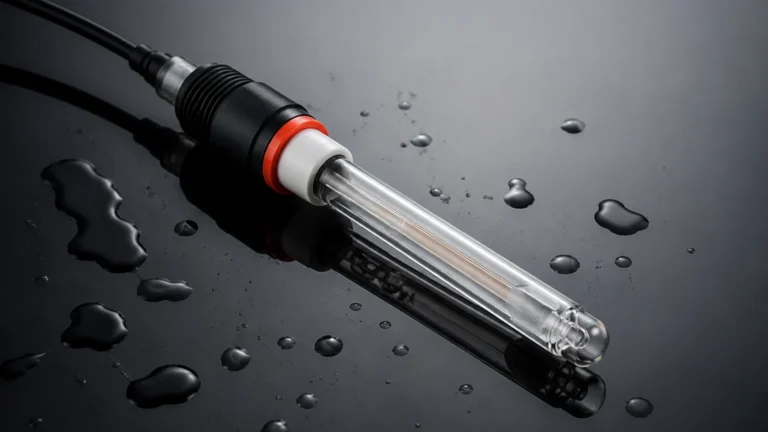
Wireless Tank Level Monitoring System
Wireless Tank Level Monitoring System
In modern industrial environments, the ability to monitor liquid levels remotely and accurately is no longer a luxury but a necessity for operational efficiency. A wireless tank level monitoring system eliminates the prohibitive costs and logistical complexities associated with extensive cabling in large-scale facilities, remote tank farms, and hazardous chemical storage areas. By integrating advanced sensing technologies with robust wireless communication protocols, these systems provide real-time data visibility, enabling better inventory management, leak detection, and process automation.
For engineers and facility managers, transitioning to a wireless architecture requires a deep understanding of both the measurement physics and the communication infrastructure. This guide examines the core principles, selection criteria, and installation best practices for implementing an effective wireless monitoring solution.
Measurement Principles in Wireless Systems
Before selecting a wireless node or gateway, it is essential to understand the underlying measurement technology. The sensor is the foundation of any wireless tank level monitoring system. The choice of sensor depends on the physical properties of the medium, the tank environment, and the required accuracy.
Radar Level Measurement (Non-Contact)
Radar level meters, such as those manufactured by Welk, utilize high-frequency electromagnetic waves (typically in the 26GHz or 80GHz range). The sensor emits a signal that reflects off the surface of the liquid and returns to the antenna. By measuring the time-of-flight or the frequency shift (FMCW), the system calculates the distance to the product surface.
* Advantages: Radar is unaffected by temperature fluctuations, pressure changes, or the presence of vapors and dust. It provides high precision (often within ±2 mm) and is ideal for corrosive or volatile liquids.
* Wireless Integration: Because radar sensors require stable power for continuous high-frequency emission, wireless versions often utilize sophisticated power management or are paired with high-capacity battery packs.
Ultrasonic Level Measurement
Ultrasonic sensors function by emitting sound pulses that bounce off the liquid surface. The time taken for the echo to return is proportional to the distance. These are widely used in water treatment and simple chemical storage applications.
* Advantages: Cost-effective and easy to install. There are no moving parts, reducing maintenance requirements.
* Limitations: Ultrasonic waves are sensitive to air temperature changes (which affect the speed of sound) and can be scattered by heavy foam or steam. In a wireless tank level monitoring system, temperature compensation is a critical feature for ultrasonic nodes.
Hydrostatic Pressure Measurement
Hydrostatic transmitters measure the pressure exerted by the liquid column above the sensor. Based on the formula $P = \rho gh$ (where $P$ is pressure, $\rho$ is density, $g$ is gravity, and $h$ is height), the level is derived. These can be submersible or externally mounted via a tank tap.
* Advantages: Highly reliable for vented tanks and deep wells. They are often the most energy-efficient option for battery-powered wireless nodes because they do not require the energy-intensive wave emission of radar or ultrasonic units.
Components of a Wireless Monitoring Architecture
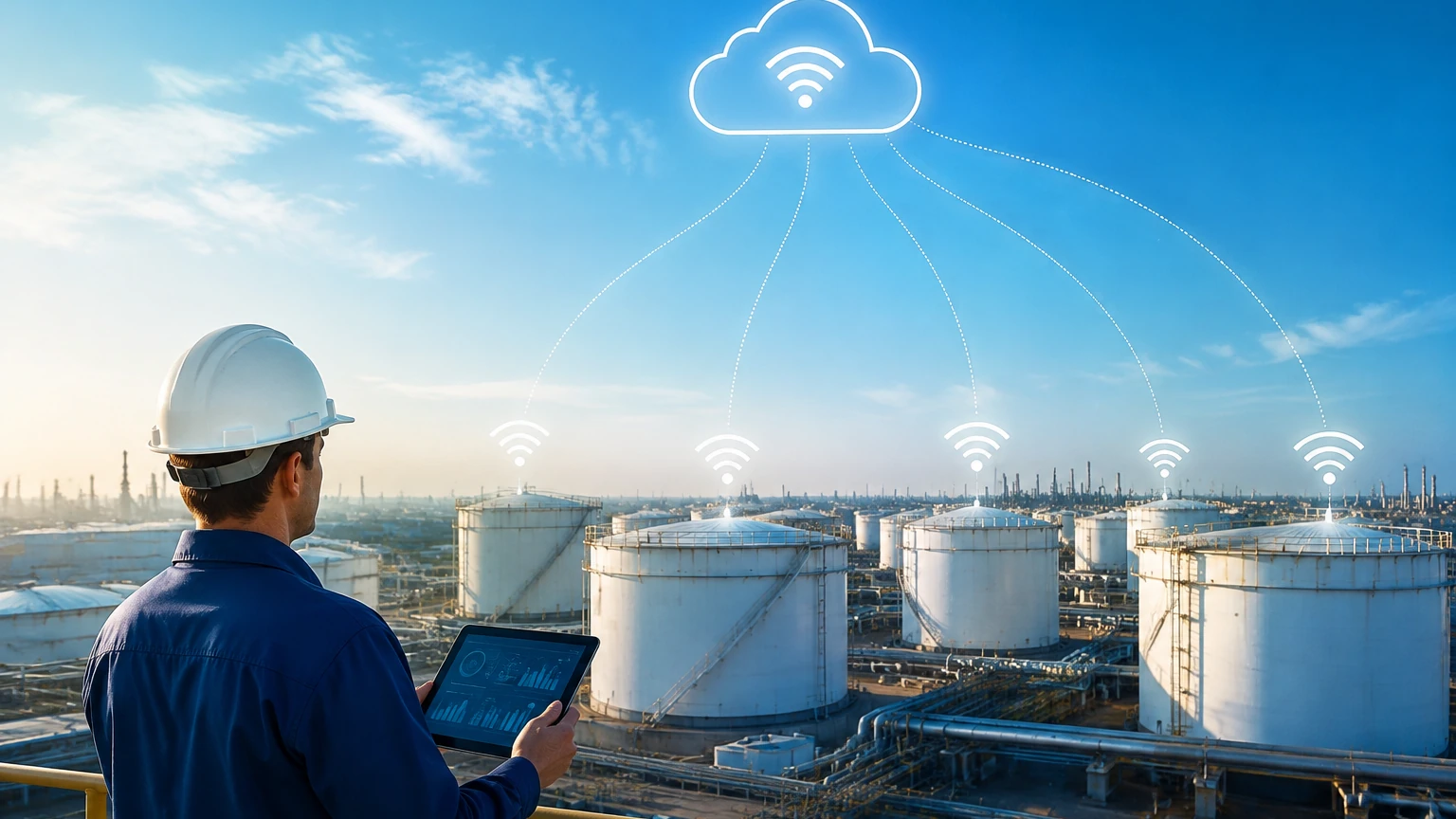
A complete wireless tank level monitoring system consists of several integrated layers that ensure data moves reliably from the tank to the end-user's screen.
1. The Wireless Sensor Node: This unit combines the level sensor (Radar, Ultrasonic, or Pressure) with a radio transmitter and a power source (battery or solar). It digitizes the analog signal and transmits it at set intervals.
2. The Gateway: Acting as the central hub, the gateway receives signals from multiple sensor nodes. It translates various radio protocols into a format compatible with the local network or the internet (e.g., Modbus TCP/IP, MQTT, or Cellular).
3. The Data Platform: This is the software interface where users view levels, set alarms, and analyze trends. It may be hosted on a local server (SCADA) or a cloud-based dashboard.
When evaluating hardware, professionals often visit the Main Page of specialized manufacturers like Welk to compare the technical specifications of sensors that support wireless integration.
Technical Selection Criteria
Selecting the right system requires balancing technical requirements with environmental constraints. The following table provides a comparison of common technologies used in wireless configurations.
| Feature | Radar (FMCW) | Ultrasonic | Hydrostatic |
| :— | :— | :— | :— |
| Accuracy | High (±2 mm to ±5 mm) | Moderate (±0.25% of range) | High (±0.1% to ±0.5% of span) |
| Range | Up to 30m – 120m | Up to 10m – 15m | Varies by pressure rating |
| Media Suitability | Corrosives, Hydrocarbons, Solids | Water, Wastewater, Acids | Clean liquids, Slurries |
| Power Consumption | Moderate to High | Moderate | Low |
| Vapor/Steam Impact | None | Significant | None |
| Typical Application | Chemical Process Tanks | Open Channels, Sumps | Deep Wells, Vented Storage |
Communication Protocols
The "wireless" aspect of the system is governed by the radio protocol. Common choices include:
* LoRaWAN: Ideal for long-range (up to 15 km in rural areas) and low power consumption. Perfect for remote tank farms.
* NB-IoT / LTE-M: Utilizes cellular networks. Best for dispersed assets where installing a local gateway is not feasible.
* Zigbee / WirelessHART: Best for dense industrial plants where mesh networking provides high reliability and low latency.
Installation Considerations and Best Practices
Successful deployment of a wireless tank level monitoring system depends heavily on proper physical installation and signal management.
Signal Integrity and Line of Sight
While many modern industrial wireless protocols can penetrate walls or wrap around obstacles, a clear Line of Sight (LoS) between the sensor node and the gateway is always preferred. For steel tanks, the sensor node or its antenna must be mounted externally to avoid the "Faraday Cage" effect, which blocks radio signals.
Mounting Geometry
For radar and ultrasonic sensors, the mounting position is critical. The sensor should be installed away from the tank wall (typically at least 200 mm to 500 mm depending on the beam angle) to avoid false reflections from weld seams or scales. It must also be positioned away from the inflow stream to prevent turbulence from interfering with the measurement.
Power Management
Since many wireless nodes are battery-powered, the update interval (how often the sensor wakes up to take a measurement) directly impacts the system's lifespan. In a typical wireless tank level monitoring system, an update interval of 15 to 30 minutes is often sufficient for inventory tanks, whereas process tanks may require updates every 1 to 5 minutes.
Limitations and Common Risks
Despite their versatility, wireless systems have specific limitations that engineers must mitigate:
1. Signal Interference: In heavy industrial environments, large motors, VFDs, and metal structures can cause electromagnetic interference (EMI). Choosing a frequency-hopping protocol like WirelessHART can help mitigate this.
2. Latency: Unlike a hardwired 4-20mA loop that provides near-instantaneous feedback, wireless systems have inherent latency. They are generally not recommended for high-speed safety instrumented systems (SIS) or critical overfill prevention where millisecond response times are required.
3. Battery Maintenance: While batteries can last 3 to 5 years, a large facility with hundreds of sensors requires a robust maintenance schedule to prevent data gaps due to power failure.
4. Data Security: Wireless transmissions are susceptible to interception. It is vital to ensure that the system uses AES-128 encryption or higher at the link layer to protect sensitive process data.
Frequently Asked Questions (FAQ)
Q: Can a wireless system be used in hazardous (Ex) zones?
A: Yes. Many wireless sensor nodes are designed with Intrinsic Safety (IS) ratings (e.g., ATEX, IECEx). These units are engineered to operate with such low energy that they cannot ignite a flammable atmosphere.
Q: How do I handle tanks with internal obstructions like agitators?
A: For tanks with internal structures, radar sensors with "false echo suppression" or "echo mapping" software are recommended. This allows the system to recognize and ignore static reflections from internal pipes or blades.
Q: What is the maximum distance a wireless sensor can be from the gateway?
A: This depends on the protocol. LoRaWAN can reach several kilometers, while Zigbee or Bluetooth-based systems are typically limited to 10m to 100m (33ft to 328ft). Signal repeaters can be used to extend these ranges.
Q: How does weather affect the wireless signal?
A: Heavy rain or snow can attenuate (weaken) high-frequency signals. However, industrial-grade wireless protocols are designed with sufficient "link budget" to account for atmospheric conditions, ensuring reliable data transmission in most climates.
Conclusion
Implementing a wireless tank level monitoring system offers a scalable and cost-effective path to digitalizing industrial assets. By selecting the appropriate measurement principle—whether it be the precision of a Welk radar meter or the simplicity of a hydrostatic transmitter—and pairing it with a robust communication protocol, organizations can achieve significant improvements in safety and inventory accuracy. When planning a project, always verify the compatibility of the sensor with the chemical properties of the fluid and the physical constraints of the site to ensure long-term reliability.