Which of the Following Was Able to Detect Pressure
Which of the Following Was Able to Detect Pressure
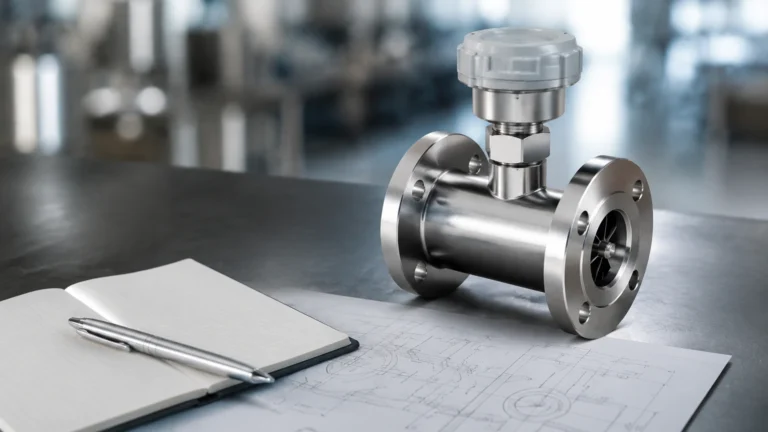
In the field of industrial automation and process control, level measurement is a fundamental requirement for safety, inventory management, and process efficiency. While there are numerous technologies available—ranging from non-contact radar to mechanical floats—the use of pressure as a proxy for level remains one of the most reliable and widely adopted methods. When engineers evaluate instrumentation for liquid storage, they must frequently determine which of the following was able to detect pressure effectively under specific process conditions.
This guide explores the principles of hydrostatic level measurement, identifies the specific instruments designed to detect pressure for level calculation, and provides practical selection and installation advice for industrial applications.
Understanding the Relationship Between Pressure and Level
Before identifying specific instruments, it is essential to understand the physical principle that allows a sensor to determine the height of a liquid by measuring pressure. This is known as the hydrostatic principle.
In a static liquid, the pressure at any given point is directly proportional to the height of the liquid column above it. This relationship is expressed by the formula:
P = ρ × g × h
Where:
* P is the hydrostatic pressure (measured in Pascals or bar).
* ρ (rho) is the density of the liquid (kg/m³).
* g is the acceleration due to gravity (approximately 9.81 m/s²).
* h is the height of the liquid column (meters).
Because gravity is constant and the density of most liquids remains relatively stable under controlled temperatures, the pressure measured at the bottom of a tank can be converted directly into a level reading. Therefore, when assessing which of the following was able to detect pressure for level monitoring, we are specifically looking at instruments that utilize this hydrostatic relationship.
Identifying Instruments: Which of the Following Was Able to Detect Pressure?
In industrial catalogs, several devices are designed to measure level by sensing pressure. Each has distinct mechanical configurations suited for different tank types and environmental conditions.
1. Hydrostatic Level Transmitters (Submersible)
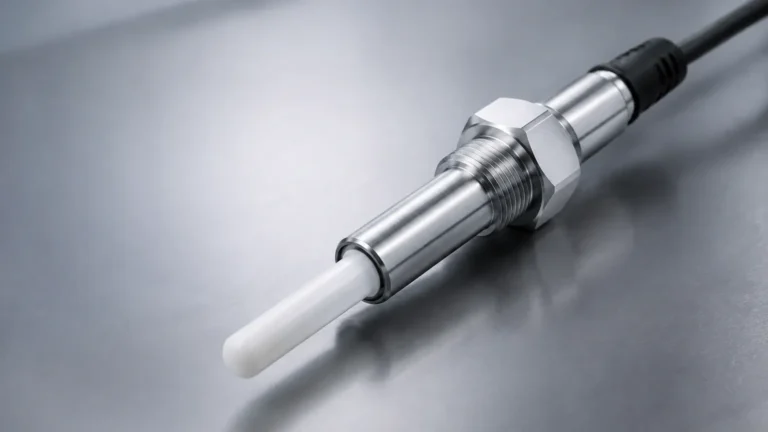
Submersible transmitters are perhaps the most direct answer when considering which of the following was able to detect pressure in deep wells or open reservoirs. These devices consist of a pressure-sensing element (usually a piezoresistive or ceramic diaphragm) housed in a waterproof stainless steel casing. The sensor is lowered into the liquid via a specialized cable that contains a vent tube to compensate for atmospheric pressure changes.
2. Differential Pressure (DP) Transmitters
In pressurized tanks, a single pressure measurement at the bottom is insufficient because the gas pressure above the liquid adds to the total pressure. In these scenarios, a Differential Pressure transmitter is used. It measures the pressure at the bottom (high-pressure side) and the pressure in the headspace (low-pressure side). The instrument subtracts the headspace pressure from the total pressure to isolate the hydrostatic pressure exerted by the liquid alone.
3. Bubbler Systems (Pneumatic Level Measurement)
While less common in modern digital plants, bubbler systems are a classic example of pressure-based detection. A tube is submerged in the liquid, and compressed air is forced through it. The pressure required to push air bubbles out of the bottom of the tube is equal to the hydrostatic pressure of the liquid. A pressure gauge or transmitter then reads this air pressure to determine the level.
4. Diaphragm Seals and Capillary Systems
For corrosive or high-temperature liquids where the transmitter cannot come into direct contact with the media, diaphragm seals are used. The pressure is detected by a remote diaphragm and transmitted through a capillary tube filled with silicone oil to the sensor. This configuration ensures the instrument remains protected while still providing accurate pressure-based level data.
To explore the full range of these technologies and their specific technical specifications, you can visit the Main Page for detailed product documentation.
Technical Selection Criteria for Pressure-Based Level Measurement
Choosing the correct instrument requires more than just knowing which of the following was able to detect pressure; it requires matching the sensor technology to the physical properties of the application.
| Feature | Submersible Transmitter | DP Transmitter | Bubbler System |
| :— | :— | :— | :— |
| Best Use Case | Deep wells, open tanks, boreholes | Pressurized vessels, boilers | Corrosive or slurry-filled tanks |
| Installation | Suspended by cable | Flanged or manifold mounted | External air supply required |
| Maintenance | Low (if sensor is anti-clogging) | Moderate (calibration of seals) | High (requires clean air source) |
| Accuracy | 0.1% to 0.5% FS | 0.05% to 0.25% FS | 0.5% to 1.0% FS |
| Cost | Economical | Moderate to High | Moderate |
Key Considerations:
* Specific Gravity (Density): Since pressure-based measurement relies on density, any significant change in the liquid's temperature or composition will affect accuracy. If the density varies, a compensation algorithm or a secondary temperature sensor may be required.
* Atmospheric Compensation: For open tanks, the sensor must be vented to the atmosphere. If the vent tube in a submersible cable becomes blocked or moisture enters, the level reading will drift.
* Chemical Compatibility: The diaphragm material (316L Stainless Steel, Tantalum, or Ceramic) must be resistant to the process media to prevent corrosion and premature failure.
Installation Best Practices for Hydrostatic Sensors
Proper installation is critical to ensure that the instrument remains able to detect pressure accurately over its service life.
1. Avoid Turbulence: Sensors should not be installed directly near an agitator or an inlet pipe where high-velocity flow can create localized pressure fluctuations (Bernoulli effect) or physical damage to the diaphragm.
2. Stilling Wells: In tanks with significant agitation, a stilling well (a perforated pipe) should be used to protect the sensor and provide a stable liquid column for measurement.
3. Cable Protection: For submersible units, ensure the cable is secured with a proper suspension clamp. The vent tube should terminate in a dry environment, often using a desiccant filter to prevent moisture ingress.
4. Zero Calibration: Once installed, the transmitter should be zeroed to account for the exact mounting position relative to the tank bottom. This ensures that the "empty" state corresponds to zero pressure.
Limitations and Environmental Factors
While pressure-based detection is versatile, it is not a universal solution. Engineers must be aware of the following limitations:
* Vapor Space Pressure: In closed tanks, if the headspace pressure is not accounted for (via a DP transmitter), the level reading will be completely inaccurate.
* Build-up and Clogging: In wastewater or slurry applications, solids can accumulate on the diaphragm. Using a flush-diaphragm design or a non-clogging cage can mitigate this risk.
* Temperature Extremes: High temperatures can cause the fill fluid in diaphragm seals to expand, leading to a "temperature effect" error. Selecting the correct fill fluid (e.g., high-temperature silicone oil) is vital for accuracy above 100°C.
* Vacuum Conditions: Some pressure sensors are not rated for vacuum. If a tank is subject to vacuum during a discharge cycle, the diaphragm could be pulled outward, causing permanent damage.
Frequently Asked Questions (FAQ)
Q: Can a pressure transmitter measure the level of a solid (like grain)?
No. Pressure-based level measurement relies on the hydrostatic properties of liquids, which exert pressure equally in all directions. Solids do not behave this way, and their "pressure" on a sensor is inconsistent and dependent on internal friction and bridging.
Q: How does a change in temperature affect the reading?
Temperature primarily affects the density of the liquid. As a liquid heats up, it usually expands and its density decreases. Since the pressure sensor only measures the weight of the column, the pressure will remain the same even though the actual physical height (volume) has increased. For high-precision volume measurement, temperature compensation is necessary.
Q: Which of the following was able to detect pressure in a highly corrosive acid tank?
A transmitter with a ceramic sensor or a diaphragm seal made of Hastelloy or Tantalum is the best choice. Ceramic sensors are particularly robust against chemical attack and mechanical abrasion.
Q: Is a pressure transmitter better than an ultrasonic sensor?
It depends on the application. Pressure transmitters are unaffected by foam, dust, or vapor in the headspace, which can interfere with ultrasonic signals. However, ultrasonic sensors are non-contact, meaning they do not require a process connection at the bottom of the tank, which is an advantage for preventing leaks.
Conclusion
Identifying which of the following was able to detect pressure is the first step in designing a robust level control loop. Hydrostatic and differential pressure transmitters offer a time-tested, reliable, and cost-effective means of monitoring liquid levels across various industries, from municipal water treatment to complex chemical processing. By understanding the underlying physics and following strict installation guidelines, operators can achieve high levels of accuracy and long-term stability in their measurement systems. For further technical assistance and to view specific hardware options, please refer to the Main Page.
Download Which of the Following Was Able to Detect Pressure as a PDF