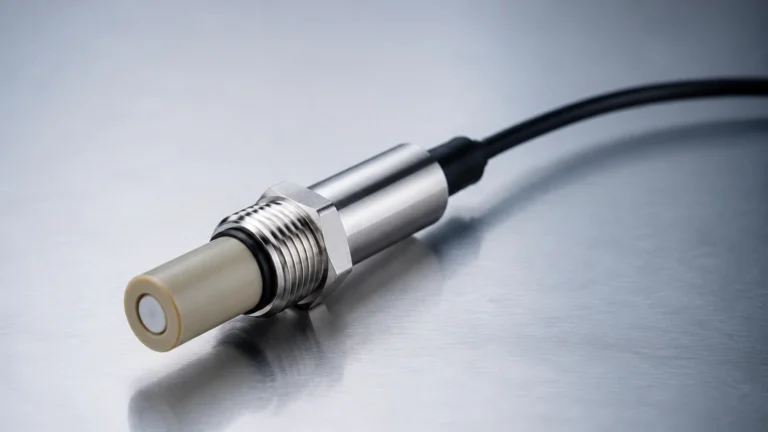
Level Sensor for Water
Level Sensor for Water
In industrial process control and water management, the selection of a level sensor for water is a critical decision that impacts operational efficiency, safety, and regulatory compliance. Water, while seemingly simple to measure, presents various challenges depending on its state—whether it is ultrapure water in a pharmaceutical lab, turbulent wastewater in a treatment plant, or high-pressure condensate in a power generation cycle.
Welk provides a comprehensive range of industrial level measurement instruments designed to meet these diverse needs. Understanding the underlying physics of different measurement technologies is the first step toward selecting the most reliable solution for a specific application.
Measurement Principles for Water Level Detection
Before selecting a level sensor for water, engineers must evaluate the operating environment and the physical properties of the liquid. The following technologies represent the industry standards for water level measurement.
Ultrasonic Level Measurement (Non-Contact)
Ultrasonic sensors operate on the "Time-of-Flight" (ToF) principle. The sensor emits a high-frequency acoustic pulse that travels through the air, reflects off the water surface, and returns to the transducer. The distance is calculated using the formula:
*Distance = (Speed of Sound × Time) / 2*
Because sound speed is affected by air temperature, high-quality ultrasonic sensors include integrated temperature compensation. This technology is ideal for open-air applications like flumes, weirs, and atmospheric storage tanks.
Radar Level Measurement (Non-Contact)
Radar sensors also use the ToF principle but utilize electromagnetic waves instead of sound. These waves travel at the speed of light and are largely unaffected by air temperature, pressure, or vacuum conditions.
* 26GHz Radar: Suitable for most standard industrial water tanks. It offers a balance between signal strength and beam angle.
* 80GHz Radar: Features a much narrower beam angle and higher precision. This is particularly useful in narrow tanks with internal obstructions (like ladders or agitators) where a wide beam would cause false reflections.
Hydrostatic Pressure Measurement (Contact)
Hydrostatic sensors measure the pressure exerted by the water column above the sensor diaphragm. According to Pascal’s Law, the pressure at the bottom of a tank is directly proportional to the height of the liquid and its density:
*P = ρ × g × h*
Where *P* is pressure, *ρ* (rho) is the density of the water, *g* is gravity, and *h* is the height. For vented tanks, submersible hydrostatic transmitters are commonly used, featuring a vented cable to compensate for changes in atmospheric pressure.
Magnetic Level Gauges (Visual and Remote)
Magnetic level gauges consist of a bypass chamber mounted to the side of a vessel. Inside the chamber, a float containing a permanent magnet moves with the water level. This magnet flips external rollers (visual indication) and can interact with a magnetostrictive transmitter or reed switches for remote signal transmission. This is a robust solution for high-pressure boilers or tanks where a clear visual reference is required alongside electronic monitoring.
Practical Selection Criteria
Choosing the right level sensor for water requires a systematic evaluation of the application's parameters. For a detailed overview of available hardware and technical specifications, engineers should consult the Main Page of our instrumentation catalog.
| Technology | Typical Accuracy | Max Range | Best Use Case | Main Limitation |
| :— | :— | :— | :— | :— |
| Ultrasonic | ±0.25% of range | 15–30 meters | Open channels, clean water tanks | Sensitive to foam and heavy steam |
| 80GHz Radar | ±1 mm | 120 meters | Narrow tanks, chemical dosing | Higher initial cost |
| Hydrostatic | ±0.1% to 0.5% | 200 meters | Deep wells, reservoirs, lift stations | Accuracy depends on constant density |
| Magnetic Gauge | ±5 mm (Visual) | 6 meters+ | Boilers, pressurized vessels | Requires side-mounting bypass |
| Level Switch | ±1 mm (Point) | N/A | Overfill protection, pump control | Point detection only (not continuous) |
Installation Considerations
Correct installation is as vital as selecting the right technology. Even the most advanced level sensor for water will fail if environmental factors are ignored.
1. The Dead Zone (Blocking Distance): For ultrasonic and radar sensors, there is a region immediately below the transducer where measurements cannot be taken. Ensure the sensor is mounted high enough that the water level never enters this zone.
2. Mounting Location: Sensors should be mounted away from the tank inlet to avoid turbulence and false readings caused by the inflowing water stream.
3. Beam Interference: For non-contact sensors, the "signal beam" is shaped like a cone. Ensure there are no structural supports, pipes, or agitators within this cone. If obstructions are unavoidable, 80GHz radar is preferred due to its narrow beam.
4. Submersible Venting: When using hydrostatic sensors, the capillary tube in the cable must remain unobstructed and protected from moisture. A desiccant cartridge is often recommended at the termination point to prevent condensation inside the vent tube.
Limitations and Environmental Challenges
While water is generally a "friendly" medium for sensors, specific conditions can interfere with accuracy:
* Foam: Heavy foam on the surface of wastewater can absorb ultrasonic signals, leading to a "loss of echo." In these cases, radar or hydrostatic sensors are more reliable.
* Steam and Condensation: Excessive steam can change the speed of sound, affecting ultrasonic accuracy. While radar is unaffected by steam, heavy condensation on the sensor face can attenuate the signal. Many Welk radar sensors feature specialized antenna designs to shed droplets.
* Density Variations: Hydrostatic sensors assume a constant liquid density. If the water temperature fluctuates significantly (changing the density) or if the water contains high concentrations of dissolved solids, the height calculation will require manual or automated compensation.
* Turbulence: Rapidly moving water in a mixing tank can cause erratic readings. Damping settings in the sensor software or the use of a stilling well can help stabilize the output.
Maintenance and Calibration Guidance
To ensure long-term reliability, a scheduled maintenance program should be implemented:
* Visual Inspection: Check for mineral scale or biological growth (algae) on the sensor face or float. In wastewater applications, grease buildup is a common issue that requires periodic cleaning.
* Zero-Point Verification: For hydrostatic sensors, pull the sensor out of the water periodically to verify that it reads zero at atmospheric pressure.
* Signal Strength Monitoring: Modern digital sensors provide diagnostics on signal quality. A declining signal-to-noise ratio often indicates that the sensor face needs cleaning or that the environment has changed (e.g., increased vapor).
Frequently Asked Questions (FAQ)
Q: Can I use an ultrasonic sensor for boiling water?
A: It is not recommended. Boiling water creates heavy steam and temperature gradients that significantly alter the speed of sound, leading to large errors. Radar is the superior choice for high-temperature water applications.
Q: What is the best sensor for deep well water levels?
A: Submersible hydrostatic level transmitters are the industry standard for deep wells. They are designed for long-term submersion and can measure levels at depths of 100 meters or more with high precision.
Q: How do I handle level measurement in a tank with an agitator?
A: Use an 80GHz radar sensor with a narrow beam to avoid the agitator blades, or use a hydrostatic sensor which is unaffected by internal tank structures. Alternatively, a magnetic level gauge mounted externally in a bypass pipe is a highly effective solution.
Q: Is a level sensor for water compatible with salt water or brine?
A: Yes, but material compatibility is key. For hydrostatic sensors, a titanium or high-grade stainless steel (316L) diaphragm is necessary to prevent corrosion. For non-contact sensors, ensure the housing can withstand the salt-spray environment.
Conclusion
Selecting a level sensor for water involves balancing technical requirements with budget constraints. While hydrostatic sensors offer a cost-effective solution for many submersible applications, radar technology provides unmatched precision in complex industrial environments. By understanding the measurement principles and acknowledging the limitations of each technology, engineers can implement a solution that provides years of accurate, maintenance-free service.
For further technical support or to request a quote for your specific project, please refer to the Main Page of our official site to connect with our application engineering team.