Switch Liquid Level
Switch Liquid Level
In industrial process control, the ability to detect the presence or absence of a fluid at a specific height is fundamental to safety and automation. A switch liquid level device, commonly referred to as a point level sensor, serves as a critical component in preventing tank overfills, protecting pumps from dry running, and managing automated filling sequences. Unlike continuous level transmitters that provide a constant stream of data regarding the fluid's exact position, a level switch operates on a binary principle: it is either "on" or "off" based on whether the liquid has reached a predetermined threshold.
Selecting the appropriate technology for a switch liquid level application requires a deep understanding of the physical properties of the media, the environmental conditions of the vessel, and the specific operational requirements of the control system. This guide examines the underlying measurement principles, selection criteria, and installation best practices for industrial level switches.
Measurement Principles of Level Switches
Before selecting a device, it is essential to understand how different technologies interact with the process media. Each principle offers distinct advantages depending on the liquid's viscosity, conductivity, and chemical composition.
Float-Operated Switches
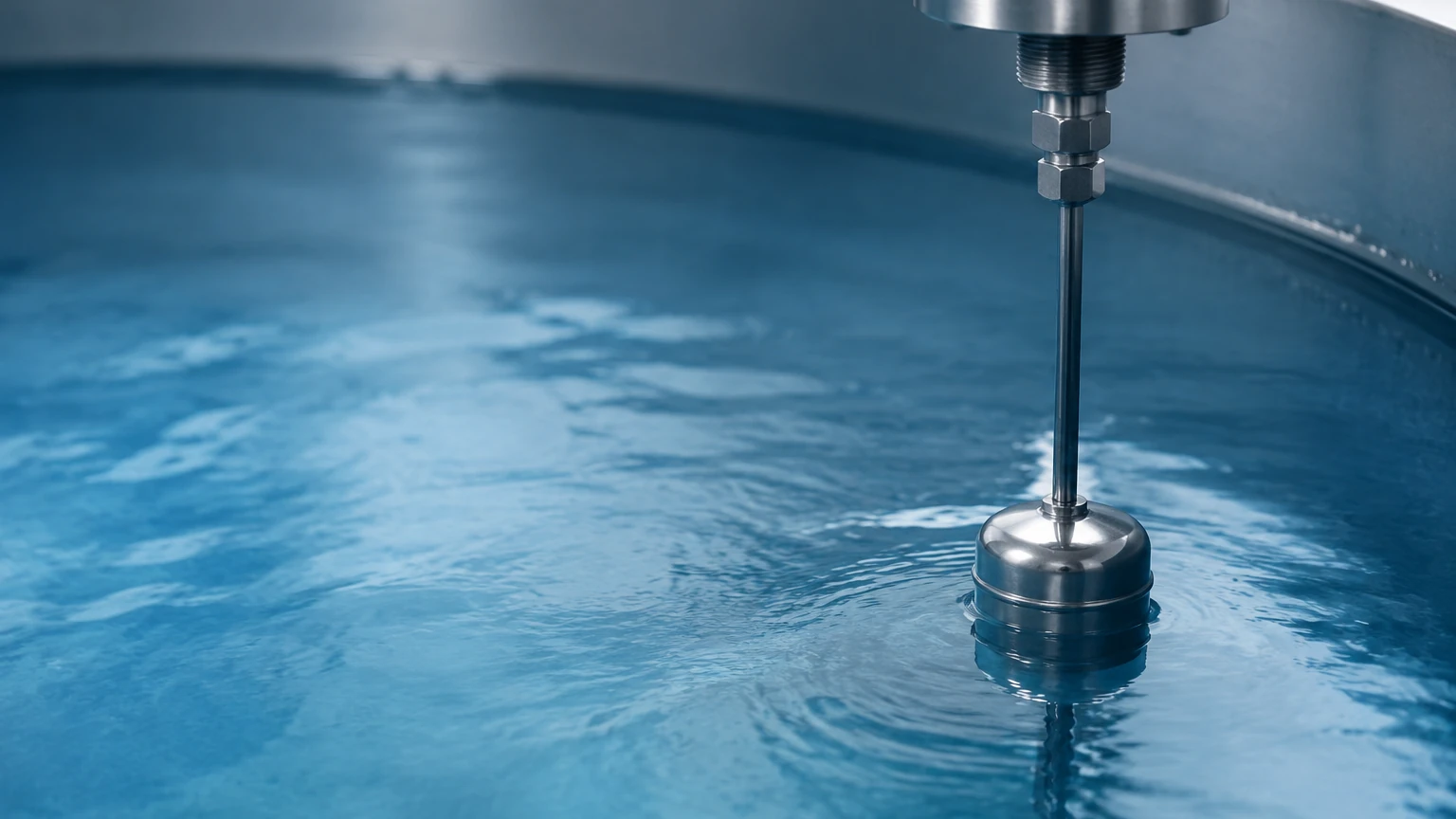
Float switches rely on the principle of buoyancy (Archimedes' principle). A float, designed with a lower density than the liquid, moves vertically along a stem or pivots on a hinge as the liquid level rises or falls. Inside the float or the stem, a permanent magnet actuates a hermetically sealed reed switch or a microswitch.
* Advantages: Simple, cost-effective, and requires no external power for the sensing element itself.
* Best For: Clean liquids with low viscosity where mechanical movement is not hindered by debris.
Vibrating Tuning Fork Switches
The vibrating level switch utilizes a tuning fork-shaped sensing element that is piezoelectrically energized to vibrate at its natural resonance frequency (typically around 1,200 Hz). When the fork is immersed in a liquid, the frequency shifts or the amplitude of the vibration is dampened. An internal electronic circuit detects this change and converts it into a switching signal.
* Advantages: Highly reliable, unaffected by bubbles, foam, or vibration in the tank.
* Best For: Slurries, aerated liquids, and applications requiring high-level overfill protection.
Capacitance Level Switches
Capacitance switches treat the sensor probe and the tank wall (or a reference electrode) as two plates of a capacitor. The liquid acts as the dielectric material. As the liquid covers the probe, the dielectric constant changes, leading to a measurable change in capacitance.
* Advantages: No moving parts; can be used in high-temperature and high-pressure environments.
* Best For: Aggressive chemicals and non-conductive liquids, provided the dielectric constant is stable.
Conductivity Level Switches
These switches use a low-voltage, current-limited signal applied between two or more electrodes. When a conductive liquid bridges the gap between the electrodes, a circuit is completed.
* Advantages: Extremely simple and economical for multi-point detection.
* Best For: Water, acids, and alkalis. They cannot be used with non-conductive liquids like oils or purified water.
Ultrasonic Gap Switches
Ultrasonic gap switches consist of a sensor head with two crystals separated by a small gap. One crystal transmits an ultrasonic signal, and the other receives it. When the gap is filled with air, the signal is too weak to reach the receiver. When liquid fills the gap, the signal is transmitted efficiently, triggering the switch.
* Advantages: Fast response time and no moving parts.
* Best For: Highly viscous liquids and applications where mechanical floats might stick.
Practical Selection Table
Choosing the right switch liquid level technology involves balancing performance with environmental constraints. The following table provides a quick reference for common industrial technologies.
| Technology | Media Compatibility | Max Pressure (approx.) | Max Temp (approx.) | Key Limitation |
| :— | :— | :— | :— | :— |
| Float | Clean, non-coating liquids | 40 bar (4.0 MPa) | 200°C | Susceptible to mechanical jamming |
| Tuning Fork | Slurries, liquids, foam | 64 bar (6.4 MPa) | 150°C | Build-up between forks can cause false trips |
| Capacitance | Chemicals, oils, water | 100 bar (10.0 MPa) | 250°C | Requires calibration for different media |
| Conductivity | Conductive liquids only | 25 bar (2.5 MPa) | 100°C | Not for non-conductive fluids |
| Optical | Clear or translucent liquids | 50 bar (5.0 MPa) | 125°C | Sensitive to coating and heavy scaling |
Key Evaluation Criteria for Engineers
When specifying a switch liquid level system, engineers must confirm several technical parameters to ensure long-term reliability.
1. Media Characteristics: Determine the density (specific gravity), viscosity, and conductivity of the liquid. For float switches, the float must be lighter than the liquid. For tuning forks, the density must be high enough to dampen the vibration (usually > 0.5 g/cm³).
2. Process Conditions: Verify the maximum operating pressure and temperature. High-pressure tanks may require specialized magnetic level gauges with integrated switches rather than direct-insertion floats.
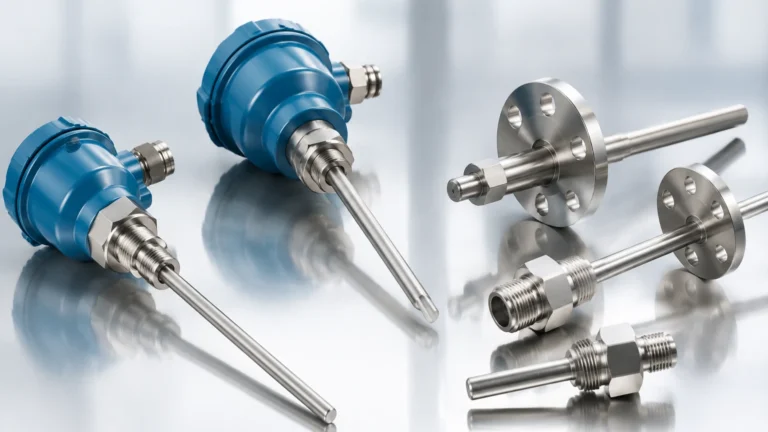
3. Chemical Compatibility: The wetted materials (e.g., 316L Stainless Steel, PTFE, PP, or PVDF) must be resistant to corrosion from the process fluid.
4. Output Type: Decide between a relay output (SPDT/DPDT) for direct load switching or a transistor output (NPN/PNP) for PLC integration. In hazardous areas, intrinsically safe (NAMUR) outputs may be required.
5. Hysteresis and Delay: Consider if the application needs a built-in time delay to prevent "chattering" caused by surface turbulence or splashing.
For those seeking a comprehensive range of industrial measurement tools, you can Review product options and application support on our Main Page to find the specific sensor configuration that fits your infrastructure.
Installation Considerations and Best Practices
Correct installation is as vital as selecting the right technology. Even the most advanced switch liquid level sensor will fail if placed incorrectly within the vessel.
* Orientation: Most tuning fork and capacitance switches can be mounted horizontally or vertically. However, float switches are often orientation-specific. Ensure the mounting allows the float to move through its full range of travel without hitting the tank wall or internal baffles.
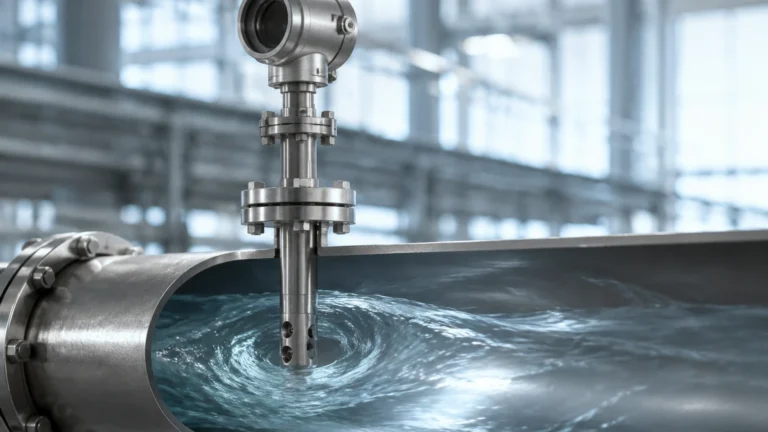
* Turbulence and Agitation: If the tank has an agitator or high-velocity inflow, the sensor should be installed in a stilling well or protected by a baffle to prevent mechanical stress or false triggering.
* Nozzle Length: For tuning fork and ultrasonic switches, ensure the sensing element extends beyond the mounting nozzle into the tank. If the sensor is recessed within a narrow nozzle, air pockets or material build-up can lead to inaccurate readings.
* Wiring and Conduits: Always install a drip loop in the conduit to prevent moisture from entering the housing. Ensure the cable entry is sealed according to the required IP (Ingress Protection) rating, typically IP65 or IP67 for industrial environments.
Limitations and Common Risks
While level switches are robust, they are not universal solutions. Engineers should be aware of the following risks:
* Coating and Build-up: In sticky or crystallizing media, material can accumulate on the sensor. While tuning forks and capacitance switches are designed to handle some build-up, excessive coating will eventually cause a "permanent" wet state signal.
* Foam Interference: Standard ultrasonic and optical switches may struggle with thick foam, either seeing it as a liquid (false high) or failing to penetrate it. Tuning forks are generally the best choice for ignoring light foam.
* Dielectric Shifts: Capacitance switches are sensitive to changes in the liquid's dielectric constant. If the process involves switching between different fluids (e.g., oil and water), the switch may require recalibration or a more advanced "phase detection" sensor.
Frequently Asked Questions (FAQ)
Q: Can a liquid level switch be used for solids?
A: Some technologies, like vibrating forks and capacitance probes, are designed specifically for bulk solids or powders. However, standard liquid float switches will not work in solid applications.
Q: What is the difference between NPN and PNP outputs?
A: These are transistor outputs used in DC circuits. PNP (Sourcing) provides positive voltage when triggered, while NPN (Sinking) connects the load to the negative/ground. The choice depends on the input requirements of your PLC.
Q: Do level switches require regular calibration?
A: Mechanical float switches and tuning forks generally do not require calibration. Capacitance switches may need adjustment during commissioning to account for the specific dielectric properties of the media and the tank geometry.
Q: How do I test a level switch without filling the tank?
A: Many modern switches include a "test" magnet or a button on the housing that simulates a wet condition. For float switches, manual manipulation of the float (if accessible) is the standard test method.
Conclusion
Implementing a reliable switch liquid level system is a cornerstone of safe and efficient industrial operations. By understanding the physical principles of the sensors and carefully matching them to the chemical and mechanical demands of the process, facilities can significantly reduce the risk of accidents and downtime. Whether the application calls for the simplicity of a float or the precision of a vibrating fork, proper selection and installation remain the most critical steps in the engineering process.