Ultrasonic Level Sensor Endress Hauser
Ultrasonic Level Sensor Endress Hauser: A Comprehensive Engineering Guide to Selection and Application
In the landscape of industrial automation, non-contact level measurement has become the gold standard for efficiency and reliability. Among the various technologies available, ultrasonic sensors remain a primary choice for water treatment, chemical processing, and bulk solids monitoring. For many procurement officers and process engineers, the ultrasonic level sensor endress hauser (specifically the Prosonic series) represents a benchmark in the industry. However, selecting the right instrument requires a deep understanding of the underlying physics, application constraints, and the comparative landscape of modern Ultrasonic Level Meters.
This guide provides a factual exploration of ultrasonic measurement principles, technical evaluation criteria, and practical installation advice for engineers looking to optimize their level monitoring systems.
1. Understanding the Measurement Principle
Before evaluating specific brands like Welk or Endress+Hauser, it is essential to understand how ultrasonic technology functions. Ultrasonic level sensors operate on the Time-of-Flight (ToF) principle.
The Pulse-Echo Method
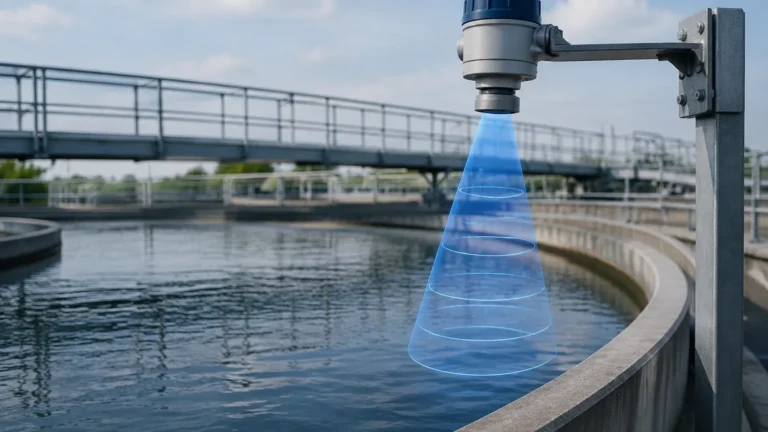
The sensor’s transducer contains a piezoelectric crystal that converts electrical energy into mechanical vibrations. These vibrations generate high-frequency sound waves (ultrasonic pulses) that travel through the air toward the medium's surface. When the pulse hits the surface, it is reflected back to the transducer, which now acts as a receiver.
The distance ($D$) from the sensor to the material surface is calculated using the formula:
$$D = \frac{v \times t}{2}$$
Where:
* $v$: The speed of sound in the medium (typically air, approx. 344 m/s at 20°C).
* $t$: The total time elapsed between the emission of the pulse and the reception of the echo.
Temperature Compensation
The speed of sound is highly dependent on the temperature of the gas through which it travels. A change of 1°C can result in a 0.17% error in distance measurement. Professional-grade instruments, including those from Welk and the ultrasonic level sensor endress hauser range, incorporate integrated temperature sensors to automatically adjust the calculation based on real-time ambient conditions.
2. Evaluating the Ultrasonic Level Sensor Endress Hauser Series
Endress+Hauser is a recognized leader in process instrumentation, and their Prosonic line is widely utilized. When engineers search for an "ultrasonic level sensor endress hauser," they are typically looking at the Prosonic FMU series (such as the FMU30, FMU40, or FMU90).
Key Characteristics of the Prosonic Range
* FMU30/40: Often used for simple applications in liquids and bulk solids, offering measuring ranges from 5 meters to 20 meters.
* FMU90: A transmitter designed for more complex tasks, including open channel flow measurement and pump control, often paired with separate sensors (FDU series).
* Signal Processing: These units utilize advanced software algorithms (like PulseMaster) to filter out false echoes caused by tank internals or agitators.
While these sensors are highly capable, they often come with a premium price tag associated with the brand's global infrastructure. For many industrial applications, manufacturers like Welk provide comparable accuracy and reliability with a focus on cost-effectiveness and specialized OEM support.
3. Technical Selection Criteria
Choosing between different Ultrasonic Level Meters requires a detailed analysis of the process environment. The following table outlines the typical performance specifications for standard industrial ultrasonic sensors.
Selection Table: Industrial Ultrasonic Sensor Specifications
| Feature | Standard Liquid Sensor | High-Range / Solids Sensor |
| :— | :— | :— |
| Measuring Range | 0.25m to 10m | 0.6m to 30m |
| Accuracy | ±0.25% of full range | ±0.2% to ±0.5% of full range |
| Beam Angle | 5° to 10° | 3° to 6° (Narrower is better) |
| Process Temperature | -40°C to +80°C | -40°C to +100°C |
| Process Pressure | 0.7 bar to 3 bar (abs) | 0.7 bar to 3 bar (abs) |
| Output Signals | 4-20mA, HART, Modbus | 4-20mA, HART, Profibus |
| Housing Material | PVDF, PP, or Stainless Steel | Aluminum or Stainless Steel |
Critical Factors to Confirm
1. The "Dead Zone" (Blocking Distance): Every ultrasonic sensor has a minimum distance near the transducer face where it cannot measure. This is typically between 0.1m and 0.6m. If the liquid level rises into this zone, the sensor will provide an error or an incorrect reading.
2. Chemical Compatibility: Ensure the transducer face material (e.g., PVDF) is resistant to the vapors present in the tank (acidic, alkaline, or solvent-based).
3. Beam Angle: A wider beam angle is more likely to hit tank walls or internal ladders, creating false echoes. Narrower beam angles are preferred for tall, narrow silos.
4. Installation Best Practices
Correct installation is the most significant factor in the success of an ultrasonic level measurement system. Even a high-end ultrasonic level sensor endress hauser will fail if the physical mounting is flawed.
Positioning the Sensor
* Perpendicularity: The sensor must be mounted perfectly perpendicular to the liquid surface. A tilt of just a few degrees can cause the reflected signal to miss the receiver, leading to signal loss.
* Avoid the Center: In round tanks, avoid mounting the sensor in the exact center. This can lead to "multiple reflections" where the sound bounces between the center and the walls, creating a parabolic effect that confuses the sensor.
* Distance from Walls: Maintain a distance from the tank wall of at least 1/6th of the tank height to prevent interference from wall seams or build-up.
Managing Obstructions
If the tank contains agitators, heating coils, or ladders, the sensor should be positioned to avoid these. If an obstruction is unavoidable, many modern Ultrasonic Level Meters allow for "False Echo Suppression," where the software is taught to ignore specific reflections at fixed distances.
5. Limitations and Environmental Risks
While ultrasonic sensors are versatile, they are not universal solutions. Engineers must be aware of the following limitations:
* Vacuum Conditions: Sound cannot travel in a vacuum. If the process involves a vacuum, ultrasonic technology will not work; radar or hydrostatic transmitters should be used instead.
* Heavy Foam: Thick, dense foam absorbs the ultrasonic pulse rather than reflecting it. If the application involves significant foaming (e.g., in some fermentation or wastewater processes), the signal may be lost.
* Dust and Vapor: While ultrasonic sensors can handle moderate dust, extremely heavy dust or dense steam can attenuate the signal. In these cases, high-frequency radar is often more reliable.
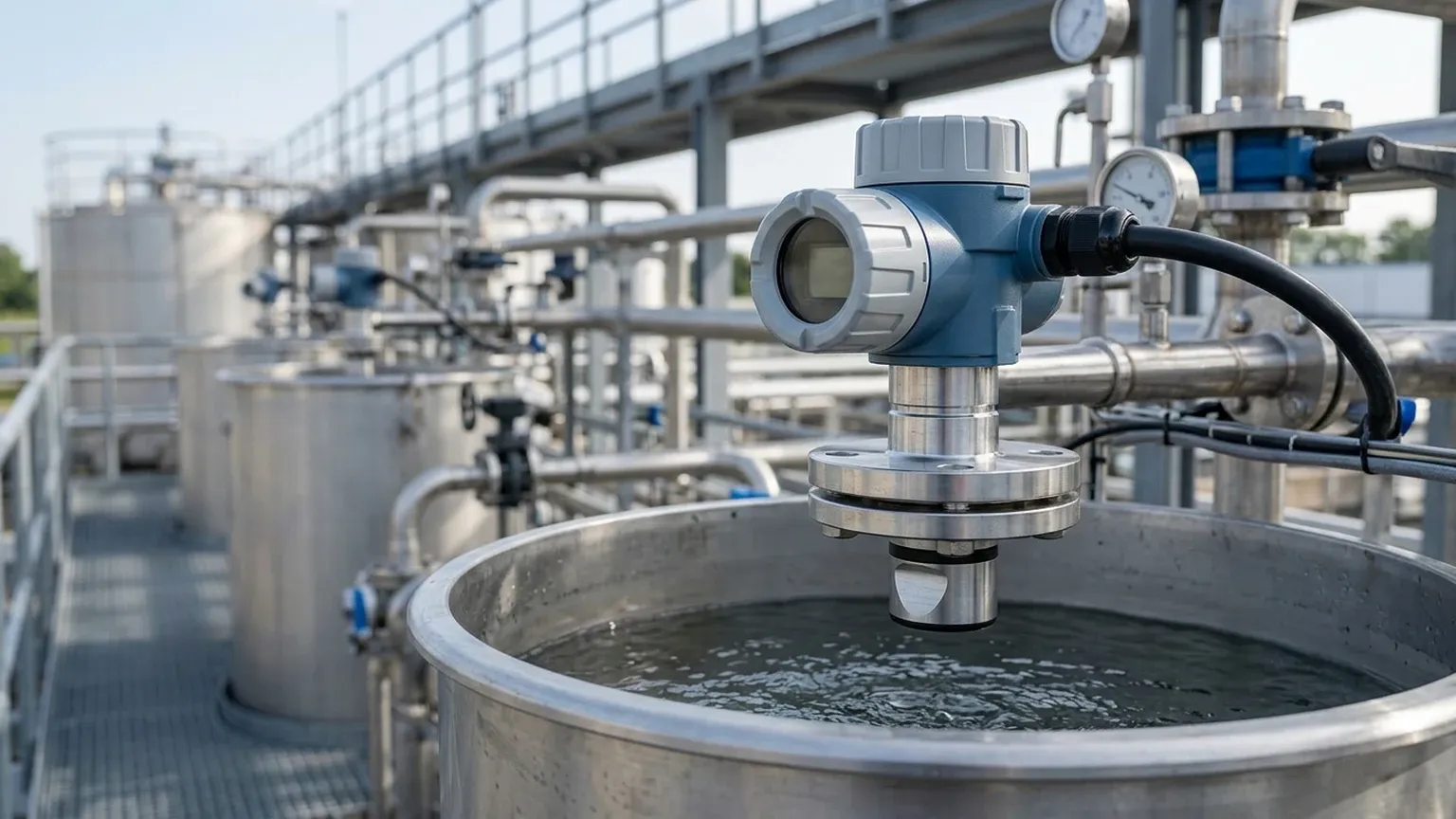
* Surface Turbulence: Rapidly churning liquids can scatter the sound waves. Using a stilling well (a pipe that extends into the liquid) can provide a calm surface for the sensor to measure.
6. Comparing Ultrasonic vs. Other Technologies
When evaluating the ultrasonic level sensor endress hauser or Welk alternatives, it is helpful to compare them against other common methods.
* Ultrasonic vs. Radar: Radar (GWR or Non-contact) is unaffected by air temperature, vacuum, or heavy dust. However, radar is generally more expensive and may be overkill for simple water tank applications where ultrasonic excels.
* Ultrasonic vs. Hydrostatic: Hydrostatic transmitters measure the pressure at the bottom of the tank. They are excellent for deep wells but require contact with the medium, making them less ideal for corrosive or sticky liquids where non-contact ultrasonic sensors are preferred.
7. Welk: Reliable Alternatives for Industrial Automation
Welk specializes in providing professional-grade industrial level measurement instruments that serve as reliable alternatives to major brands. Our Ultrasonic Level Meters are engineered for durability in harsh environments, offering:
* Advanced Signal Processing: Algorithms that ensure stable readings even in turbulent conditions.
* Customized OEM/ODM Services: Tailoring sensor specifications to meet unique industrial requirements.
* Cost-Effectiveness: High-accuracy measurement without the overhead costs of Tier-1 brands, supported by strict quality control.
Our solutions are widely deployed in water treatment facilities, chemical storage, and oil and gas applications worldwide, providing a balance of technical sophistication and practical value.
8. Frequently Asked Questions (FAQ)
Q: Can an ultrasonic sensor measure the level of solids?
A: Yes, but with caveats. Solids like grain or sand often have an angle of repose that scatters the sound signal. A sensor with a higher power output and a narrower beam is usually required for solids compared to liquids.
Q: How do I handle a sensor that shows a "Full" reading when the tank is empty?
A: This is often caused by a reflection from an object within the blocking distance (dead zone) or a significant build-up on the transducer face. Clean the transducer and check for any mounting brackets that might be interfering near the sensor head.
Q: Is the ultrasonic level sensor endress hauser compatible with other control systems?
A: Most industrial ultrasonic sensors, including E+H and Welk models, use standard 4-20mA or HART protocols, making them compatible with almost any PLC, SCADA, or DCS system.
Q: What is the maximum range for ultrasonic measurement?
A: While some specialized sensors can reach up to 60 or 70 meters, the practical limit for most industrial applications is around 30 meters. Beyond this, the signal attenuation in air becomes too significant for reliable measurement.
Conclusion
Whether you are specifying an ultrasonic level sensor endress hauser or exploring the robust Ultrasonic Level Meters from Welk, the success of your project depends on matching the sensor's capabilities to your specific environmental conditions. By understanding the physics of sound, respecting the blocking distance, and ensuring proper installation, you can achieve precise, maintenance-free level monitoring for years to come.