Ultrasonic Water Level Sensor Esp32
Ultrasonic Water Level Sensor ESP32: Engineering Guide for IoT Integration
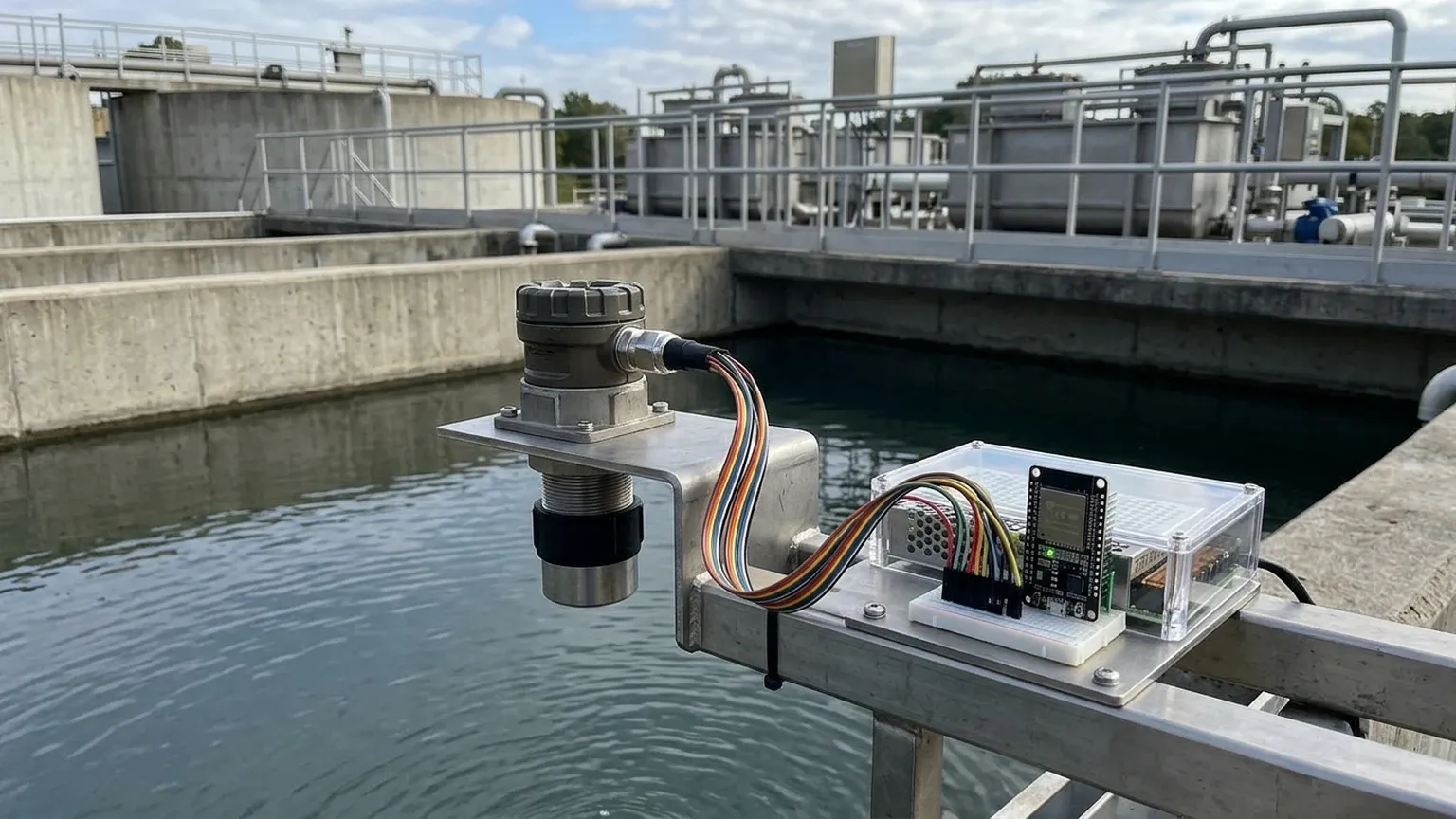
In the era of Industrial Internet of Things (IIoT), the demand for remote, real-time liquid level monitoring has grown significantly. The combination of an ultrasonic water level sensor esp32 represents a versatile solution for engineers and system integrators looking to bridge the gap between physical measurement and cloud-based data analytics. While the ESP32 provides the computational power and connectivity, the accuracy of the system depends entirely on the selection and implementation of the ultrasonic transducer.
This guide explores the principles of ultrasonic measurement, the technical requirements for interfacing these sensors with the ESP32 microcontroller, and the critical factors that distinguish prototype-grade components from professional Ultrasonic Level Meters.
1. Understanding Ultrasonic Measurement Principles
Before integrating an ultrasonic water level sensor with an ESP32, it is essential to understand the underlying physics. Ultrasonic sensors operate on the "Time-of-Flight" (ToF) principle.
The Time-of-Flight Mechanism
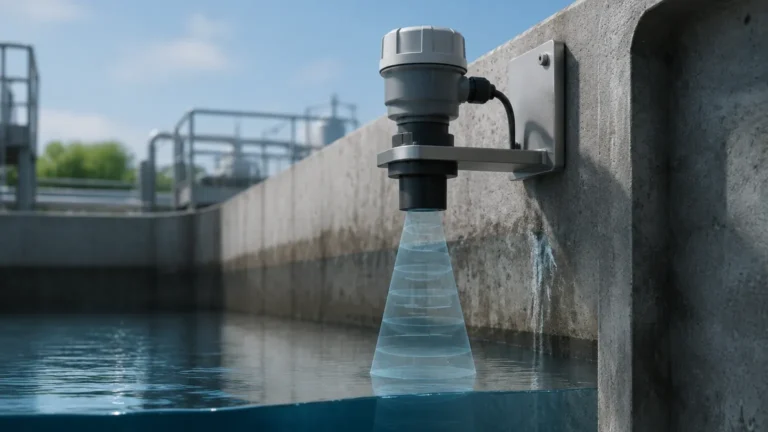
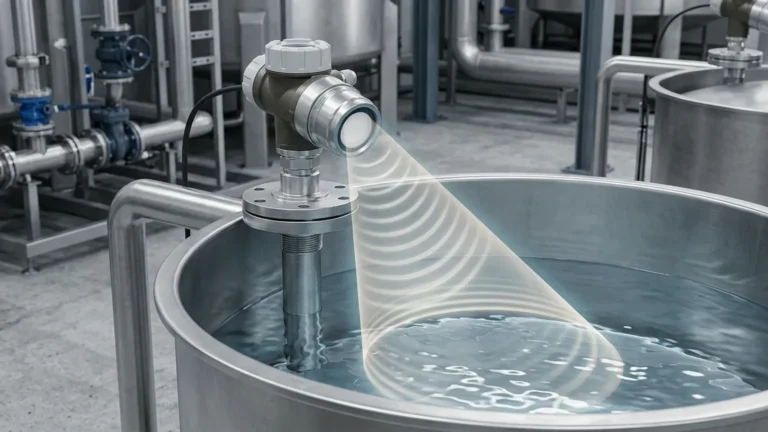
The sensor head, or transducer, emits a high-frequency sound pulse (typically between 40 kHz and 200 kHz). This pulse travels through the air, strikes the surface of the liquid, and reflects back to the sensor. By measuring the time interval between the emission and the reception of the echo, the distance to the liquid can be calculated using the formula:
Distance = (Time × Speed of Sound) / 2
In standard atmospheric conditions at 20°C, the speed of sound is approximately 343 meters per second (m/s). Because the sound wave must travel to the surface and back, the total distance is divided by two.
Factors Affecting Accuracy
1. Temperature: The speed of sound varies with air temperature. A change of 1°C can result in a 0.17% error in distance measurement. Professional systems often include built-in temperature compensation.
2. The Dead Zone (Blocking Distance): Every ultrasonic sensor has a minimum range, often called the "dead zone." This is the area immediately in front of the transducer where the sensor cannot accurately process the returning echo because the transducer is still vibrating from the initial pulse. For many sensors, this ranges from 0.1 m to 0.5 m.
3. Beam Angle: The ultrasonic pulse is not a laser; it spreads out in a cone shape. Any obstacles within this cone—such as pipes, ladders, or tank walls—can cause false reflections.
2. Integrating the Ultrasonic Water Level Sensor with ESP32
The ESP32 is a powerful 32-bit microcontroller with integrated Wi-Fi and Bluetooth, making it an ideal choice for water level monitoring in remote locations. However, interfacing it with industrial or semi-industrial sensors requires attention to electrical specifications.
Hardware Interface Options
Most ultrasonic sensors used with the ESP32 utilize one of three communication protocols:
* Trigger/Echo (PWM): The microcontroller sends a short pulse to a "Trigger" pin, and the sensor responds by pulling an "Echo" pin high for a duration proportional to the distance.
* UART (Serial): The sensor automatically transmits distance data as a digital string (e.g., "R0123" for 123mm). This is generally more stable over longer cable runs.
* Analog (0-5V or 4-20mA): Common in industrial environments, these require the ESP32’s Analog-to-Digital Converter (ADC) or an external signal conditioner.
Voltage Level Considerations
The ESP32 operates on 3.3V logic. Many ultrasonic sensors, particularly those designed for outdoor or industrial use, require a 5V or 12-24V power supply. If the sensor outputs a 5V signal on the Echo or TX pin, a logic level shifter or a simple voltage divider (using resistors) must be used to protect the ESP32’s GPIO pins from overvoltage.
3. Selecting the Right Sensor: Comparison Table
When designing an ultrasonic water level sensor esp32 system, the choice of sensor depends on the environment. For indoor tanks, a simple open-transducer sensor may suffice, but for outdoor sumps or chemical tanks, sealed waterproof sensors are required.
| Feature | Hobbyist (e.g., HC-SR04) | Weatherproof (e.g., JSN-SR04T) | Industrial Ultrasonic Level Meters |
| :— | :— | :— | :— |
| Measurement Range | 0.02 m – 4 m | 0.2 m – 5 m | 0.3 m – 15+ m |
| IP Rating | None (Open PCB) | IP67 (Transducer only) | IP67/IP68 (Full Enclosure) |
| Accuracy | ±3 mm (Ideal conditions) | ±10 mm | ±0.25% to 0.5% of range |
| Signal Processing | Raw pulse | Basic filtering | Advanced False Echo Suppression |
| Durability | Low | Moderate | High (Corrosion resistant) |
| Typical Application | Desktop prototyping | Rainwater tanks | Chemical processing, Water treatment |
4. Installation Guidelines for ESP32-Based Systems
Proper physical installation is as critical as the code running on the ESP32. Even the best sensor will fail if it is mounted incorrectly.
Mounting Position
* Perpendicularity: The sensor must be mounted perfectly perpendicular to the water surface. If the sensor is tilted, the ultrasonic pulse may reflect away from the receiver, resulting in a "Lost Echo" error.
* Centering: Avoid mounting the sensor too close to the side walls of a tank. As a rule of thumb, the sensor should be placed at least 20 cm away from the wall for every meter of depth to avoid side-wall interference.
* Stability: The mounting bracket must be rigid. Vibrations from pumps or wind can introduce noise into the distance readings.
Managing the Dead Zone
To account for the dead zone, the sensor should be mounted above the maximum possible water level. For example, if a sensor has a 25 cm dead zone, it should be installed at least 30 cm above the "Full" line of the tank. If the water enters the dead zone, the sensor will often report a maximum distance or erratic values.
5. Limitations and Environmental Challenges
While ultrasonic technology is robust, it is not universal. Engineers must be aware of the following limitations when deploying an ultrasonic water level sensor esp32 solution:
1. Vapor and Steam: In high-temperature tanks, steam can change the density of the air, significantly altering the speed of sound. Furthermore, heavy condensation on the transducer face can block the signal entirely.
2. Foam: Liquid surfaces covered in foam absorb ultrasonic waves rather than reflecting them. In these cases, a radar level meter or a hydrostatic pressure sensor is usually preferred.
3. Vacuum/Pressure: Ultrasonic sensors require a medium (air) to transmit sound. They cannot function in a vacuum. In pressurized tanks, the change in air density affects the calibration, requiring specialized industrial sensors designed for such environments.
4. Turbulence: Rapidly moving or boiling liquid surfaces create scattered reflections. Software-based averaging on the ESP32 can help, but severe turbulence may require a stilling well (a vertical pipe that stabilizes the liquid surface around the sensor).
6. From Prototype to Industrial Deployment
Using an ESP32 with a low-cost ultrasonic sensor is an excellent way to prove a concept or monitor non-critical assets like domestic rainwater tanks. However, for industrial automation, water treatment plants, or chemical storage, the requirements for reliability and safety are much higher.
Professional Ultrasonic Level Meters offer features that a basic ESP32 setup lacks:
* False Echo Storage: The ability to "learn" the interior of a tank and ignore reflections from fixed obstacles like agitators.
* Explosion-Proof Ratings: Essential for applications involving flammable liquids.
* Standardized Output: 4-20mA current loops that can transmit signals over hundreds of meters without data loss, unlike the TTL serial signals of hobbyist sensors.
* Integrated Displays: Allowing local operators to check levels without needing a web dashboard.
For B2B applications where downtime is costly, it is often more efficient to use a dedicated industrial ultrasonic meter as the primary sensing element and use the ESP32 (or a PLC) simply to aggregate and transmit that high-quality data to the cloud.
7. Frequently Asked Questions (FAQ)
Q: How do I handle temperature changes with my ESP32 ultrasonic sensor?
A: If your sensor does not have built-in compensation, connect a digital temperature sensor (like the DS18B20) to your ESP32. In your code, update the speed of sound value using the formula: `v = 331.3 + 0.606 * T`, where T is the temperature in Celsius.
Q: My sensor is giving jumpy readings. How can I fix this?
A: This is common with ultrasonic waves. Implement a "Median Filter" or a "Moving Average Filter" in your ESP32 firmware. Taking 10 readings and using the median value is highly effective at removing outlier noise caused by stray reflections.
Q: Can I use an ESP32 ultrasonic sensor for gasoline or chemicals?
A: Standard hobbyist sensors are not chemically resistant and are not intrinsically safe. For hazardous materials, you must use an industrial-grade sensor with a PTFE (Teflon) face and appropriate explosion-proof certifications (ATEX/IECEx).
Q: What is the maximum cable length between the sensor and the ESP32?
A: For PWM (Trigger/Echo) signals, keep the cable under 2 meters to avoid signal degradation. For UART or I2C, use shielded cables for up to 5 meters. If you need longer distances, convert the signal to RS485 or use an industrial 4-20mA sensor with an appropriate interface.
Conclusion
Deploying an ultrasonic water level sensor esp32 system offers a powerful, low-cost entry point into remote level monitoring. By understanding the physics of sound, respecting the limitations of the hardware, and following strict installation practices, engineers can develop highly effective monitoring solutions. When the application scales to industrial environments, transitioning to professional-grade Ultrasonic Level Meters ensures the long-term reliability and accuracy required for critical process control.