Ultrasonic Water Level Sensor Esp8266
Ultrasonic Water Level Sensor ESP8266: A Guide to IoT Integration and Industrial Standards
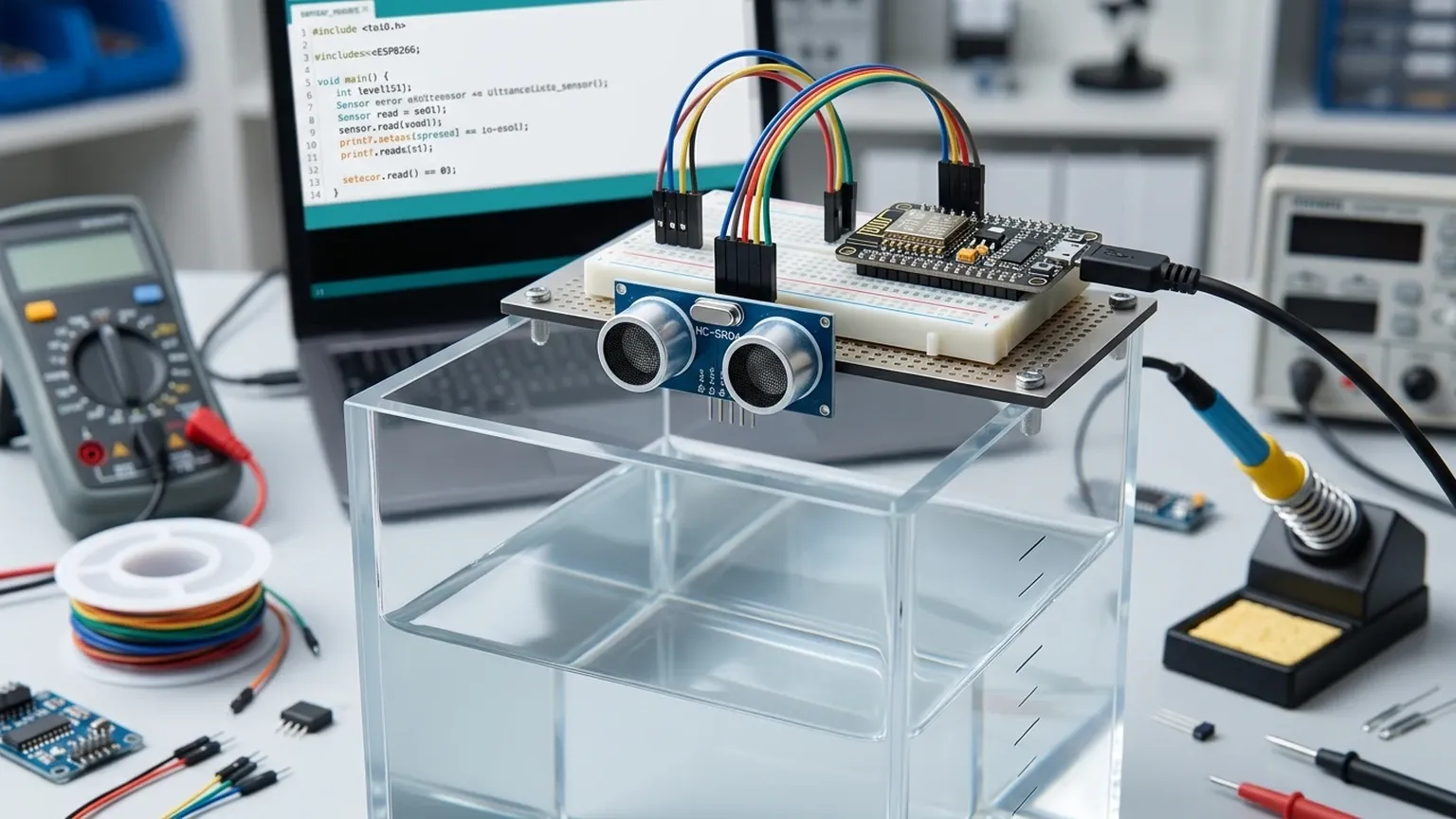
In the landscape of industrial automation and smart water management, the demand for remote, real-time data has led to a surge in IoT-based monitoring solutions. The integration of an ultrasonic water level sensor esp8266 module represents a significant shift toward decentralized telemetry. While the ESP8266 serves as a powerful, Wi-Fi-enabled microcontroller for data transmission, the accuracy of the system remains entirely dependent on the underlying ultrasonic measurement principle.
For process engineers and system integrators, understanding the bridge between low-power IoT prototyping and robust industrial Ultrasonic Level Meters is essential for ensuring long-term reliability in water treatment, chemical processing, and agricultural applications.
Measurement Principles of Ultrasonic Technology
Before implementing an ultrasonic water level sensor esp8266 system, it is vital to understand how these instruments quantify the distance to a liquid surface.
The Time-of-Flight (ToF) Method
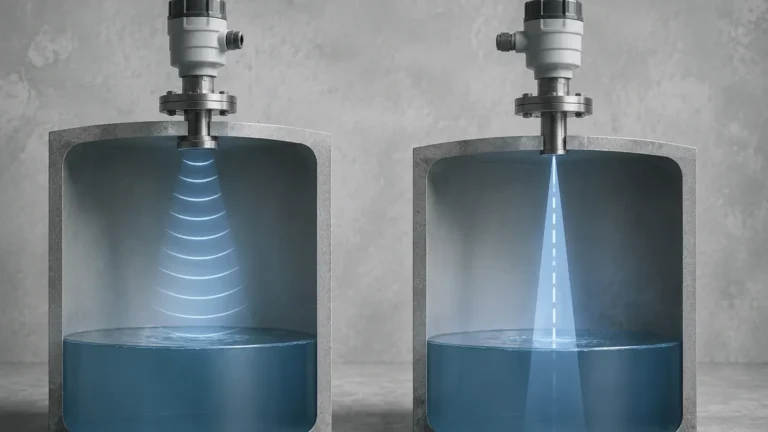
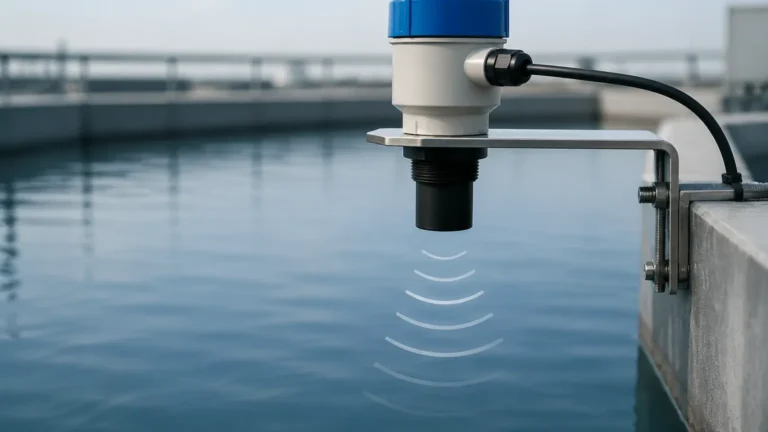
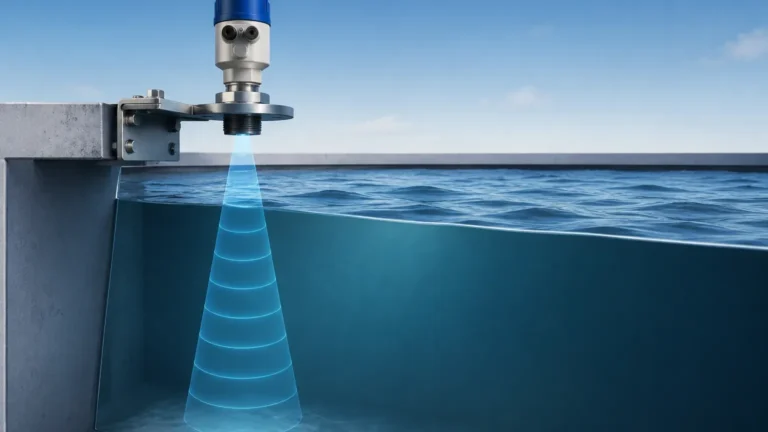
Ultrasonic sensors operate on the principle of "Time of Flight." The device’s transducer emits a high-frequency acoustic pulse—typically between 40 kHz and 200 kHz. This sound wave travels through the air, strikes the surface of the water, and reflects back toward the sensor.
The distance is calculated using the following formula:
Distance = (Speed of Sound × Time) / 2
The speed of sound in dry air at 20°C (68°F) is approximately 343 meters per second (1,125 ft/s). Because the sound wave must travel to the target and back, the total time is divided by two to determine the distance from the sensor face to the liquid level.
Factors Influencing Accuracy
1. Temperature Variation: The speed of sound is not constant; it increases by approximately 0.6 m/s for every degree Celsius increase in temperature. Industrial-grade sensors include integrated thermistors to compensate for these fluctuations.
2. Air Density and Pressure: Significant changes in atmospheric pressure or the presence of heavy vapors (such as in chemical tanks) can alter the medium through which the sound travels, leading to measurement drift.
3. Surface Turbulence: A turbulent or agitated water surface scatters the acoustic signal, potentially resulting in "lost echoes" or erratic readings.
The Role of the ESP8266 in Level Monitoring
The ESP8266 is a low-cost Wi-Fi microchip with full TCP/IP stack capability. In a B2B context, it is often utilized as a communication gateway for remote sensors where traditional wired infrastructure is cost-prohibitive.
When paired with an ultrasonic sensor, the ESP8266 performs three primary functions:
* Signal Triggering: It sends a pulse to the sensor to initiate a measurement.
* Data Processing: It calculates the distance based on the pulse duration received from the sensor's echo pin.
* Connectivity: It transmits the level data via protocols like MQTT, HTTP, or Modbus TCP to a centralized SCADA system or cloud dashboard.
Hardware Selection: IoT Modules vs. Industrial Sensors
When designing a system around an ultrasonic water level sensor esp8266, engineers must choose between hobbyist-grade modules and industrial-grade transmitters. The choice depends on the environment and the criticality of the data.
Comparison Table: Sensor Grades
| Feature | IoT/Prototyping (e.g., JSN-SR04T) | Industrial Level Meter (e.g., Welk Series) |
| :— | :— | :— |
| Measurement Range | 0.2m to 4.5m | 0.3m to 30m+ |
| Accuracy | ±1% to ±3% of span | ±0.2% to ±0.5% of span |
| Ingress Protection | IP65 (Sensor head only) | IP67 / IP68 (Full enclosure) |
| Output Options | TTL Serial, PWM | 4-20mA, RS485, Hart, Modbus |
| Temperature Comp. | Software-defined (External) | Built-in Automatic Compensation |
| Certifications | None | CE, RoHS, Explosion-proof (Ex d/ia) |
| Durability | Low (Corrosion prone) | High (PVDF/PTFE options) |
For pilot projects or non-critical agricultural irrigation, a waterproof JSN-SR04T module integrated with an ESP8266 is often sufficient. However, for industrial wastewater or chemical storage, professional Ultrasonic Level Meters are required to withstand corrosive fumes and provide the reliability demanded by safety regulations.
Installation Considerations and Best Practices
Proper physical installation is the most critical factor in the success of an ultrasonic level measurement system. Even the most advanced ESP8266-based controller cannot compensate for a poorly mounted sensor.
1. The Dead Zone (Blocking Distance)
Every ultrasonic sensor has a "dead zone" directly in front of the transducer face (typically 200mm to 500mm depending on the frequency). In this zone, the transducer is still vibrating from the initial pulse and cannot accurately detect the returning echo. Ensure the maximum water level never enters this dead zone.
2. Beam Angle and Obstructions
Ultrasonic waves spread in a cone shape, usually between 5° and 15°. Any physical obstruction within this cone—such as ladders, pipes, or tank wall seams—will create a false echo.
* Rule of Thumb: Mount the sensor at least 200mm (8 inches) away from the tank wall for every meter of depth.
3. Perpendicular Mounting
The sensor must be mounted perfectly perpendicular to the water surface. A tilt of even a few degrees can cause the reflected signal to bounce away from the transducer, resulting in a signal loss.
4. Environmental Shielding
While the ultrasonic water level sensor esp8266 assembly might be waterproof, the ESP8266 itself is sensitive to humidity. Use NEMA-rated or IP66 enclosures for the electronics, and ensure cable glands are used to prevent moisture ingress through wiring ports.
Limitations of Ultrasonic Level Sensors
While versatile, ultrasonic technology is not a universal solution. Engineers should be aware of the following limitations:
* Heavy Foam: Foam on the surface of the liquid acts as an acoustic absorber. If the foam is thick and airy, the sound wave may not reflect at all, leading to a "tank empty" error.
* Vacuum Applications: Sound requires a medium (air/gas) to travel. Ultrasonic sensors cannot function in a vacuum.
* High Temperature/Pressure: Extreme temperatures can significantly distort the sound wave, and high pressure can change the acoustic impedance of the air, reducing signal strength.
* Vapor and Dust: Heavy steam or significant dust concentrations (in silos) can attenuate the signal. In these instances, radar level meters are often a better alternative.
Practical Application: Remote Tank Telemetry
In many B2B scenarios, such as monitoring distributed water tanks across a manufacturing campus, an ultrasonic water level sensor esp8266 setup provides a cost-effective telemetry node.
By utilizing the ESP8266's Deep Sleep mode, the system can be powered by a small solar panel and a LiFePO4 battery. The device wakes up every 15 minutes, triggers the ultrasonic sensor, transmits the level via Wi-Fi to a central gateway, and returns to sleep. This architecture allows for massive scalability in facilities where running power and data cables to every tank is financially unfeasible.
Frequently Asked Questions (FAQ)
Q1: Can I use an ESP8266 with a 4-20mA industrial ultrasonic sensor?
Yes, but it requires an interface. The ESP8266 operates at 3.3V logic, while industrial sensors typically use a 24V DC loop. You will need a 4-20mA to Voltage receiver module or an I2C ADC (Analog-to-Digital Converter) to read the industrial signal safely.
Q2: How do I handle "jitter" in the water level readings?
Water surfaces are rarely perfectly still. To get a stable reading with your ESP8266, implement a software filter. A simple moving average (taking the mean of 10-20 readings) or a median filter is usually effective at removing outliers caused by ripples or momentary interference.
Q3: What is the maximum distance an ESP8266 can be from the sensor?
For TTL-level sensors like the HC-SR04 or JSN-SR04T, the cable length should be kept under 2 meters (6 feet) to avoid signal degradation and electromagnetic interference. For longer distances, use a sensor with an RS485/Modbus output, which can communicate over hundreds of meters.
Q4: Does the ESP8266 affect the accuracy of the ultrasonic sensor?
The ESP8266 itself does not affect the physical measurement, but timing inaccuracies in the code can. Using interrupts or hardware timers to measure the echo pulse width is more accurate than using the `pulseIn()` function in Arduino-based environments, which can be affected by background Wi-Fi tasks.
Conclusion
The integration of an ultrasonic water level sensor esp8266 is a powerful solution for modernizing water monitoring systems. By combining the physics of acoustic measurement with the connectivity of IoT microcontrollers, businesses can achieve unprecedented visibility into their fluid assets. However, for critical industrial processes, the transition from DIY modules to professional-grade Ultrasonic Level Meters is necessary to ensure the precision, safety, and durability required in harsh environments. Proper selection, coupled with rigorous installation standards, remains the cornerstone of any successful level measurement strategy.