Ultrasonic Level vs Radar
Ultrasonic Level vs Radar: A Practical Engineering Guide for Industrial Measurement
In industrial process control, selecting the correct non-contact level measurement technology is critical for operational efficiency, safety, and cost management. Two of the most prevalent technologies used today are ultrasonic and radar. While both provide non-contact measurement, they rely on fundamentally different physical principles, making each suitable for specific environmental conditions and media types.
Understanding the nuances of ultrasonic level vs radar is essential for instrumentation engineers and plant managers. This guide explores the measurement principles, application strengths, and technical limitations of Ultrasonic Level Meters compared to radar transmitters, providing a factual basis for equipment selection.
Measurement Principles: How They Work
Before comparing the two technologies, it is important to understand the physics behind their operation. Both methods utilize the "Time of Flight" (ToF) principle, but the medium of transmission differs.
Ultrasonic Level Measurement Principle
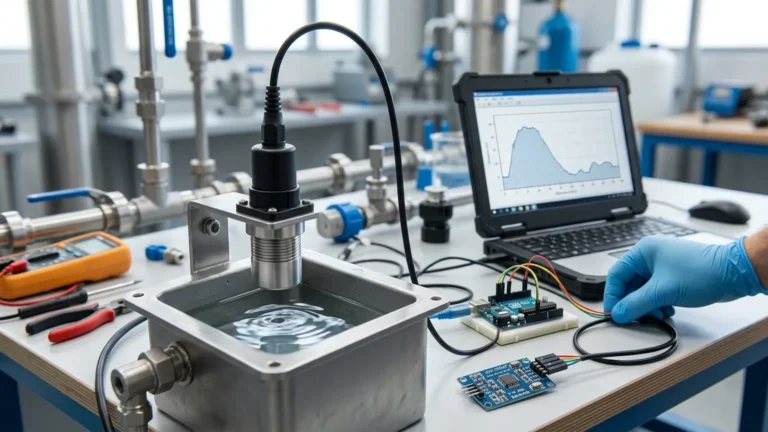
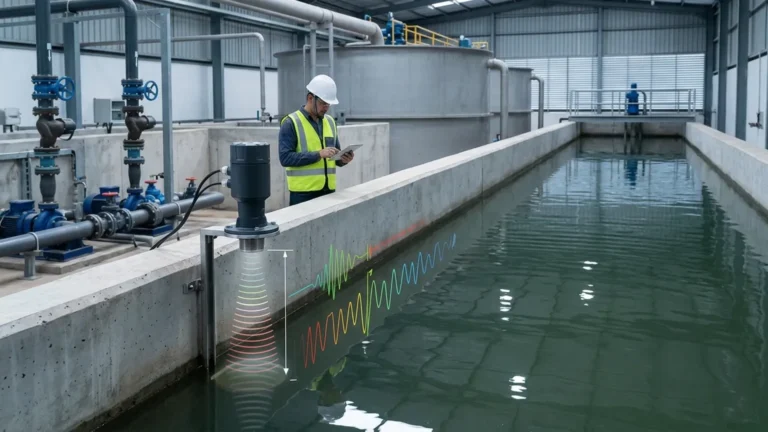
Ultrasonic sensors utilize mechanical sound waves. A piezoelectric crystal within the sensor transducer converts electrical energy into sonic pulses. These pulses travel through the air (or gas) in the tank, bounce off the surface of the material, and return to the transducer.
The sensor measures the time interval between the emission of the pulse and the reception of the echo. Since the speed of sound in air is known—approximately 340 m/s (1,115 ft/s) at 20°C—the distance can be calculated using the formula:
Distance = (Speed of Sound × Time) / 2
Because sound waves require a physical medium (gas or air) to propagate, ultrasonic sensors cannot function in a vacuum. Furthermore, because the speed of sound changes with air temperature, most high-quality ultrasonic level meters include integrated temperature compensation to maintain accuracy.
Radar Level Measurement Principle
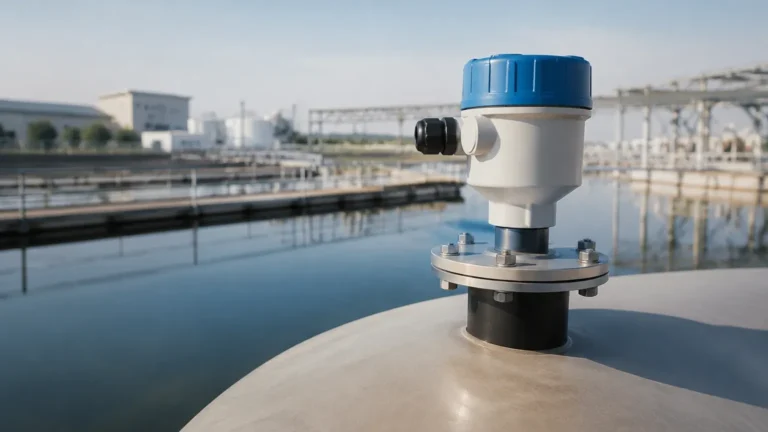
Radar (Radio Detection and Ranging) utilizes high-frequency electromagnetic waves, typically in the microwave spectrum (6GHz to 80GHz). Unlike sound waves, electromagnetic waves do not require a medium and travel at the speed of light—approximately 300,000 km/s.
There are two primary types of radar measurement:
1. Pulse Radar: Similar to ultrasonic, it sends a pulse and measures the time it takes to return.
2. FMCW (Frequency Modulated Continuous Wave): The sensor emits a continuous signal with a changing frequency. The difference in frequency between the emitted and received signal is proportional to the distance.
Radar performance is heavily influenced by the dielectric constant (εr) of the material being measured. Materials with high dielectric constants (like water) reflect signals strongly, while low dielectric materials (like oils or plastic pellets) may allow the signal to penetrate, requiring more sensitive electronics.
Ultrasonic Level vs Radar: Key Comparison Factors
When evaluating ultrasonic level vs radar, several environmental and process variables dictate which technology will provide the most reliable data.
1. Process Atmosphere (Vacuum, Pressure, and Gas)
Ultrasonic waves are mechanical and require a gas medium. In a vacuum, there are no molecules to transmit the sound, rendering ultrasonic sensors useless. Additionally, high-pressure environments increase the density of the gas, which can significantly alter the speed of sound and absorb the signal.
Radar waves are electromagnetic and are unaffected by vacuum or changes in gas density. Radar is the preferred choice for high-pressure reactors or vacuum distillation columns.
2. Temperature Fluctuations
As noted, the speed of sound is highly dependent on temperature. A 1°C change in temperature can result in a 0.17% error in distance measurement if not compensated. While most sensors have built-in compensation, extreme temperature gradients (e.g., a cold sensor over a hot liquid) can create measurement errors. Radar is virtually unaffected by temperature changes in the vapor space.
3. Dust, Steam, and Foam
* Dust: Heavy dust (common in grain silos or cement plants) can attenuate ultrasonic signals. Radar, especially at lower frequencies, can penetrate dust clouds more effectively.
* Steam/Vapors: Thick steam can change the composition of the air, affecting the speed of sound for ultrasonic sensors. Radar is generally immune to steam.
* Foam: Both technologies struggle with thick, dense foam. However, ultrasonic waves often reflect off the top of the foam, while radar may penetrate it or be absorbed, depending on the foam's moisture content.
4. Cost and Complexity
Historically, ultrasonic level meters have been the more cost-effective solution for standard water and wastewater applications. Radar was reserved for complex process applications due to its higher price point. However, as 80GHz radar technology has matured, the price gap has narrowed, though ultrasonic remains the budget-friendly choice for open-channel flow and simple tank monitoring.
Technical Selection Table
The following table provides a quick reference for comparing the operational boundaries of these two technologies.
| Feature | Ultrasonic Level Meters | Radar Level Meters |
| :— | :— | :— |
| Medium of Wave | Sound (Mechanical) | Microwaves (Electromagnetic) |
| Vacuum Compatibility | No | Yes |
| Effect of Temperature | High (Requires compensation) | Negligible |
| Effect of Pressure | Limited to ~3 bar (43 psi) | Up to 160+ bar (2320+ psi) |
| Standard Range | 0.25m to 30m | 0.1m to 120m |
| Accuracy | 0.25% of range | 1mm to 3mm |
| Dielectric Sensitivity | No | Yes (Critical for reflection) |
| Typical Applications | Water, Acids, Open Channels | Chemicals, Hydrocarbons, Solids |
Installation Considerations
Proper installation is paramount to the success of both technologies. Engineers must account for the physical geometry of the vessel to avoid "false echoes."
Beam Angle and Obstructions
Every sensor has a beam angle. Any internal structure—such as ladders, agitators, or heating coils—that falls within this beam will create a reflection.
* Ultrasonic: Typically has a wider beam angle (8° to 15°). It requires a clear path to the surface.
* Radar: High-frequency radar (80GHz) offers a very narrow beam angle (as low as 3°), allowing it to be installed in narrow tanks or tanks with many internal obstructions.
The Dead Zone (Blocking Distance)
Both sensors have a "dead zone" directly beneath the transducer where measurement is impossible.
* For ultrasonic sensors, this is usually 0.2m to 0.8m (8" to 31"), depending on the frequency.
* Radar sensors generally have much smaller dead zones, often less than 0.1m (4").
Mounting Position
Sensors should never be mounted in the center of a domed tank, as this can concentrate reflected signals and cause errors. Similarly, sensors should be kept away from the tank wall to prevent side-wall interference and away from the fill stream to avoid measuring the incoming material instead of the level.

Limitations and Common Risks
While highly versatile, neither technology is a universal solution. Understanding their limitations prevents costly commissioning failures.
Ultrasonic Limitations
* Surface Turbulence: Heavy agitation or surface ripples can scatter sound waves, leading to "Loss of Echo" (LOE) errors.
* Chemical Compatibility: The transducer face is often exposed to the process. In corrosive environments, specialized materials like PVDF or PTFE linings are required.
* Acoustic Noise: High-frequency mechanical noise from nearby machinery can occasionally interfere with the sensor's ability to distinguish its own echo.
Radar Limitations
* Low Dielectric Materials: Non-conductive liquids like oils, solvents, and liquid gases have low dielectric constants (εr < 2). These reflect very little energy, making it difficult for the radar to detect the surface unless guided wave radar or high-sensitivity FMCW radar is used.
* Conductive Buildup: If conductive material (like wet mud) coats the antenna of a radar, it can "blind" the sensor. Ultrasonic sensors are slightly more tolerant of thin coatings on the transducer face.
Frequently Asked Questions (FAQ)
Q: When should I choose ultrasonic over radar?
A: Choose ultrasonic for simple liquid level applications in atmospheric tanks, such as water treatment, sump pits, and chemical storage where the temperature is stable and there is no foam or steam. It is a cost-effective, reliable choice for these scenarios.
Q: Can radar measure the level of solids like grain or sand?
A: Yes. High-frequency radar is excellent for solids because its narrow beam can target specific areas of the pile, and it can penetrate the dust generated during filling.
Q: Does the color of the liquid affect ultrasonic or radar?
A: No. Neither technology is affected by the color or transparency of the liquid, unlike optical or laser sensors.
Q: How do I handle foam in a tank?
A: Foam is challenging for both. If the foam is light and airy, radar might see through it to the liquid. If the foam is dense, ultrasonic might measure the top of the foam. In severe cases, a stilling well or a different technology (like a magnetic level gauge or hydrostatic transmitter) may be required.
Conclusion
The choice between ultrasonic level vs radar depends on a thorough analysis of the process environment. Ultrasonic sensors remain a staple for water-based applications due to their simplicity and lower cost. However, for high-temperature, high-pressure, or chemically complex environments, radar offers superior precision and reliability.
As a professional manufacturer, Welk provides a comprehensive range of industrial level measurement instruments designed to meet these diverse needs. For detailed technical specifications and to find the right fit for your specific application, you can Review product options and application support to ensure your facility operates with maximum accuracy and safety.