Ultrasonic Level vs Radar Level
Ultrasonic Level vs Radar Level: A Technical Guide for Industrial Selection
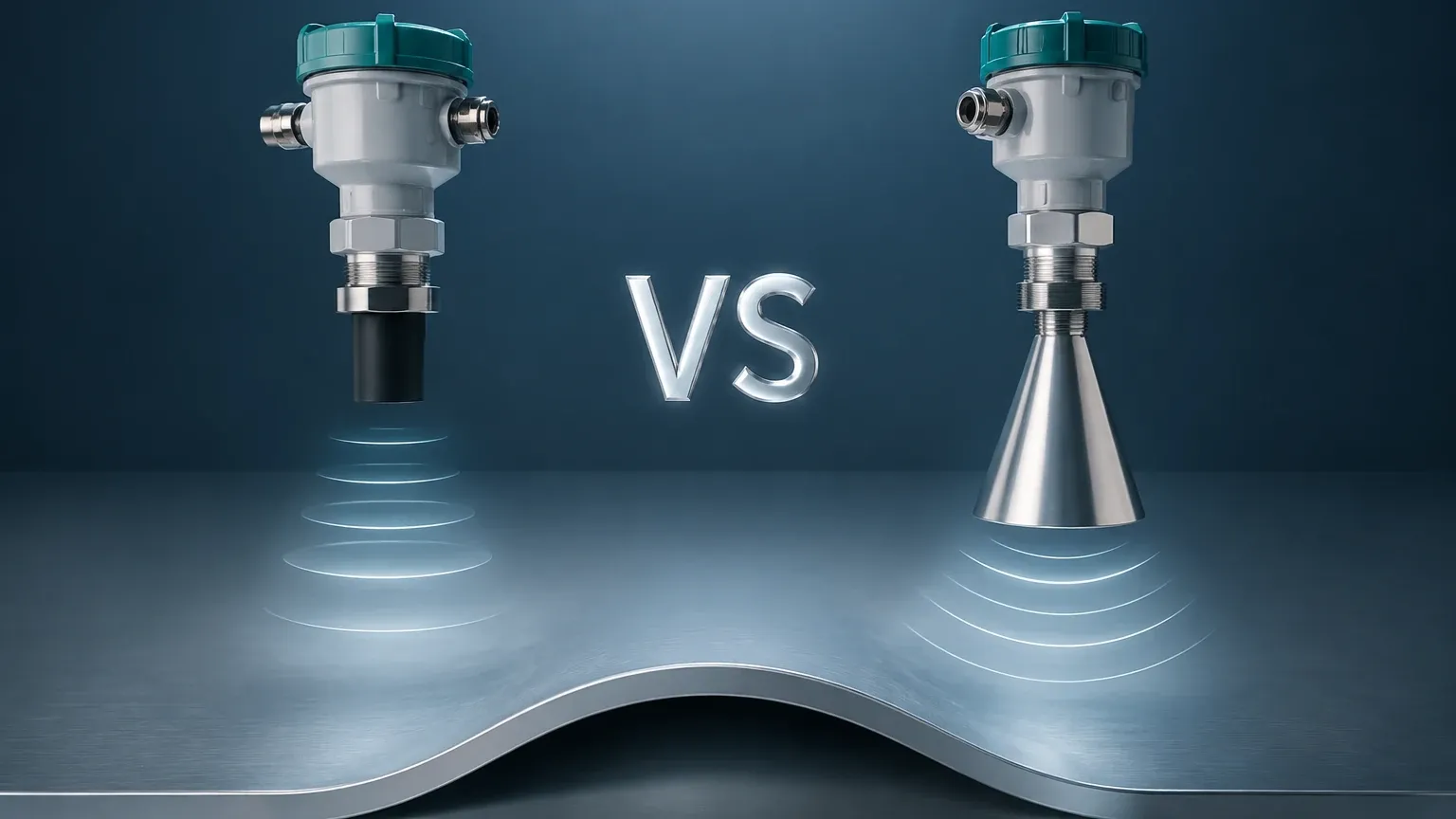
In the field of industrial process control, selecting the correct non-contact level measurement technology is critical for operational efficiency, safety, and cost management. Two of the most prevalent technologies used globally are ultrasonic and radar. While both serve the same fundamental purpose—measuring the distance to a liquid or solid surface without making physical contact—their underlying physics, performance characteristics, and ideal application environments differ significantly.
This guide provides a comprehensive comparison of ultrasonic level vs radar level technologies, explaining their measurement principles, strengths, limitations, and practical selection criteria for engineering and procurement professionals.
Understanding the Measurement Principles
Before comparing the two, it is essential to understand how each technology interacts with the process environment.
How Ultrasonic Level Meters Work
Ultrasonic Level Meters operate using mechanical energy in the form of high-frequency sound waves. The sensor’s transducer acts as both a transmitter and a receiver. It emits a pulse of sound that travels through the air (or gas) in the tank, hits the surface of the medium, and reflects back to the sensor.
The device measures the "Time of Flight" (ToF). Since the speed of sound in air is approximately 343 meters per second at 20°C, the distance to the surface can be calculated using the formula:
Distance = (Speed of Sound × Time) / 2
Because the speed of sound is heavily dependent on the temperature and density of the medium through which it travels, ultrasonic sensors almost always include an integrated temperature sensor to provide real-time compensation.
How Radar Level Meters Work
Radar level meters use electromagnetic energy, specifically microwaves. Like ultrasonic devices, they utilize the Time of Flight principle, but the waves travel at the speed of light (~300,000 km/s).
There are two primary types of radar used in level measurement:
1. Pulse Radar: Sends a microwave pulse and measures the time it takes to return.
2. FMCW (Frequency Modulated Continuous Wave): Sends a continuous signal with a varying frequency. The difference in frequency between the transmitted and received signal is proportional to the distance.
Unlike sound waves, microwaves do not require a physical medium (like air) to travel; they can operate in a vacuum and are largely unaffected by changes in air temperature, pressure, or gas composition.
—
Ultrasonic Level vs Radar Level: Key Comparison Factors
When evaluating ultrasonic level vs radar level, engineers must consider the physical properties of the medium and the atmospheric conditions within the vessel.
1. Atmospheric Conditions (Pressure and Vacuum)
* Ultrasonic: Sound waves require air or gas molecules to propagate. Consequently, ultrasonic sensors cannot function in a vacuum. Furthermore, high-pressure environments (typically above 3 bar) can increase the attenuation of the sound signal, leading to measurement errors.
* Radar: Microwaves are electromagnetic and travel through a vacuum with ease. Radar is the preferred choice for high-pressure reactors or vacuum distillation columns.
2. Temperature and Vapor Layers
* Ultrasonic: As noted, the speed of sound varies with temperature. While sensors compensate for temperature at the transducer, significant temperature gradients or heavy vapor layers (like steam) can cause the sound wave to refract or change speed unpredictably, leading to inaccuracies.
* Radar: Radar signals are unaffected by temperature fluctuations or the presence of steam and vapors. This makes radar superior for boiling liquids or high-temperature chemical processes.
3. Surface Conditions: Foam and Turbulence
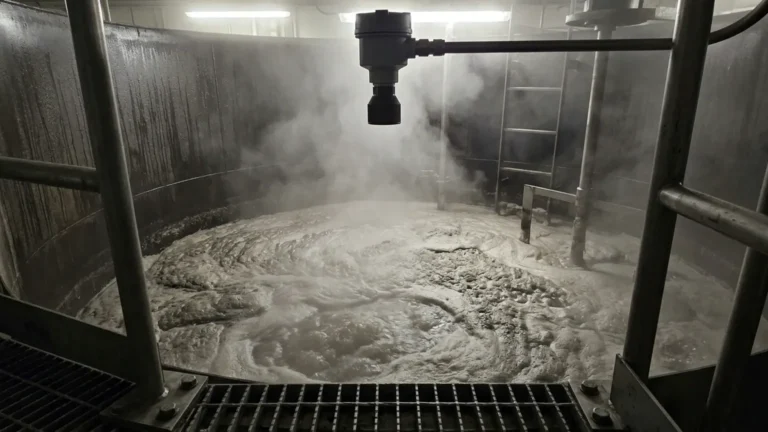
* Ultrasonic: Foam is a major challenge for ultrasonic technology. Because foam is porous and contains air, it tends to absorb the mechanical energy of the sound wave rather than reflecting it. Heavy turbulence can also scatter the sound signal.
* Radar: While heavy, dense foam can also affect radar, many radar frequencies (especially higher frequencies like 80GHz) can penetrate light foam or provide a more reliable reflection from the liquid surface beneath it.
4. Material Properties (Dielectric Constant)
* Ultrasonic: The reflection of a sound wave depends on the density of the surface. It works exceptionally well on almost all liquids and many solids, regardless of their electrical properties.
* Radar: The strength of a radar reflection depends on the Dielectric Constant (εr) of the material. Materials with low dielectric constants (like oil, liquid CO2, or certain plastic pellets) reflect less energy. However, modern high-sensitivity radar units can now measure materials with εr as low as 1.4.
—
Practical Selection Table
The following table summarizes the typical performance boundaries for both technologies in industrial applications.
| Feature | Ultrasonic Level Meters | Radar Level Meters |
| :— | :— | :— |
| Measurement Principle | Sound Waves (Mechanical) | Microwaves (Electromagnetic) |
| Medium Required? | Yes (Air/Gas) | No (Works in Vacuum) |
| Standard Accuracy | ±0.25% to ±0.5% of range | ±1mm to ±3mm |
| Max Temperature | Usually up to 80°C – 100°C | Up to 450°C (Specialized) |
| Max Pressure | ~3 bar (43 psi) | 40+ bar (580+ psi) |
| Effect of Dust/Steam | High (Scatters/Absorbs) | Low (Penetrates) |
| Effect of Foam | High (Absorbs signal) | Moderate (Frequency dependent) |
| Relative Cost | Economical | Higher Investment |
—
Installation Considerations
Proper installation is vital for both technologies to ensure a clear signal path and accurate data.
Ultrasonic Installation
1. Dead Zone (Blocking Distance): Every ultrasonic sensor has a "dead zone" near the transducer face (typically 0.2m to 0.5m) where it cannot measure. The sensor must be mounted high enough so the maximum liquid level never enters this zone.
2. Perpendicularity: The sensor must be mounted perfectly perpendicular to the liquid surface. Even a small tilt can cause the sound wave to reflect away from the receiver.
3. Avoid Obstructions: The "beam angle" of an ultrasonic sensor is relatively wide (typically 8° to 15°). Ensure there are no ladders, pipes, or agitators within the cone of the signal.
Radar Installation
1. Nozzle Height: For non-contact radar, the antenna should ideally extend slightly beyond the mounting nozzle to prevent internal reflections (ringing) from the nozzle walls.
2. Beam Focusing: Modern 80GHz radars have very narrow beam angles (as low as 3°), allowing them to be installed in tall, narrow nozzles or tanks with many internal obstructions.
3. Metal vs. Plastic Tanks: Radar can "see through" plastic tank walls if necessary, but in metal tanks, the sensor must have a clear line of sight to the medium.
—
Limitations and Common Risks
When to Avoid Ultrasonic
* High Dust Environments: In silos containing flour or fine cement, dust clouds can attenuate the sound wave, causing "lost echo" errors.
* Volatile Chemicals: If the gas space above the liquid changes composition (e.g., from air to nitrogen or methane), the speed of sound changes, and the measurement will drift significantly unless the device is calibrated for that specific gas mixture.
When to Avoid Radar
* Extremely Low Dielectric Media: In some specific hydrocarbon applications where the εr is extremely low and the surface is turbulent, non-contact radar may struggle to get a return signal. In these cases, Guided Wave Radar (GWR) is often preferred.
* Budget Constraints: For simple water tank monitoring where high precision and extreme conditions aren't factors, radar may be over-engineered and unnecessarily expensive.
—
Frequently Asked Questions (FAQs)
Q: Which is better for wastewater treatment?
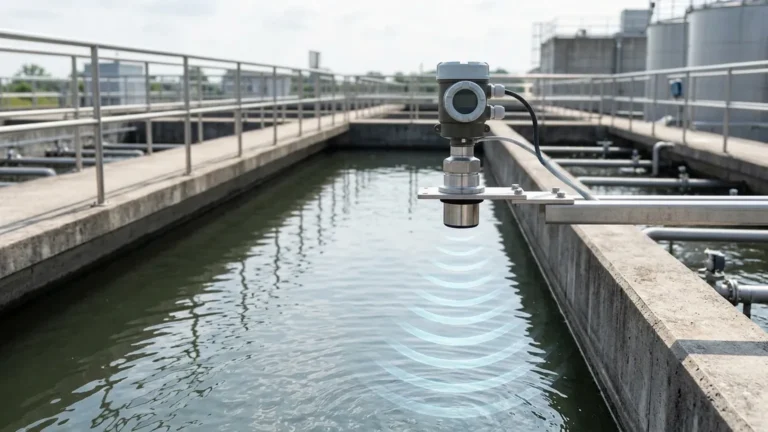
A: For most wastewater applications, such as open channel flow or sump level measurement, Ultrasonic Level Meters are the industry standard due to their cost-effectiveness and reliability in atmospheric conditions.
Q: Can radar measure the level of solids like grain or sand?
A: Yes. High-frequency radar is excellent for solids because it can penetrate dust and handle the uneven, angled surfaces (angle of repose) common in silos better than ultrasonic sensors.
Q: Does wind affect ultrasonic measurements?
A: Yes. Strong wind in outdoor applications can "blow" the sound wave away, causing intermittent signal loss. Radar is unaffected by wind.
Q: How do I handle foam in a chemical tank?
A: If the foam is light, a high-frequency radar (80GHz) is usually the best choice. If the foam is thick and dense, you may need to consider a different technology altogether, such as a hydrostatic pressure transmitter or a magnetic level gauge.
—
Conclusion
Choosing between ultrasonic level vs radar level comes down to a balance of environment and budget. Ultrasonic technology remains the most cost-effective solution for water-based applications, open-air measurements, and simple storage tanks under ambient conditions. However, for processes involving high temperatures, pressures, vapors, or vacuum conditions, radar provides the robustness and precision required for modern industrial automation.
Welk provides a wide range of both ultrasonic and radar solutions tailored to specific industrial needs. When selecting a device, always confirm the process temperature, pressure, and the chemical compatibility of the sensor materials with your medium. For those looking for reliable, non-contact measurement in standard industrial environments, Ultrasonic Level Meters offer a proven and economical path forward.