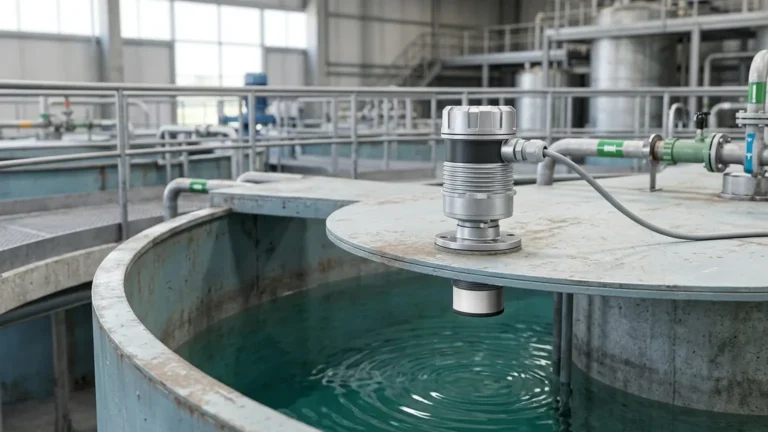
Ultrasonic Level Sensor Wastewater
Ultrasonic Level Sensor for Wastewater: A Comprehensive Engineering Guide
In the management of municipal and industrial wastewater, accurate level measurement is critical for process efficiency, regulatory compliance, and equipment protection. Among the various technologies available, the ultrasonic level sensor wastewater systems have become a standard choice due to their non-contact nature and reliability in challenging environments.
This guide explores the engineering principles, application considerations, and selection criteria for Ultrasonic Level Meters within the wastewater sector, providing a practical reference for engineers and plant operators.
Measurement Principles of Ultrasonic Level Meters
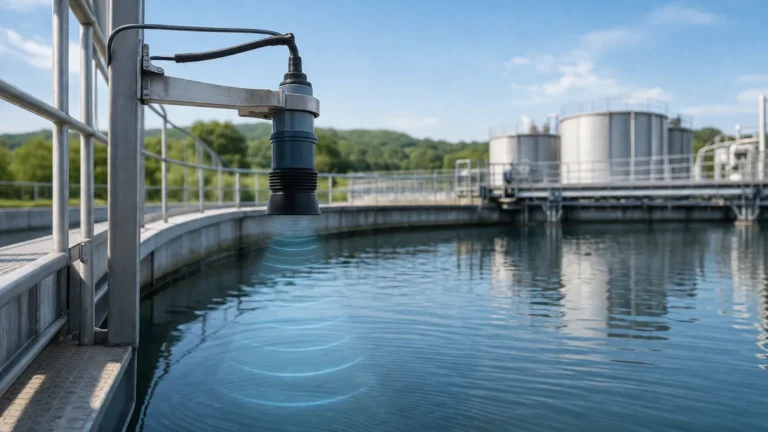
Ultrasonic level measurement is based on the "Time of Flight" (ToF) principle. The sensor, typically mounted at the top of a tank or above a channel, emits high-frequency sound waves (ultrasonic pulses) toward the surface of the medium. These waves travel through the air, bounce off the liquid surface, and return to the sensor's transducer.
The Calculation Process
The distance (D) between the sensor and the liquid surface is calculated using the formula:
D = (c × t) / 2
Where:
* c is the speed of sound in the air (approximately 344 m/s or 1,128 ft/s at 20°C).
* t is the total time elapsed from the emission of the pulse to the reception of the echo.
Since the installation height (H) of the sensor is known, the actual level (L) of the wastewater is determined by subtracting the measured distance from the total height: L = H – D.
Temperature Compensation
The speed of sound is highly dependent on air temperature, changing by approximately 0.17% per degree Celsius. To maintain accuracy, modern ultrasonic level meters incorporate integrated temperature sensors to automatically adjust the calculation based on the ambient air temperature between the sensor and the liquid surface.
Why Choose an Ultrasonic Level Sensor for Wastewater?
Wastewater is often a complex mixture of water, organic solids, chemicals, and fats/oils. The non-contact nature of ultrasonic technology offers several distinct advantages in these environments:
1. Reduced Maintenance: Because the sensor never touches the wastewater, there is no risk of corrosion from harsh chemicals or fouling from raw sewage and grease. This significantly reduces the need for frequent cleaning or sensor replacement compared to hydrostatic or float-based systems.
2. Versatility: These sensors can be used in a variety of structures, including wet wells, lift stations, clarifiers, and open channels.
3. Ease of Installation: Most units are top-mounted and can be installed without draining the tank or stopping the flow.
4. Cost-Effectiveness: Compared to radar level meters, ultrasonic sensors provide a highly accurate and reliable solution at a lower capital cost for standard wastewater applications.
Key Selection Criteria for Wastewater Environments
When specifying an ultrasonic level sensor wastewater application, engineers must evaluate several technical parameters to ensure long-term performance.
Measuring Range and Blocking Distance
Every ultrasonic sensor has a "blocking distance" (also known as the dead zone or blanking distance). This is a small area directly beneath the transducer where the sensor cannot receive an echo because the transducer is still vibrating from the pulse emission. Typical blocking distances range from 0.2m to 0.5m (8" to 20"). It is vital to mount the sensor high enough so that the maximum liquid level never enters this zone.
Beam Angle
The ultrasonic pulse spreads out in a conical shape. The "beam angle" defines the width of this cone. In narrow wet wells or tanks with internal obstructions (like ladders, pipes, or pumps), a sensor with a narrow beam angle (e.g., 5° to 10°) is required to prevent false echoes from the walls or equipment.
Material Compatibility
Wastewater treatment often involves corrosive gases like hydrogen sulfide (H2S). The sensor housing and transducer face should be constructed from chemically resistant materials such as PVDF (Polyvinylidene fluoride) or PP (Polypropylene) to prevent degradation.
Signal Processing and False Echo Suppression
Advanced ultrasonic level meters feature digital signal processing (DSP) algorithms. These allow the sensor to "learn" the environment and ignore static reflections from internal tank structures, focusing only on the true liquid level echo.
Practical Selection Table
| Feature | Standard Wastewater Sump | Large Clarifier/Basin | Open Channel Flow (Flume) |
| :— | :— | :— | :— |
| Measuring Range | 0.3m – 8m | 0.5m – 15m | 0.1m – 3m |
| Required Accuracy | ±0.25% to ±0.5% | ±0.25% | ±1mm to ±2mm |
| Beam Angle | Narrow (5°-8°) | Standard (10°-12°) | Standard (10°) |
| Output Signal | 4-20mA / HART | 4-20mA / Modbus | 4-20mA / Pulse (Totalizer) |
| Protection Rating | IP68 (Submersible) | IP67 | IP67/IP68 |
Installation Guidelines and Best Practices
Proper installation is the single most important factor in the success of an ultrasonic level measurement system. Follow these engineering guidelines:
* Perpendicular Alignment: The transducer face must be perfectly parallel to the liquid surface. Even a few degrees of tilt can cause the echo to reflect away from the sensor, leading to signal loss.
* Avoid the Inflow: Never mount the sensor directly above the point where liquid enters the tank. The turbulence and air entrainment at the inflow point will scatter the ultrasonic signal.
* Distance from Walls: To avoid "edge effects" and false reflections, the sensor should be mounted at a distance from the tank wall at least 1/6th of the total tank height.
* Sun Shields: For outdoor installations, use a sun shield. Direct sunlight can heat the sensor body significantly higher than the actual air temperature, leading to inaccurate temperature compensation and measurement errors.
* Stilling Wells: In extremely turbulent applications, installing the sensor inside a stilling well (a vertical pipe) can provide a calm surface for measurement, though the pipe must be kept clean of grease and debris.
Overcoming Common Challenges
1. Foam Interference
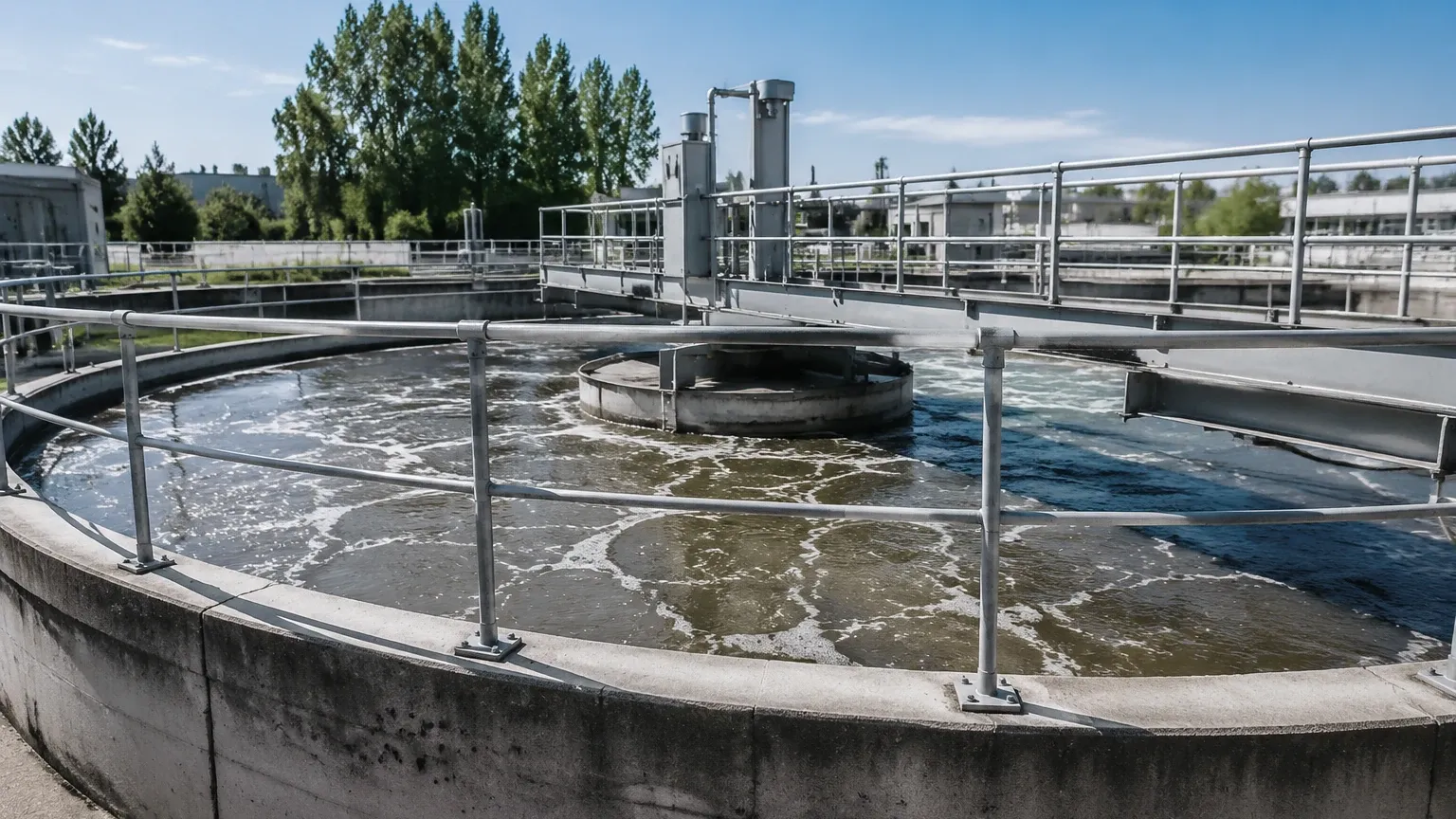
Heavy foam on the surface of wastewater (common in aeration basins) acts as an acoustic absorber. The ultrasonic pulse enters the foam and is scattered or absorbed rather than reflected. If foam is persistent and thick, a radar level meter or a hydrostatic pressure sensor may be a more appropriate choice.
2. Steam and Vapor
While light vapor is generally manageable, heavy steam or high concentrations of chemical vapors can change the density of the air, affecting the speed of sound. In these cases, the sensor may require specialized calibration or a higher-frequency transducer to penetrate the vapor.
3. Turbulence and Waves
Surface turbulence causes the echo to scatter. Modern Ultrasonic Level Meters use damping or averaging functions to smooth out these fluctuations, providing a stable output signal despite the surface movement.
Maintenance and Troubleshooting
While low-maintenance, ultrasonic sensors are not "no-maintenance."
* Transducer Cleaning: Periodically check the transducer face for condensation or buildup of grease and spider webs. A gentle wipe with a soft cloth and mild detergent is usually sufficient. Avoid using abrasive tools that could scratch the transducer surface.
* Signal Strength Monitoring: Most digital ultrasonic meters provide a "Signal-to-Noise Ratio" (SNR) or echo strength value. Monitoring this via a PLC or SCADA system can provide an early warning if the sensor is becoming fouled or if environmental conditions are degrading the signal.
* Wiring Checks: Ensure that cable glands are tight and that there is no moisture ingress in the terminal housing, especially in the humid environments typical of wastewater lift stations.
Frequently Asked Questions (FAQ)
Q: Can an ultrasonic level sensor measure through a closed tank lid?
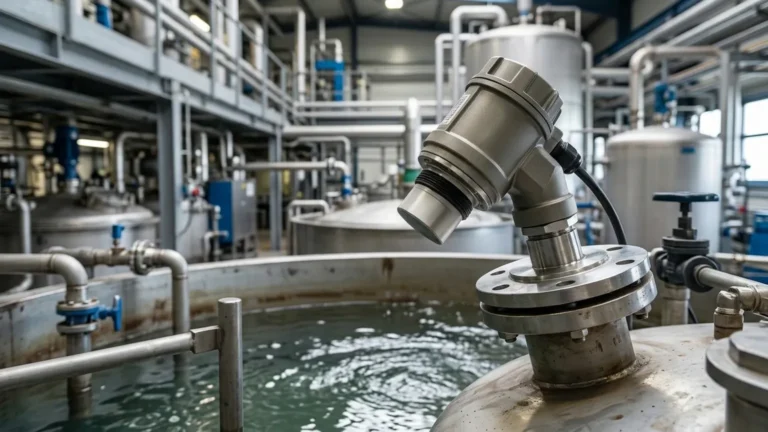
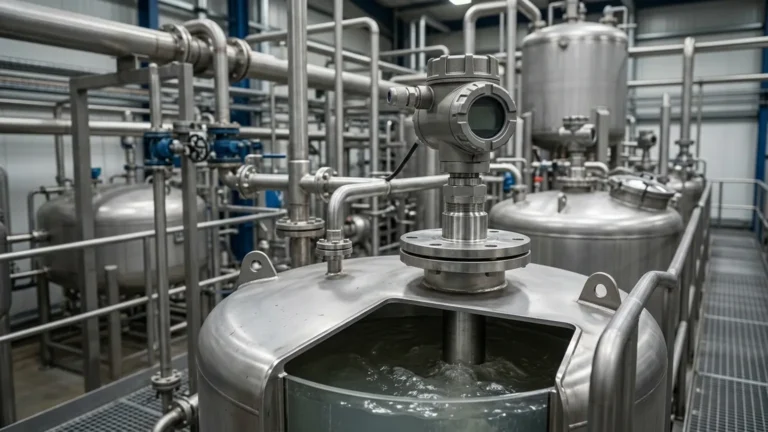
A: No. The ultrasonic pulse requires a clear air path to the liquid surface. If the tank is sealed, the sensor must be mounted through a nozzle or flange so the transducer face is inside the tank environment.
Q: What is the maximum range for a wastewater ultrasonic sensor?
A: While some high-power industrial sensors can reach up to 30 or 40 meters (approx. 100-130 ft), most wastewater applications (sumps and tanks) utilize sensors with a range between 5 and 15 meters (16 to 50 ft).
Q: How does wind affect outdoor open channel measurements?
A: Strong wind can "blow" the ultrasonic pulse away or create temperature gradients that affect accuracy. For outdoor flumes, mounting the sensor as close to the maximum liquid level as possible (while respecting the blocking distance) helps minimize wind interference.
Q: Is it possible to use ultrasonic sensors for sludge level?
A: Yes, provided the sludge has a liquid-like surface that can reflect sound. However, if the sludge is very thick or has an uneven, "crusty" surface, the echo may be weak. In such cases, testing the specific medium is recommended.
Conclusion
The ultrasonic level sensor wastewater remains a cornerstone of modern industrial automation. By understanding the acoustic principles and adhering to strict installation standards, engineers can implement a measurement solution that is both accurate and remarkably durable. For applications ranging from simple storage tanks to complex open-channel flow monitoring, selecting the right frequency, beam angle, and housing material ensures that the level meter provides reliable data for years of operation.