Level Switch Board
Level Switch Board
In the landscape of industrial automation, the ability to detect the presence or absence of a substance at a specific point is fundamental to process safety and efficiency. While the physical probe or sensor of a level switch interacts directly with the medium, the level switch board—the internal electronic circuitry—serves as the intelligence of the device. This component is responsible for signal processing, logic execution, and triggering the final output, such as a relay or a transistor switch. Understanding the technical nuances of the level switch board and its integration within Level Switches is essential for engineers designing reliable control loops.
Understanding Level Measurement Principles
Before evaluating the electronic board, it is necessary to understand the physical principles that these boards are designed to interpret. Different sensing technologies require specific signal conditioning on the level switch board.
Vibration (Tuning Fork) Principle
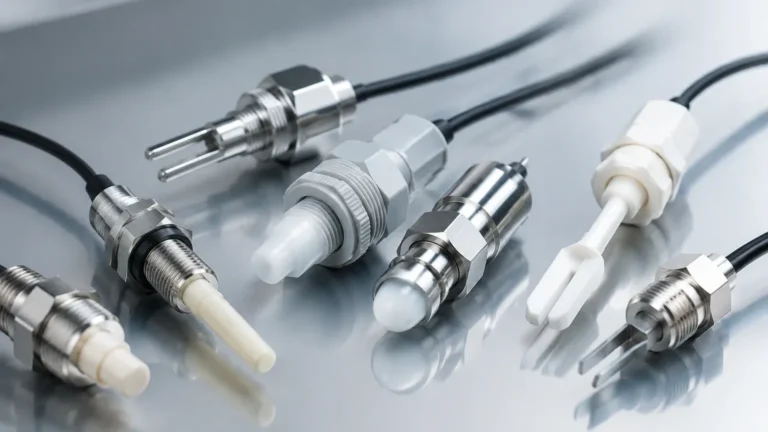
In a tuning fork level switch, the board drives a piezoelectric crystal that causes the fork tines to vibrate at their natural resonant frequency. When the tines are covered by a liquid or solid, the frequency shifts or the vibration is damped. The level switch board detects this change in frequency or amplitude and converts it into a switching signal.
Capacitance Principle
Capacitive switches treat the probe and the tank wall (or a reference electrode) as two plates of a capacitor. The board measures the change in capacitance as the medium displaces air. Because different materials have different dielectric constants, the board often includes a sensitivity adjustment to calibrate the switch for specific media.
Conductivity Principle
Used primarily for conductive liquids, these switches rely on the medium completing an electrical circuit between two electrodes. The level switch board applies a low-voltage AC signal (to prevent electrolysis) and monitors the current flow. When the liquid touches the probes, the board registers a drop in resistance.
Float and Magnetic Reed Principle
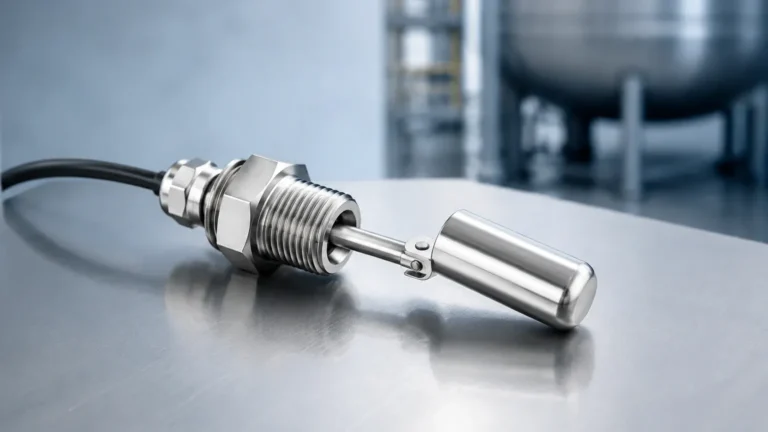
This is a purely mechanical-to-electrical interface. A float containing a magnet moves along a stem. When it reaches a specific point, the magnetic field closes or opens a reed switch. In this configuration, the level switch board may be a simple terminal interface or a more complex protection circuit that prevents contact arcing and provides signal debouncing.
The Function and Design of the Level Switch Board
The level switch board is a printed circuit board (PCB) housed within the instrument's enclosure. Its design determines the switch's compatibility with industrial power supplies and its ability to communicate with higher-level control systems like PLCs (Programmable Logic Controllers).
Signal Conditioning and Processing
Industrial environments are electrically noisy. The board must include filters to remove electromagnetic interference (EMI) and radio-frequency interference (RFI). For technologies like ultrasonic or radar-based point level switches, the board also contains a microprocessor to execute algorithms that distinguish between the actual material level and false echoes caused by tank internal structures or foam.
Output Configurations
The board typically provides one of the following output types:
* Relay Output (SPDT/DPDT): Mechanical contacts that can switch high-current loads. Standard ratings are often 5A at 250V AC.
* Transistor Output (PNP/NPN): Solid-state switching used for high-speed applications and direct connection to PLC digital inputs.
* Two-Wire (Contactless): The switch is wired in series with the load, drawing a small leakage current when open and allowing full current when closed.
* NAMUR: A current-coded signal (typically 1mA vs 3mA) used primarily in hazardous areas with intrinsically safe barriers.
Sensitivity and Time Delay Adjustments
Most professional-grade boards feature potentiometers or DIP switches. Sensitivity adjustments allow the switch to ignore coating buildup on the probe. Time delay settings (typically 0 to 30 seconds) prevent "chattering" of the relay caused by turbulence or splashing in the tank.
Key Evaluation Criteria for Level Control Components
When selecting a level switch board and its associated sensor, engineers must consider the chemical, physical, and electrical constraints of the application.
1. Supply Voltage: Boards are usually designed for specific ranges, such as 24V DC, 110V AC, or universal power supplies (20V to 250V AC/DC). Ensuring the board matches the site's available power is the first step in selection.
2. Enclosure Rating: The board must be protected from the environment. For outdoor or wash-down areas, an IP66 or IP67 (NEMA 4X) rating is standard. In explosive atmospheres, the board must be housed in an explosion-proof enclosure or designed for intrinsic safety.
3. Operating Temperature: While the probe might withstand 200°C (392°F), the level switch board is usually limited to an ambient temperature range of -40°C to +70°C (-40°F to 158°F). If the process is extremely hot, a remote-mounted board or an extended neck design is required to protect the electronics.
4. Fail-Safe Modes: A critical feature of the board is the selectable fail-safe mode. "Fail-Safe High" ensures the relay de-energizes when the level reaches the switch (or if power is lost), preventing overfills. "Fail-Safe Low" is used for dry-run protection.
Practical Selection Table for Industrial Level Switches
| Technology | Suitable Media | Max Pressure (Typical) | Key Advantage | Limitation |
| :— | :— | :— | :— | :— |
| Vibrating Fork | Liquids, Powders | 40 bar (580 psi) | High reliability; no calibration | Affected by heavy build-up |
| Capacitance | Solids, Liquids, Slurries | 100 bar (1450 psi) | Robust; handles high temp | Requires calibration for media change |
| Conductivity | Conductive Liquids | 10 bar (145 psi) | Low cost; simple design | Only for conductive media |
| Float Switch | Clean Liquids | 20 bar (290 psi) | Simple; no power required | Moving parts can jam |
| Optical | Clean Liquids | 50 bar (725 psi) | Compact; fast response | Sensitive to coating/bubbles |
Installation Guidelines and Wiring Practices
Proper installation of the level switch board and its housing is vital for long-term accuracy. Welk instruments are designed for ease of integration, but standard engineering practices must be followed.
Mounting Orientation
For liquid applications, horizontal mounting is common for side-level detection. However, for solids or powders, a 20-degree downward angle is often recommended to prevent material from accumulating on the probe and causing false triggers. The level switch board should be oriented so that cable entries point downward to prevent moisture ingress through the conduits.
Wiring and Grounding
* Shielded Cables: Use shielded twisted-pair cables for signal lines to minimize noise interference on the board.
* Grounding: The instrument housing must be grounded to the tank (if metal) or a dedicated plant ground. This is especially important for capacitive switches, where the tank acts as the reference electrode.
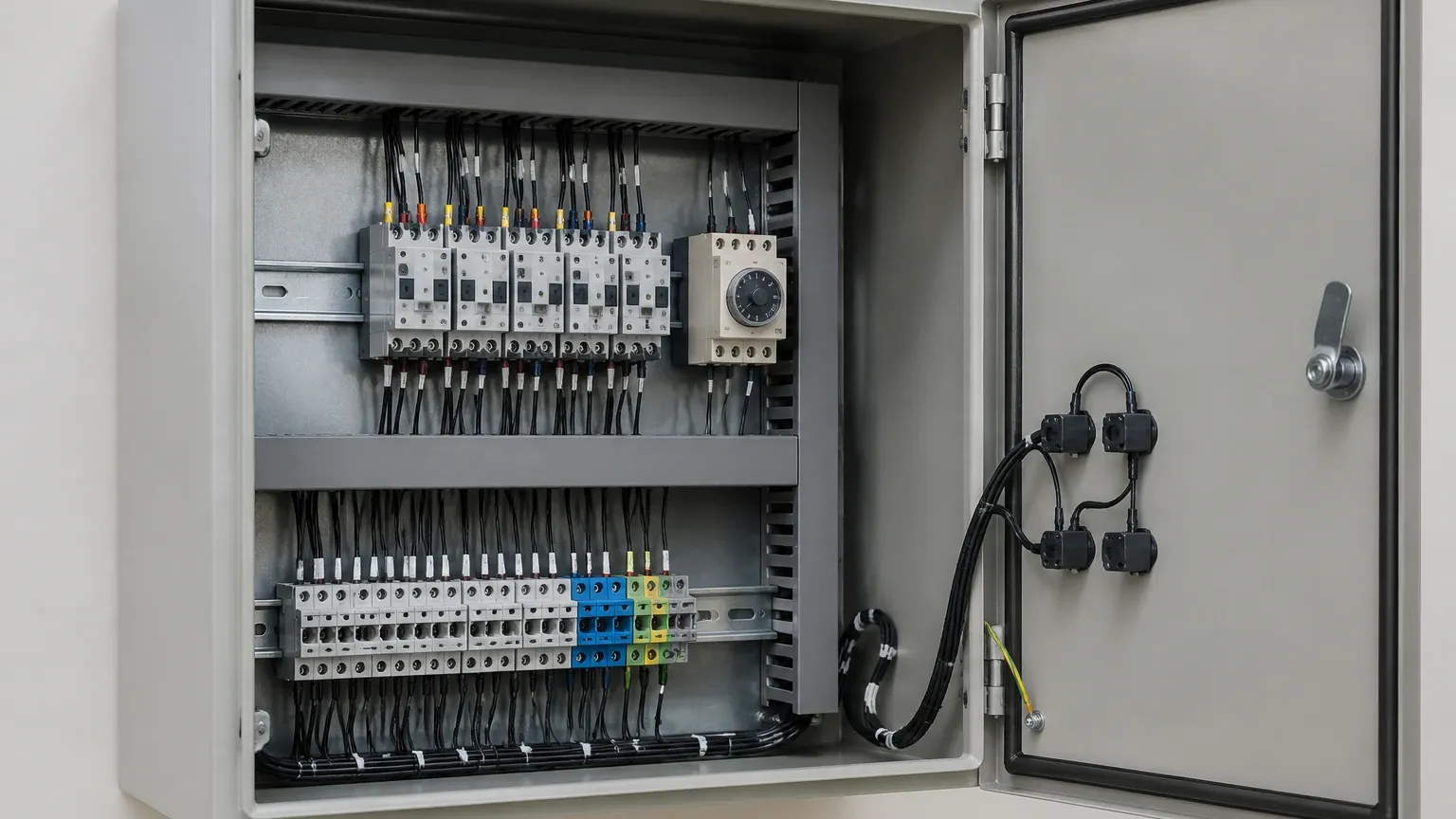
* Terminal Connections: Ensure that wire ferrules are used for stranded wires to prevent shorts on the dense terminal blocks of the level switch board.
Environmental Protection
If the switch is installed in a high-vibration environment, ensure the board is potted or uses vibration-resistant connectors. For high-humidity areas, the use of a breather vent or desiccant pack inside the housing can prevent condensation on the PCB traces.
Limitations and Common Operational Risks
Despite the advanced design of modern level switch boards, certain conditions can compromise performance:
* Dielectric Fluctuations: For capacitive boards, a significant change in the moisture content of a solid material can change its dielectric constant, requiring recalibration of the board's sensitivity.
* Coating and Scaling: In wastewater or chemical processing, materials may adhere to the probe. While many boards feature "active shield" technology to ignore this, extreme buildup can eventually bridge the sensor to the tank wall.
* Turbulence and Foam: Mechanical floats may bounce in turbulent liquids, and ultrasonic switches may lose signal in heavy foam. In these cases, the board's time-delay settings must be increased, or a stilling well must be installed.
* Electrolytic Corrosion: In conductivity switches, using a DC voltage on the probes can cause rapid corrosion. Quality level switch boards always use an AC signal to mitigate this risk.
Frequently Asked Questions (FAQs)
Q: Can a level switch board be repaired if a relay fails?
A: While individual components like relays can technically be replaced, most industrial manufacturers recommend replacing the entire board assembly to maintain the instrument's original safety ratings and environmental sealing.
Q: How do I test the board without filling the tank?
A: Most modern boards include a "test" button or a magnetic test point on the exterior of the housing. Pressing this simulates a high-level condition to verify the relay logic and downstream alarm circuits.
Q: What is the difference between a PNP and NPN output on a board?
A: A PNP output switches the positive side of the circuit (sourcing current), while an NPN output switches the negative side (sinking current). The choice depends on the input requirements of your PLC.
Q: Why does my switch trigger when the tank is empty?
A: This is often caused by high sensitivity settings on a capacitive or tuning fork board. It can also be caused by moisture inside the housing shorting the level switch board terminals. Check for condensation and adjust the sensitivity potentiometer.
Conclusion
The level switch board is the critical bridge between physical process conditions and the digital control environment. By selecting the appropriate sensing principle and ensuring the board is configured with the correct fail-safe modes and sensitivity settings, operators can achieve precise level control in the most demanding applications. Whether managing water treatment facilities or complex chemical reactors, the reliability of the level switch board ensures that processes remain within safe operational boundaries. For those seeking to optimize their systems, exploring the full range of Level Switches is the recommended next step in technical evaluation.