Displacer Type Level Switches
Displacer Type Level Switches
In the landscape of industrial process control, the requirement for reliable point-level detection remains a cornerstone of plant safety and efficiency. Among the various technologies available, displacer type level switches have established themselves as a preferred choice for demanding applications involving high pressures, extreme temperatures, and turbulent liquid surfaces. Unlike traditional float-based systems, displacer technology relies on the change in apparent weight of a solid body as it is submerged in a liquid, providing a robust solution for critical alarm and control functions.
Selecting the appropriate instrumentation requires a deep understanding of the underlying physics and the specific environmental factors of the installation site. For engineers and procurement professionals, evaluating Level Switches involves balancing precision with long-term durability in harsh chemical or petrochemical environments.
Understanding the Measurement Principle
Displacer type level switches operate based on Archimedes' Principle, which states that a body immersed in a fluid is buoyed up by a force equal to the weight of the fluid displaced by the body.
The Force Balance Mechanism
Unlike a float switch, which has a lower density than the process liquid and stays on the surface, a displacer is intentionally designed to be heavier than the liquid it measures. It is suspended from a spring or a torque tube mechanism. When the liquid level is below the displacer, the spring is extended by the full weight of the displacer.
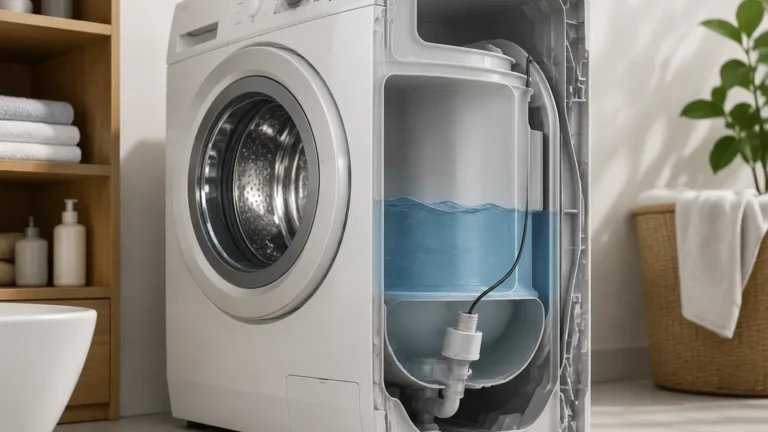
As the liquid level rises and covers the displacer, the buoyant force increases. This force acts upward, effectively reducing the "apparent weight" of the displacer. This change in net weight causes the suspension spring to contract or the torque tube to rotate slightly. This mechanical movement is then used to actuate a switch mechanism—typically a dry contact or a pneumatic valve—located outside the process pressure boundary.
Sensitivity and Specific Gravity
Because the operation depends on the weight of the displaced liquid, the specific gravity (SG) of the process medium is a critical factor. A displacer designed for water (SG 1.0) will experience a different buoyant force than one used in light hydrocarbons (SG 0.6). High-quality displacer type level switches allow for calibration adjustments to account for these variations, ensuring the switch point remains accurate even if the process fluid density changes slightly due to temperature fluctuations.
Key Components and Construction
A standard displacer switch assembly consists of several engineered components designed to withstand industrial rigors:
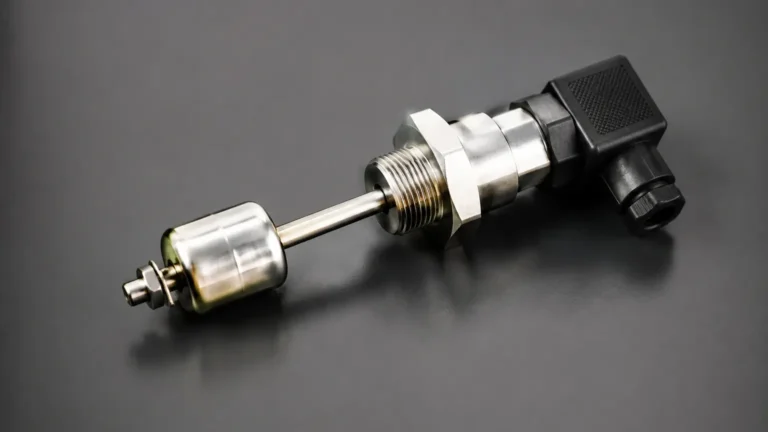
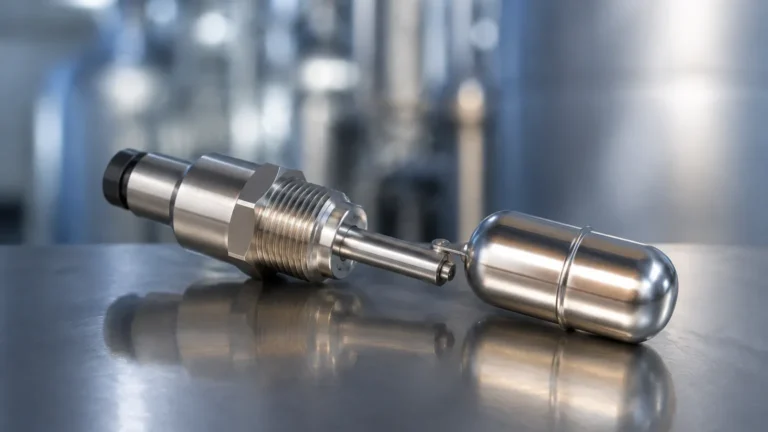
1. The Displacer: Usually a hollow or solid cylindrical rod made from Stainless Steel (316/316L), Monel, or Hastelloy. Its length and diameter are calculated based on the required switching range and the liquid's density.
2. The Suspension Spring: A precision-engineered spring that supports the displacer. It must maintain its elastic properties over millions of cycles and across wide temperature ranges.
3. The Pressure Seal: Often a flexible diaphragm or a torque tube that transfers the mechanical motion from the wetted parts to the switch housing while maintaining a hermetic seal against the process pressure.
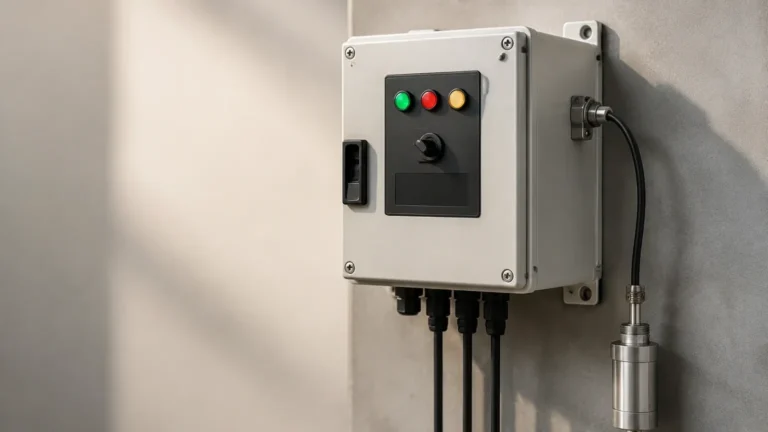
4. The Switch Housing: An enclosure (often NEMA 4X or IP66/67 rated) containing the electrical or pneumatic switching elements. For hazardous areas, these housings are typically explosion-proof or intrinsically safe.
5. The Magnetic Sleeve (Optional): In many modern designs, the displacer movement moves a magnetic sleeve inside a non-magnetic pressure tube. An external switch mechanism senses the magnetic field, eliminating the need for dynamic seals or bellows.
Comparing Displacer Switches vs. Float Switches
While both technologies are used for point-level detection, they serve different operational needs. The following table highlights the technical distinctions:
| Feature | Displacer Type Level Switches | Float Level Switches |
| :— | :— | :— |
| Buoyancy Basis | Heavier than liquid (sinks) | Lighter than liquid (floats) |
| Surface Turbulence | Highly resistant; less prone to "chatter" | Susceptible to bouncing on waves |
| Pressure Rating | Often up to 170 bar (2500 psi) | Generally lower; floats can collapse |
| Temperature Range | Up to 450°C (842°F) | Typically limited to < 250°C |
| Interface Detection | Excellent for liquid-liquid interfaces | Limited; requires very specific float density |
| Switch Point Adjustment | Easily adjusted by moving the displacer on the cable | Often fixed or requires moving the entire unit |
Displacer type level switches are particularly advantageous in high-pressure steam drums or oil-water separators where stability and material integrity are paramount.
Selection Criteria for Industrial Applications
When specifying a displacer switch, engineers must confirm several process parameters to ensure safety and accuracy. Failure to account for these can lead to premature mechanical failure or false triggering.
Process Fluid Characteristics
* Specific Gravity: The most vital metric. If the SG is too low, the buoyant force may not be sufficient to actuate the spring. Conversely, a very high SG might require a heavier displacer to prevent it from floating like a standard float.
* Viscosity: While displacers are more tolerant of viscosity than many electronic sensors, extremely thick or "sticky" fluids can cause drag on the displacer, delaying the switch response.
* Corrosivity: Ensure the wetted materials (displacer, cable, and chamber) are compatible with the process chemicals. Stainless steel is standard, but specialized alloys may be required for acids or chlorides.
Operating Conditions
* Pressure and Temperature: Displacer switches are often used in boiler applications. Ensure the pressure rating of the housing and the spring's temperature compensation are rated for the maximum possible excursion, not just the normal operating point.
* Agitation: In tanks with heavy mixers, the displacer should be installed within a stilling well or an external chamber to prevent mechanical damage from lateral forces.
Installation and Mounting Configurations
Proper installation is critical for the mechanical movement of the displacer. There are three primary mounting styles used in industrial automation:
1. Top Mounting (Internal)
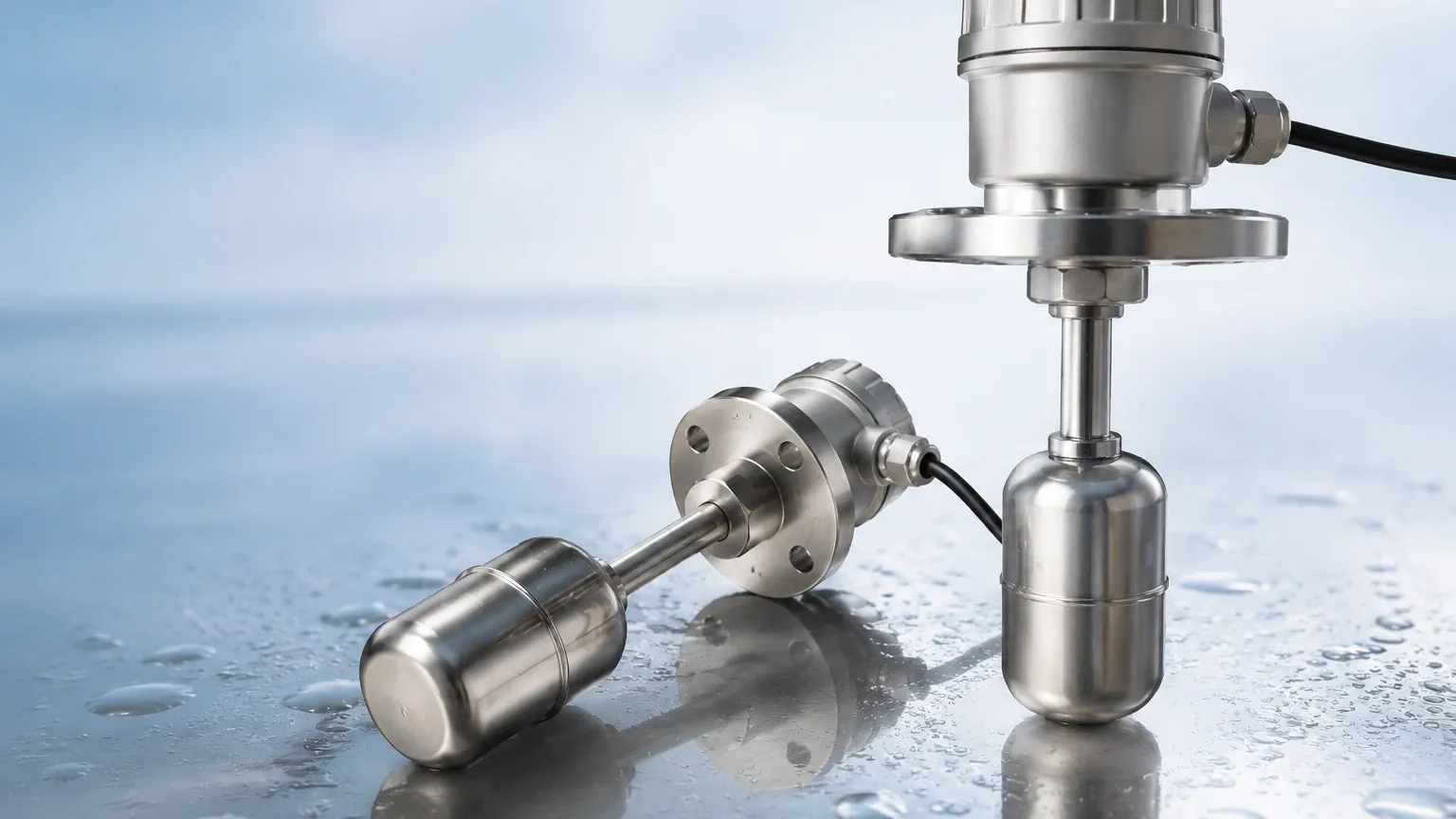
The displacer is suspended directly into the process vessel from a top flange. This is common in large storage tanks where the liquid is relatively calm. It is essential to ensure the displacer has enough clearance from the tank walls and internal structures like heating coils.
2. External Cage (Chamber) Mounting
This is the most common configuration for refineries and power plants. The switch is mounted in a separate vertical pipe (chamber) connected to the side of the vessel via two process connections (bridles).
* Advantage: The chamber acts as a natural stilling well, smoothing out turbulence.
* Maintenance: Isolation valves can be installed between the vessel and the chamber, allowing the switch to be tested, calibrated, or repaired without draining the main tank.
3. Side Mounting
While less common for displacers (more typical for floats), some specialized displacer designs use a horizontal pivot arm. However, the vertical suspension model remains the standard for true displacer technology.
Installation Checklist
* Vertical Alignment: The unit must be mounted perfectly vertical. Even a few degrees of tilt can cause the displacer to rub against the side of the chamber, creating friction that prevents accurate switching.
* Vent and Drain: External chambers should be equipped with a vent plug at the top and a drain valve at the bottom to allow for periodic flushing of sediment.
* Wiring: Use appropriate conduit seals, especially in hazardous areas, to prevent moisture ingress into the switch housing.
Maintenance and Operational Safety
Displacer type level switches are known for their longevity, but they are mechanical devices and require periodic inspection.
Routine Inspection
In applications like boiler low-water cutoffs, daily or weekly "blow-down" procedures are often mandated by safety codes. This involves opening the drain valve on the external chamber to simulate a low-level condition and verifying that the switch actuates the alarm or shutdown sequence.
Troubleshooting Common Issues
* Switch Fails to Actuate: Check for sediment buildup in the bottom of the chamber that might be supporting the displacer's weight. Also, inspect the spring for signs of corrosion or fatigue.
* Intermittent Signals: This is often caused by loose electrical connections or moisture in the housing. In high-vibration environments, ensure the switch mechanism is securely fastened.
* False Alarms: Often caused by significant changes in the liquid's specific gravity that were not accounted for during initial calibration.
Frequently Asked Questions (FAQ)
Q: Can displacer switches be used for interface level detection?
A: Yes. By calibrating the spring tension to the difference in buoyant forces between two immiscible liquids (e.g., oil and water), the displacer can accurately detect the interface level even if the total liquid level changes.
Q: What is the maximum length for a displacer?
A: Standard displacers are typically between 300 mm and 3000 mm (approx. 1 to 10 feet). For longer ranges, multiple displacers can be hung on a single cable to provide multiple switch points.
Q: How do I handle liquids that tend to coat surfaces?
A: For coating liquids, the displacer should be inspected regularly. While the added weight of a thin coating usually has a negligible effect on a heavy displacer, thick buildup can eventually interfere with the movement or change the displacement volume significantly.
Q: Are these switches suitable for sanitary food applications?
A: Generally, no. The suspension springs and mechanical linkages often contain crevices that are difficult to clean. For food and beverage applications, non-contact radar or hygienic tuning fork switches are usually preferred.
By adhering to these engineering principles and selection guidelines, facilities can ensure that their displacer type level switches provide reliable, long-term service in even the most challenging process environments. For specific model specifications and customized configurations, consulting with a professional manufacturer is recommended to match the instrument to the unique demands of the application.