Level Switch for Fuel Tank
Level Switch for Fuel Tank
In industrial fuel management, the accuracy and reliability of level detection are paramount for operational safety, environmental compliance, and inventory control. A level switch for fuel tank applications acts as a critical interface between the physical storage state and the automated control system. Whether preventing a catastrophic overfill of a diesel generator tank or ensuring a pump does not run dry, selecting the appropriate technology is a fundamental engineering decision.
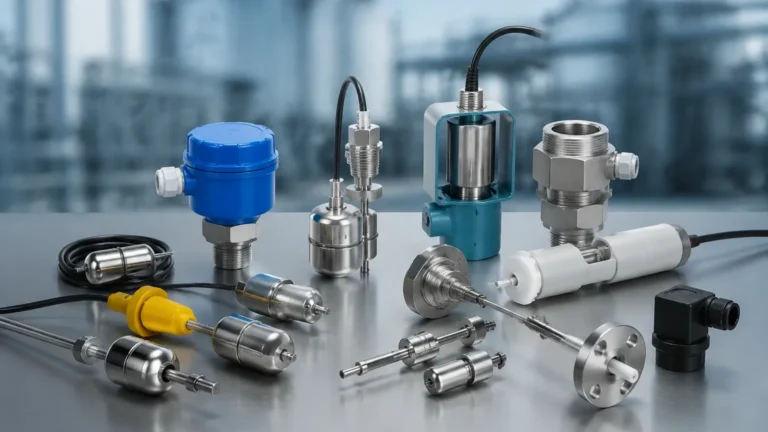
As a professional manufacturer, Welk provides high-performance Level Switches designed to meet the rigorous demands of the oil and gas, chemical, and industrial automation sectors. This guide examines the technical principles, selection criteria, and installation best practices for fuel level switching technologies.
Understanding Measurement Principles for Fuel Level Detection
Before selecting a level switch for fuel tank use, it is essential to understand how different sensing technologies interact with hydrocarbon-based fluids. Fuels vary significantly in viscosity, dielectric constant, and volatility, all of which influence sensor performance.
Float Level Switches
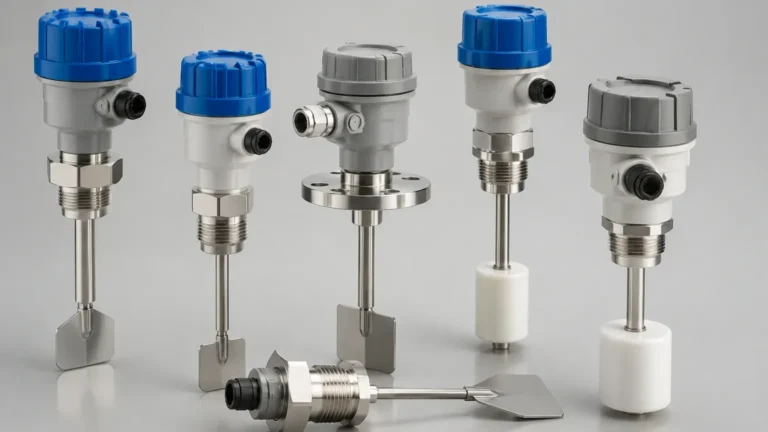
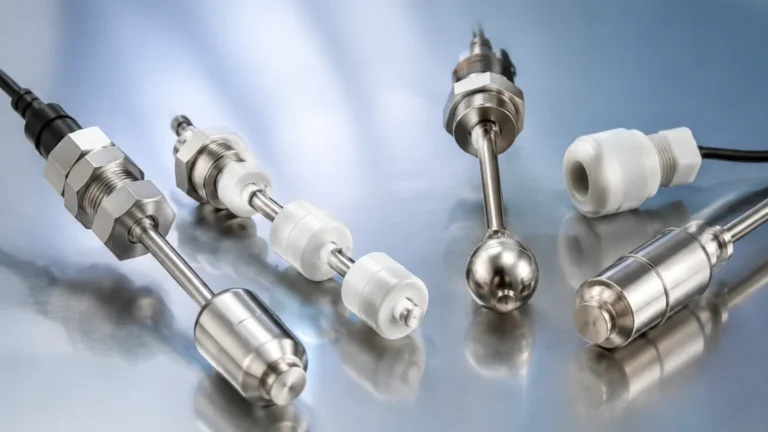
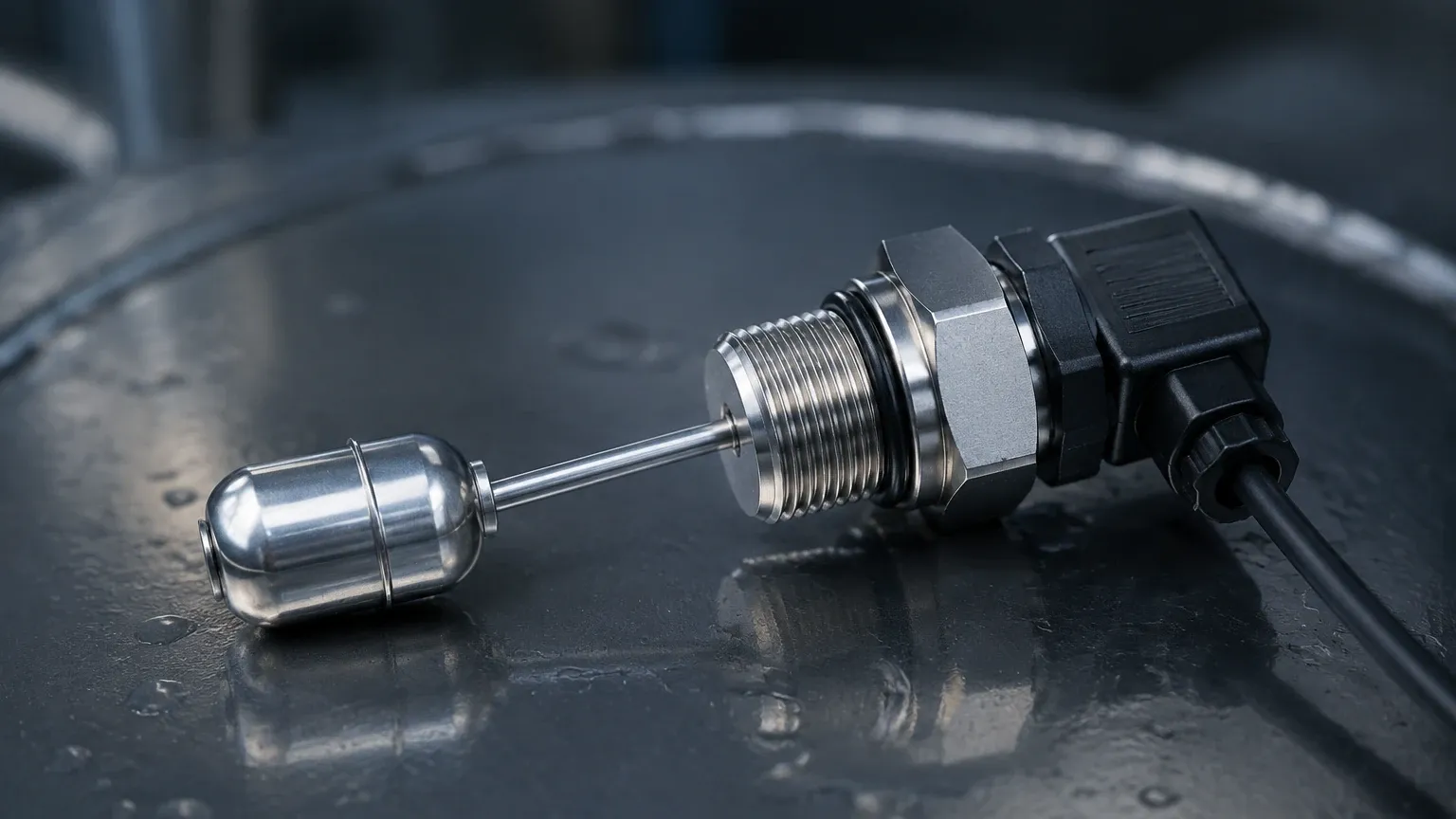
Float switches operate on the principle of buoyancy. A float, containing a permanent magnet, moves with the liquid level along a stationary stem. When the float reaches a predetermined point, the magnetic field actuates a hermetically sealed reed switch. This is a purely mechanical-electrical interaction that requires no external power for the sensing element itself. While highly reliable for clean fuels like kerosene or light diesel, they can be susceptible to mechanical sticking if the fuel contains heavy paraffin or contaminants.
Vibrating Tuning Fork Switches
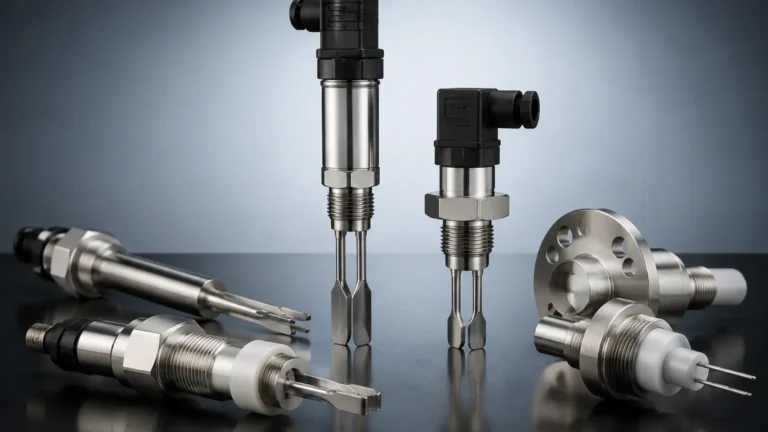
The tuning fork or vibrating level switch utilizes a piezoelectric crystal to energize a fork at its natural resonant frequency. When the fork is submerged in fuel, the frequency changes. This shift is detected by the internal electronics and converted into a switching signal. This technology is exceptionally robust because it is unaffected by turbulence, bubbles, or foam. It is often the preferred choice for high-level alarms in fuel tanks where reliability is non-negotiable.
Capacitance Level Switches
Capacitance sensors measure the change in electrical capacitance between two electrodes (or one electrode and the tank wall) as the fuel displaces air. Since fuels have a different dielectric constant than air, the sensor can accurately detect the presence of the liquid. These are solid-state devices with no moving parts, making them suitable for high-vibration environments. However, they require calibration specific to the fuel type being stored.
Ultrasonic Level Switches
Ultrasonic switches use high-frequency sound waves to detect the liquid surface. In a switch configuration, these are often gap-type sensors where the signal is transmitted across a small gap. When fuel fills the gap, the signal transmission changes, triggering the switch. Being non-contact in many configurations, they are excellent for corrosive or highly volatile fuels, though heavy vapor concentrations in the tank headspace can sometimes attenuate the signal.
Key Evaluation Criteria for a Level Switch for Fuel Tank
Selecting the right level switch for fuel tank integration requires a multi-faceted evaluation of the application environment. Engineers must look beyond basic price points to consider the long-term lifecycle costs and safety implications.
1. Fluid Properties and Compatibility
Fuels are not identical. Heavy fuel oil (HFO) requires sensors that can withstand high temperatures (often up to 100°C or more for flowability) and resist coating. Conversely, gasoline and aviation fuels are highly volatile and require sensors with strict explosion-proof certifications. The material of the wetted parts—typically 316L stainless steel or specialized polymers—must be chemically compatible with the specific hydrocarbon profile to prevent corrosion or degradation.
2. Hazardous Area Certifications
Because fuel tanks often contain flammable vapors, the level switch must be certified for use in hazardous locations. Depending on the region, this involves ATEX, IECEx, or UL/CSA certifications. The device must be either "Intrinsically Safe" (limiting the energy available for ignition) or "Explosion-Proof" (housed in an enclosure capable of containing an internal explosion).
3. Tank Geometry and Pressure
The physical dimensions of the tank dictate the mounting style. For deep underground storage tanks (USTs), top-mounted cable-suspended switches or long-stem float switches are common. For smaller day tanks used in power generation, side-mounted horizontal switches are often more practical. Additionally, the switch must be rated for the tank's operating pressure, which can range from atmospheric to several bars in pressurized storage vessels.
Technical Comparison of Fuel Level Switching Technologies
The following table provides a comparative overview of common technologies used in fuel tank applications to assist in the initial selection process.
| Technology | Best Application | Advantages | Limitations |
| :— | :— | :— | :— |
| Magnetic Float | Clean diesel, light oils | Low cost, simple installation | Moving parts can clog |
| Vibrating Fork | Overfill protection, HFO | High reliability, foam immune | Contact with media required |
| Capacitance | Small tanks, high vibration | No moving parts, compact | Requires dielectric calibration |
| Ultrasonic (Gap) | Volatile fuels, chemicals | Fast response, no calibration | Affected by heavy vapors |
| Hydrostatic Switch | Large storage tanks | Measures head pressure | Density changes affect accuracy |
Installation Guidelines and Best Practices
Even the highest-quality level switch for fuel tank applications will fail if installed incorrectly. Proper placement and mounting are critical for maintaining accuracy and extending the device's lifespan.
* Avoid Turbulence: Do not install switches directly under fuel inlet pipes. The turbulence and splashing can cause "chatter" in the switch, leading to false alarms and premature wear of the relay contacts. If the tank has high agitation, use a stilling well (a perforated pipe) to shield the sensor.
* Dead Zone Awareness: Every sensor has a "dead zone" or "unmeasurable range" near the mounting point. Ensure the switch is positioned so that the desired alarm point (e.g., 95% volume for high-level) falls within the active sensing range.
* Orientation: For float switches, ensure the stem is perfectly vertical (within ±5 degrees) to prevent the float from binding. For side-mounted switches, ensure the orientation allows for proper drainage so that fuel does not pool on the sensing element.
* Wiring and Sealing: Use appropriate cable glands and conduit seals to prevent fuel vapors from migrating through the electrical conduit. In fuel applications, the use of vapor-tight seals is a mandatory safety requirement in most jurisdictions.
Managing Operational Risks and Limitations
Engineers must account for environmental and operational variables that can impact the performance of a level switch for fuel tank systems.
Temperature Fluctuations
Fuel density changes with temperature. While this primarily affects continuous level measurement, it can also impact float switches. A float designed for a specific specific gravity (SG) might sit lower in the fluid as the temperature rises and the fuel becomes less dense. Always specify the minimum and maximum operating temperatures during the procurement phase.
Coating and Fouling
In tanks storing crude oil or heavy residuals, buildup on the sensor is a common failure mode. Vibrating fork switches are generally better at shedding buildup than float switches, but they still require periodic inspection. If coating is a significant risk, consider non-contact technologies or sensors with specialized "anti-coat" electronics.
Electrical Interference
In industrial environments, electromagnetic interference (EMI) from large motors or pumps can induce noise in sensor cables. Using shielded twisted-pair cabling and ensuring proper grounding of the tank and the instrument housing are essential steps to prevent false triggers.
Frequently Asked Questions (FAQs)
Q: Can I use the same level switch for both diesel and gasoline?
A: Not necessarily. While the mechanical materials might be compatible, the electrical certifications differ. Gasoline requires much stricter explosion-proof ratings (Class I, Div 1 or ATEX Zone 0/1) compared to diesel, which has a higher flash point. Always check the certification plate on the device.
Q: How often should a fuel level switch be tested?
A: For critical safety applications like overfill prevention, a functional "proof test" should be conducted at least annually. Many modern Level Switches from manufacturers like Welk include a manual test button or a magnetic test point that allows operators to simulate a high-level condition without filling the tank.
Q: What is the difference between a NORMALLY OPEN (NO) and NORMALLY CLOSED (NC) configuration in fuel tanks?
A: For safety-critical high-level alarms, a "Normally Closed" (fail-safe) configuration is recommended. In this setup, the circuit is closed when the level is safe and opens when the alarm point is reached or if a wire is cut. This ensures that a power failure or broken wire is detected as an alarm state.
Q: Does fuel foam affect the switch?
A: It depends on the technology. Ultrasonic and optical switches can be fooled by foam, whereas vibrating fork and float switches typically ignore foam and respond only to the actual liquid level.
By carefully matching the sensing technology to the specific fuel characteristics and tank environment, industrial operators can ensure high levels of safety and efficiency. Welk continues to innovate in this space, providing the customized OEM/ODM services and technical support necessary to solve complex level measurement challenges globally.