Level Switch Rod
Level Switch Rod
In industrial process control, point level detection serves as a critical safeguard against tank overfills, dry-run conditions for pumps, and automated inventory management. While level measurement can be achieved through various non-contact methods, contact-based sensors remain a staple due to their reliability in challenging environments. Central to many of these devices is the level switch rod—a mechanical extension that bridges the gap between the electronic sensor housing and the process medium.
Selecting the correct Level Switches requires an understanding of how the level switch rod interacts with the material being measured. Whether the application involves aggressive chemicals, viscous liquids, or bulk solids, the rod's design, material, and length directly influence the accuracy and longevity of the instrument.
Measurement Principles for Rod-Based Switches
Before selecting a level switch rod, it is essential to understand the underlying physical principles that govern its operation. Different technologies utilize the rod in distinct ways to detect the presence or absence of a medium.
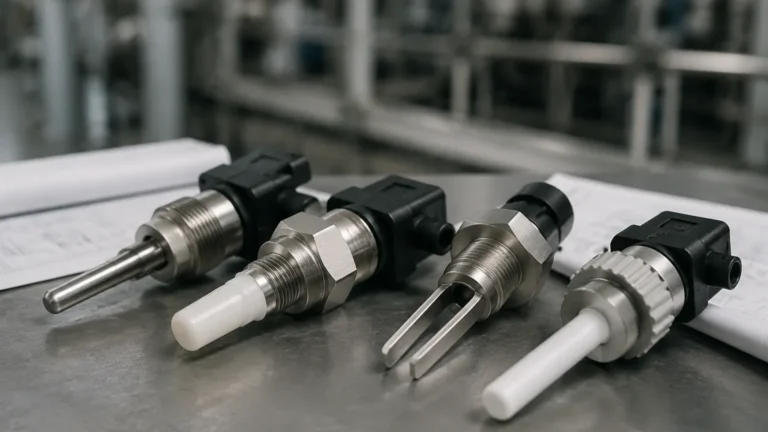
Vibrating Rod Technology
The vibrating rod level switch operates on the principle of resonance. A piezoelectric crystal inside the housing excites the level switch rod to vibrate at its natural frequency in free air. When the process material (liquid or solid) covers the rod, the vibration is dampened. This change in frequency or amplitude is detected by the electronics, which then triggers a switching signal. This method is highly effective for bulk solids and powders because the single-rod design prevents material buildup, which is a common failure point for "tuning fork" designs.
Conductive Level Sensing
In conductive applications, the level switch rod acts as an electrode. When a conductive liquid reaches the rod, an electrical circuit is completed between the rod and the tank wall (or a reference electrode). This technology is simple and cost-effective for water-based liquids but requires the medium to have a minimum conductivity level, typically measured in microsiemens per centimeter (µS/cm).
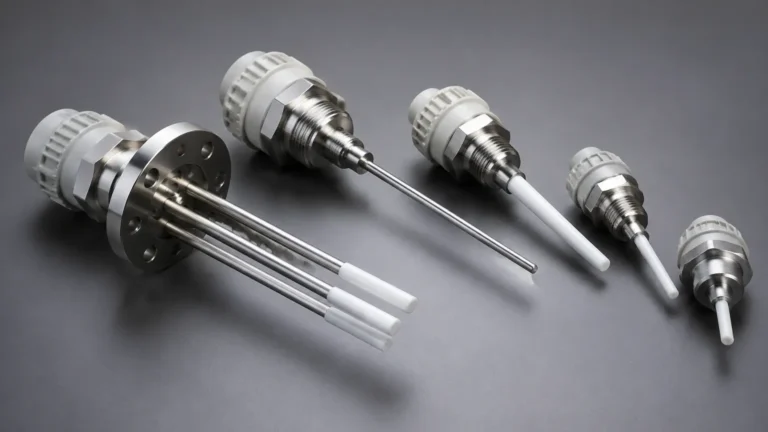
Capacitive Level Sensing
Capacitive switches treat the level switch rod as one plate of a capacitor, with the tank wall acting as the second plate. As the material rises and surrounds the rod, the dielectric constant changes, shifting the total capacitance. The internal circuitry monitors this shift to determine the switch state. Capacitive rods are often coated with insulation (such as PTFE) to prevent short-circuiting in conductive liquids.
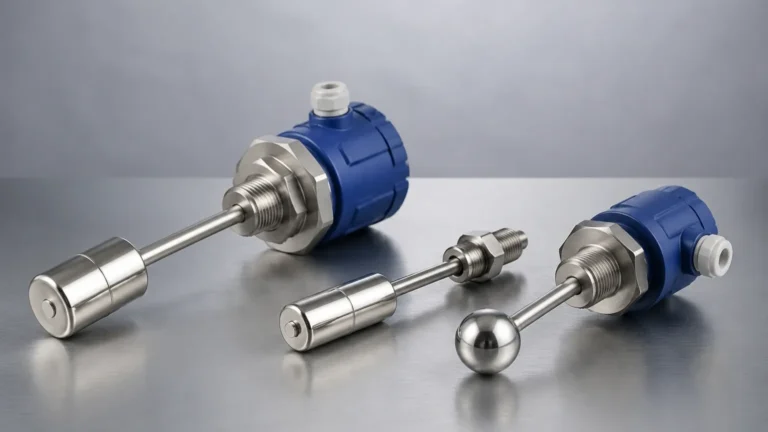
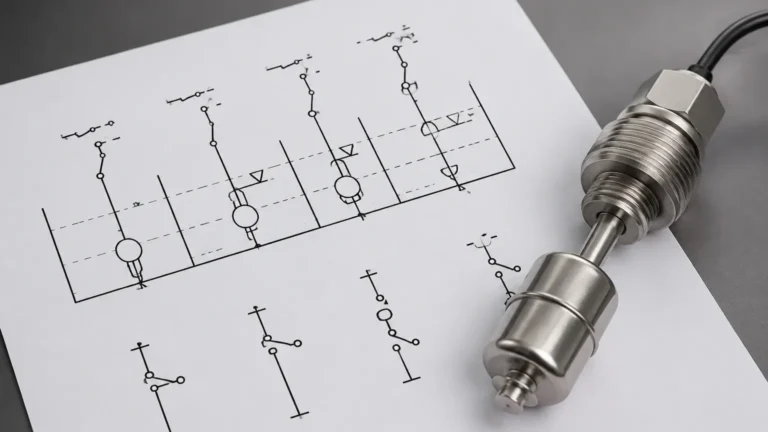
Float-Operated Rods
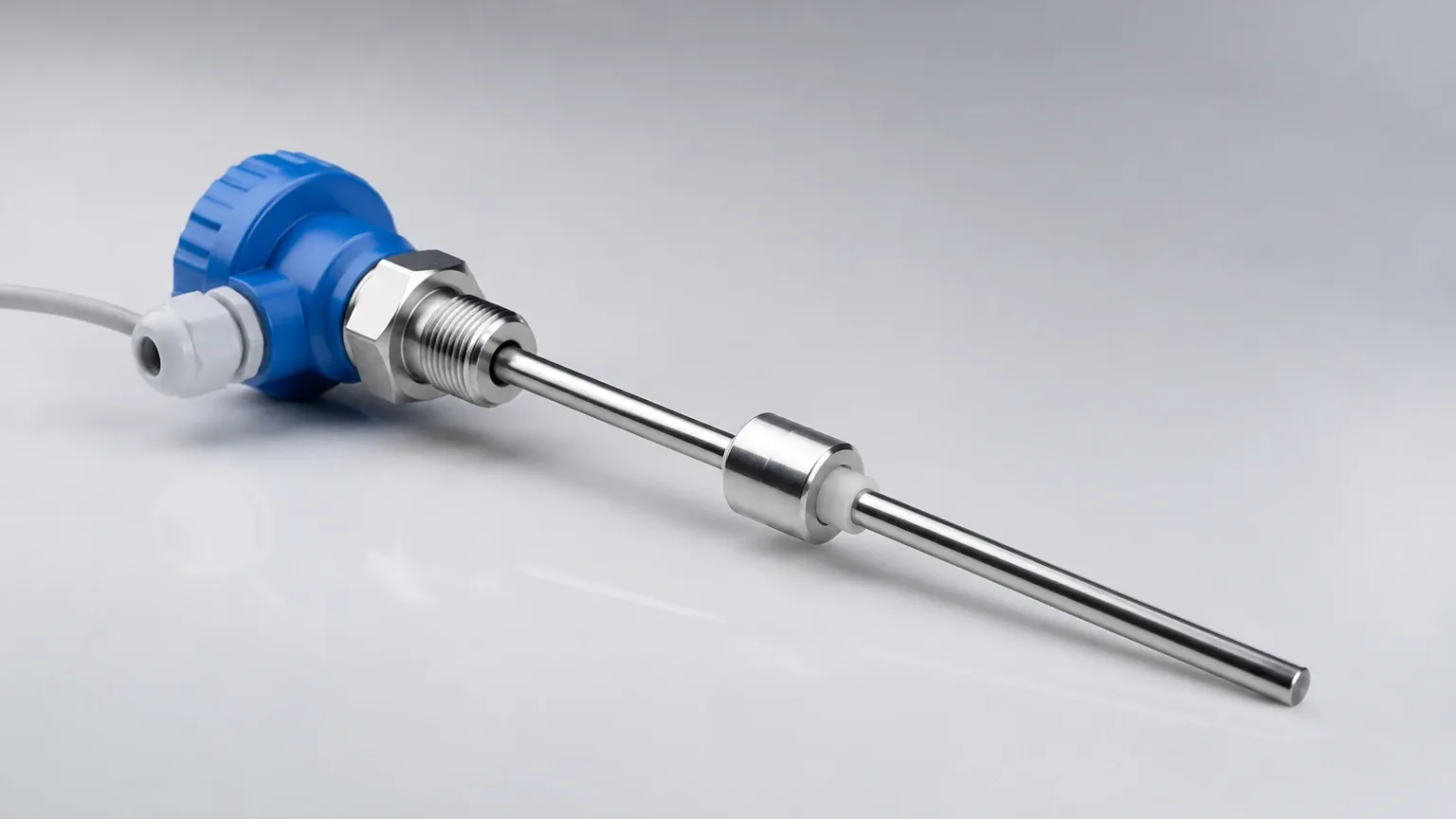
In traditional mechanical float switches, the rod serves as a guide or a lever. A magnetic float moves along the length of the rod, and as it reaches specific points, it actuates reed switches located inside the rod. This is a common solution for clean liquids where power consumption must be kept to a minimum.
Material Selection and Engineering Specifications
The level switch rod is the primary component exposed to the process environment. Therefore, its material composition and mechanical design must be engineered to withstand chemical corrosion, high pressures, and extreme temperatures.
Common Materials
* Stainless Steel (304/316L): The industry standard for most water treatment and general industrial applications. 316L provides superior resistance to pitting and crevice corrosion.
* PTFE/PFA Coating: For highly aggressive acids or bases, a level switch rod may be fully encapsulated in fluoropolymers. This ensures that the metallic core is protected from chemical attack.
* Hastelloy/Titanium: Used in specialized chemical processing where standard stainless steel would fail rapidly.
Mechanical Dimensions
The length of the rod is a critical specification. Standard rods may range from 100 mm to 3,000 mm. For depths exceeding 3 meters, rigid rods often become impractical for shipping and installation, leading engineers to specify flexible cable extensions instead. However, for precise point detection in turbulent tanks, a rigid level switch rod is preferred to prevent the sensor from swaying.
Application-Specific Selection Criteria
Choosing the right rod configuration depends on the physical characteristics of the media and the vessel geometry. The following table provides a comparison of common rod types and their typical applications.
| Technology | Typical Rod Material | Best For | Limitations |
| :— | :— | :— | :— |
| Vibrating Rod | 316L Stainless Steel | Bulk solids, grains, powders | Not for high-viscosity liquids |
| Conductive Rod | Stainless Steel / Hastelloy | Water, acids, alkalis | Requires conductive media |
| Capacitive Rod | PTFE Coated Stainless | Viscous liquids, oils, chemicals | Sensitive to dielectric changes |
| Magnetic Float Rod | Stainless Steel / PVC | Clean water, fuel tanks | Prone to jamming if solids present |
Considerations for Solids vs. Liquids
In bulk solids, the level switch rod must be robust enough to withstand the lateral forces of material movement (especially during tank filling or emptying). In liquids, the primary concern is often the prevention of "bridging" or coating, where a film of liquid remains on the rod and causes a false positive signal.
Installation Guidelines for Level Switch Rods
Proper installation is paramount to ensure the level switch rod functions correctly and has a long service life. Engineers should adhere to the following best practices:
1. Mounting Position: Rod-type switches are typically mounted either vertically from the top of the tank or horizontally through the side wall. For solids, a side-mounted vibrating rod should be angled slightly downward to allow material to shed off the sensing element naturally.
2. Avoid the Inflow Stream: The level switch rod should never be placed directly in the path of the material inlet. The force of falling material can damage the rod or cause premature wear and false readings. If placement near the inlet is unavoidable, a protective baffle should be installed.
3. Nozzle Length: Ensure that the rod extends far enough into the tank. If the rod is too short and remains partially inside the mounting nozzle, material may become trapped in the nozzle, leading to "dead zones" or false triggers.
4. Grounding: For capacitive and conductive switches, ensure the tank is properly grounded. If the tank is made of plastic or fiberglass, a reference rod or a grounding plate must be used to complete the sensing circuit.
5. Support for Long Rods: If a rigid rod exceeds 2 meters and is mounted horizontally, it may require additional structural support to prevent bending or mechanical fatigue at the process connection.
Limitations and Operational Constraints
While versatile, the level switch rod has specific limitations that must be managed during the design phase:
* Build-up and Coating: In sticky or highly viscous applications, material can accumulate on the rod. While vibrating rods are designed to shed material, extreme build-up can eventually dampen the vibration even when the tank is empty.
* Turbulence: In tanks with high-speed agitators, a long level switch rod can be subjected to significant mechanical stress. In these cases, a stilling well or a shorter rod with a different mounting point may be required.
* Pressure and Temperature: The seal between the rod and the electronic housing is a potential leak point. Always verify that the process connection (threaded or flanged) is rated for the maximum operating pressure and temperature of the vessel.
Maintenance and Troubleshooting
Maintenance requirements for a level switch rod are generally low, but periodic inspections are recommended, especially in corrosive or scaling environments.
* Visual Inspection: Check for signs of corrosion, pitting, or physical deformation of the rod. For coated rods, ensure there are no tears or pinholes in the PTFE/PFA layer.
* Cleaning: If the medium is prone to scaling (such as in hard water or wastewater applications), the rod should be cleaned periodically to prevent false signals. Use a soft cloth or a cleaning agent that is compatible with the rod material.
* Signal Testing: Most modern switches include a test button or a magnetic bridge to simulate a high-level condition. This allows operators to verify the electronic loop without filling the tank.
Frequently Asked Questions (FAQs)
Q: Can I cut a level switch rod to a shorter length in the field?
A: It depends on the technology. Conductive rods can often be trimmed to size. However, vibrating rods and capacitive rods are factory-calibrated to a specific length and mass; cutting them will change their resonant frequency or base capacitance, rendering them inoperable. Always consult the manufacturer's manual before attempting to modify a rod.
Q: What is the maximum length for a rigid level switch rod?
A: Most manufacturers offer rigid rods up to 3 or 4 meters. Beyond this length, the mechanical stability decreases, and shipping costs increase significantly. For deeper applications, a flexible cable probe is usually the preferred alternative.
Q: How do I handle a level switch rod in a non-metallic tank?
A: For conductive and capacitive technologies, a second rod (reference electrode) is required to provide a return path for the electrical signal, as the plastic tank wall cannot act as a ground.
Q: Does the orientation of the rod affect its sensitivity?
A: For vibrating rods, orientation is less critical than ensuring the rod is not positioned where material can bridge between the rod and the tank wall. For float switches, vertical orientation is mandatory to allow the float to move freely with the liquid level.
By carefully evaluating the material properties, the mechanical stresses of the application, and the specific measurement principle required, engineers can select a level switch rod that provides reliable point level detection for years of service. For more detailed technical specifications and product options, you can Review product options and application support to find the ideal solution for your industrial requirements.