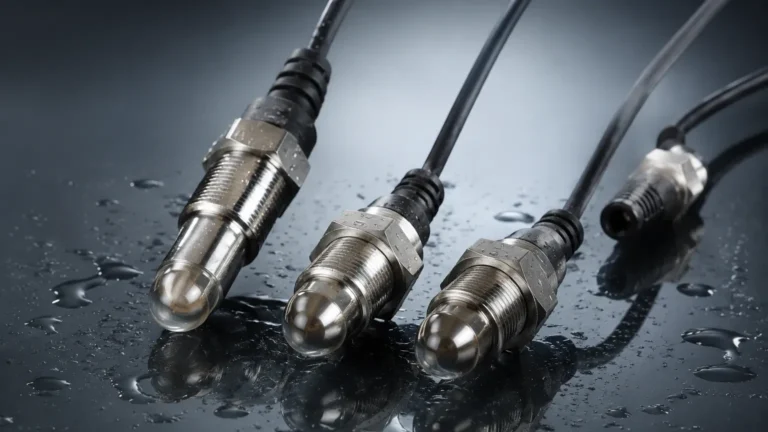
Level Switch Vega
Level Switch Vega
In industrial process automation, point level detection serves as the fundamental safety and control mechanism for tanks, silos, and pipelines. Among the industry standards for these components, the level switch vega series—encompassing technologies like vibrating forks, capacitive probes, and microwave barriers—has established a benchmark for reliability. Whether preventing a storage tank from overflowing or protecting a pump from running dry, selecting the correct point level sensor requires a deep understanding of measurement principles and application-specific variables.
This guide examines the technical landscape of high-performance Level Switches, focusing on the engineering logic required to specify, install, and maintain these critical instruments in demanding B2B environments.
Measurement Principles of Point Level Switches
Point level detection does not provide a continuous percentage of volume; instead, it provides a binary output (on/off) when a material reaches a specific height. Several distinct physical principles are employed to achieve this, each with specific strengths.
Vibrating Level Switches (Tuning Forks)
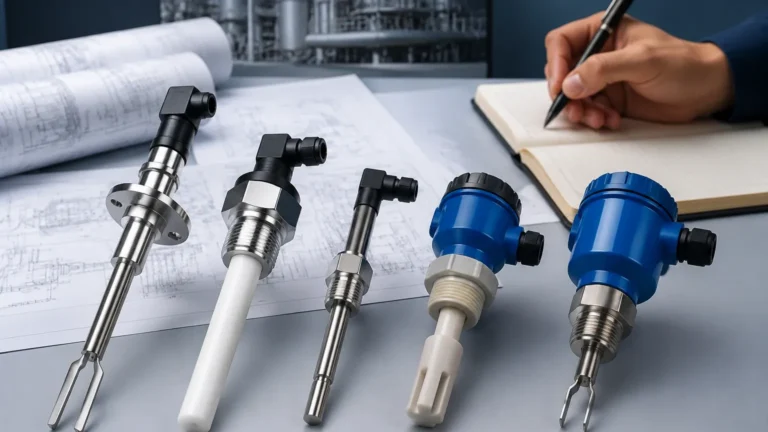
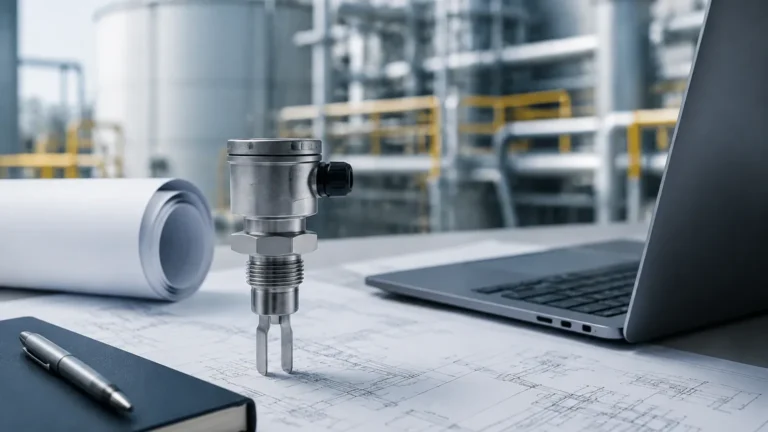
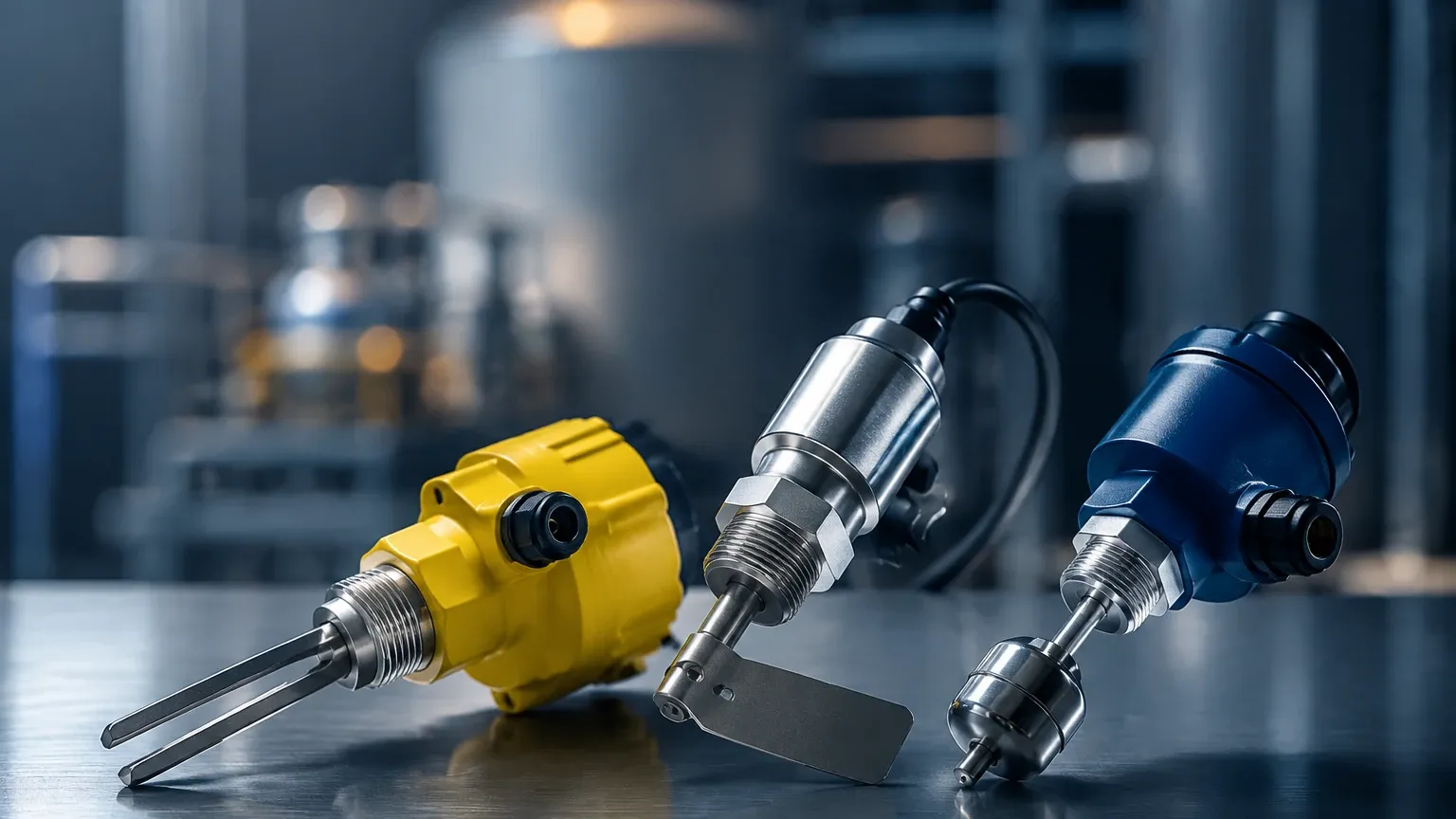
Often associated with the VEGASWING series, vibrating level switches utilize a tuning fork-shaped sensor element. A piezoelectric crystal drives the fork to vibrate at its resonant frequency in the air—typically around 1,200 Hz for liquid applications and lower for solids.
When the medium covers the fork, the frequency shifts or the amplitude is dampened. The integrated electronics detect this change and convert it into a switching signal. This technology is highly favored because it is independent of the medium's physical properties such as density (above a certain threshold), conductivity, and dielectric constant. It is essentially a "plug-and-play" solution that requires no calibration for most media.
Capacitive Level Switches
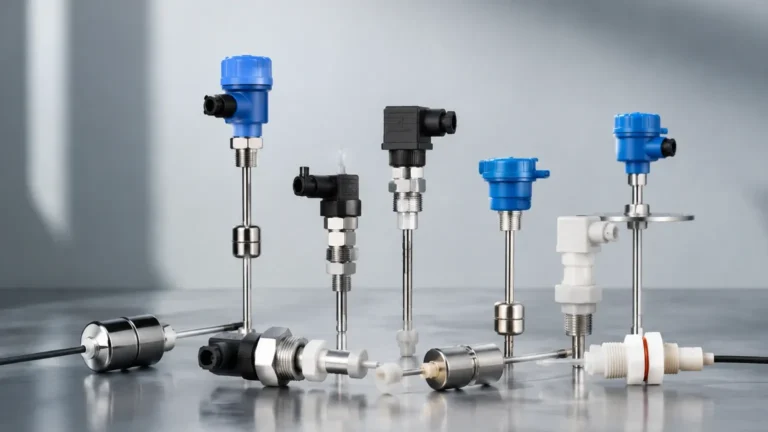
Capacitive sensors, such as the VEGACAP series, treat the probe and the vessel wall (or a second reference probe) as two plates of a capacitor. The medium acts as the dielectric. As the level rises and covers the probe, the capacitance changes based on the dielectric constant ($ε_r$) of the material.
These switches are versatile and can be used in extreme temperatures and pressures. However, they generally require calibration to the specific medium and may be sensitive to significant build-up if the electronics do not include active compensation for coating.
Conductive Level Switches
This is the simplest form of level detection, used exclusively for conductive liquids. Two electrodes are placed at the target level. When the liquid touches both, a small electrical current flows, triggering the switch. While cost-effective, they are limited to conductive media and are susceptible to electrode corrosion or fouling.
Microwave Barriers
For non-contact detection of bulk solids, microwave barriers are used. A transmitter sends a microwave beam to a receiver. When the material obstructs the beam, the signal strength drops, and the switch is triggered. This is ideal for highly abrasive or hot materials where physical contact would damage the sensor.
Key Evaluation Criteria for Selection
When evaluating a level switch vega or a comparable Welk instrument, engineers must confirm several process parameters to ensure long-term stability.
1. Media State and Density: Is the material a liquid, a heavy slurry, or a light powder? For vibrating forks, the minimum density (often measured in g/cm³ or kg/m³) is critical. If the powder is too light (e.g., < 0.008 g/cm³), the fork may not detect the dampening.
2. Process Temperature and Pressure: Standard switches handle up to 150°C and 64 bar (6.4 MPa). For high-pressure steam or cryogenic applications, specialized ceramic seals and temperature adapters are required.
3. Chemical Compatibility: The wetted parts—usually 316L stainless steel, Hastelloy, or PFA coatings—must resist corrosion from the process media.
4. Viscosity and Build-up: In sticky media like molasses or resins, vibrating forks can become "bridged," where material gets stuck between the tines, causing a false positive. In these cases, a flush-mounted capacitive or microwave sensor is preferred.
Practical Selection Table
| Application Type | Recommended Technology | Key Benefit | Potential Limitation |
| :— | :— | :— | :— |
| Water/Wastewater | Vibrating Fork | No calibration required | High turbulence may cause wear |
| Aggressive Chemicals | PFA-coated Capacitive | Excellent corrosion resistance | Requires dielectric stability |
| Light Bulk Solids | Vibrating Fork (Solids) | Detects very low densities | Mechanical wear in abrasive media |
| Hygienic/Food | Flush-mounted Capacitive | Easy to clean (CIP/SIP) | Sensitivity to thick coatings |
| High-Temp Solids | Microwave Barrier | Non-contact, high durability | Requires signal-transparent windows |
| Oil/Hydrocarbons | Vibrating Fork | Independent of $ε_r$ | Density must be > 0.5 g/cm³ |
Installation Considerations and Best Practices
Correct installation is as important as selecting the right technology. Failure to follow mechanical guidelines often leads to premature sensor failure or false switching.
Orientation and Positioning
* Side Mounting: Most level switches are mounted through the side wall of a tank. For vibrating forks, ensure the tines are oriented so that the medium can flow off them easily (usually vertical for liquids to prevent trapping bubbles or solids).
* Top Mounting: When mounted from the top, the extension length must be precisely calculated. For solids, the sensor should be positioned away from the inflow stream to avoid damage from falling material and to prevent false triggers caused by the "coning" effect of the material pile.
Nozzle Design
If the switch is installed in a nozzle (a pipe extension from the tank wall), the nozzle length should not exceed the length of the sensor tines or probe. If the sensor is recessed too far into a nozzle, material can collect there, leading to a permanent "covered" signal even when the tank is empty.
Electrical Connection
Modern B2B level switches offer various output options, including PNP/NPN transistors, relays, and two-wire (8/16mA) outputs. In hazardous areas (Ex zones), intrinsically safe (Ex-i) or explosion-proof (Ex-d) wiring is mandatory. Ensure the cable gland is tightened and pointed downwards to prevent moisture ingress into the housing.
Common Risks and Limitations
While a level switch vega is designed for high reliability, engineers should be aware of specific failure modes:
* Turbulence and Agitation: In tanks with high-speed stirrers, the mechanical force of the liquid can bend or snap sensor probes. In these environments, a protective shield or a more robust vibrating fork design is necessary.
* Foam Interference: Some technologies (like ultrasonic or certain capacitive sensors) may struggle to distinguish between a layer of foam and the actual liquid level. Vibrating forks are generally excellent at ignoring foam, but very dense, wet foam can occasionally trigger a switch.
* Abrasive Wear: In mining or cement applications, the constant flow of abrasive particles will eventually wear down the metal of the sensor. Regular inspection of the wall thickness of the tines is required to prevent process leaks through a worn-out sensor head.
Maintenance and Troubleshooting
Point level switches are generally low-maintenance, but a routine check-up schedule is recommended for critical safety loops (SIL-rated applications).
1. Visual Inspection: Check for signs of corrosion, mechanical damage to the tines, or moisture in the housing.
2. Function Test: Most modern switches include a test magnet or a button on the electronics module that simulates a covered state. This allows the operator to verify that the downstream PLC or alarm reacts correctly.
3. Cleaning: For media that tends to crystallize or harden, periodic cleaning of the sensor element is necessary. Avoid using abrasive tools on coated probes, as scratches can become focal points for further build-up.
Frequently Asked Questions (FAQ)
Q: Can a vibrating level switch be used for both liquids and solids?
A: No. While the principle is the same, the mechanical design of the fork and the frequency of the electronics are tuned differently. Liquid forks are smaller and vibrate at higher frequencies, while solids forks are larger and more robust to handle the physical weight of bulk materials.
Q: How does the dielectric constant (ε_r) affect my switch?
A: It primarily affects capacitive switches. If the $ε_r$ of the medium is very low (e.g., < 2.0 for some oils), the change in capacitance may be too small for standard probes to detect reliably. Vibrating forks are a better choice for low-$ε_r$ media.
Q: What is the "switching delay" and why is it used?
A: Switching delay is a programmable time (usually 0.5 to 30 seconds) that the sensor waits after detecting a change before changing its output state. This is used to prevent "chattering" of the relay in applications with turbulent surfaces or splashing.
Q: Can I cut a capacitive probe to length on-site?
A: Some capacitive rod probes are designed to be shortened, but this requires recalibration and potentially resealing the end. Cable-based probes are more commonly shortened. Vibrating forks, however, can never be cut or modified, as this changes their resonant frequency and destroys the sensor functionality.
For engineers seeking to integrate these technologies into their process, consulting a professional manufacturer like Welk ensures that the technical specifications of the Level Switches align with the specific chemical and physical demands of the application. Confirming the density, pressure, and mounting constraints before purchase is the most effective way to ensure a maintenance-free installation.