Sump Level Switches
Sump Level Switches
In industrial and municipal engineering, the management of liquid waste, runoff, and process overflows is a critical operational requirement. Sump pits, lift stations, and drainage basins serve as the primary collection points for these fluids. To automate the removal of these liquids and prevent catastrophic overflows, engineers rely on sump level switches. These devices are designed to detect specific liquid levels and trigger pumps, alarms, or control systems. Choosing the correct technology requires a deep understanding of the fluid characteristics, the physical environment of the sump, and the long-term maintenance implications of the chosen instrument.
Understanding Sump Level Measurement Principles
Before selecting a specific device, it is essential to understand the physical principles that govern how level switches detect the presence or absence of a liquid. In sump applications, the most common principles include buoyancy, conductivity, and ultrasonic reflection.
Buoyancy Principle
The buoyancy principle is the foundation of mechanical and magnetic float switches. According to Archimedes' principle, any object, wholly or partially immersed in a fluid, is buoyed up by a force equal to the weight of the fluid displaced by the object. In a sump level switch, a float with a lower density than the liquid is used. As the liquid level rises, the float moves upward, eventually reaching a point where it mechanically toggles a switch or moves a magnet to actuate a reed switch.
Conductivity Principle
Conductivity-based switches utilize the electrical properties of the liquid. These systems typically consist of multiple stainless steel probes (electrodes) suspended in the sump. When the liquid reaches a probe, it completes an electrical circuit between the probe and a reference electrode (or the metallic wall of the tank). This low-voltage AC signal is processed by a controller to trigger a relay. This method is highly effective for conductive liquids like wastewater but cannot be used for oils or deionized water.
Ultrasonic (Time-of-Flight) Principle
Non-contact level switches often use ultrasonic technology. A transducer emits a high-frequency sound wave that travels through the air, reflects off the liquid surface, and returns to the sensor. The time taken for the pulse to return is proportional to the distance. While often used for continuous measurement, ultrasonic sensors can be configured with internal relays to act as high-accuracy level switches. This is ideal for corrosive sumps where physical contact with the fluid would degrade a mechanical sensor.
Types of Sump Level Switches
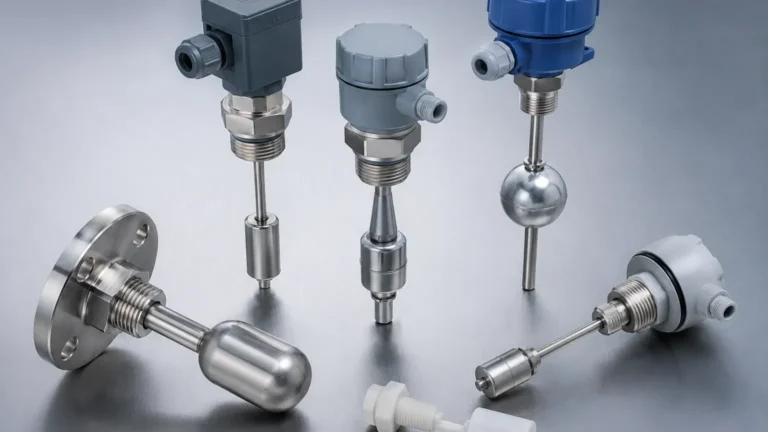
Industrial sumps vary from small condensate pits to massive municipal lift stations. Consequently, several types of Level Switches have been developed to meet these diverse needs.
1. Tethered Float Switches
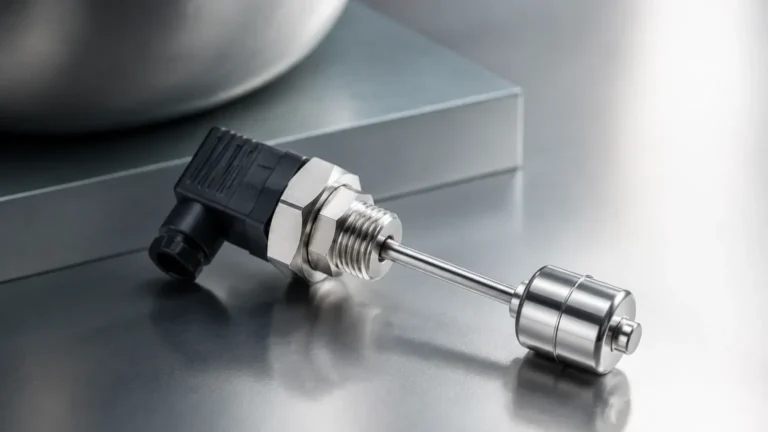
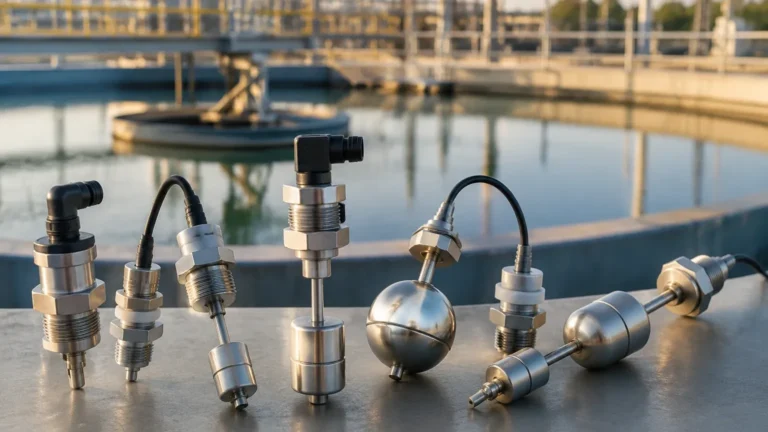
Often referred to as "piggyback" switches, these consist of a weighted cable and a floating bulb containing a mechanical microswitch or a ball-activated contact. They are widely used in residential and light industrial sumps. The "tether length" determines the switching differential—the distance between the pump "on" and "off" points.
2. Vertical Float Switches
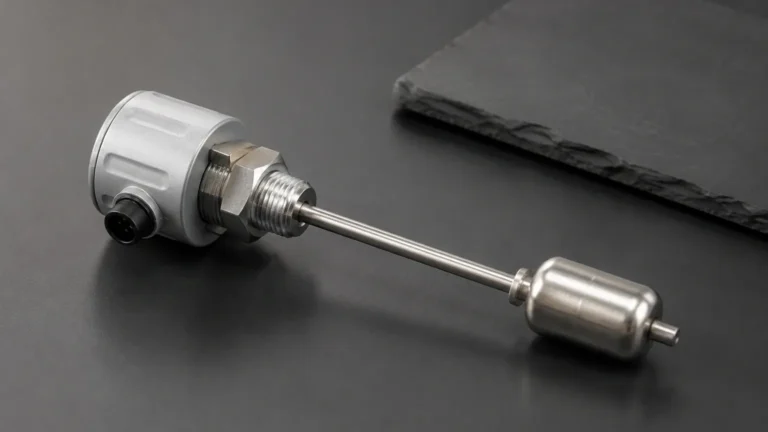
Vertical switches feature a float that moves up and down a stationary stem. Inside the stem are one or more reed switches. As the float (which contains a magnet) passes these switches, they open or close. These are preferred in confined spaces where a tethered float might get snagged on the sump walls or pump piping.
3. Conductivity Probes
In sumps containing turbulent or dirty water, conductivity probes are often the most reliable choice. Because they have no moving parts, they are not susceptible to mechanical failure or jamming due to debris. They are typically installed in a "probe holder" and can be cut to specific lengths to define the start, stop, and high-alarm levels.
4. Displacement Level Switches
Displacement switches use a heavy weight (displacer) suspended by a spring. When the liquid covers the displacer, its apparent weight decreases (buoyancy), allowing the spring to retract and actuate the switch. These are exceptionally rugged and used in high-pressure or high-temperature industrial sumps.
Selection Criteria for Industrial Sump Applications
Selecting the wrong switch can lead to pump burnout due to rapid cycling or environmental hazards from overflows. Engineers must evaluate the following factors:
* Fluid Composition: Does the sump contain clean water, sewage, or chemical runoff? For fluids with high solids or "ragging" (fibrous debris), non-contact ultrasonic sensors or robust conductivity probes are superior to mechanical floats.
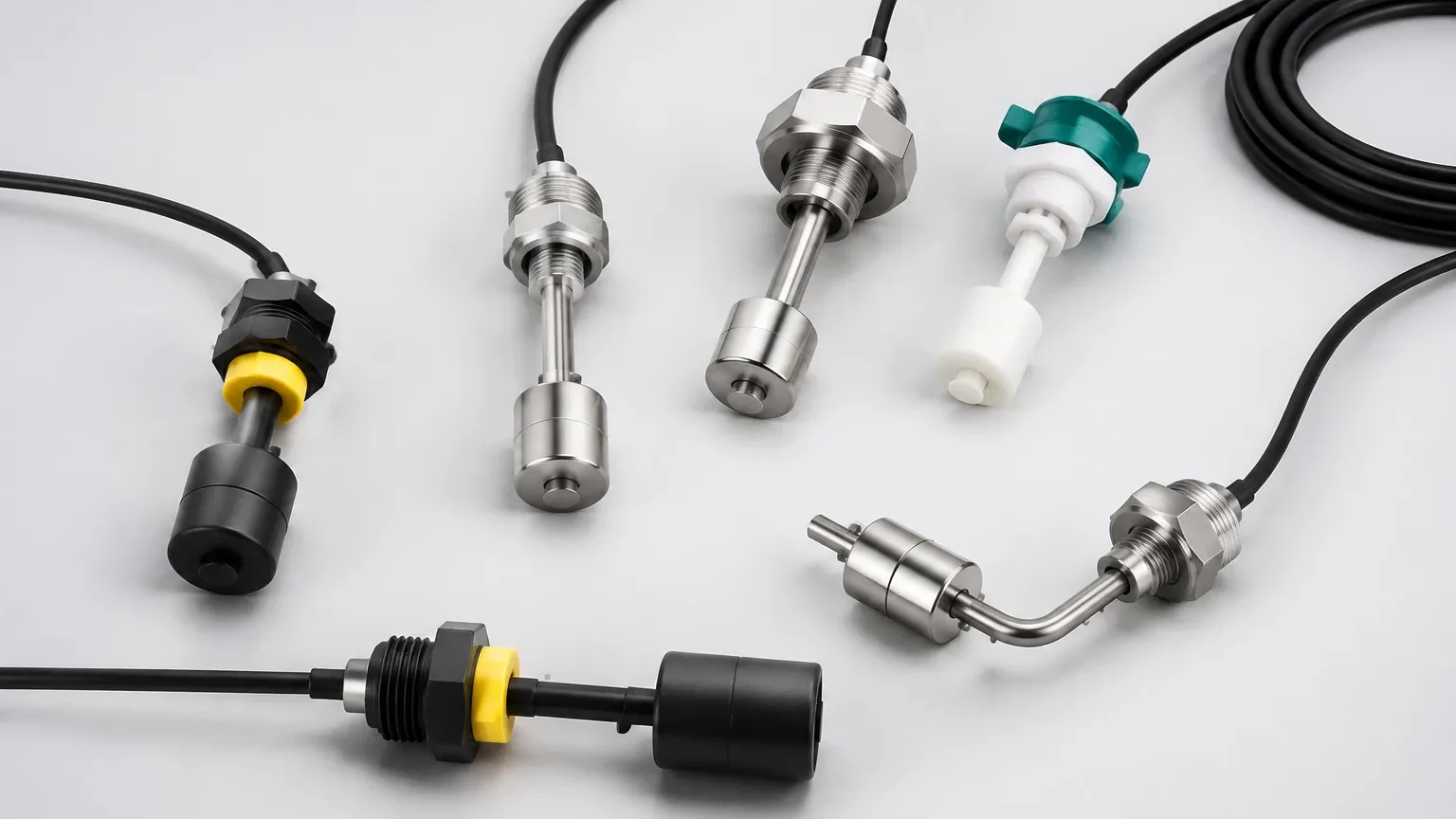
* Chemical Compatibility: The switch housing and cable materials must withstand the fluid. Common materials include Polypropylene (PP) for general use, Stainless Steel (316SS) for high temperatures, and PVDF for aggressive acids.
* Temperature and Pressure: Most sumps are vented to the atmosphere (0 bar), but temperature can vary. Standard PVC cables may fail in hot process sumps (above 60°C), requiring Teflon or silicone alternatives.
* Sump Geometry: In narrow pits, a tethered float may become trapped. A vertical float or a non-contact sensor is required in these environments.
* Switching Differential: This is the distance between the "on" and "off" points. A small differential causes the pump to cycle frequently, shortening its lifespan. Tethered floats offer an adjustable differential, while vertical floats may require two separate switches to achieve the same effect.
Comparison of Sump Level Control Technologies
| Technology | Best Application | Advantages | Limitations |
| :— | :— | :— | :— |
| Tethered Float | Large wastewater basins | Low cost, easy to install | Requires space to swing; prone to tangling |
| Vertical Float | Small, narrow sumps | Precise, compact | Sensitive to coating and debris |
| Conductivity | Turbulent, dirty water | No moving parts, very reliable | Only works with conductive liquids |
| Ultrasonic | Corrosive chemical pits | Non-contact, high accuracy | Affected by heavy foam or steam |
| Capacitance | Viscous or coating liquids | Can ignore some buildup | Requires calibration to the specific fluid |
Installation Guidelines and Best Practices
Proper installation is just as important as selecting the right switch. Follow these engineering guidelines to ensure long-term reliability:
1. Avoid the Inflow Path: Never install a level switch directly under the liquid inlet. The turbulence and force of the falling water can cause false triggering or mechanical damage.
2. Use Still Wells: In sumps with high agitation or turbulence, install the switch inside a still well. A still well is a vertical pipe (typically 50 mm to 100 mm in diameter) with small vent holes that allows the liquid level to rise and fall smoothly while shielding the sensor from waves.
3. Cable Management: For tethered switches, ensure the cable is securely fastened to a bracket or the discharge pipe using UV-resistant cable ties. Ensure the "swing" of the float does not contact the pump or the walls.
4. Electrical Protection: Sump environments are often damp. All electrical connections should be made in an IP66 or IP67 rated junction box located above the maximum possible flood level. Use intrinsically safe barriers if the sump contains flammable vapors (e.g., oil/water separators).
5. Redundancy: In critical applications, always install a secondary "High-High" level switch. This switch should be wired to a completely independent alarm or a backup pump to prevent overflows if the primary control fails.
Operational Limitations and Common Risks
Even the best-designed systems face challenges in sump environments. Engineers should be aware of the following risks:
* Fouling and Scaling: In industrial sumps, minerals or biological growth can coat the sensor. In float switches, this can add weight and prevent the float from rising. In conductivity probes, a thick coating of non-conductive oil can insulate the probe, preventing it from detecting the liquid.
* Pump Cycling (Chatter): If the switch differential is too small, the pump will turn on and off rapidly. This generates heat in the motor windings and will eventually lead to pump failure. Always ensure a minimum run time for the pump.
* Vapor and Foam: Ultrasonic switches can struggle in sumps where heavy foam is present, as the foam absorbs the sound pulse rather than reflecting it. In these cases, a pressure-based or mechanical switch is often a better choice.
Maintenance and Troubleshooting
A proactive maintenance schedule can prevent 90% of sump-related failures.
* Monthly Inspection: Visually check for debris or "ragging" around the switch. In sewage applications, grease and fibrous materials can build up and prevent mechanical floats from moving.
* Functional Test: Manually lift the float or bridge the conductivity probes to ensure the pump or alarm activates. This confirms that both the sensor and the control relay are functional.
* Cable Integrity Check: Inspect cables for signs of brittleness, cracking, or chemical attack. A breached cable jacket can allow moisture to wick into the switch, causing a short circuit.
* Cleaning: If using conductivity probes or ultrasonic sensors in dirty environments, clean the sensing faces with a soft cloth and mild detergent to remove films or deposits.
Frequently Asked Questions (FAQs)
Q: Can I use a magnetic float switch in a sump with metallic particles?
A: It is not recommended. Metallic particles (such as iron filings in a machine shop sump) will be attracted to the internal magnet of the float, eventually causing it to jam or become too heavy to float.
Q: What is the ideal vertical distance between the 'Start' and 'Stop' levels?
A: This depends on the pump capacity and the sump volume. A general rule of thumb is to allow for at least 1-2 minutes of pump run time to ensure the motor can dissipate the heat generated during startup.
Q: How do I choose between a 2-wire and 3-wire switch?
A: A 2-wire switch is typically a simple "dry contact" that acts like a light switch. A 3-wire switch often provides both Normally Open (NO) and Normally Closed (NC) options, allowing for greater flexibility in how the control panel is wired.
Q: Is it possible to use a level switch for both control and alarm?
A: While a single multi-point switch can handle both, it is safer to use a separate physical device for the high-level alarm. This provides true redundancy in case of a mechanical or electrical failure of the primary controller.
Conclusion
Sump level switches are small but vital components in industrial infrastructure. Whether managing wastewater, chemical runoff, or simple rainwater, the reliability of these switches determines the safety and efficiency of the entire facility. By understanding the measurement principles—from basic buoyancy to advanced ultrasonic reflection—and considering the specific challenges of the sump environment, engineers can select a solution that minimizes maintenance and maximizes operational uptime. For those requiring specialized configurations or high-durability materials, Welk offers a range of industrial-grade measurement instruments designed to perform in the most demanding conditions.