Types of Liquid Level Switches
Types of Liquid Level Switches
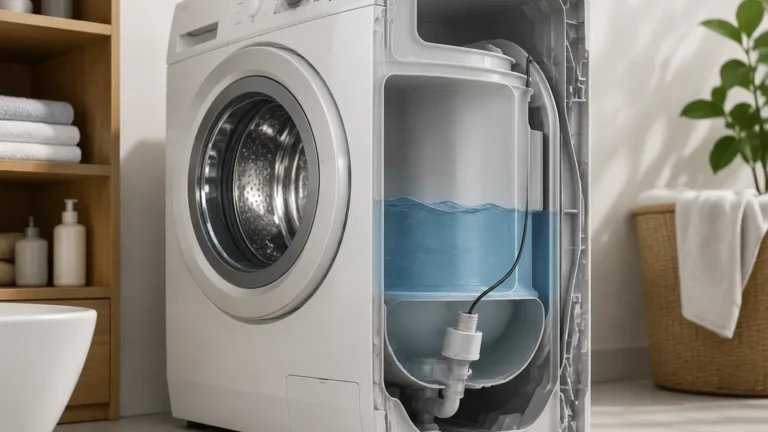
In industrial process control, point level detection is a critical function used to prevent tank overflows, protect pumps from running dry, and automate the filling and emptying of vessels. Unlike continuous level transmitters that provide a constant reading of the fluid level, level switches are designed to trigger a discrete output—typically a relay or transistor signal—when the liquid reaches a specific height.
Selecting the correct equipment requires an understanding of the various types of liquid level switches and how their underlying measurement principles interact with specific fluid properties. This guide examines the most common technologies used in modern industrial automation, providing a technical framework for engineering selection.
Measurement Principles of Level Switches
Before selecting a device, it is essential to understand the physical or electrical principle the switch uses to detect the presence of a liquid. These principles generally fall into mechanical, electrical, or optical categories.
Mechanical Principles
Mechanical level switches rely on the physical displacement of a component or the buoyancy of an object. When the liquid level rises, it exerts an upward force on a float or displacer. This movement is then mechanically or magnetically coupled to a switch mechanism. Because these rely on physical movement, they are sensitive to the density (specific gravity) of the liquid and can be affected by mechanical wear or debris.
Electrical Principles
Electrical switches detect changes in the electrical properties of the environment around the sensor probe. Common methods include:
* Conductivity: Measuring the resistance between two electrodes. This requires the liquid to be electrically conductive.
* Capacitance: Measuring the change in electrical capacitance between a probe and the tank wall (or a second probe) as the air is replaced by liquid. This depends on the dielectric constant of the fluid.
* Vibration (Tuning Fork): Utilizing piezoelectric crystals to vibrate a fork at its resonant frequency. When immersed in liquid, the frequency changes due to the damping effect of the fluid density.
Optical and Ultrasonic Principles
These technologies use waves (light or sound) to detect the interface. Optical switches use infrared light refraction, while ultrasonic switches use high-frequency sound waves. These are often preferred when physical contact with the media must be minimized or when the media has complex electrical properties.
Common Types of Liquid Level Switches
Identifying the right technology involves matching the switch type to the application environment. Below are the primary Level Switches utilized in industrial settings.
1. Float Level Switches
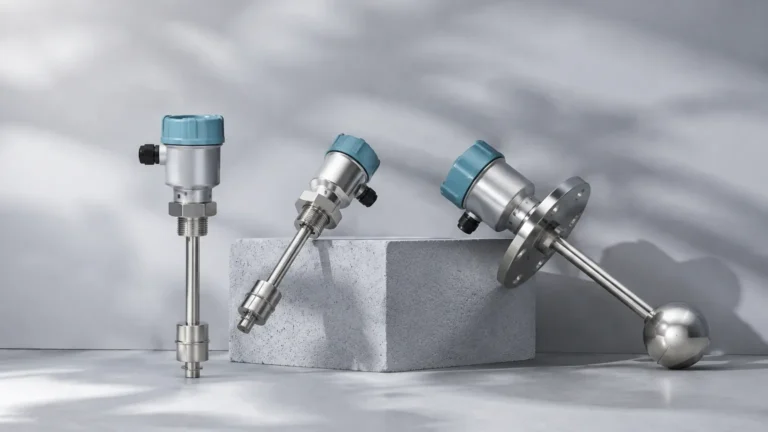
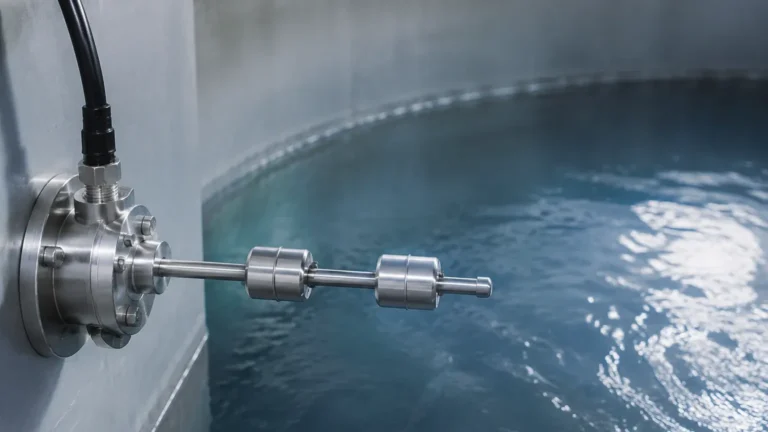
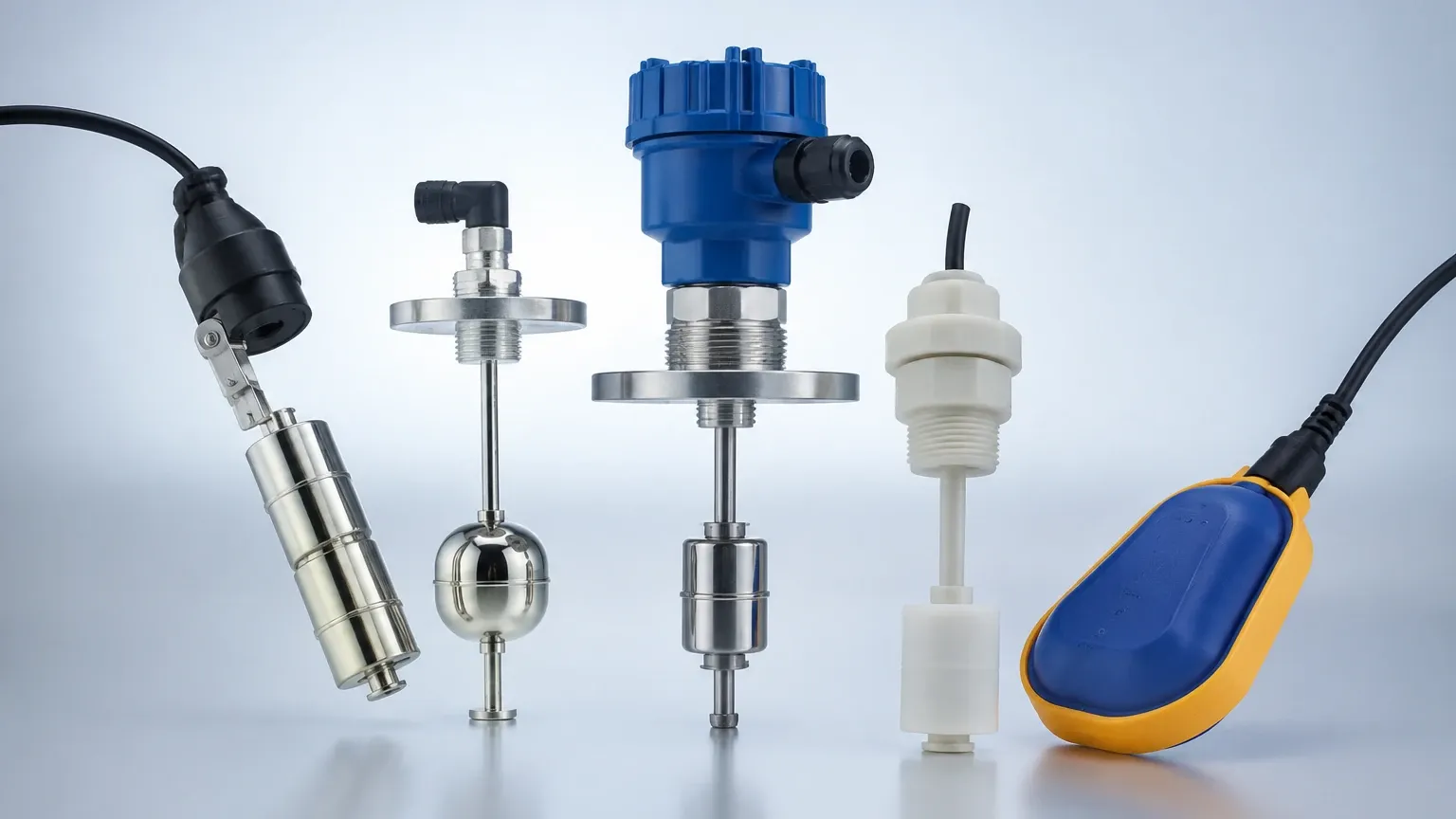
Float switches are among the most established and cost-effective technologies. They consist of a buoyant float containing a magnet and a stationary stem containing a reed switch. As the liquid level moves the float up or down the stem, the magnet actuates the reed switch.
* Advantages: Simple design, no power required for the sensing element, and low cost.
* Limitations: Moving parts can get stuck due to scaling or viscous liquids. They are generally not suitable for liquids with high debris content.
2. Vibrating Tuning Fork Switches
A tuning fork switch uses a pair of tines that are vibrated at a specific frequency (usually around 1200 Hz to 1400 Hz). When the liquid covers the tines, the frequency drops. The internal electronics detect this shift and switch the output.
* Advantages: Highly reliable, unaffected by bubbles, foam, or vibration. They are largely independent of the liquid's chemical properties.
* Limitations: While very versatile, extremely high-viscosity liquids (like thick molasses) can cause "bridging" between the tines, leading to false readings.
3. Capacitance Level Switches
Capacitive sensors operate like an open capacitor. The probe acts as one plate, and the tank wall acts as the other. As the liquid (with a different dielectric constant than air) fills the space, the capacitance increases.
* Advantages: No moving parts, suitable for high temperatures and pressures, and can be used with corrosive chemicals.
* Limitations: Requires calibration for the specific liquid. Changes in the moisture content or dielectric constant of the fluid can affect accuracy.
4. Conductive Level Switches
Conductive switches use a low-voltage, current-limited circuit between two or more probes. When a conductive liquid touches the probes, the circuit is completed.
* Advantages: Extremely simple, low cost, and can detect multiple points with a single installation.
* Limitations: Only works with conductive liquids (e.g., water, acids, lye). They cannot be used with oils, distilled water, or non-polar solvents.
5. Optical Level Switches
These switches contain an infrared LED and a light receiver inside a plastic or glass prism. When the prism is in air, the IR light reflects back to the receiver. When immersed in liquid, the light refracts into the fluid, and the receiver detects a loss of signal.
* Advantages: Very small footprint, fast response time, and no moving parts.
* Limitations: Not suitable for liquids that leave a thick coating or film on the sensor tip, which can mimic the presence of liquid.
Technical Selection Criteria
When evaluating different types of liquid level switches, engineers should use a systematic approach based on the process parameters. The following table provides a comparison of key selection factors.
| Switch Type | Media Conductivity | Viscosity Tolerance | Foam Resistance | Moving Parts | Relative Cost |
| :— | :— | :— | :— | :— | :— |
| Float | Irrelevant | Low | High | Yes | Low |
| Vibrating Fork | Irrelevant | Medium-High | High | No | Medium |
| Capacitance | Irrelevant | Medium | Medium | No | Medium-High |
| Conductive | High Required | Low | Low | No | Low |
| Optical | Irrelevant | Low | Low | No | Medium |
| Ultrasonic | Irrelevant | Medium | Medium | No | High |
Installation Considerations
Proper installation is as critical as selecting the right technology. Even the most advanced switch will fail if placed incorrectly.
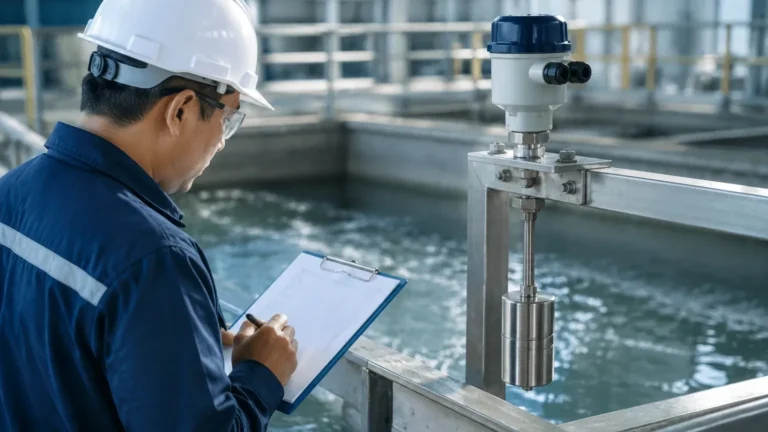
1. Turbulence and Agitation: If the tank has an agitator or high-velocity inflow, float switches can bounce, leading to "chatter" in the relay. In these cases, a stilling well (a pipe surrounding the switch) should be used, or a non-mechanical switch like a vibrating fork should be selected.
2. Orientation: Many switches can be mounted either horizontally (through the side of the tank) or vertically (from the top). Side mounting is common for high/low alarms, while top mounting is preferred for deep sumps where side access is impossible.
3. Nozzle Length: For tuning fork or optical switches, ensure the sensing element extends fully into the tank. If the mounting nozzle is too long, the liquid may get trapped in the nozzle (the "dead zone"), preventing the sensor from resetting when the level drops.
4. Coating and Buildup: In applications with sticky liquids, sensors should be mounted in a way that allows for easy cleaning. Capacitance switches often feature "active shield" technology to ignore buildup on the probe.
Limitations and Common Risks
While level switches are robust, certain conditions present risks to operational reliability:
* Material Compatibility: The wetted materials (316 Stainless Steel, PP, PVDF, etc.) must be chemically compatible with the process fluid. For example, using a stainless steel float in a concentrated hydrochloric acid tank will lead to rapid failure.
* Specific Gravity: Float-based switches require the liquid to have a higher density than the float itself. If the liquid density changes significantly (e.g., due to temperature swings), a float that once worked may no longer rise.
* Pressure and Temperature: Always verify that the switch housing and seals are rated for the maximum possible process pressure and temperature. Exceeding these limits can cause seal failure and leakages into the electronics housing.
* Electrical Interference: Electronic switches (capacitance and ultrasonic) can be sensitive to electromagnetic interference (EMI) from nearby high-power motors or variable frequency drives (VFDs). Shielded cabling is recommended.
Frequently Asked Questions (FAQ)
Q: Can I use a level switch for continuous level monitoring?
No. A level switch only provides an ON/OFF signal at a specific point. For continuous tracking (e.g., 0% to 100% volume), you require a radar, ultrasonic, or hydrostatic level transmitter.
Q: What is the difference between "Normally Open" (NO) and "Normally Closed" (NC) in level switches?
This refers to the state of the electrical switch when the liquid is not present. For fail-safe high-level alarms, a "Normally Closed" configuration is often used so that if a wire breaks, the system triggers an alarm as if the tank were full.
Q: How do I handle foam in a tank?
Foam can be problematic for optical and ultrasonic switches. Vibrating forks and float switches are generally the best options for ignoring foam and detecting only the true liquid surface.
Q: Are there level switches suitable for hazardous areas?
Yes. For environments with explosive gases or dust, you must select switches with appropriate certifications (such as ATEX, IECEx, or UL Class I, Div 1) and use intrinsic safety barriers if required.
Conclusion
Selecting from the various types of liquid level switches requires a balance between cost, fluid characteristics, and maintenance requirements. While float switches remain a staple for simple water applications, the move toward electronic sensing—specifically vibrating fork and capacitance technologies—offers increased reliability and reduced maintenance in demanding industrial environments. By confirming the chemical compatibility, liquid density, and presence of foam or turbulence before procurement, plant engineers can ensure long-term accuracy and safety in their level control loops.