Tav Level Switches
Tav Level Switches
In the landscape of industrial automation, point level detection remains a fundamental requirement for process safety and efficiency. Among the various technologies available, TAV level switches have established a reputation for reliability in liquid level monitoring. These devices are primarily utilized to trigger alarms, control pumps, or manage valves when a liquid reaches a specific height within a tank or vessel. Understanding the engineering principles, material compatibility, and installation nuances of these instruments is essential for process engineers seeking to optimize their level control systems.
The Role of Point Level Detection in Industry
Point level detection differs from continuous level measurement in that it provides a discrete signal (on/off) at a predetermined level. This is critical for preventing tank overfills, which can lead to environmental hazards and equipment damage, or protecting pumps from running dry, which causes cavitation and mechanical failure.
While many modern facilities utilize radar or ultrasonic sensors for continuous monitoring, Level Switches are frequently employed as redundant safety layers. Their mechanical or electrical simplicity often makes them more robust in harsh environments where complex electronics might fail. TAV level switches, specifically those utilizing magnetic float technology, are prized for their ability to operate without external power in many configurations, providing a fail-safe mechanism for critical infrastructure.
Measurement Principles of TAV Level Switches
Most TAV-style level switches operate on the principle of magnetism and buoyancy. The most common configuration is the magnetic float level switch.
1. Magnetic Float Principle
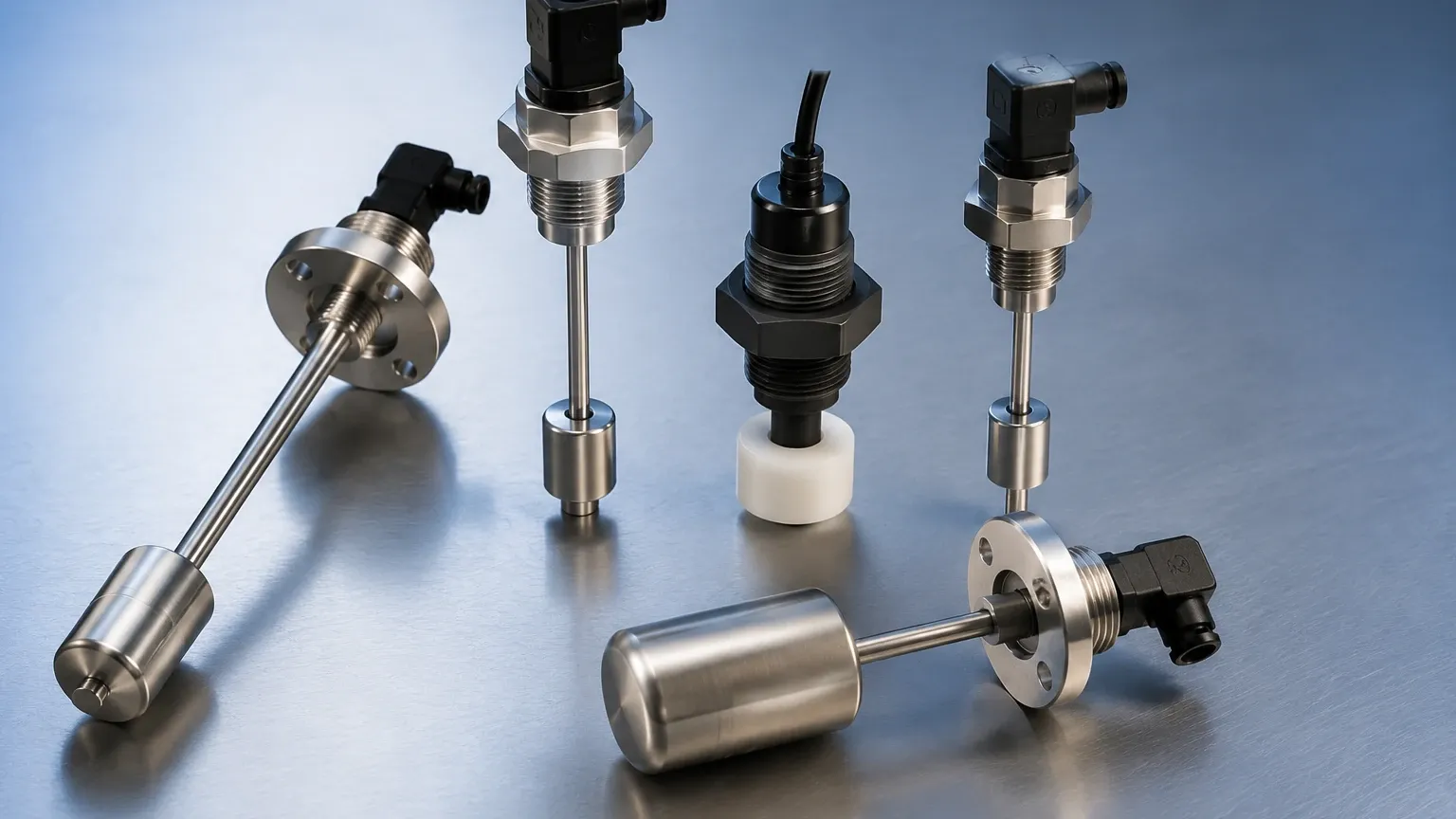
The device consists of a hollow float containing a permanent magnet and a stationary stem containing one or more reed switches. As the liquid level rises or falls, the float moves along the stem. When the magnet inside the float reaches the position of the reed switch, the magnetic field causes the switch contacts to close (or open, depending on the configuration).
This method is highly effective because the electrical components are hermetically sealed inside the stem, isolated from the process media. This prevents corrosion and electrical shorts, even when measuring aggressive chemicals or conductive liquids.
2. Conductive Level Detection
Some TAV variants utilize conductivity. In this setup, several electrodes (probes) are immersed in the tank. When a conductive liquid touches a probe, it completes an electrical circuit between the probe and the tank wall (or a reference probe). This is ideal for wastewater and acidic solutions but cannot be used with non-conductive liquids like oils or purified water.
3. Buoyancy Physics
The functionality of a float-based switch is governed by Archimedes' principle. The float must be less dense than the liquid it is intended to measure. For example, if a process involves an oil with a specific gravity of 0.8 g/cm³, the float must be engineered with a lower density to ensure it remains buoyant. If the density of the medium changes due to temperature fluctuations, the switching point may shift slightly, a factor that must be accounted for during the design phase.
Technical Selection Criteria
Selecting the correct level switch requires a detailed analysis of the process environment. Engineers should consult the following table to compare common technologies used in TAV-style applications:
| Technology | Media Compatibility | Max Temperature | Max Pressure | Best Use Case |
| :— | :— | :— | :— | :— |
| Magnetic Float (SS316L) | Water, Oils, Chemicals | 200°C (392°F) | 40 bar (580 psi) | High-pressure tanks, general fuel storage |
| Magnetic Float (PP/PVC) | Acids, Bases, Corrosives | 80°C (176°F) | 3 bar (43 psi) | Chemical processing, plating baths |
| Conductive Probes | Conductive Liquids | 150°C (302°F) | 10 bar (145 psi) | Wastewater, boiler level control |
| Displacer Switches | Heavy oils, Slurries | 250°C (482°F) | 60 bar (870 psi) | High-turbulence environments |
Material Selection and Chemical Compatibility
The longevity of a level switch is directly tied to its material construction. TAV level switches are often available in a variety of materials to suit different industrial needs:
* Stainless Steel (AISI 304/316L): The standard for food and beverage, pharmaceutical, and oil and gas applications. It offers excellent resistance to corrosion and high temperatures.
* Polypropylene (PP): A cost-effective choice for acidic and alkaline solutions in water treatment and chemical dosing.
* PVDF/PTFE: Reserved for highly aggressive chemicals where even stainless steel would succumb to pitting or corrosion.
When specifying a switch, it is vital to verify the compatibility of the gasket and seal materials (such as NBR, EPDM, or Viton) with the process media to prevent leaks.
Installation Considerations and Best Practices
Proper installation is paramount to ensuring the accuracy and reliability of TAV level switches. Even the highest quality instrument will fail if environmental factors are ignored.
Orientation and Positioning
Most magnetic float switches are designed for vertical installation through the top of a tank. However, side-mounted versions are available for applications where top access is restricted. For vertical switches, ensure the stem is perfectly plumb; an angled installation can cause the float to bind against the stem, leading to "stuck" readings.
Turbulence and Agitation
In tanks with mixers or high-velocity inflow, turbulence can cause the float to bounce, leading to "chatter" in the electrical signal. This can damage pumps and control relays. In such cases, a stilling well (a perforated pipe surrounding the switch stem) should be installed to dampen the liquid movement and provide a stable surface for the float.
Magnetic Interference
Since these switches rely on magnetic fields, they should not be installed near high-voltage power lines or large motors that generate strong electromagnetic interference (EMI). Furthermore, if the liquid contains ferromagnetic particles (such as iron filings), these can accumulate on the magnetic float, eventually increasing its weight and causing it to sink.
Electrical Wiring
Engineers must ensure that the electrical load of the controlled device does not exceed the rating of the reed switch. Reed switches are typically designed for low-current signals (e.g., 0.5A to 1A). Directly connecting a high-power pump to a level switch will weld the contacts shut. Always use an intermediate relay or a PLC input to handle the switching logic.
Limitations and Safety Constraints
While TAV level switches are highly versatile, they have specific limitations:
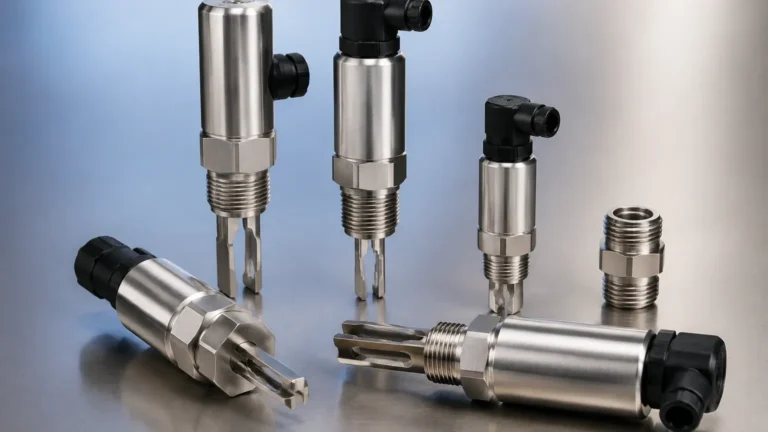
1. Viscosity: Highly viscous liquids (like heavy molasses or crude oil at low temperatures) can impede the movement of the float. For these applications, tuning fork or ultrasonic switches are preferred.
2. Coating and Scaling: If the media tends to crystallize or leave heavy deposits, the float may become stuck to the stem. Regular cleaning intervals must be established in these environments.
3. Pressure Limits: Hollow floats can collapse under extreme pressure. Always verify the maximum pressure rating of the float, especially in pressurized boiler applications.
Maintenance and Troubleshooting
One of the primary advantages of magnetic level switches is their low maintenance requirement. However, a biannual inspection is recommended for critical safety loops.
* Visual Inspection: Check the float for signs of pitting, corrosion, or buildup. Ensure the float moves freely along the entire length of the stem.
* Continuity Testing: Using a multimeter, manually move the float to the switching point and verify that the circuit opens and closes as expected.
* Seal Integrity: Inspect the cable entry point and the mounting flange for any signs of moisture ingress, which could indicate a failing gasket.
Frequently Asked Questions (FAQ)
Q: Can TAV level switches be used in hazardous areas?
A: Yes, many models are available with ATEX or IECEx certifications. These versions typically use intrinsically safe circuits or explosion-proof housings to prevent the ignition of flammable gases or dust.
Q: What is the difference between N.O. and N.C. contacts?
A: N.O. (Normally Open) means the circuit is open when the float is at the bottom (rest) position. N.C. (Normally Closed) means the circuit is closed at rest. Most TAV switches allow the user to reverse the action by simply flipping the float upside down on the stem.
Q: How do I handle foaming in the tank?
A: Mechanical float switches are generally unaffected by light foam because the float responds to the liquid's density. However, if the foam is extremely dense, it may exert enough force to move the float. In high-foam applications, conductive or vibrating fork switches may be more reliable.
Conclusion
TAV level switches represent a reliable, time-tested solution for point level control across diverse industries. By understanding the relationship between media density, material compatibility, and mechanical installation, engineers can implement level control strategies that enhance plant safety and operational uptime. Whether for simple water storage or complex chemical processing, selecting the right Level Switches is a critical step in industrial system design. For customized requirements, including specific stem lengths or multi-point switching, consulting with a specialized manufacturer like Welk ensures that the instrument is tailored to the exact demands of the application.