Level Switch Uses
Level Switch Uses
In the landscape of industrial automation and process control, the ability to accurately detect the presence or absence of a substance at a specific point is critical. While continuous level transmitters provide a constant stream of data regarding the volume or height of a medium, level switches serve a more binary but equally vital role. These devices, often referred to as point level sensors, are designed to trigger an electrical signal when a predefined level is reached. Understanding the various level switch uses and the underlying physics of different sensing technologies is essential for engineers and plant managers seeking to maintain safety, efficiency, and environmental compliance.
Measurement Principles of Common Level Switches
Before exploring specific applications, it is necessary to understand how these devices interact with the process media. Level switches utilize several physical principles to detect the transition between air (or vapor) and the liquid or solid being measured.
1. Float Level Switches
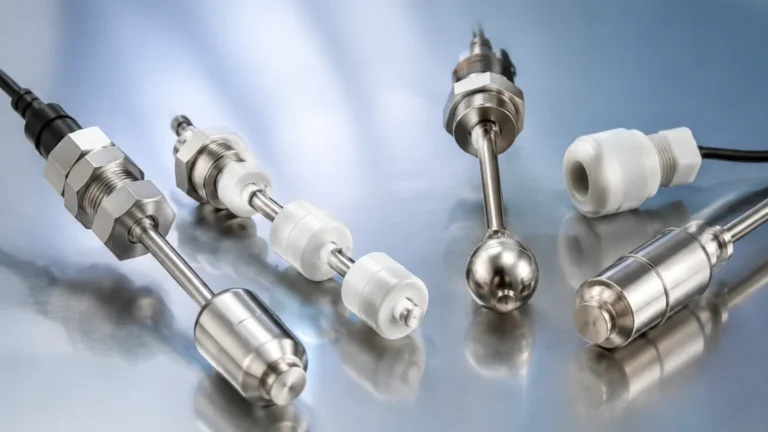
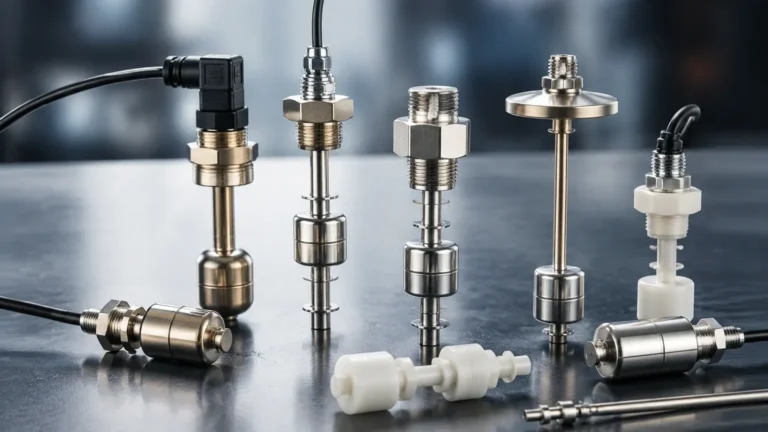
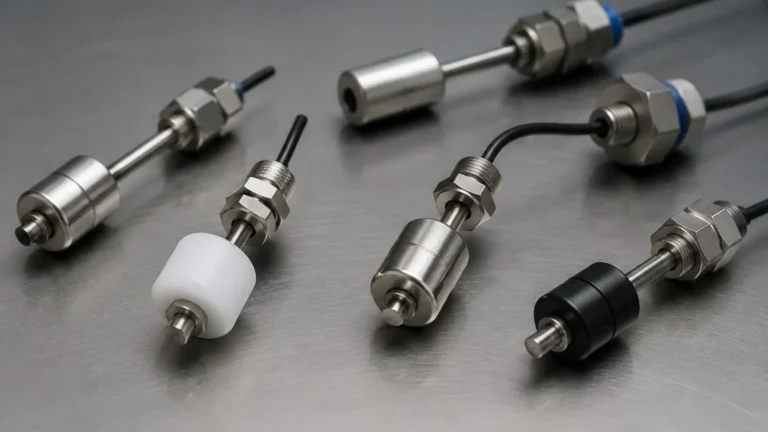
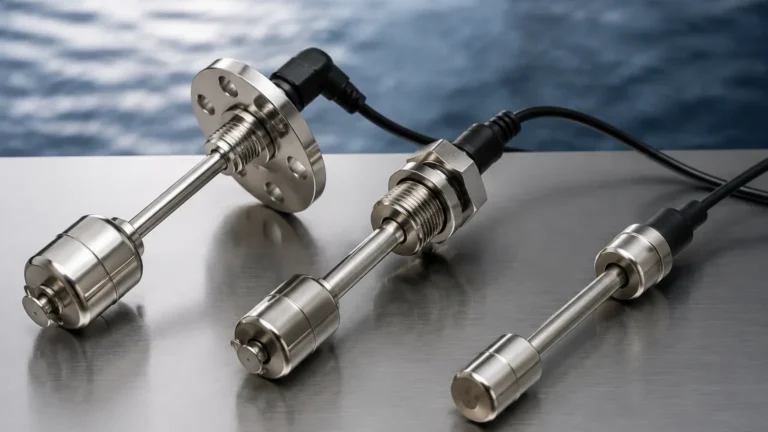
Float switches operate on the principle of buoyancy. A float containing a permanent magnet moves with the surface of the liquid. As the float reaches a specific point, the magnetic field actuates a hermetically sealed reed switch located within the stationary stem. These are among the most common Level Switches due to their simplicity and low cost. They are best suited for clean, non-coating liquids.
2. Vibrating Point Level Switches (Tuning Fork)
Often called tuning fork switches, these devices use piezoelectric crystals to vibrate a metal fork at its natural resonant frequency in the air. When the fork becomes immersed in a liquid or solid, the frequency changes or the vibration is damped. The internal electronics detect this shift and trigger the output. These are highly versatile and resistant to turbulence and bubbles.
3. Capacitance Level Switches
Capacitance switches treat the sensor probe and the vessel wall (or a second probe) as two plates of a capacitor. The medium acts as the dielectric. As the level rises and covers the probe, the dielectric constant changes, leading to a change in capacitance. This technology is effective for both liquids and bulk solids, though it may require calibration for different materials.
4. Rotary Paddle Switches
Designed specifically for bulk solids and powders, a small electric motor slowly rotates a paddle. When the material reaches the paddle, the rotation is impeded. The motor then pivots on its shaft, tripping a microswitch that stops the motor and signals the level alarm.
5. Ultrasonic Level Switches
These utilize high-frequency sound waves. In a typical gap-style ultrasonic switch, a signal is transmitted across a small gap. When the gap is filled with liquid, the signal strength increases significantly compared to when it is filled with air, triggering the switch. This is a non-mechanical method ideal for hazardous or corrosive fluids.
Primary Industrial Level Switch Uses
The application of these technologies across industrial sectors is diverse. Most level switch uses fall into three functional categories: safety/protection, process control, and inventory management.
Overfill Protection (High-Level Alarms)
Perhaps the most critical use of a level switch is preventing a tank from overflowing. In many jurisdictions, secondary high-level switches are a legal requirement for tanks containing hazardous chemicals or petroleum. These "High-High" alarms are often integrated into an Emergency Shutdown System (ESD). If the primary level transmitter fails or the control logic glitche, the independent level switch provides a hardware-level fail-safe to close inlet valves or stop pumps.
Dry Run Protection (Low-Level Alarms)
Centrifugal pumps and heaters can be destroyed if they operate without sufficient fluid. A level switch installed at the bottom of a suction tank or near a heating element ensures that the system is deactivated if the level drops below a safe threshold. This protects expensive infrastructure from cavitation, overheating, and mechanical seal failure.
Automatic Pump Control
Level switches are frequently used in pairs to manage the filling or emptying of sumps and reservoirs. For example, in a wastewater lift station, a "start" switch is placed at a high point and a "stop" switch at a lower point. When the water hits the high switch, the pump activates; it continues to run until the water drops below the low switch. This prevents the pump from "short-cycling" and extends the motor's lifespan.
Interface Detection
In oil-water separators or chemical settling tanks, specific level switches can be tuned to detect the interface between two immiscible liquids. By selecting a technology sensitive to dielectric constants (like capacitance) or density (like specific buoyancy floats), operators can control the drainage of water from the bottom of an oil tank without losing the valuable product.
Technology Selection Matrix
Choosing the correct device depends heavily on the physical properties of the medium and the process environment. The following table provides a general guide for initial selection.
| Technology | Media Type | Viscosity | Pressure Range | Typical Application |
| :— | :— | :— | :— | :— |
| Float | Clean Liquids | Low | Up to 40 bar (580 psi) | Water tanks, fuel storage |
| Vibrating Fork | Liquids/Solids | Low to Med | Up to 64 bar (928 psi) | Chemical processing, food |
| Capacitance | Liquids/Solids | Any | High | Corrosive media, silos |
| Rotary Paddle | Bulk Solids | N/A | Atmospheric | Grain, plastic pellets |
| Ultrasonic Gap | Clean Liquids | Low | Up to 20 bar (290 psi) | Pharmaceutical, high purity |
Practical Engineering Considerations
When implementing level switch uses in a real-world facility, several engineering factors must be addressed during the design phase to ensure long-term reliability.
Media Characteristics
* Build-up and Coating: If the medium is sticky (like molasses or wastewater sludge), mechanical switches like floats or rotary paddles may seize. In these cases, vibrating forks with specialized coatings or non-contact ultrasonic sensors are preferred.
* Corrosivity: For aggressive acids or bases, the wetted parts of the switch must be compatible. Common materials include 316L stainless steel, PTFE (Teflon), or PVDF.
* Specific Gravity: Float switches are dependent on the density of the liquid. If the process involves different fluids with varying densities, a float calibrated for water may not rise in a light hydrocarbon.
Process Conditions
* Turbulence and Foam: In tanks with agitators, the surface may be turbulent or covered in foam. Vibrating forks are generally excellent at ignoring foam, whereas float switches may bounce and cause "chatter" in the electrical signal. To mitigate this, stilling wells are often installed to provide a calm area for the sensor.
* Temperature and Pressure: High-pressure steam or cryogenic liquids require specialized seals and housing. Standard switches are typically rated for -40°C to 150°C, but specialized models can exceed these ranges.
Installation Geometry
Level switches can be mounted horizontally (through the side of the tank) or vertically (from the top). Side mounting is common for high/low alarms because it allows for precise point detection. However, top mounting is often preferred for underground tanks or when side access is restricted. When installing top-mounted switches, the length of the probe or cable must be accurately specified to reach the desired trigger point.
Limitations of Level Switches
While highly effective, level switches have inherent limitations that engineers must recognize:
* Point Detection Only: A level switch cannot tell you if a tank is 40% or 60% full; it only knows if the level is above or below its specific mounting point.
* Mechanical Wear: Devices with moving parts, such as float and rotary paddle switches, are subject to mechanical fatigue and can be jammed by debris.
* Maintenance Access: Many level switch uses involve mounting the device at the very top of a tall silo or inside a pressurized vessel, making routine testing and maintenance difficult without specialized equipment or process downtime.
Maintenance and Calibration Best Practices
To ensure the safety functions of level switches—particularly in overfill protection—regular proof testing is required. For float switches, this may involve manually lifting the float or filling the tank to the trip point. Many modern vibrating fork switches include "self-test" buttons or diagnostic electronics that can verify the integrity of the piezoelectric crystal and the internal circuitry without removing the device from the process.
Calibration is generally required for capacitance-based switches. This involves setting the "empty" and "full" values to account for the vessel's geometry and the dielectric constant of the specific material being measured. Once calibrated, these sensors are remarkably stable, provided the material composition does not change significantly.
Frequently Asked Questions (FAQs)
Q: Can a level switch be used for continuous monitoring?
No. A level switch provides a discrete output (on/off). For continuous monitoring, a radar, ultrasonic transmitter, or hydrostatic pressure sensor is required. However, multiple level switches can be installed at different heights to provide a stepped approximation of the level.
Q: What is the difference between a N.O. and N.C. level switch?
N.O. (Normally Open) means the circuit is open when the switch is in its "rest" state (usually empty). N.C. (Normally Closed) means the circuit is closed. For safety applications like high-level alarms, N.C. is often preferred because a wire break will trigger an alarm, providing a fail-safe condition.
Q: Are level switches suitable for hazardous areas?
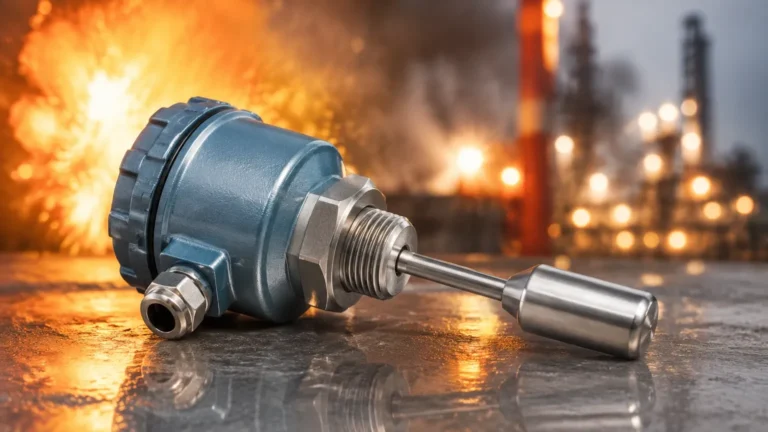
Yes, but they must be appropriately rated. In environments with explosive gases or dust, switches must be either intrinsically safe (IS) or housed in explosion-proof (Ex d) enclosures to prevent ignition.
Q: How do I prevent "chatter" in my control system?
Chatter occurs when a turbulent liquid surface causes the switch to flip on and off rapidly. This can be solved by using a controller with a built-in time delay (e.g., the level must stay high for 5 seconds before the pump stops) or by using two switches to create a deadband (hysteresis).
Conclusion
Level switch uses are foundational to modern industrial safety and efficiency. From simple water tank management to complex chemical overfill protection, these devices provide the reliable point detection necessary to prevent environmental disasters and equipment damage. By selecting the appropriate technology—whether it be a robust Welk vibrating fork or a simple magnetic float—and adhering to rigorous installation standards, facilities can ensure their processes remain controlled and predictable. For those designing new systems or upgrading existing ones, a thorough evaluation of media properties and process requirements is the first step toward selecting the right level measurement solution.