Level 2 vs Level 3 Switches
Level 2 vs Level 3 Switches
In the landscape of industrial automation and process control, the term "switch" often carries a dual meaning. For a process engineer, a switch is a device that detects a specific fluid height—a point-level measurement tool. For a systems integrator, a switch is a networking component that directs data across a plant floor. As industrial facilities transition toward Industry 4.0, these two worlds have converged. Understanding the distinction between level 2 vs level 3 switches is now essential for designing robust level monitoring systems that integrate Level Switches into broader enterprise resource planning (ERP) and manufacturing execution systems (MES).
This article examines the functional principles of industrial level measurement devices and compares the networking infrastructures (Layer 2 and Layer 3) used to communicate their critical data to supervisory systems.
Principles of Industrial Level Switches
Before addressing the networking architecture, it is vital to understand the primary instruments generating the data. Industrial level switches are used for point-level detection, serving as high-level alarms (HLA) to prevent overflows or low-level alarms (LLA) to prevent pump cavitation. Unlike continuous level transmitters, switches provide a discrete binary signal (on/off).
Mechanical and Electromechanical Principles
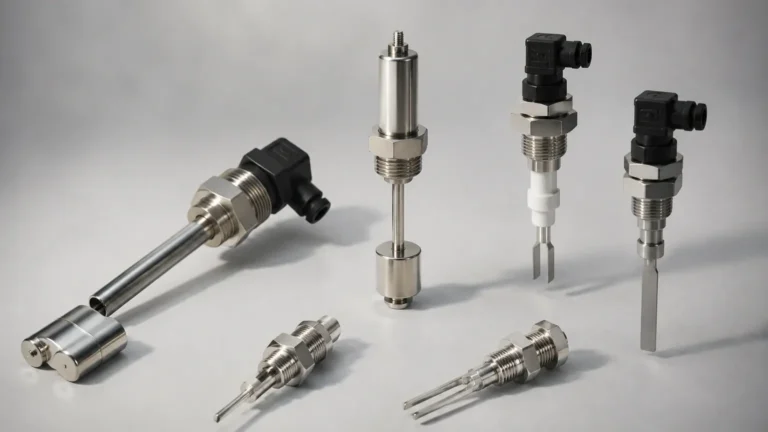
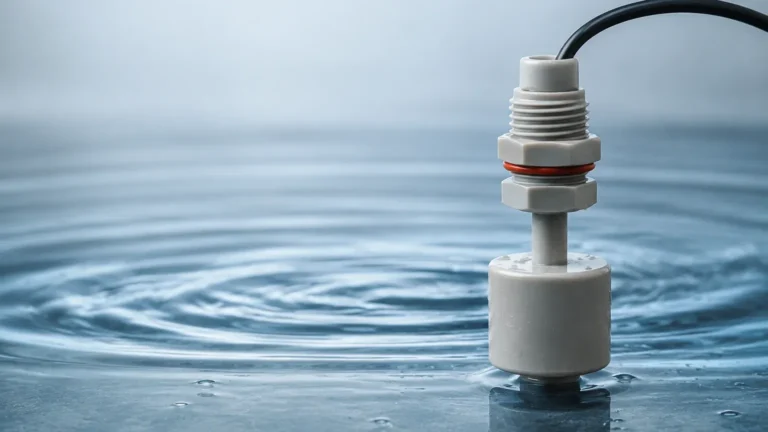
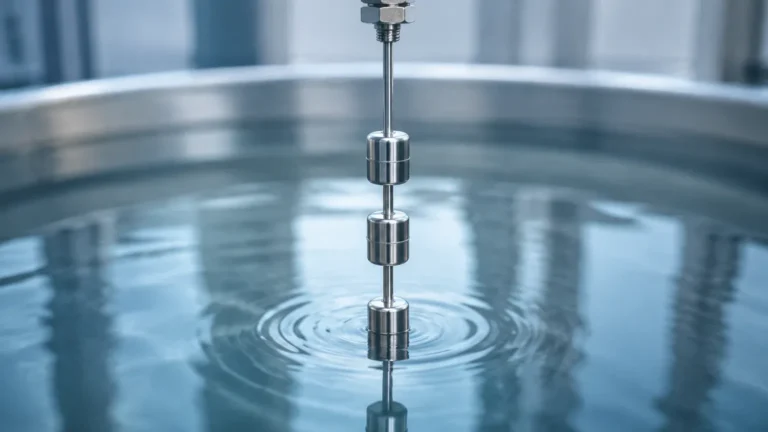
1. Float Level Switches: These utilize a buoyant body containing a magnet. As the liquid level rises, the float moves along a stem, triggering a reed switch. They are simple, cost-effective, and require no external power, but are susceptible to coating and mechanical wear.
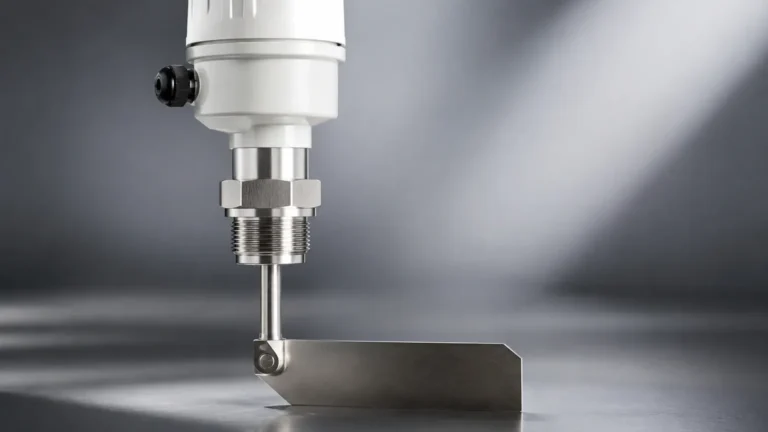
2. Tuning Fork (Vibrating) Switches: A piezo-electric crystal vibrates the fork at its natural frequency. When submerged in a medium, the frequency shifts. The electronics detect this change and toggle the output. These are highly reliable for both liquids and solids and are resistant to turbulence and bubbles.
Electronic and Non-Contact Principles
1. Capacitance Level Switches: These measure the change in capacitance between a probe and the tank wall. They are excellent for powders and granular solids but require calibration based on the dielectric constant of the material.
2. Ultrasonic Level Switches: These emit high-frequency sound waves. In a gap-style sensor, the signal is transmitted across a space when liquid is present. These are non-mechanical and suitable for hazardous or corrosive fluids.
3. Optical Level Switches: These use an infrared LED and a prism. When liquid covers the prism, the light is refracted into the fluid rather than reflected back to the sensor. These are extremely compact and ideal for leak detection.
Understanding Level 2 vs Level 3 Switches in Industrial Networks
When we discuss level 2 vs level 3 switches in the context of automation, we are typically referring to the Open Systems Interconnection (OSI) model layers used in the plant's Ethernet backbone. The choice between these layers dictates how data from a level switch reaches the control room.
Layer 2 (Data Link Layer) Switches
Layer 2 switches operate using MAC addresses. In a typical water treatment or chemical processing plant, a Layer 2 switch connects several Level Switches (via I/O modules or Link-capable gateways) to a local Programmable Logic Controller (PLC).
* Functionality: They facilitate communication within a single Virtual Local Area Network (VLAN). They are "plug-and-play" and offer low latency, which is critical for safety-interlock applications where a high-level switch must shut off a valve in milliseconds.
* Limitations: They cannot route traffic between different networks. If the level data needs to be accessed by a corporate office on a different subnet, a Layer 2 switch alone is insufficient.
Layer 3 (Network Layer) Switches
Layer 3 switches combine the speed of a switch with the routing capabilities of a router. They use IP addresses to move data between different subnets.
* Functionality: In large-scale operations, such as a refinery with multiple tank farms, a Layer 3 switch acts as a core aggregator. It takes the data from various Layer 2 switches and routes it to the Manufacturing Execution System (MES) or a cloud-based monitoring platform.
* Advantages: They provide better traffic management, security through Access Control Lists (ACLs), and reduced broadcast traffic, which prevents the network from becoming congested with sensor data.
Comparative Analysis: Level Switch Integration
The following table compares the application of networking tiers for industrial level measurement systems.
| Feature | Layer 2 (Data Link) | Layer 3 (Network) |
| :— | :— | :— |
| Primary Identifier | MAC Address | IP Address |
| Network Scope | Local Area Network (LAN) | Inter-VLAN Routing / Enterprise |
| Latency | Extremely Low (Microseconds) | Low (but slightly higher than L2) |
| Configuration | Simple / Managed | Complex / Highly Configurable |
| Typical Use Case | Connecting a tuning fork switch to a PLC | Connecting a PLC cluster to an ERP system |
| Security | Basic (Port Security) | Advanced (ACLs, Routing Security) |
Practical Selection Criteria for Level Measurement Systems
When specifying a system that involves both the physical instrument and the data backbone, engineers must evaluate several technical factors.
1. Process Media Characteristics
For the level switch itself, the viscosity, density, and dielectric constant of the medium are paramount. For example, a magnetic float switch may fail in high-viscosity crude oil, whereas a tuning fork switch would perform reliably.
2. Required Response Time
If the Level Switches are part of a Safety Instrumented System (SIS), the network latency becomes a critical factor. Layer 2 switches are preferred for the "Control Level" (Level 1 and 2 of the ISA-95 model) to ensure deterministic communication between the sensor and the final control element (e.g., a pump or valve).
3. Scalability and Segmentation
For a facility with hundreds of measurement points, segmenting the network into VLANs is necessary to prevent a "broadcast storm" from crashing the control system. In this scenario, Layer 3 switches are required to manage the communication between the segmented level-monitoring zones and the central SCADA system.
Installation and Engineering Considerations
Proper installation of both the level instrument and the network hardware ensures long-term reliability.
Instrument Installation
* Orientation: Most vibrating fork switches can be mounted horizontally or vertically. However, for viscous liquids, a slight downward angle is recommended to facilitate drainage.
* Nozzle Length: Ensure the sensing element extends beyond the mounting nozzle into the tank to avoid false triggers caused by build-up within the nozzle.
* Turbulence: In tanks with agitators, install a stilling well or use a switch with a programmable delay to prevent "chattering" of the relay output due to surface waves.
Network Hardware Installation
* Environment: Industrial switches (both L2 and L3) should be DIN-rail mounted and rated for the ambient temperature of the site (often -40°C to +75°C).
* Redundancy: For critical level monitoring, use switches that support Media Redundancy Protocol (MRP) or Rapid Spanning Tree Protocol (RSTP). This ensures that if one network cable is damaged, the level alarm signal can still reach the controller via an alternative path.
Limitations and Risks
While modern Level Switches and high-speed networking offer significant advantages, there are inherent limitations:
* Physical Obstructions: Mechanical switches are prone to jamming if the fluid contains large solids. Regular inspection cycles (e.g., every 6 to 12 months) are necessary.
* Cybersecurity: Integrating level switches into a Layer 3 network increases the attack surface. If the network is not properly firewalled, a remote actor could theoretically intercept level data or suppress alarms.
* Power Requirements: Unlike simple 2-wire switches, Layer 3 switches and advanced electronic level sensors require stable power supplies. In remote locations, this may necessitate solar arrays or UPS systems.
Frequently Asked Questions (FAQ)
Q: Can I use a Layer 3 switch for a simple pump control loop?
A: While possible, it is generally unnecessary. A Layer 2 switch or even a direct hardwired connection from the level switch to the PLC is more cost-effective and provides lower latency for simple local control.
Q: What is the maximum distance for a level switch signal?
A: For standard 4-20mA or relay outputs, distances can reach 1,000 meters (approx. 3,280 feet) depending on cable gauge. If using an industrial Ethernet switch, the limit is typically 100 meters (328 feet) for copper cabling, though fiber optic modules can extend this to 20 kilometers (12.4 miles) or more.
Q: How do I handle level switches in hazardous areas (Ex zones)?
A: You must use intrinsically safe (IS) barriers or explosion-proof housings. When networking these devices, the switch itself is usually located in a safe area, or an appropriately certified industrial switch must be used within the hazardous zone.
Q: Which level switch is best for foaming liquids?
A: Tuning fork switches are generally resistant to foam, as they detect the density change of the liquid. Ultrasonic switches may struggle as the foam can absorb the sound waves, leading to signal loss.
Conclusion
The choice between level 2 vs level 3 switches depends entirely on the scale and connectivity requirements of the industrial application. At the field level, the priority is selecting the correct physical Level Switches based on the chemical and physical properties of the process media. Once the measurement is accurate, the networking layer—whether the simple, fast Layer 2 or the complex, routable Layer 3—ensures that this critical data reaches the decision-makers in the control room and the corporate office. By balancing instrument reliability with network sophistication, engineers can build systems that are both safe and highly efficient.