Level Sensor 5v
Level Sensor 5v
In the landscape of industrial automation and embedded systems, the requirement for precise liquid management often intersects with the need for low-voltage compatibility. A level sensor 5v is a specialized instrument designed to operate within the 5V DC power domain, making it an essential component for original equipment manufacturers (OEMs), medical device engineers, and industrial automation specialists who utilize microcontrollers, TTL logic, or specific low-power PLC inputs.
While traditional industrial environments often standardize on 24V DC systems, the move toward compact, energy-efficient, and highly integrated monitoring solutions has increased the demand for 5V-compliant sensors. These devices bridge the gap between high-level process control and precision electronic logic, providing real-time data on fluid presence, depth, or volume.
Measurement Principles of 5V Level Sensors
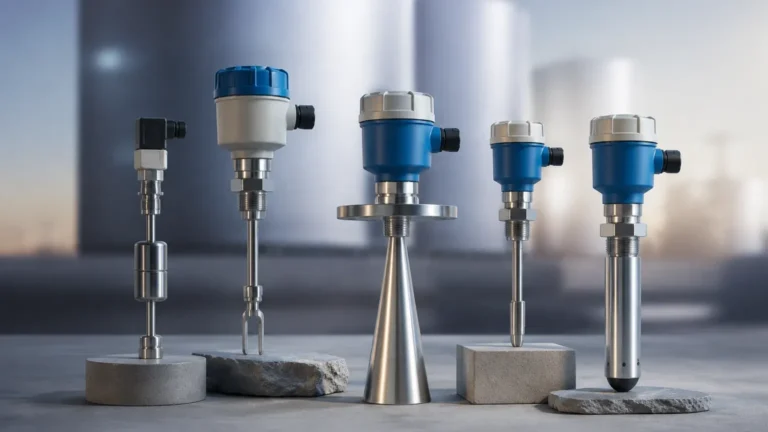
To select the correct level sensor 5v for a specific application, it is first necessary to understand the underlying physical principles that govern how these devices detect liquid levels. Each technology offers distinct advantages depending on the media being measured and the environmental conditions.
Ultrasonic Measurement
Ultrasonic sensors operate on the "Time of Flight" (ToF) principle. The sensor emits a high-frequency sound pulse (typically 40 kHz to 200 kHz) from a transducer. This pulse travels through the air, reflects off the surface of the liquid, and returns to the sensor. By measuring the time interval between emission and reception, the sensor calculates the distance based on the speed of sound. In a 5V configuration, these sensors often provide a PWM (Pulse Width Modulation) or UART output, which is easily parsed by digital processing units.
Optical Sensing
Optical level sensors utilize an infrared LED and a phototransistor. When the sensor head is in the air, the infrared light is reflected within a prism back to the receiver. When the sensor is submerged in liquid, the light is refracted into the fluid, causing the receiver to detect a change in light intensity. This technology is strictly for point-level detection—identifying if a liquid has reached a specific height—and is highly valued for its compact size and lack of moving parts.
Capacitive Sensing
Capacitive level sensors measure the change in electrical capacitance between two electrodes or between a single electrode and the tank wall. As the liquid level rises, the dielectric constant of the medium changes the stored charge. 5V capacitive sensors are frequently used for non-contact sensing through the walls of non-metallic containers, such as plastic or glass tanks, making them ideal for sterile or corrosive applications.
Hydrostatic Pressure
Hydrostatic sensors measure the pressure exerted by a liquid column at a specific depth. The pressure is proportional to the height of the liquid and its density (P = ρgh). A 5V hydrostatic transmitter typically uses a piezoresistive silicon chip that converts mechanical pressure into a millivolt signal, which is then amplified to a 0.5V–4.5V or 0–5V analog output. This is a reliable method for continuous level measurement in deep tanks or wells.
Integrating 5V Logic with Level Switches
In many industrial safety and control loops, the primary requirement is not continuous measurement but rather an alert when a specific threshold is reached. This is where Level Switches become critical. When working with 5V systems, level switches act as digital triggers that can directly interface with an interrupt pin on a processor or a low-voltage relay.
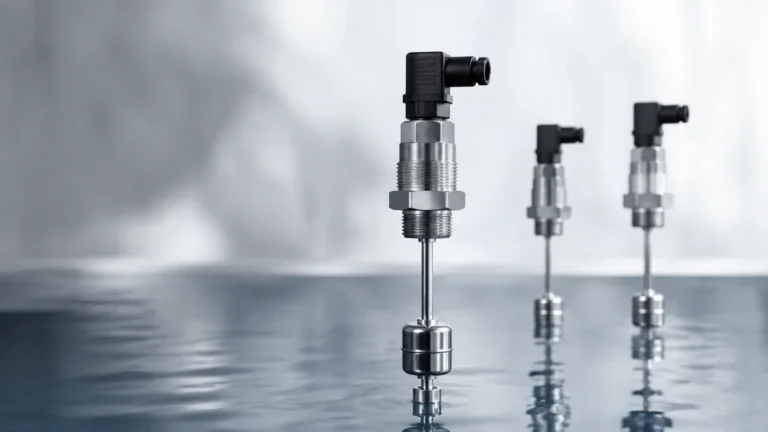
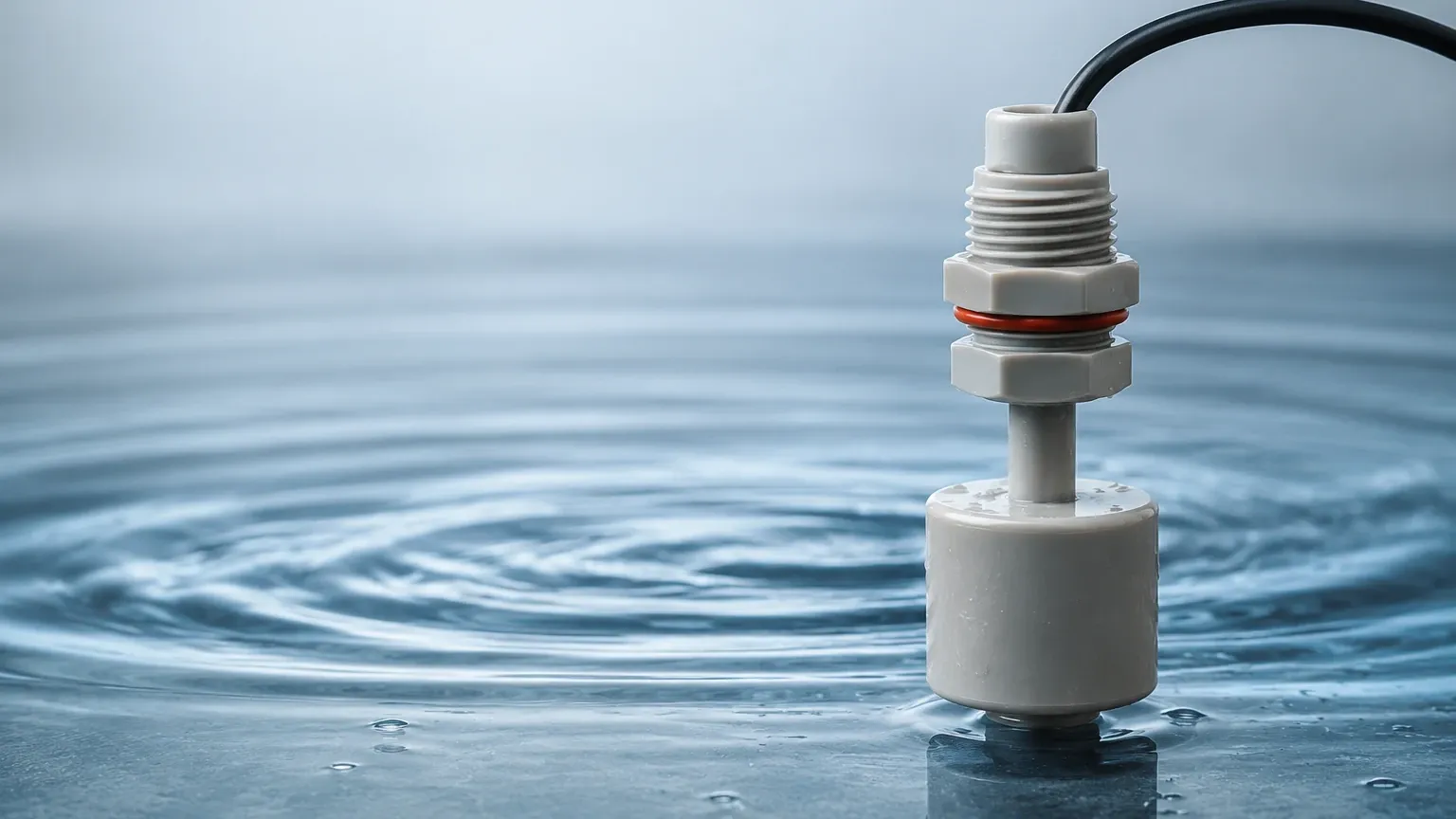
Welk provides a range of switching solutions that can be configured for low-voltage operation. For instance, magnetic float switches utilize a reed switch that is hermetically sealed. These switches do not consume power themselves but can safely switch 5V signals to indicate high or low-level alarms. Because 5V logic is sensitive to electrical noise, using high-quality switches with gold-plated contacts or debounced digital outputs is essential to prevent false triggering in industrial environments.
Technical Selection Criteria
Choosing a level sensor 5v requires a detailed evaluation of the operating environment. The following table provides a comparison of common sensor types used in 5V applications:
| Sensor Type | Ideal Media | Accuracy | Typical Output | Primary Advantage |
| :— | :— | :— | :— | :— |
| Ultrasonic | Water, Chemicals | ±1% to 3% | PWM / UART / I2C | Non-contact measurement |
| Optical | Clear Liquids | High (Point) | Digital (High/Low) | Extremely compact, no moving parts |
| Capacitive | Non-conductive | Moderate | Analog / Digital | Can sense through tank walls |
| Hydrostatic | Oils, Water, Fuel | ±0.5% | 0.5V – 4.5V Ratiometric | Accurate for deep tanks |
| Magnetic Float | Most Liquids | High (Point) | Dry Contact | Simple, no power consumption |
Key Evaluation Factors:
1. Media Compatibility: Ensure the sensor material (PP, Stainless Steel, PTFE) is chemically compatible with the liquid. For example, aggressive acids require PVDF or PTFE housings.
2. Output Signal: Determine if your controller requires an analog voltage (0-5V), a digital signal (High/Low), or a communication protocol like I2C or RS485 (TTL level).
3. Temperature and Pressure: Most 5V sensors are designed for moderate temperatures (up to 80°C) and atmospheric pressure. For high-pressure boilers, specialized industrial-grade housings are required.
4. Power Consumption: In battery-powered or remote IoT applications, the current draw (mA) of the sensor is a critical factor for longevity.
Installation and Wiring Considerations
Proper installation is vital to ensure the longevity and accuracy of a level sensor 5v. Because 5V signals are more susceptible to voltage drop and electromagnetic interference (EMI) than 24V signals, specific precautions must be taken.
Wiring and Cable Length
Voltage drop is a significant concern for 5V analog sensors. If the cable run between the sensor and the controller is too long, the resistance of the wire can cause a measurable drop in voltage, leading to inaccurate readings. It is recommended to keep cable runs under 10 meters for 5V analog signals. If longer distances are required, consider using a digital communication protocol like RS485 with TTL-to-RS485 converters.
Noise Mitigation
Industrial environments are often filled with EMI from motors, VFDs, and heavy machinery. To protect the integrity of a 5V level sensor signal:
* Use shielded twisted-pair cabling.
* Ensure the shield is grounded at the controller end only to avoid ground loops.
* Implement a decoupling capacitor (typically 0.1µF) near the sensor power input to filter out high-frequency noise.
Physical Mounting
For ultrasonic sensors, ensure there are no obstructions (like ladders or agitators) within the "beam angle" of the sensor. For hydrostatic sensors, the vent tube in the cable must remain unobstructed to allow for atmospheric pressure compensation; otherwise, the sensor will provide incorrect depth readings as weather conditions change.
Limitations and Common Risks
While the level sensor 5v is highly versatile, it is not a universal solution. Understanding its limitations prevents costly failures in the field.
* Voltage Fluctuations: 5V logic systems often have narrow tolerances. If the power supply spikes above 5.5V, it can permanently damage the sensor's internal electronics. Conversely, if it dips below 4.5V, the sensor may provide erratic data or fail to initialize.
* Environmental Sealing: Many low-cost 5V sensors are designed for indoor or lab use. For B2B industrial applications, ensure the device has an IP67 or IP68 rating to protect against moisture ingress and dust.
* Surface Turbulence: Ultrasonic and optical sensors can struggle with turbulent surfaces or foam. In these cases, a stilling well (a pipe that surrounds the sensor) may be necessary to provide a calm surface for measurement.
* Signal Attenuation: In 5V capacitive sensing, the thickness and material of the tank wall significantly impact sensitivity. Testing is required to calibrate the sensor for specific wall thicknesses.
Frequently Asked Questions (FAQ)
Q: Can I use a 5V level sensor with a 24V PLC?
A: Not directly. You will need a voltage regulator or a DC-DC converter to step down the 24V power to 5V. Additionally, the output signal of the sensor (0-5V) must be compatible with the PLC's analog input card, or you must use a signal conditioner.
Q: What is the difference between a ratiometric and a non-ratiometric 5V output?
A: A ratiometric output (typically 0.5V to 4.5V) scales with the supply voltage. If the supply voltage fluctuates slightly, the output scales proportionally, which helps maintain accuracy if the controller uses the same 5V supply as its reference. A non-ratiometric output remains fixed regardless of small supply fluctuations but requires a very stable reference.
Q: Are 5V level sensors suitable for hazardous areas (Ex-rated)?
A: Generally, 5V sensors are used in general-purpose or OEM applications. While the low voltage is inherently safer, a sensor must have specific ATEX or IECEx certification to be used in explosive atmospheres. Most standard 5V modules do not carry these ratings unless specifically stated.
Q: How do I clean an optical 5V sensor?
A: Use a soft cloth and a mild detergent. Avoid abrasive cleaners that could scratch the prism, as scratches can cause light scattering and lead to false "liquid present" readings.
Conclusion
The level sensor 5v represents a critical intersection of precision electronics and industrial fluid management. By understanding the specific measurement principles—whether ultrasonic, optical, or hydrostatic—and adhering to strict installation guidelines regarding noise and voltage stability, engineers can implement robust level control in low-voltage environments. Whether the application involves a complex dosing system or a simple high-level alarm using Level Switches, selecting the right 5V instrument ensures long-term reliability and system accuracy. Welk continues to support these technical requirements with a diverse portfolio of measurement solutions tailored for the evolving needs of global industrial automation.