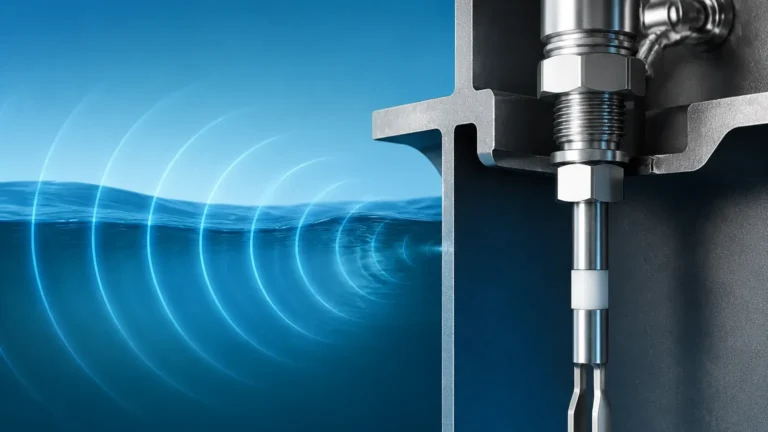
Level Switch Ls 7
Level Switch Ls 7
In the landscape of industrial automation and process control, point-level detection remains a fundamental requirement for safety, efficiency, and inventory management. The level switch LS 7 represents a category of compact, reliable instruments designed to provide discrete output signals when a liquid reaches a predetermined height within a tank or vessel. As a critical component in overfill protection and pump control systems, understanding the mechanical and electrical nuances of these devices is essential for engineers and system integrators.
This guide examines the operational principles, technical specifications, and practical application of the level switch LS 7, providing a comprehensive reference for its selection and deployment in industrial environments.
Measurement Principles of Point-Level Switches
Before selecting a specific model like the level switch LS 7, it is necessary to understand the underlying physics of point-level detection. While several technologies exist, the LS 7 typically utilizes the magnetic float principle, though the term is sometimes applied to ultrasonic or capacitive variants in specific OEM contexts.
The Magnetic Float Principle
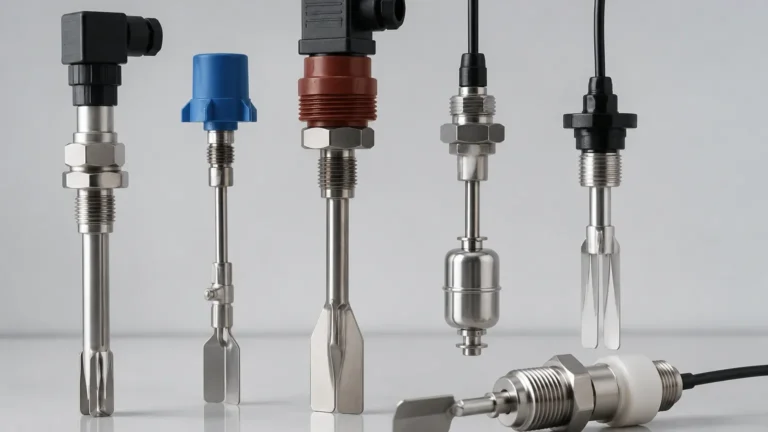
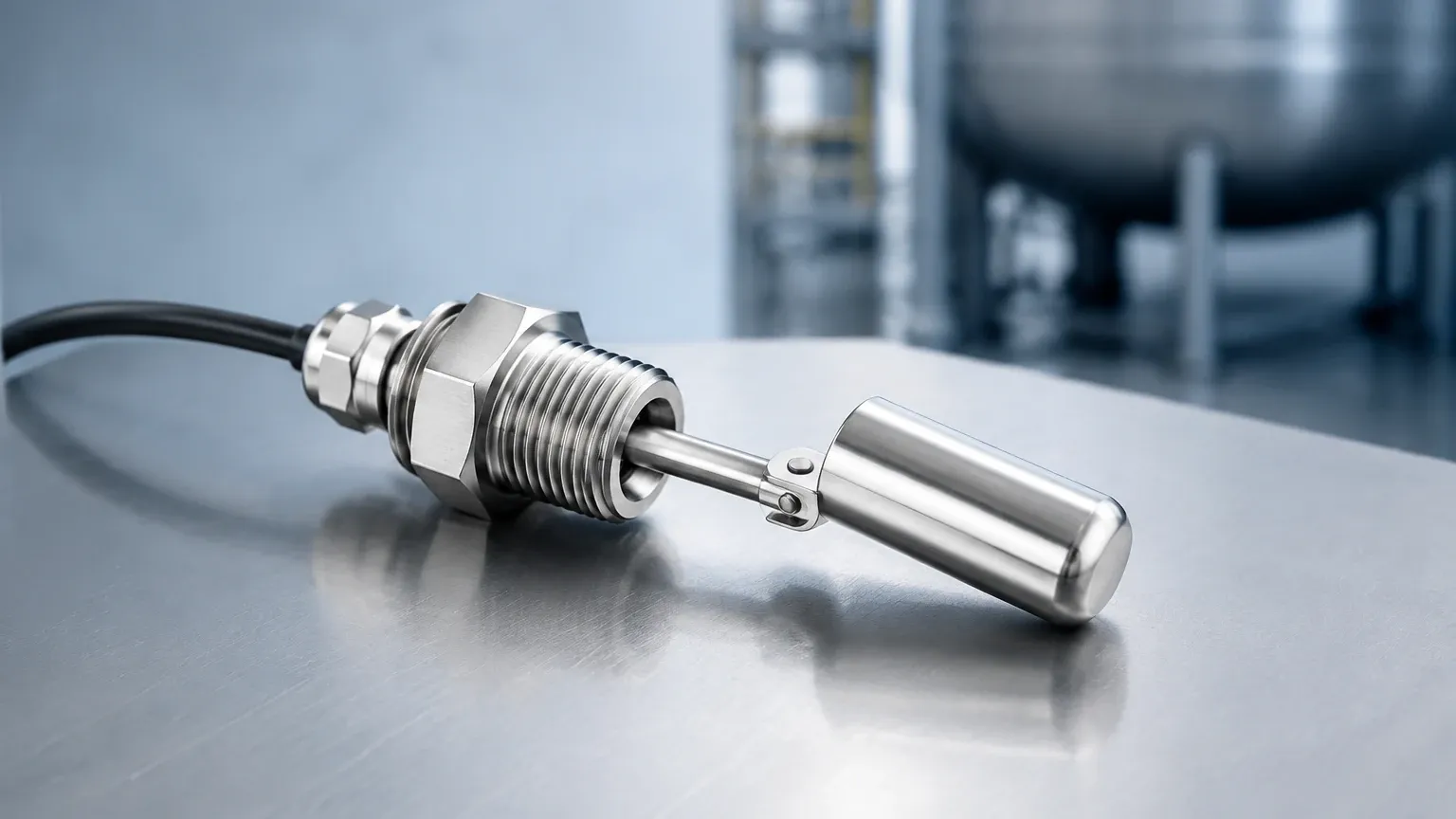
Most instruments in the LS 7 class operate using a buoyancy-based magnetic system. The device consists of a float containing an internal permanent magnet and a stem housing a hermetically sealed reed switch. As the liquid level rises or falls, the float moves along the stem. When the float’s magnetic field reaches the position of the reed switch, the contact leaves (typically made of rhodium or ruthenium) are either drawn together or forced apart, changing the electrical state of the circuit.
This principle is favored in B2B industrial applications because it is inherently simple, requires no external power to operate the sensing element itself, and offers high repeatability. Unlike continuous measurement technologies, such as radar or ultrasonic sensors, the magnetic level switch provides a definitive "on/off" signal, which is ideal for triggering alarms or stopping motors.
Alternative Technologies
In more complex media, other principles may be employed:
- Ultrasonic Gap Sensing: Uses a pair of piezoelectric crystals. When liquid fills the gap between them, the ultrasonic signal is transmitted, indicating a "high" state.
- Vibration (Tuning Fork): The sensor vibrates at its natural frequency. Immersion in liquid changes this frequency, which the electronics detect as a level change.
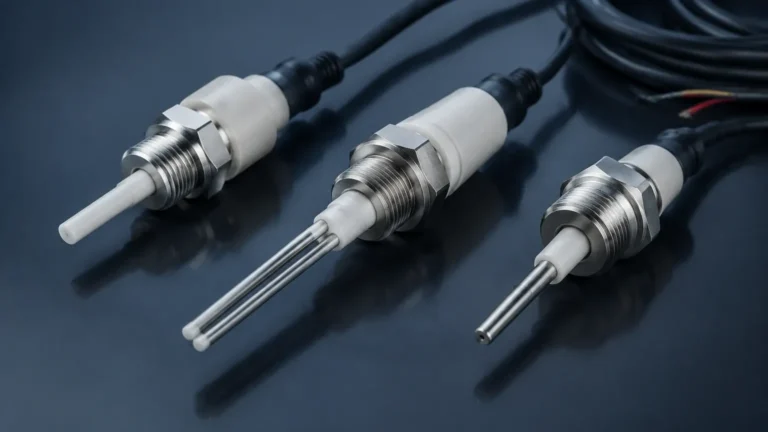
- Capacitive Sensing: Measures the change in capacitance between the probe and the tank wall as liquid displaces air.
For the majority of clean liquid applications, however, the mechanical simplicity of the Level Switches based on float technology remains the industry standard for cost-effectiveness and reliability.
Technical Specifications and Evaluation Criteria
The level switch LS 7 is characterized by its compact form factor, making it suitable for small tanks, laboratory equipment, and integrated machinery. When evaluating these units, engineers must confirm that the materials and electrical ratings align with the process requirements.
Material Compatibility
The choice of material is the first line of defense against premature failure. Common options include:
- Stainless Steel (304 or 316L): Preferred for high-temperature applications (up to 120°C or 248°F) and corrosive environments in the chemical or food and beverage industries.
- Polypropylene (PP): A cost-effective choice for water treatment, acidic solutions, and general-purpose applications where temperatures do not exceed 80°C (176°F).
- Polyamide (Nylon): Often used in oil-based systems and hydraulic reservoirs.
Electrical Characteristics
Since the LS 7 is often used to interface with Programmable Logic Controllers (PLCs) or relays, the electrical load must be carefully managed. Most reed-based switches are rated for low current. For example, a standard unit might handle 10W to 50W of power. If the switch is used to drive a high-power pump directly, an intermediate relay must be installed to prevent the reed contacts from welding shut due to arcing.
| Feature | Specification (Typical) | Metric Units | Imperial Units |
| :— | :— | :— | :— |
| Max Pressure | Stainless Steel models | 30 bar | 435 psi |
| Max Temperature | Polypropylene models | 80°C | 176°F |
| Max Temperature | Stainless Steel models | 120°C – 200°C | 248°F – 392°F |
| Specific Gravity | Minimum Liquid Density | 0.70 g/cm³ | 0.70 S.G. |
| Mounting Thread | Standard Options | G 1/8", G 1/2", NPT | 1/8", 1/2" NPT |
Selection Guidelines for the Level Switch LS 7
Selecting the correct level switch LS 7 requires a detailed analysis of the operating environment. Failure to account for fluid dynamics or chemical interactions can lead to false readings or mechanical failure.
1. Media Density (Specific Gravity)
The float must be lighter than the liquid it is intended to measure. Most industrial level switches are designed for liquids with a specific gravity (S.G.) of 0.7 or higher. If the liquid is an extremely light hydrocarbon with an S.G. of 0.5, a standard float may sink, failing to actuate the switch.
2. Viscosity and Coating
If the liquid is highly viscous or prone to crystallization (such as heavy syrups or certain polymers), the float may become stuck on the stem. In these instances, a non-contact method or a "large-gap" tuning fork switch may be more appropriate than a traditional LS 7 float switch.
3. Switch Logic (N.O. vs. N.C.)
Most LS 7 switches are field-reversible. By removing a retaining clip and flipping the float 180 degrees, the user can change the switch from Normally Open (N.O.) to Normally Closed (N.C.). This flexibility is vital for ensuring "fail-safe" operation. For example, a high-level alarm should typically be N.C. so that if a wire breaks, the system perceives a high-level condition and triggers a safety shutdown.
Installation Considerations and Best Practices
Proper installation is as critical as the selection of the device itself. Even the most robust level switch LS 7 will fail if subjected to improper mechanical stress or electrical interference.
Mechanical Orientation
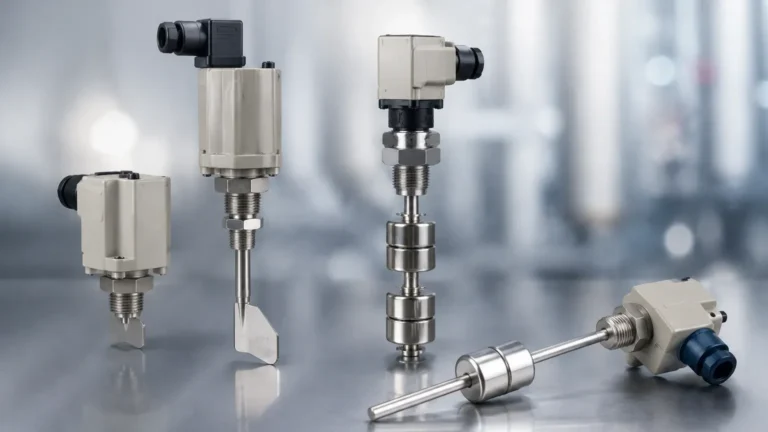
The LS 7 is available in both vertical and horizontal (side-mount) configurations.
- Vertical Mounting: These are installed through the top or bottom of a tank. They are less susceptible to turbulence but require enough overhead clearance for the stem length.
- Horizontal Mounting: These are ideal for tanks where the top is inaccessible. They usually feature a hinged float mechanism. It is important to ensure the hinge is oriented correctly (usually with the arrow on the hex head pointing up or down) to allow for proper gravity-assisted movement.
Turbulence and Sloshing
In tanks with agitators or high-velocity inflow, the float may bounce, causing "chatter" in the electrical signal. This can be mitigated by:
- Stilling Wells: Installing the switch inside a perforated pipe to dampen liquid movement.
- Time-Delay Relays: Using electronics to require the signal to be stable for several seconds before acting.
- Baffles: Placing physical barriers between the inflow pipe and the sensor.
Wiring and Safety
When installing the level switch LS 7 in hazardous areas (Ex zones), it must be connected via an intrinsically safe barrier. Even though the switch itself is a "simple apparatus" (a passive mechanical contact), the energy entering the hazardous area must be limited to prevent ignition in the event of a short circuit.
Common Industrial Applications
The versatility of the level switch LS 7 allows it to be used across diverse sectors. Its primary role is to act as a sentinel, protecting equipment and preventing environmental incidents.
1. Water Treatment: Monitoring levels in chemical dosing tanks (e.g., chlorine or coagulants) to ensure the pumps do not run dry.
2. Hydraulic Power Units (HPUs): Detecting low oil levels in reservoirs to prevent cavitation and damage to high-pressure pumps.
3. Food and Beverage: High-level detection in small mixing vats or condensate collection trays in refrigeration units.
4. HVAC Systems: Overflow detection in drip pans for large-scale air handling units.
5. Industrial Automation: Integrated into OEM machinery, such as parts washers or coolant recovery systems, to automate fluid replenishment.
Limitations and Maintenance
While the level switch LS 7 is a highly reliable component, it is not a "fit and forget" solution for every scenario. Understanding its limitations is key to long-term system integrity.
Limitations
- Particulate Matter: Magnetic particles in the fluid can adhere to the float’s magnet, eventually weighing it down or causing it to jam against the stem.
- Pressure Surges: Rapid pressure changes (water hammer) can collapse hollow metal floats or damage plastic ones.
- Contact Pitting: Switching inductive loads (like solenoid valves) without surge suppression (diodes or RC snubbers) will eventually pit the reed contacts, leading to intermittent failure.
Maintenance Checklist
To ensure continued accuracy, a periodic maintenance schedule should be implemented:
- Visual Inspection: Check for signs of corrosion on the stem and buildup of debris on the float.
- Manual Actuation: If the tank can be safely accessed, manually move the float to confirm the electrical signal reaches the control room.
- Continuity Testing: Check the resistance across the contacts. A high resistance reading when the switch is "closed" indicates contact degradation.
Frequently Asked Questions (FAQs)
Q: Can the level switch LS 7 be used in boiling water?
A: Only if the stainless steel version is selected. Polypropylene models will soften and fail at temperatures near 100°C. Always verify the specific temperature rating of the model in use.
Q: How do I change the switch from Normally Open to Normally Closed?
A: For most vertical LS 7 models, remove the small C-clip at the end of the stem, slide the float off, flip it over, and reinstall it. The internal magnet is usually offset to one side, which changes the activation point relative to the reed switch.
Q: What is the maximum wire length for a level switch?
A: Because the switch is a simple contact, wire runs can be hundreds of meters long. However, for long distances, use shielded cable to prevent electromagnetic interference (EMI) from inducing false signals, especially if the cable runs parallel to high-voltage power lines.
Q: Is the LS 7 suitable for measuring the level of foam?
A: Generally, no. Float switches rely on the density of the liquid to provide buoyancy. Foam is mostly air and typically does not have enough density to lift the float. For foam detection, a tuning fork or capacitive sensor is recommended.
By adhering to these engineering principles and installation guidelines, the level switch LS 7 provides a dependable, low-maintenance solution for point-level monitoring. For more specialized requirements or to explore a wider range of industrial sensing technology, engineers should consult the full catalog of Level Switches to find the optimal match for their specific process conditions.