Where to Buy Gateron Switches
Where to Buy Gateron Switches
In the realm of modern automation and interface design, the term "switch" covers a vast spectrum of technologies. For many enthusiasts and hardware engineers building custom human-machine interface (HMI) panels or specialized control consoles, the search for high-quality components often leads to the question of where to buy gateron switches. While Gateron has become a household name in the mechanical keyboard and tactile input industry, the broader industrial sector requires a different class of switching technology to manage process safety and efficiency: the industrial level switch.
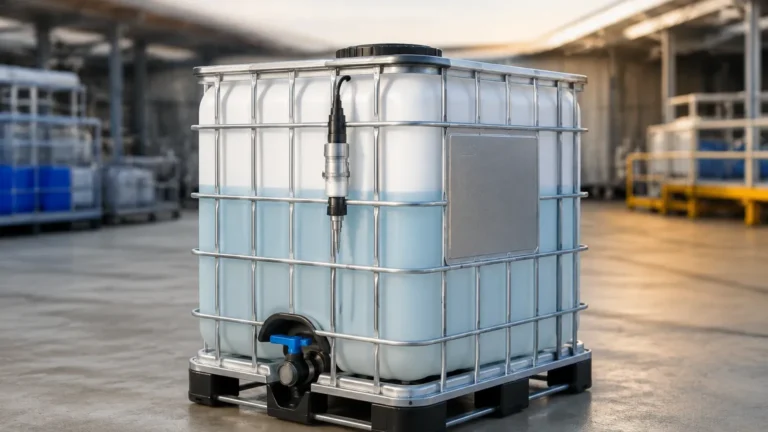
Understanding the distinction between consumer-grade tactile switches and industrial-grade Level Switches is essential for engineers who design the control systems used in water treatment, chemical processing, and oil and gas applications. While one provides the tactile feedback for the operator, the other ensures that a chemical tank does not overflow or a pump does not run dry.
Measurement Principles of Industrial Level Switches
Before deciding where to source components, it is critical to understand the operating principles of industrial level measurement. Unlike a mechanical keyboard switch that relies on a physical spring and copper contact, industrial switches must interact with various liquids, powders, and granular solids under extreme conditions.
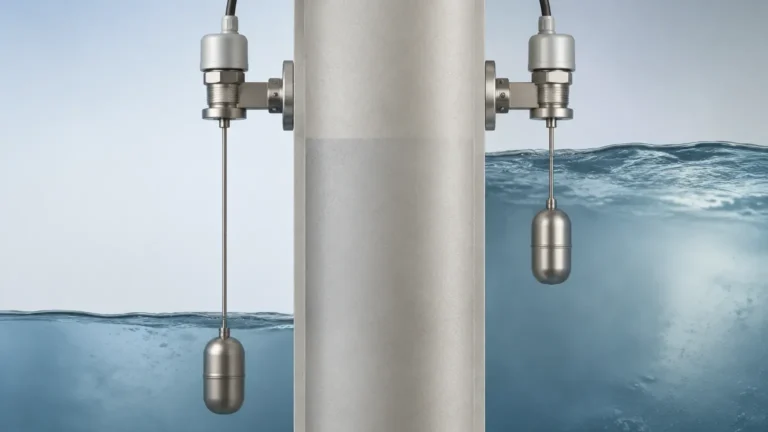
1. Float Level Switches
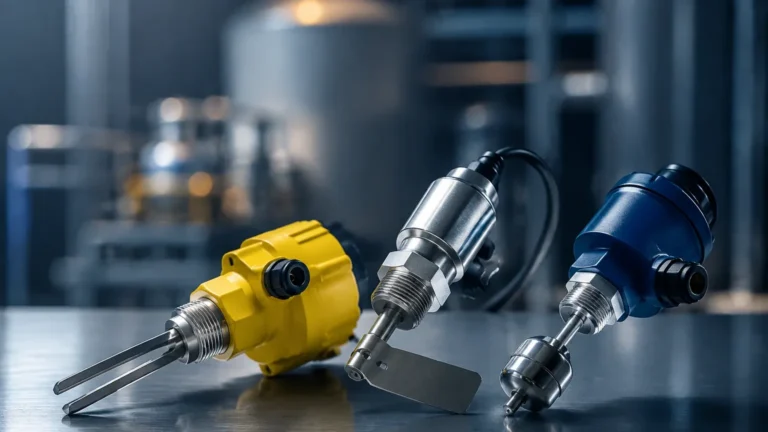
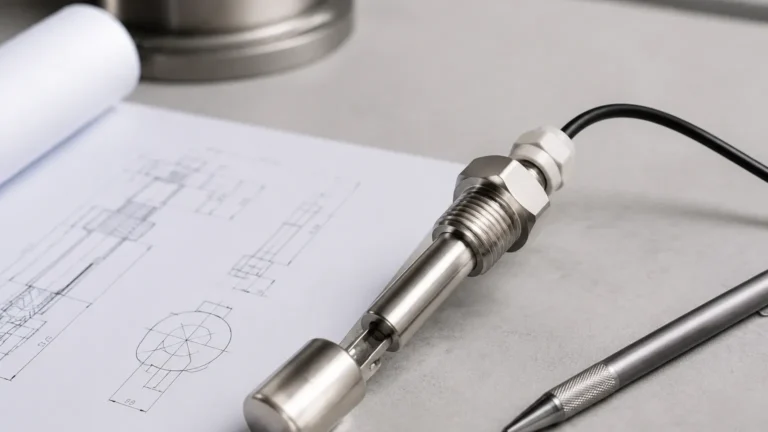
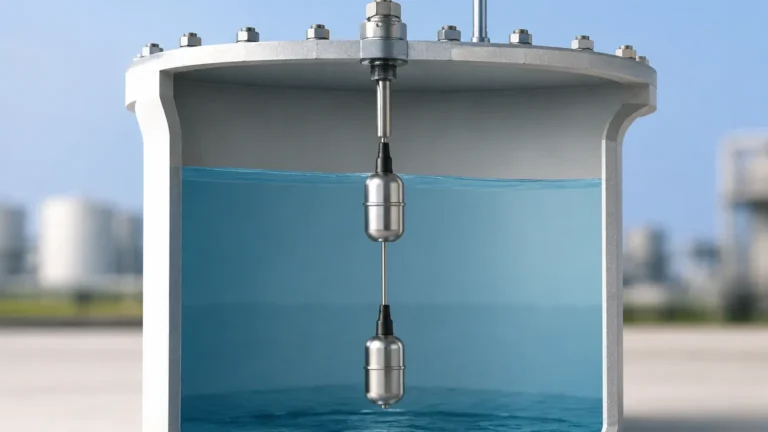
The float switch is one of the most established technologies in the industry. It operates on the principle of buoyancy. A float containing a permanent magnet moves with the liquid level. When the float reaches a predetermined point, the magnetic field triggers a reed switch located inside a stationary stem.
* Advantages: Simple, reliable, and requires no external power.
* Limitations: Susceptible to fouling in viscous or coating liquids.
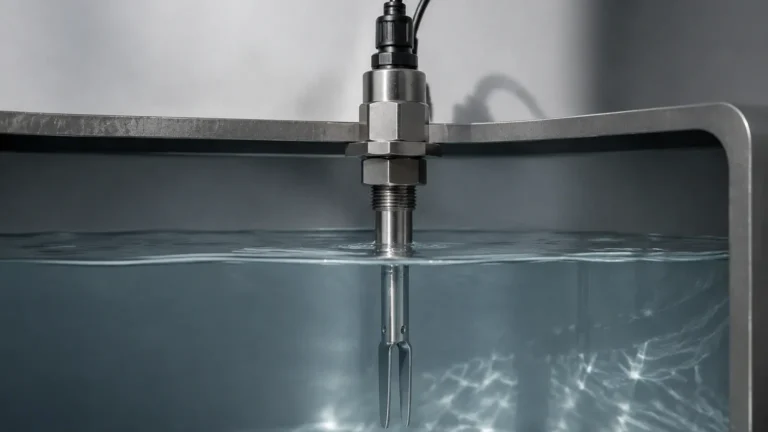
2. Vibrating Tuning Fork Switches
These switches utilize a tuning fork-shaped sensor that vibrates at its natural resonant frequency in the air. When the fork is submerged in a medium (liquid or solid), the frequency of vibration changes or stops. This change is detected by the internal electronics and converted into a switching signal.
* Advantages: Not affected by bubbles, foam, or vibration; highly versatile for various densities.
* Limitations: Not ideal for extremely high-viscosity media that can bridge the forks.
3. Capacitance Level Switches
Capacitive sensors measure the change in electrical capacitance between the probe and the tank wall. As the material level rises, the dielectric constant changes, altering the capacitance. This technology is excellent for detecting the interface between two different liquids or for dry bulk solids.
* Advantages: No moving parts; suitable for high-pressure environments.
* Limitations: Requires calibration for different media; sensitive to material buildup on the probe.
4. Ultrasonic Level Switches
Ultrasonic switches use high-frequency sound waves to detect the presence of a medium. A transducer emits a pulse that travels across a gap in the sensor. If liquid is present in the gap, the signal is transmitted; if air is present, the signal is attenuated.
* Advantages: Non-contact options available; excellent for corrosive liquids.
* Limitations: Performance can be degraded by heavy foam or significant vapor layers.
Technical Selection Criteria for Industrial Switches
When transitioning from sourcing consumer electronics—where the primary concern might be finding where to buy gateron switches for a control desk—to sourcing industrial instrumentation, the evaluation criteria shift toward environmental resilience and process compatibility.
| Feature | Float Switches | Tuning Fork Switches | Capacitive Switches | Ultrasonic Switches |
| :— | :— | :— | :— | :— |
| Media Type | Clean Liquids | Liquids/Solids | Liquids/Solids/Interface | Clean Liquids |
| Max Pressure | Up to 40 Bar | Up to 64 Bar | Up to 100 Bar | Up to 20 Bar |
| Max Temp | Up to 150°C | Up to 250°C | Up to 200°C | Up to 90°C |
| Viscosity Limit | Low | Medium/High | Medium | Low/Medium |
| Maintenance | Moderate (Moving parts) | Low | Low | Very Low |
Sourcing and Procurement: Consumer vs. Industrial
The procurement path for switching technology depends heavily on the final application.
Where to Buy Gateron Switches for HMI Applications
If your project involves building a custom control panel or a high-end keyboard interface for an industrial workstation, you will likely look for Gateron switches through specialized electronic component distributors. These switches are valued for their actuation force, travel distance, and durability (often rated for 50 million to 100 million keystrokes). Common sources include:
* Direct Manufacturers: Buying in bulk for OEM production.
* Specialty Electronics Retailers: Ideal for prototyping and small-batch HMI builds.
* Global Distributors: Large-scale suppliers that offer a variety of linear, tactile, and clicky switch variants.
Sourcing Industrial Level Switches
For process control, the procurement process is more rigorous. When sourcing Level Switches, engineers must confirm certifications such as ATEX/IECEx for hazardous areas, IP ratings (typically IP66 or IP68) for moisture protection, and SIL (Safety Integrity Level) ratings for critical safety loops.
Professional manufacturers like Welk provide not just the hardware, but the engineering support required to ensure the switch material (e.g., 316L Stainless Steel, PTFE, or Hastelloy) is compatible with the chemical properties of the stored media.
Installation Considerations and Best Practices
Proper installation is the difference between a reliable safety system and a frequent source of false alarms.
1. Mounting Position: Horizontal mounting is common for side-entry point level detection, while vertical mounting is preferred for top-down high/low alarms. Ensure that the switch is placed away from the tank inlet to avoid interference from turbulent inflow.
2. Cable Glands and Wiring: In industrial environments, moisture ingress through the conduit is a leading cause of switch failure. Always use high-quality cable glands and create a "drip loop" to prevent water from following the cable into the housing.
3. Calibration and Testing: While some switches are "plug-and-play," capacitive and ultrasonic models often require a dry-run calibration. Regular testing of the switching logic (Proof Testing) is mandatory in many regulated industries to ensure the device will actuate during an actual overfill event.

Limitations and Common Risks
No single switching technology is universal. Engineers must be aware of the following risks:
* Material Compatibility: Using a stainless steel float in a highly acidic tank will lead to rapid corrosion and failure. Always consult a chemical resistance chart.
* Turbulence and Agitation: In tanks with mixers, tuning fork or float switches may suffer mechanical fatigue. In these cases, a stilling well or a non-contact ultrasonic solution may be required.
* Coating and Buoyancy: In wastewater applications, fats, oils, and greases (FOG) can coat a float, eventually making it too heavy to rise or sticking it in place.
Frequently Asked Questions (FAQ)
Q: Can I use a Gateron switch for industrial process control?
A: No. Gateron switches are designed for low-voltage signal input in human-machine interfaces. They lack the sealing, pressure ratings, and electrical isolation required to interact with industrial fluids or high-power pump circuits.
Q: What is the difference between a level switch and a level transmitter?
A: A level switch provides a discrete output (on/off) at a specific point, used primarily for alarms or pump control. A level transmitter provides a continuous signal (e.g., 4-20mA or RS485) representing the exact level across a range.
Q: How do I choose between a tuning fork and a float switch?
A: Choose a tuning fork switch if your liquid is prone to coating or if you need a device with no moving parts for higher reliability. Choose a float switch for simple, non-powered applications in clean liquids where cost is a primary factor.
Q: Are there wireless industrial level switches?
A: Yes, many modern industrial switches now offer LoRaWAN or Zigbee connectivity for remote monitoring in areas where running cable is cost-prohibitive, though wired connections remain the standard for safety-critical applications.
Conclusion
Whether you are researching where to buy gateron switches for a sophisticated control desk or specifying high-performance Level Switches for a chemical refinery, the key to success lies in matching the switch technology to the environmental demands. For industrial applications, prioritizing accuracy, material integrity, and manufacturer support ensures long-term operational safety and efficiency. For those in the process industries, working with a professional manufacturer like Welk provides the technical assurance needed to manage complex level measurement challenges effectively.