Level Switch Omron
Level Switch Omron
In the field of industrial automation, point level detection serves as a critical safety and process control mechanism. Whether preventing a tank overflow or ensuring a pump does not run dry, the selection of a reliable level switch is paramount. Among the various solutions available in the market, the level switch Omron range—specifically the 61F series of floatless level controllers—has become a standard for conductive liquid applications.
However, selecting the right technology requires a deep understanding of measurement principles, liquid characteristics, and environmental constraints. This guide examines the engineering fundamentals of point level detection, evaluates the specific capabilities of Omron level switches, and compares them with broader industrial alternatives to help engineers make informed procurement decisions.
Fundamental Principles of Point Level Detection
Before selecting a specific device, it is essential to understand the physics behind the measurement. Point level detection identifies when a substance reaches a specific height in a vessel. Unlike continuous level measurement, which provides a constant 4-20mA or digital output of the volume, a level switch provides a discrete on/off signal.
Conductive Level Sensing
Conductive level switches operate on the principle of electrical conductivity. This method requires the liquid to be electrically conductive. A low-voltage AC current is applied to electrodes (probes) suspended in the tank. When the liquid touches the electrodes, the circuit is completed through the liquid back to a ground electrode or the tank wall. This change in resistance is detected by a controller, which then toggles a relay. This is the primary technology utilized in the most popular level switch Omron models.
Float-Based Sensing
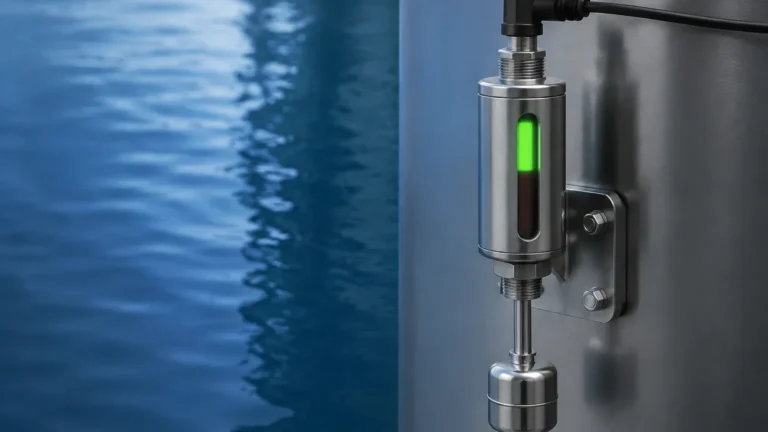
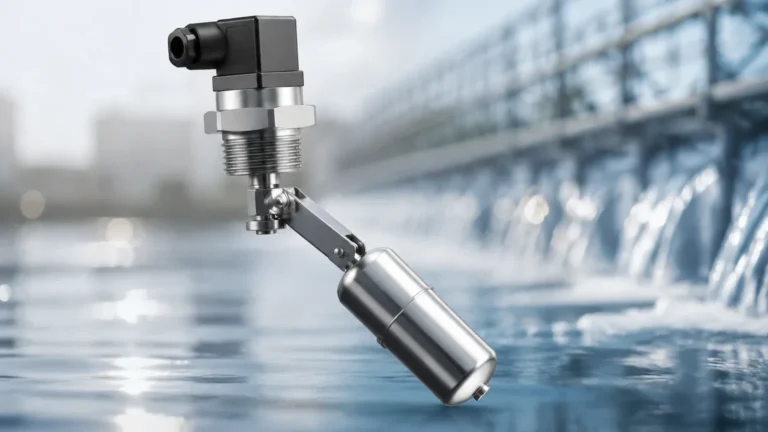
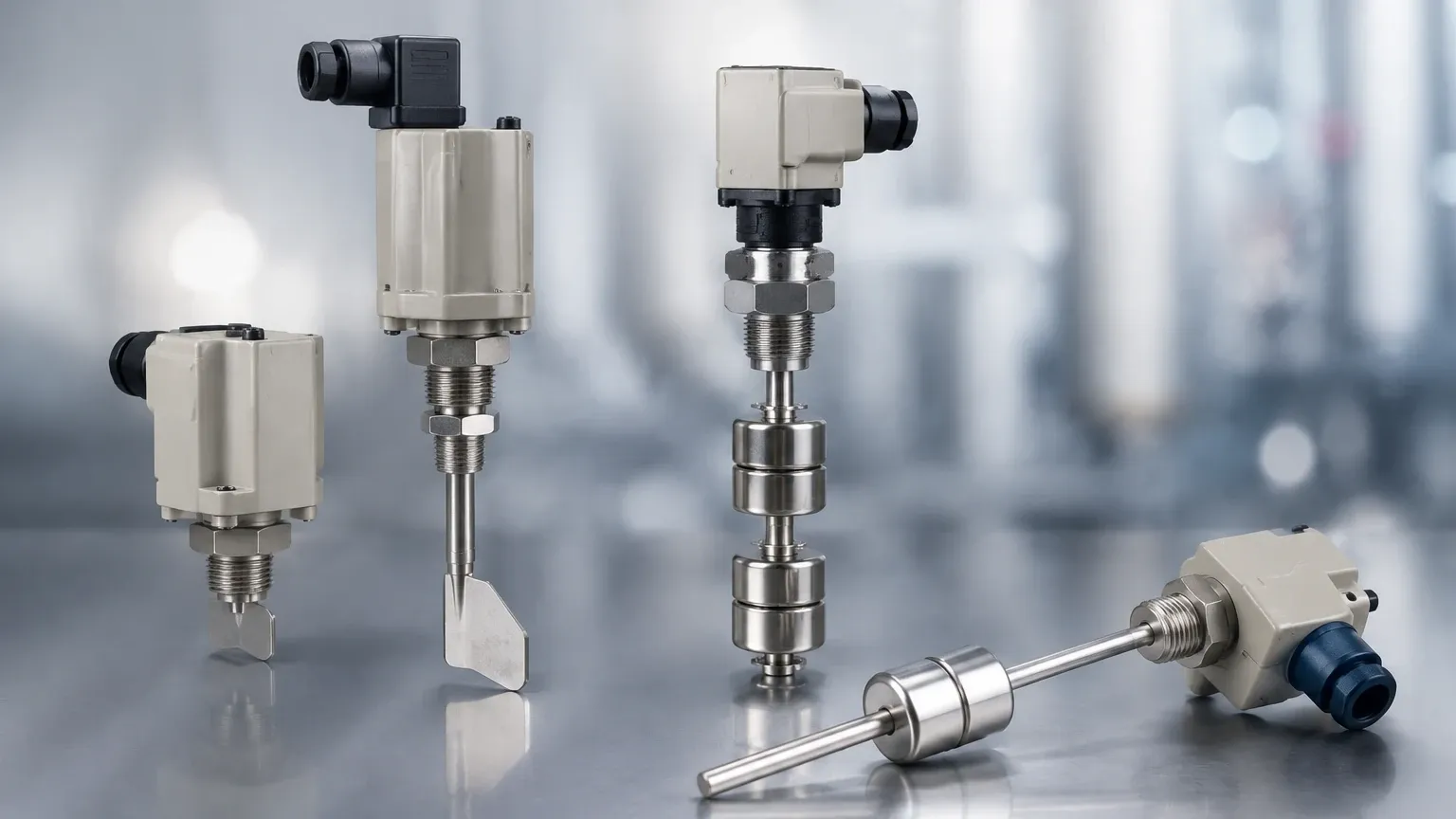
Float switches utilize buoyancy. A float containing a magnet moves up and down with the liquid level. When the float reaches a predetermined point, the internal magnet actuates a reed switch or a microswitch. This is a purely mechanical-electrical interface and does not require the liquid to be conductive.
Capacitive Level Sensing
Capacitive switches detect changes in the dielectric constant. The sensor and the tank wall (or a second probe) act as the plates of a capacitor. As the liquid displaces air between the plates, the capacitance changes, triggering the switch. This technology is versatile and can be used for both liquids and solids.
Understanding the Level Switch Omron Product Range
Omron’s contribution to level sensing is primarily focused on the 61F series, often referred to as floatless level controllers. These are widely used in building automation and water treatment for their reliability and modular design.
The 61F Floatless Level Controller
The 61F system consists of two main components: the controller (the relay unit) and the electrode holder with probes.
* Conductive Probes: These are typically stainless steel rods (SUS304 or SUS316) that are cut to the desired length to represent high, low, and common levels.
* Relay Units: These can be plug-in types for easy maintenance or compact DIN-rail mounted units. They handle the logic for tank filling (automatic water supply) or tank emptying (drainage control).
Key Features of the 61F Series
1. Electrolysis Prevention: By using AC voltage across the electrodes, the system prevents the buildup of scales and the corrosion of probes caused by electrolysis, which is a common failure point in DC-based conductive switches.
2. Sensitivity Adjustment: Many models allow users to adjust the operating resistance (sensitivity). This is vital for liquids with varying conductivities, such as treated water versus wastewater.
3. Long-Distance Wiring: Certain models are designed for long-distance signal transmission between the probes and the controller, making them suitable for remote pumping stations.
Industrial Selection Criteria for Level Switches
When evaluating Level Switches for industrial applications, engineers must look beyond the brand and focus on the technical requirements of the process. The following factors are decisive in selecting the correct instrument.
Liquid Characteristics
* Conductivity: For a conductive level switch to work, the liquid must have a minimum conductivity (usually measured in microSiemens/cm). Pure deionized water or oil-based products cannot be measured with conductive probes.
* Viscosity and Coating: Sticky or highly viscous liquids can create "bridging" between electrodes or weigh down floats, leading to false readings.
* Corrosiveness: The material of the probe or float must be compatible with the chemical composition of the liquid. While SUS316 is standard, aggressive acids may require Hastelloy or plastic-coated electrodes.
Process Conditions
* Temperature: Standard level switches often operate up to 70°C or 100°C. High-temperature steam applications require specialized ceramic-insulated probes or high-temp float switches.
* Pressure: Conductive probes are often used in atmospheric tanks. For pressurized vessels, the electrode holder must be rated for the specific pressure (e.g., 1.0 MPa or higher).
* Turbulence: In tanks with heavy agitation, floats may bounce, and conductive probes may experience intermittent contact. In these cases, stilling wells or time-delay relays are necessary.
Comparative Analysis of Level Switching Technologies
While the level switch Omron 61F is excellent for standard water applications, other industrial environments may require more robust technologies provided by manufacturers like Welk. The table below compares common point-level technologies.
| Technology | Typical Application | Advantages | Limitations |
| :— | :— | :— | :— |
| Conductive (Omron 61F) | Water tanks, boiler feed | Simple, no moving parts, low cost | Requires conductive liquid, prone to scaling |
| Magnetic Float | Oil tanks, fuel storage | Works with non-conductive liquids | Moving parts can jam, sensitive to density changes |
| Tuning Fork (Vibratory) | Chemicals, powders, slurries | Highly reliable, ignores foam/bubbles | Higher cost, can be affected by heavy buildup |
| Ultrasonic Switch | Non-contact detection | No contact with media, hygienic | Affected by heavy vapor or foam |
| Capacitive Switch | Granules, non-conductive liquids | Compact, works through non-metallic walls | Requires calibration for different materials |
Installation and Engineering Best Practices
Correct installation is the difference between a system that lasts decades and one that fails within months. When installing a level switch Omron or any industrial probe system, follow these guidelines:
1. Electrode Spacing: Ensure electrodes are spaced at least 15mm to 20mm apart to prevent accidental contact due to vibration or liquid movement. Use electrode separators if probes exceed 1 meter in length.
2. Grounding: In non-metallic tanks (plastic or fiberglass), a dedicated "common" or ground electrode must be installed that reaches deeper than the lowest control electrode. In metal tanks, the tank wall can serve as the ground.
3. Wiring Separation: Route electrode signal wires away from high-power cables (motors, VFDs) to prevent electromagnetic interference from triggering false signals.
4. Ventilation: Ensure the electrode holder is not completely airtight if the tank is subject to temperature swings, as condensation can form inside the holder and short out the terminals.
Limitations and Application Risks
Despite their versatility, level switches have inherent limitations that engineers must account for in their safety designs.
The Risk of Scaling and Fouling
In wastewater or hard water applications, calcium carbonate or other minerals can build up on conductive probes. This scale acts as an insulator, eventually preventing the switch from detecting the liquid. Regular inspection and cleaning are required for these environments.
Specific Gravity Constraints
For float-based level switches, the float must be lighter than the liquid it is intended to measure. If the liquid density changes significantly due to temperature or chemical concentration, the float may sink, causing a system failure. Always verify the minimum specific gravity rating of the switch.
Foam and Turbulence
Conductive and ultrasonic switches can be fooled by foam. A conductive probe might sense the foam as the liquid level, while an ultrasonic sensor might have its signal absorbed by the foam. If foam is present, a tuning fork or a hydrostatic level transmitter is often a more reliable choice.
Frequently Asked Questions (FAQ)
Q: Can I use a level switch Omron 61F for oil or diesel?
A: No. Conductive level switches require the medium to conduct electricity. Oils are insulators. For oil or fuel, a magnetic float switch or an ultrasonic switch is recommended.
Q: How do I choose between a 2-wire and 3-wire electrode setup?
A: A 2-wire setup is typically used for simple high or low alarms. A 3-wire setup (High, Low, and Common) is used for automatic control (e.g., starting a pump at the high level and stopping it at the low level) to provide hysteresis and prevent "chattering" of the pump.
Q: What is the maximum length for conductive probes?
A: While probes can be several meters long, they become prone to bending and touching each other. For depths over 2 meters, it is often better to use a hydrostatic level transmitter or a cable-suspended float switch.
Q: Are Omron level switches suitable for hazardous (Ex) zones?
A: Standard 61F models are for general-purpose areas. For hazardous locations, you must use intrinsically safe barriers or select a level switch specifically rated for explosive atmospheres (ATEX/IECEx).
Conclusion
The level switch Omron 61F series remains a cornerstone of conductive liquid control due to its simplicity and modularity. However, industrial environments often present challenges—such as non-conductive fluids, high pressure, or aggressive chemicals—that necessitate a broader range of technologies. By understanding the underlying principles of conductivity, buoyancy, and capacitance, engineers can select the most robust Level Switches for their specific application. Whether opting for the electrode-based logic of Omron or the advanced sensing capabilities of ultrasonic and radar switches from manufacturers like Welk, the key to success lies in matching the instrument to the physical properties of the process media.