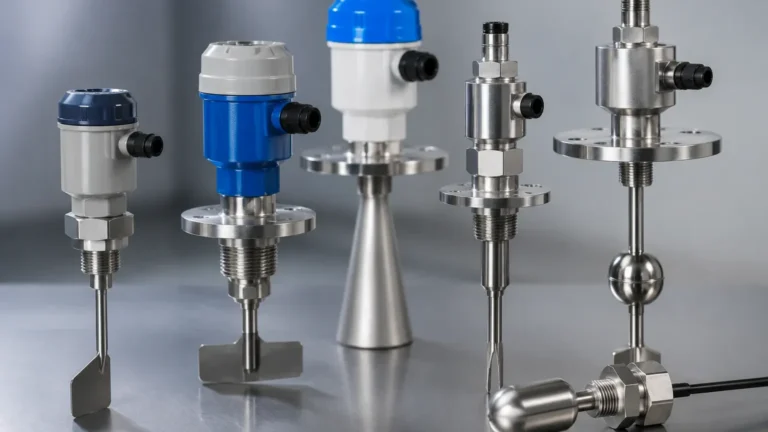
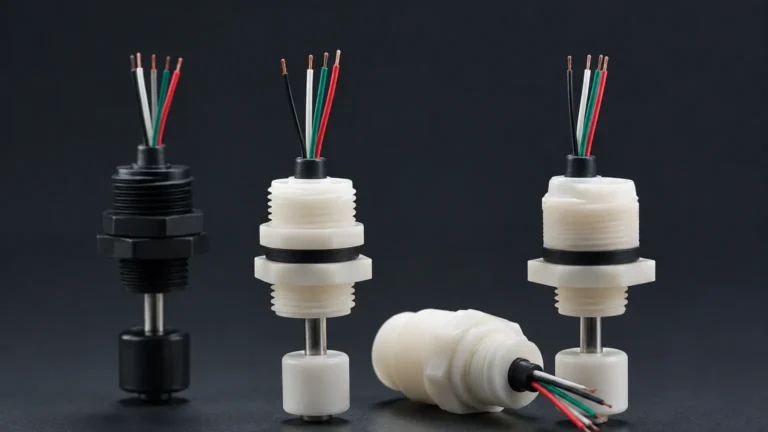
Magnetrol Level Switch 961
Magnetrol Level Switch 961
In the landscape of industrial process control, point level detection serves as a critical safeguard for overfill prevention, pump protection, and automated inventory management. Among the various technologies available, ultrasonic gap switches have established a reputation for reliability in challenging liquid applications. The Magnetrol Level Switch 961 is a prominent example of this technology, utilizing high-frequency acoustic energy to detect the presence or absence of a liquid at a specific point.
For engineers and plant operators, selecting the right instrumentation requires a deep understanding of measurement principles, application constraints, and the comparative advantages of different Level Switches. This guide provides a technical deep dive into the 961 series, its operational mechanics, and how it fits into a broader industrial automation strategy.
Measurement Principles: Ultrasonic Gap Technology
To appreciate the functionality of the Magnetrol Level Switch 961, one must first understand the physics of ultrasonic wave propagation in different media. The device operates on the principle of ultrasonic attenuation and transmission.
The Piezoelectric Effect
The core of the 961 switch consists of a pair of piezoelectric crystals mounted on opposite sides of a small gap in the probe tip. One crystal acts as a transmitter, while the other acts as a receiver. When an electrical signal is applied to the transmitting crystal, it vibrates at a high frequency (typically in the megahertz range), creating ultrasonic waves.
Signal Transmission Across the Gap
When the probe gap is filled with air or gas, the ultrasonic energy is significantly attenuated. Air is a poor conductor of high-frequency sound waves; therefore, the receiving crystal detects little to no signal. This state is interpreted by the electronics as a "dry" condition.
When the liquid level rises and fills the gap, the ultrasonic waves travel much more efficiently. Liquids have a significantly higher acoustic impedance than gases, allowing the signal to pass across the gap with minimal loss. The receiving crystal converts this mechanical energy back into an electrical signal, which the electronics interpret as a "wet" condition, subsequently triggering the relay or current output.
Pulsed Signal Processing
Modern iterations of this technology, including the 961 series, utilize pulsed signal processing. Instead of a continuous wave, the device sends bursts of energy. This allows the electronics to filter out noise, ignore signal reflections caused by turbulence, and perform self-diagnostic checks on the integrity of the crystals and the internal circuitry.
Key Features of the Magnetrol Level Switch 961
The 961 is designed for single-point detection, often used as a high-level alarm or a low-level pump-off switch. Its construction and electronic features are tailored for high-demand industrial environments.
1. No Moving Parts: Unlike float switches, the 961 has no mechanical components that can jam, wear out, or become encrusted with solids. This makes it ideal for viscous liquids or applications with moderate suspended solids.
2. Advanced Diagnostics: The 961 features a self-test routine that monitors the electronics and the transducer. If a fault is detected, the unit can signal a failure mode, ensuring that a hardware malfunction is not mistaken for a safe level condition.
3. Material Versatility: Probes are commonly available in 316 Stainless Steel, but specialized alloys like Hastelloy C are often used for corrosive chemical applications.
4. Compact Electronics: The integrated electronics are housed in a rugged, explosion-proof enclosure, suitable for hazardous area installations (ATEX, FM, CSA certifications).
Technical Selection Criteria
Choosing between an ultrasonic gap switch like the 961 and other Level Switches depends on several process variables. The following table compares common point level technologies to assist in the selection process.
Comparison Table: Point Level Technologies
| Feature | Ultrasonic Gap (e.g., 961) | Vibrating Tuning Fork | Float Switch | Displacer Switch |
| :— | :— | :— | :— | :— |
| Measurement Principle | Ultrasonic Transmission | Mechanical Resonance | Buoyancy | Buoyancy/Weight |
| Moving Parts | None | None | Yes | Yes |
| Viscosity Limit | Up to 10,000 cP | Up to 10,000 cP | Low to Medium | Medium |
| Foam Resistance | Excellent (ignores light foam) | Moderate | Good | Good |
| Aerated Liquids | Poor (signal scattering) | Excellent | Good | Good |
| Coating/Buildup | Moderate Resistance | High Resistance | Poor | Poor |
| Maintenance | Very Low | Low | Moderate | High |
When to Specify the 961
* Clean to Slightly Dirty Liquids: It excels in water, fuels, and chemicals where the liquid is relatively homogeneous.
* High Pressure/Temperature: Certain models can handle pressures up to 103 bar (1500 psi) and temperatures ranging from -40°C to +165°C (-40°F to +330°F).
* Safety Critical Loops: Due to its diagnostic capabilities, it is a preferred choice for SIL 2 rated overfill prevention systems.
Installation Considerations
Proper installation is paramount to the performance of any level instrument. For the Magnetrol Level Switch 961, several engineering factors must be addressed during the design phase.
1. Orientation
The probe can be installed horizontally or vertically. However, in horizontal installations, the gap must be oriented vertically (the "slot" facing up and down). This ensures that liquid can drain freely from the gap when the level drops. If the gap is oriented horizontally, a droplet of liquid could remain trapped by surface tension, causing a "false wet" signal.
2. Turbulence and Agitation
In tanks with heavy agitation, the probe should be located away from the direct path of the agitator blades. While the pulsed signal processing helps filter out noise, physical protection such as a stilling well may be required if the turbulence is severe enough to cause rapid splashing into the gap.
3. Nozzle Length
The probe must extend far enough into the vessel so that the gap is fully cleared of the mounting nozzle. If the gap is partially shrouded by the nozzle, liquid may become trapped, or the ultrasonic signal may reflect off the nozzle walls, leading to erratic behavior.
4. Wiring and Power
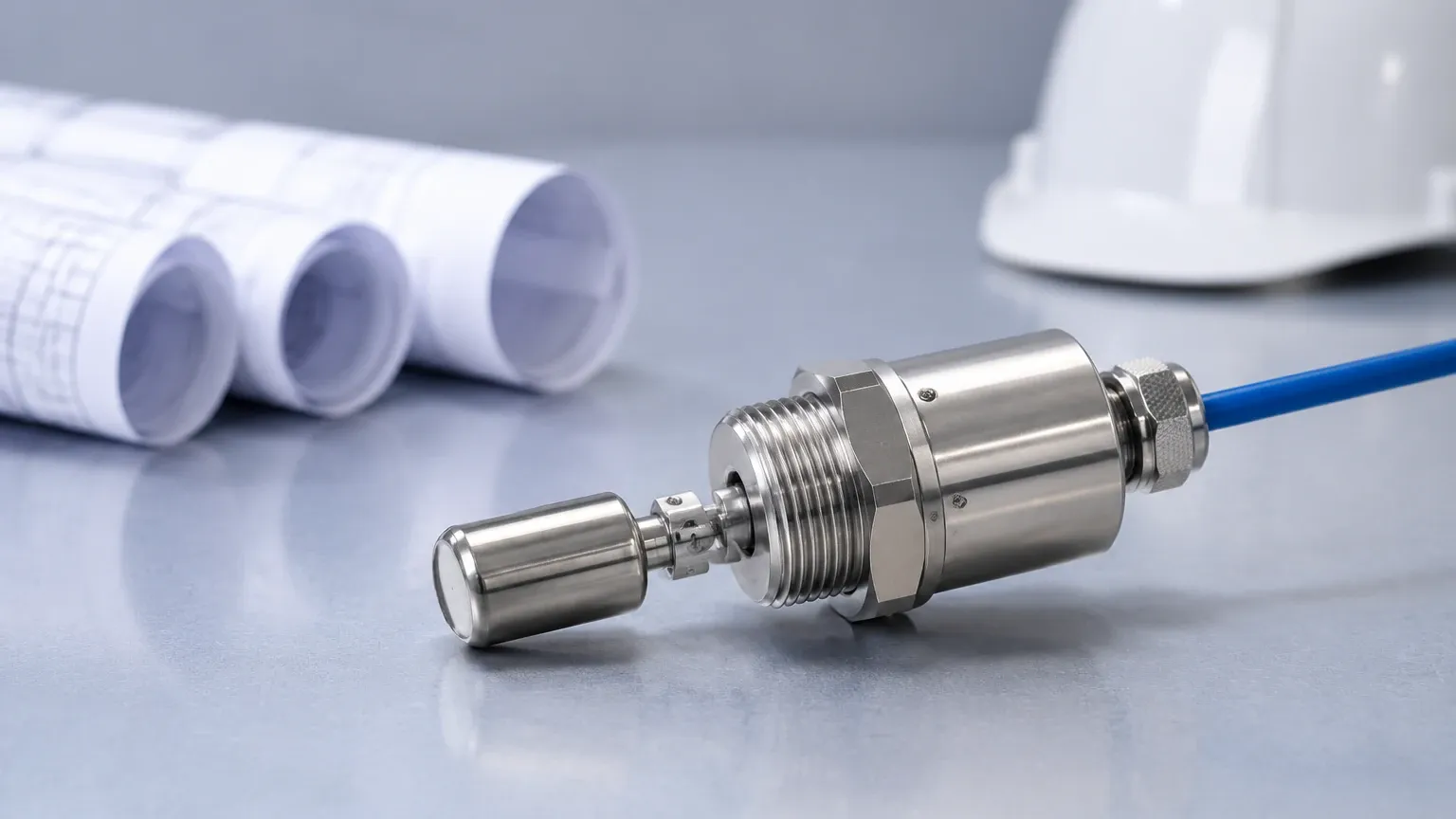
The 961 is typically available in a two-wire loop-powered configuration (8-30 VDC) or a line-powered version with relay outputs. Engineers must ensure that the cable entry is properly sealed with a conduit plug or cable gland to prevent moisture ingress into the housing.
Limitations and Practical Constraints
While highly versatile, the ultrasonic gap technology used in the 961 has specific limitations that must be recognized to avoid field failures.
* Aeration and Bubbles: Ultrasonic waves are scattered by air bubbles. If the process liquid is highly aerated (e.g., directly below a fill pipe or in an aeration basin), the signal may not reach the receiver even when the gap is submerged. This results in a "false dry" reading.
* Heavy Coating and Bridging: While the device can handle some film buildup, a thick, conductive, or highly attenuating coating that physically bridges the gap will cause the switch to stay in the "wet" state regardless of the actual liquid level.
* High Viscosity Limits: Although rated for up to 10,000 cP, extremely viscous fluids that do not flow out of the gap easily can cause delayed response times.
* Vacuum Service: In high vacuum applications, the transmission of sound is hindered. While the liquid phase detection remains unaffected, the transition from gas to liquid must be carefully evaluated if the ambient pressure is near absolute vacuum.
Maintenance and Troubleshooting
Because the Magnetrol Level Switch 961 has no moving parts, maintenance is generally minimal. However, periodic verification is recommended, especially in safety-related applications.
* Visual Inspection: During plant shutdowns, the probe should be inspected for signs of corrosion or heavy material buildup.
* Functional Test: Most units include a magnetic test point on the housing. Swiping a magnet over this point simulates a "wet" condition, allowing operators to verify the loop and alarm logic without removing the sensor.
* Diagnostic LEDs: The internal electronics usually feature LEDs indicating power, signal status, and fault conditions. A flashing fault LED typically indicates a transducer failure or an internal electronic error.
Frequently Asked Questions (FAQs)
Q: Can the 961 be used for interface detection (e.g., oil over water)?
A: Generally, no. The 961 is a liquid-vs-gas detector. Since both oil and water transmit ultrasonic waves effectively, the switch will trigger as soon as it hits the upper liquid layer. For interface applications, specialized technologies like guided wave radar or displacers are preferred.
Q: Is the 961 affected by changes in dielectric constant or density?
A: No. Unlike capacitive or hydrostatic sensors, ultrasonic gap switches are independent of the liquid's dielectric constant, conductivity, or density. They only require the liquid to be capable of transmitting sound waves.
Q: What is the difference between the 961 and the 962?
A: The 961 is a single-point switch. The 962 is a dual-point version, featuring two gaps on a single probe, which is useful for controlling a pump (on/off) or providing both a high and high-high alarm with a single tank penetration.
Q: Can it be used in foaming liquids?
A: Yes, it is quite effective in foam. Because foam is mostly air, it does not transmit the ultrasonic signal well. The switch will typically ignore the foam and only trigger when the actual liquid level reaches the gap.
Conclusion
The Magnetrol Level Switch 961 remains a staple in industrial level control due to its robust design and the inherent advantages of ultrasonic gap technology. By eliminating moving parts and providing integrated diagnostics, it offers a high degree of reliability for point level detection in diverse sectors, from petrochemicals to water treatment.
When specifying Level Switches, engineers must weigh the benefits of ultrasonic detection against the specific characteristics of their process media. While aeration and heavy coating present challenges, the 961's ability to provide accurate, maintenance-free operation in clean and viscous liquids makes it a foundational tool in the modern process engineer's toolkit. For optimal results, always verify the chemical compatibility of the probe materials and ensure the installation geometry allows for complete drainage of the sensor gap.