Level Sensor Yokogawa
Level Sensor Yokogawa
In the landscape of industrial process automation, precise liquid level measurement is a cornerstone of operational safety, inventory management, and process efficiency. Among the various manufacturers in this space, the level sensor Yokogawa portfolio is frequently specified for its high-performance differential pressure (DP) transmitters and advanced digital sensing technology. However, selecting the right level measurement solution requires a deep understanding of the underlying physics, the specific application environment, and the complementary role of point-level detection systems.
This guide explores the technical principles of level measurement, compares continuous sensing with point-level switching, and provides practical engineering insights for selecting and installing instrumentation in demanding B2B environments.
1. Core Principles of Level Measurement Technology
Before selecting a specific instrument, engineers must evaluate whether the application requires continuous level monitoring or point-level detection. Continuous sensors provide a real-time 0–100% level signal, while level switches provide discrete signals at specific heights.
Hydrostatic and Differential Pressure (DP)
The most common technology associated with the level sensor Yokogawa line is the differential pressure transmitter. This method relies on the principle that the pressure at the bottom of a liquid column is directly proportional to the height of the liquid and its density. The formula used is:
P = ρ × g × h
Where:
* P is the hydrostatic pressure.
* ρ (rho) is the density of the fluid.
* g is the gravitational constant (9.81 m/s²).
* h is the height of the liquid.
In pressurized tanks, a differential pressure transmitter measures the difference between the total pressure at the bottom and the gas-space pressure at the top to isolate the hydrostatic head of the liquid.
Radar and Ultrasonic Measurement
Non-contact technologies, such as those offered by Welk, use Time-of-Flight (ToF) principles. Radar sensors emit electromagnetic pulses (FMCW or pulse radar) that reflect off the liquid surface. The sensor calculates the distance based on the time it takes for the signal to return. Unlike DP sensors, radar is independent of fluid density changes, making it ideal for applications where the process media composition fluctuates.
Point Level Detection (Level Switches)
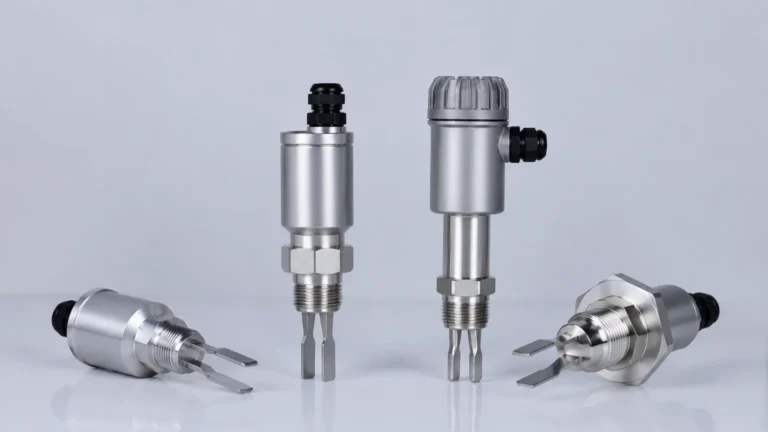
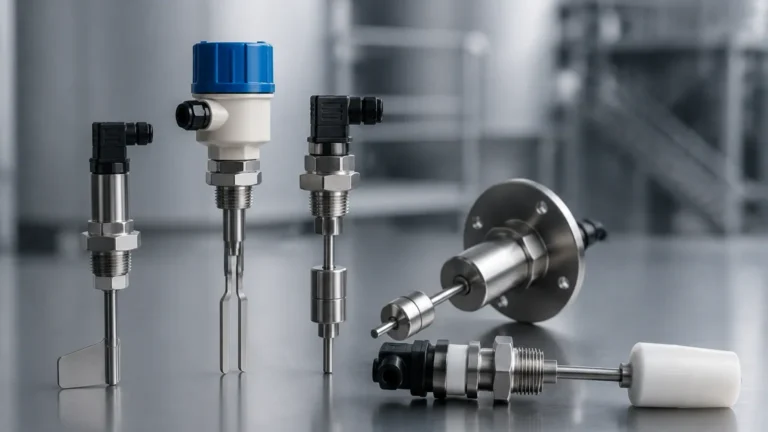
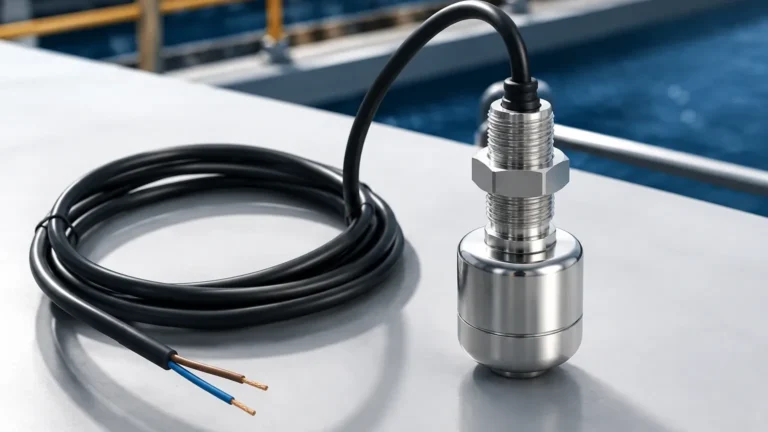
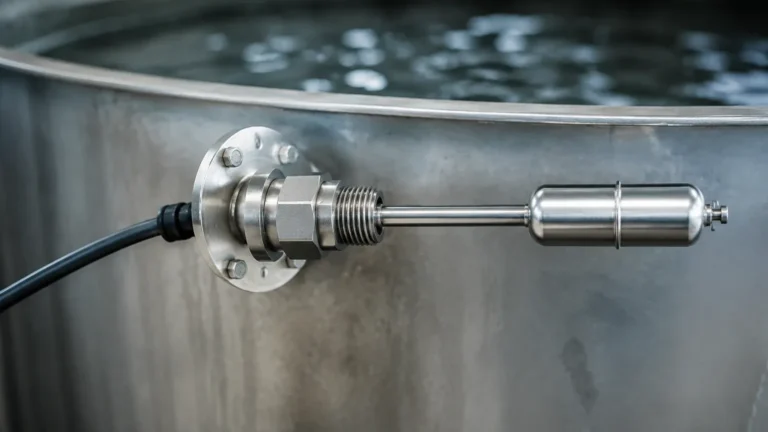
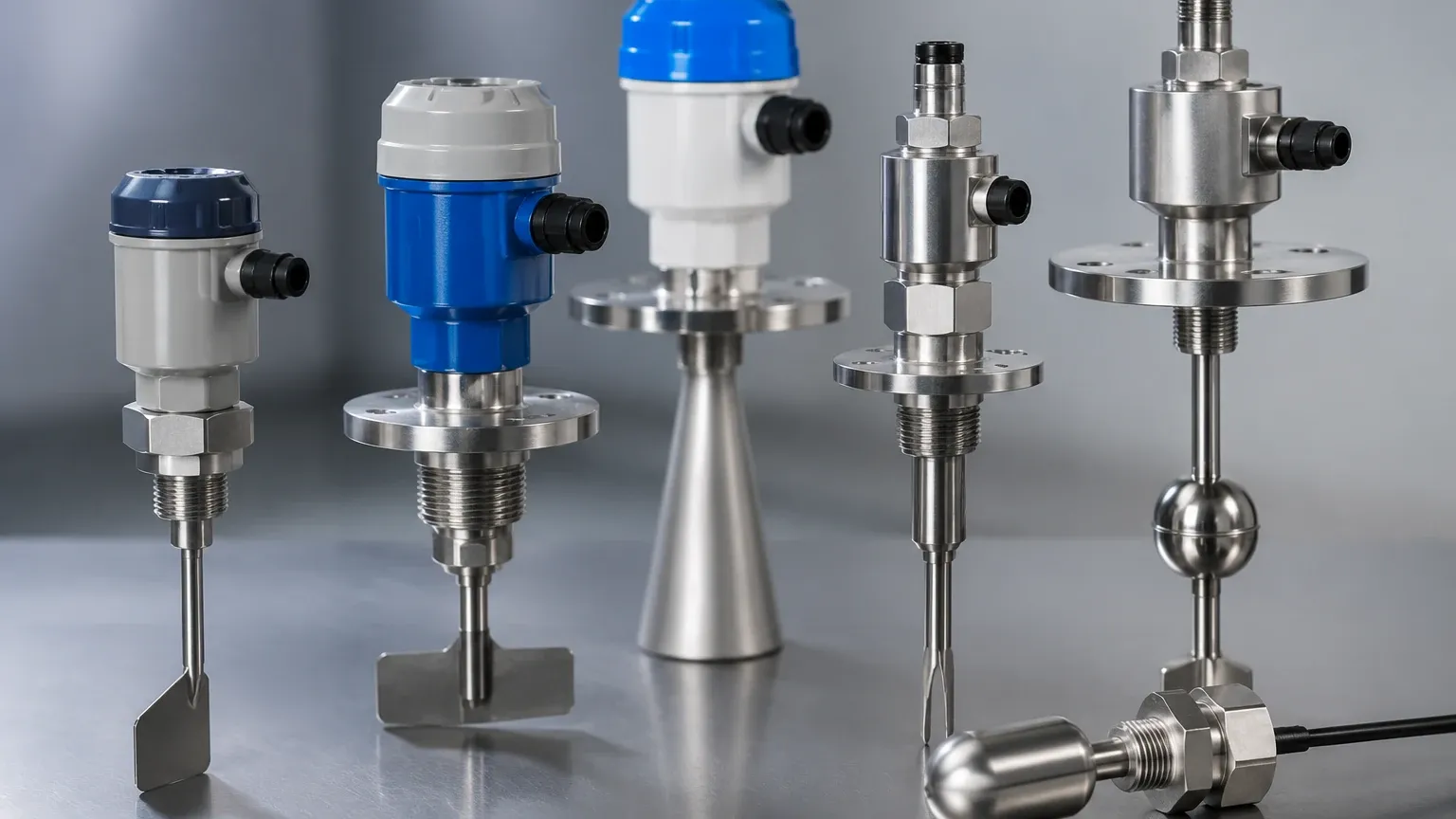
While continuous sensors provide a data stream, Level Switches serve as critical safety and control components. These devices use various principles—such as vibrating forks, floats, or conductivity—to detect the presence or absence of a medium at a specific point. They are often used as redundant high-high (HH) or low-low (LL) alarms to prevent tank overfills or pump dry-running.
2. Technical Features of Level Sensor Yokogawa Systems
Yokogawa's approach to level measurement is centered on its proprietary DPharp (Differential Pressure High Accuracy Resonance Pressure) sensor technology. Unlike traditional analog strain gauges, the DPharp sensor utilizes a digital silicon resonant sensor.
Digital Sensing Advantages
The resonant sensor provides a direct digital output, which reduces the error introduced by A/D conversion in traditional transmitters. This technology allows for high static pressure span and excellent long-term stability. In a level sensor Yokogawa EJX or EJA series transmitter, the dual-resonator design also allows for simultaneous measurement of differential pressure and static pressure, which can be used to compensate for changes in gas density in high-pressure vessels.
Multi-Sensing Capabilities
Modern industrial transmitters are increasingly multi-variable. For instance, a single unit might monitor the level while also providing diagnostic data on the health of the impulse lines (clogging detection). This predictive maintenance capability is essential for reducing downtime in chemical and oil and gas facilities.
3. Continuous Measurement vs. Point Level Detection
In a robust engineering design, continuous sensors and point-level switches are rarely mutually exclusive; they are typically used in tandem to ensure layers of protection.
| Feature | Continuous Level Sensor (e.g., Radar/DP) | Point Level Switch |
| :— | :— | :— |
| Primary Function | Real-time inventory and process control | Safety interlocks and discrete alarms |
| Output Signal | 4-20mA HART, PROFIBUS, Foundation Fieldbus | Relay, Transistor, or NAMUR |
| Complexity | High (requires calibration and scaling) | Low (simple set-point configuration) |
| Redundancy | Primary measurement source | Secondary safety layer |
| Cost | Higher initial investment | Cost-effective for simple control |
For example, in a water treatment facility, a Welk ultrasonic level sensor may provide the primary level data for a PLC-controlled pump speed loop. However, a mechanical or vibrating fork level switch is often installed at the top of the tank to provide a hard-wired emergency shutdown (ESD) signal that bypasses the PLC in the event of a controller failure.
4. Technical Selection Criteria for Level Instrumentation
Selecting the appropriate level sensor Yokogawa or Welk instrument requires a systematic review of the process conditions. Engineers should use the following table as a preliminary selection guide:
| Process Condition | Recommended Technology | Reason |
| :— | :— | :— |
| Changing Fluid Density | Radar / Ultrasonic | Independent of density and pressure |
| High Pressure / High Temp | Guided Wave Radar / DP | Robust mechanical construction |
| Corrosive Media | PTFE-coated Radar / Diaphragm Seal DP | Material compatibility and isolation |
| Foaming Surfaces | Differential Pressure / Guided Wave Radar | Radar signals can be absorbed by foam |
| Simple Sump/Open Pit | Ultrasonic / Hydrostatic | Ease of installation and low cost |
| Overfill Protection | Vibrating Fork Level Switch | High reliability and self-monitoring |
Media Characteristics
The dielectric constant (DC) of the liquid is a critical factor for radar sensors. Liquids with a low DC (like oils) reflect less energy than those with a high DC (like water). If the DC is below 1.4, a guided wave radar or a hydrostatic DP sensor may be required to ensure a stable signal.
5. Installation Considerations and Best Practices
Correct installation is as important as instrument selection. Even the highest quality level sensor Yokogawa produces will fail to provide accurate data if installed incorrectly.
Impulse Line Management (DP Sensors)
For differential pressure level measurement, the impulse lines (the small-bore pipes connecting the tank to the transmitter) must be carefully designed:
* Sloping: Impulse lines should slope at least 1:12 to allow gas bubbles to escape back into the tank (for liquid service) or condensate to drain (for gas service).
* Manifolds: Always use a 3-valve or 5-valve manifold to allow for zeroing the transmitter under static pressure and for safe removal during maintenance.
* Heat Tracing: In cold climates or for high-viscosity fluids, impulse lines may require insulation or heat tracing to prevent freezing or plugging.
Mounting Radar and Ultrasonic Sensors
* Nozzle Geometry: Ensure the sensor is not mounted too close to the tank wall to avoid "ringing" or false reflections. The nozzle height should be kept to a minimum.
* Internal Obstructions: Avoid mounting sensors directly above ladders, agitators, or heating coils. If obstructions are unavoidable, use "false echo suppression" software features to map out the interference.
* Stilling Wells: In turbulent tanks or those with heavy foam, installing the sensor inside a stilling well (a vertical pipe) can provide a calm surface for measurement.
6. Operational Limitations and Maintenance
Every level measurement technology has its boundaries. Understanding these prevents common operational failures.
* DP Sensors: The primary limitation is density sensitivity. If the process temperature changes significantly, the fluid density changes, leading to a level error. Modern systems can compensate for this if a temperature input is available.
* Ultrasonic Sensors: These are sensitive to the speed of sound, which varies with air temperature and vapor composition. They are generally not recommended for vacuum applications or tanks with heavy chemical vapors.
* Radar Sensors: While highly versatile, very high-pressure steam can affect the propagation speed of the radar signal, requiring high-pressure steam compensation in boiler drum applications.
Maintenance Checklist
1. Zero Verification: Periodically check the zero-point of DP transmitters when the tank is empty or through a manifold.
2. Cleaning: Inspect non-contact sensor faces for buildup or condensation, especially in sticky or crystallizing media.
3. Proof Testing: For level switches used in safety-instrumented systems (SIS), regular proof testing is required to ensure the relay or output trips at the correct level.
7. Frequently Asked Questions (FAQ)
Q: Can a level sensor Yokogawa DP transmitter be used for solids?
A: Generally, no. DP transmitters measure hydrostatic head pressure, which does not apply to solids in the same way as liquids. For solids, radar or ultrasonic sensors are preferred.
Q: What is the difference between the EJA and EJX series?
A: The EJA series is the standard high-performance line, while the EJX series is the premium line offering higher accuracy, faster response times, and enhanced multi-sensing capabilities, including SIL 2/3 certification for safety applications.
Q: Why would I choose a level switch over a continuous sensor?
A: Cost and reliability. A level switch is simpler to integrate into a safety interlock circuit and provides a definitive "yes/no" signal that is less prone to the scaling errors that can affect continuous sensors.
Q: How do I handle measurement in a tank with an agitator?
A: Use a stilling well to protect the sensor from turbulence and mechanical interference, or use a radar sensor with advanced software that can filter out the moving blades of the agitator.
Conclusion
Selecting a level measurement strategy involves balancing the high-precision capabilities of systems like the level sensor Yokogawa DP series with the practical reliability of non-contact sensors and point-level switches. By understanding the physical properties of the media and the mechanical constraints of the vessel, engineers can design a system that ensures both process efficiency and safety. For applications requiring discrete alarm points or redundant safety layers, exploring a range of specialized Level Switches is a necessary step in completing a robust instrumentation package.