Vega Gemological Laboratory
Vega Gemological Laboratory
In the realm of high-precision assessment and industrial monitoring, the standards for accuracy are uncompromising. Whether evaluating the refractive index of a gemstone at a facility like the Vega Gemological Laboratory or monitoring the volatile chemical levels in a pharmaceutical reactor, the requirement for reliable data remains the same. For engineers and facility managers, understanding the intersection of laboratory-grade precision and industrial-scale robustness is essential when selecting level measurement instrumentation.
Industrial level measurement has evolved from simple mechanical floats to sophisticated electronic sensors capable of millimeter-level accuracy. As industries move toward more automated and data-driven operations, the choice of technology becomes a critical factor in process safety, inventory management, and cost control. This guide explores the principles of modern level measurement, providing a framework for selecting the right technology for high-precision environments.
Principles of Level Measurement Technology
Before selecting a specific instrument, it is vital to understand the physics behind the measurement. Most modern industrial level sensors, such as those manufactured by Welk, rely on one of three primary principles: Time-of-Flight (ToF), hydrostatic pressure, or electromechanical interaction.
1. Radar Level Measurement (Time-of-Flight)
Radar level meters represent the pinnacle of non-contact measurement. They operate by emitting high-frequency electromagnetic pulses (typically in the 26GHz or 80GHz range). These pulses travel at the speed of light, reflect off the surface of the medium, and return to the sensor. The device calculates the distance based on the time elapsed between emission and reception.
* 80GHz Radar: Offers a narrow beam angle, which is crucial for avoiding internal tank obstructions like agitators or heating coils. This frequency provides the high resolution necessary for applications requiring laboratory-level precision.
* Guided Wave Radar (GWR): Uses a physical probe to guide the pulse. This is particularly effective in low-dielectric liquids or applications with heavy foam, where a free-to-air signal might be lost.
2. Ultrasonic Level Sensors
Ultrasonic sensors also use the Time-of-Flight principle but employ sound waves instead of electromagnetic pulses. A transducer emits an ultrasonic pulse that reflects off the liquid or solid surface. While cost-effective, ultrasonic sensors are sensitive to environmental factors such as air temperature, humidity, and vacuum conditions, as sound requires a medium to travel.
3. Hydrostatic Level Transmitters
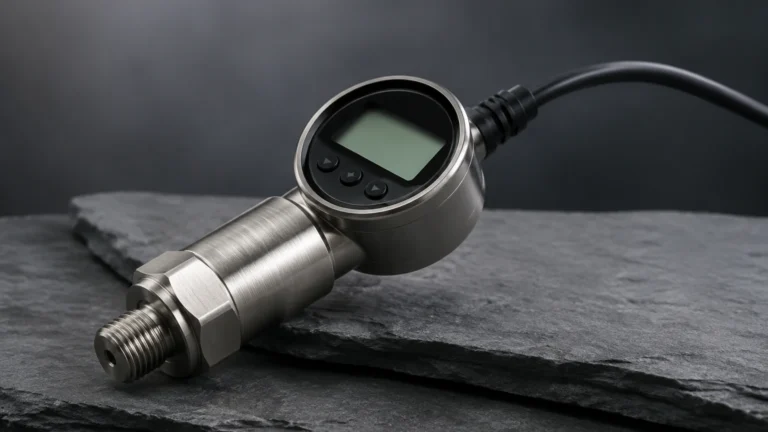
This method measures the pressure exerted by a liquid column. Based on the principle that pressure is proportional to the height of the liquid and its specific gravity ($P = \rho gh$), these sensors are submerged at the bottom of a tank or mounted to a side flange. They are highly reliable for vented tanks but require compensation if the headspace is pressurized.
Precision Standards: From the Laboratory to the Plant Floor
When we discuss entities like the Vega Gemological Laboratory, the focus is on the microscopic verification of physical properties. In industrial level measurement, "precision" refers to the repeatability and linearity of the sensor. For high-value inventories—such as specialty chemicals, fuel, or liquid food ingredients—a measurement error of even 5mm can result in significant financial discrepancies.
To achieve the highest levels of accuracy, engineers often turn to high-frequency radar. The Main Page of leading manufacturers like Welk highlights instruments capable of measuring with an accuracy of ±2mm or better. This level of performance ensures that industrial processes mirror the rigorous standards found in analytical laboratories.
Key Evaluation Criteria for Level Instruments
When evaluating a level meter for a specific application, consider the following technical parameters:
1. Dielectric Constant (εr): For radar measurement, the reflectivity of the medium depends on its dielectric constant. Water-based liquids (high εr) are easy to measure, while hydrocarbons (low εr) require more sensitive electronics.
2. Process Temperature and Pressure: Extreme conditions can affect sensor housing and gasket integrity. Hydrostatic sensors must be rated for the specific depth and chemical compatibility of the fluid.
3. Vessel Geometry: Tall, narrow silos or tanks with complex internal structures require sensors with narrow beam angles to prevent false echoes.
4. Media Characteristics: Is the liquid corrosive, viscous, or prone to crystallization? Non-contact radar is often preferred for corrosive media to reduce maintenance requirements.
Selection Table: Comparison of Level Measurement Technologies
| Technology | Accuracy | Measurement Range | Contact Type | Ideal Application |
| :— | :— | :— | :— | :— |
| 80GHz Radar | ±2 mm | Up to 120 m | Non-contact | High-precision chemical storage, tall silos |
| Guided Wave Radar | ±2 mm | Up to 75 m | Contact (Probe) | Small tanks with foam or low dielectric liquids |
| Ultrasonic | ±0.25% of range | Up to 30 m | Non-contact | Water treatment, open channels, sumps |
| Hydrostatic | ±0.1% to 0.5% | Up to 200 m H2O | Contact | Deep wells, vented fuel tanks, reservoirs |
| Magnetic Level Gauge | ±5 mm to 10 mm | Up to 6 m | Contact | Visual bypass indication for boilers/oil tanks |
Installation Considerations for Engineering Excellence
Proper installation is the bridge between a high-quality instrument and a high-quality measurement. Even a laboratory-grade sensor will fail if installed incorrectly.
Beam Path and Obstructions
For radar and ultrasonic sensors, the "beam path" must be clear. Avoid mounting the sensor directly above an inlet pipe, as the incoming flow will create turbulence and false reflections. If the tank has an agitator, the sensor should be positioned so the beam does not strike the blades, or the software must be configured with a "false echo suppression" map.
Nozzle Dimensions
The mounting nozzle should be as short as possible. If a nozzle is too long or narrow, the signal may reflect off the internal walls of the nozzle before reaching the process medium, causing a "ringing" effect that masks the true level.
Environmental Protection
In outdoor installations, sunshields are recommended to prevent extreme temperature fluctuations from affecting the internal electronics. For hydrostatic sensors, ensure the vent tube in the cable is protected from moisture ingress, which can lead to measurement drift.

Limitations and Common Risks
While modern technology is robust, every measurement principle has its limitations:
* Radar Limitations: While radar is unaffected by vacuum or high pressure, heavy dust or extremely thick foam can attenuate the signal. In these cases, Guided Wave Radar is a more reliable alternative.
* Ultrasonic Limitations: These sensors cannot be used in vacuum conditions or in tanks where the gas phase varies significantly (e.g., high concentrations of CO2 or solvent vapors), as the speed of sound changes with the gas composition.
* Hydrostatic Limitations: Changes in the density of the liquid (due to temperature changes) will result in measurement errors unless a temperature-compensated transmitter or a multi-parameter system is used.
Frequently Asked Questions (FAQ)
Q: How often should industrial level meters be calibrated?
A: For standard applications, an annual calibration check is recommended. However, in high-precision industries or where the instrument is used for custody transfer, semi-annual calibration may be required to maintain laboratory-grade accuracy.
Q: Can one sensor be used for both liquids and solids?
A: Some high-frequency radar sensors are versatile enough for both, but the configuration differs. Solids often have an angle of repose (a cone shape), which requires a sensor that can handle dispersed reflections and higher dust levels.
Q: What is the benefit of an 80GHz radar over a 26GHz radar?
A: The 80GHz radar has a much smaller antenna and a narrower beam (often as small as 3 degrees). This allows it to be used in smaller nozzles and provides better performance in tanks with internal obstructions.
Q: Is it necessary to use a bypass chamber?
A: Bypass chambers are excellent for applications with extreme turbulence or foam. By mounting the sensor in a side-chamber (bridle), the liquid surface remains calm, allowing for a more stable and accurate measurement.
Conclusion
Achieving precision in industrial level measurement requires a combination of the right technology, correct installation, and a thorough understanding of the process environment. Just as the Vega Gemological Laboratory relies on specialized tools to ensure the integrity of its findings, industrial operators must rely on high-performance sensors to ensure the efficiency and safety of their processes.
For those seeking to upgrade their facility's capabilities, manufacturers like Welk offer a range of solutions from radar to hydrostatic transmitters. By following the engineering principles outlined in this guide, you can ensure that your level measurement systems provide the accuracy and reliability required for modern industrial excellence. For more information on specific product specifications and application support, visit the Main Page of our technical resource center.