How Many Gallons in a Water Tower
How Many Gallons in a Water Tower
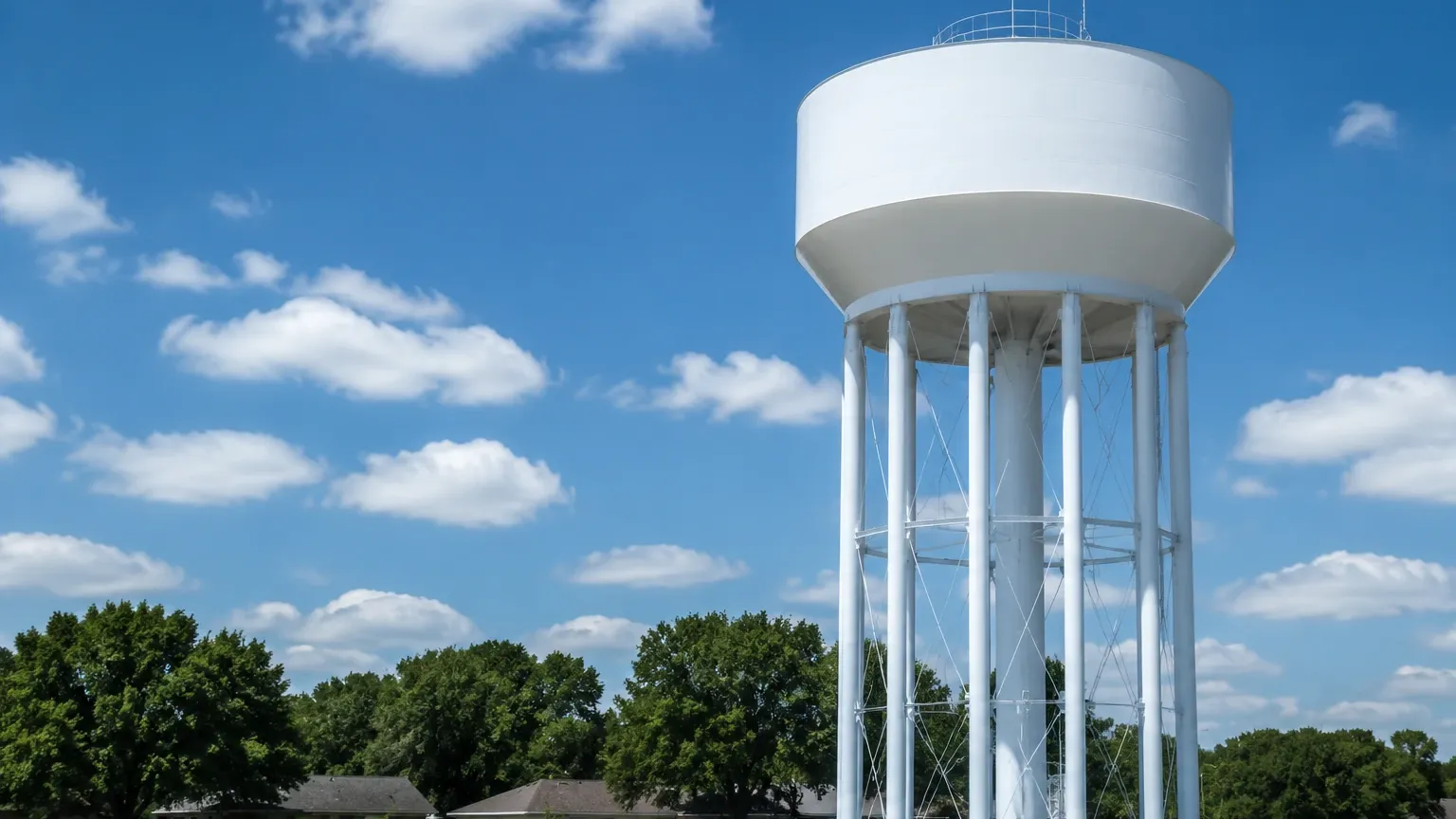
Elevated storage tanks, commonly known as water towers, are iconic features of the industrial and municipal landscape. Beyond their visual presence, they serve a critical hydraulic function: maintaining consistent pressure and providing a buffer for peak demand and emergency fire suppression. For engineers, facility managers, and municipal planners, determining how many gallons in a water tower is not just a matter of curiosity, but a fundamental calculation for system reliability.
This guide explores the typical capacities of water towers, the engineering principles used to measure their volume, and the instrumentation required to ensure these massive structures operate within safe and efficient parameters.
Typical Capacities of Municipal and Industrial Water Towers
The question of how many gallons in a water tower depends entirely on the population served and the specific industrial requirements of the site. Water towers are designed to hold approximately one day's worth of water for the area they serve, plus additional reserves for fire protection.
Small to Mid-Sized Communities
In rural areas or small residential developments, water towers typically hold between 250,000 and 500,000 gallons (approx. 946 to 1,892 cubic meters). These spheroid or multi-column tanks are sufficient to maintain pressure for several thousand residents.
Large Municipal Systems
For larger cities, the capacity increases significantly. A standard composite or fluted column water tower in a suburban environment often holds between 1,000,000 and 2,000,000 gallons (approx. 3,785 to 7,570 cubic meters). In massive metropolitan hubs, it is not uncommon to see tanks exceeding 5,000,000 gallons (18,927 cubic meters).
Industrial Applications
Industrial facilities, such as chemical processing plants or refineries, may utilize smaller, dedicated water towers for process cooling or high-pressure wash-down systems. These may range from 50,000 to 200,000 gallons (approx. 189 to 757 cubic meters), depending on the specific flow rate requirements of the machinery.
Principles of Volume Measurement in Water Towers
Knowing the maximum capacity is only the first step. For daily operations, operators must know the real-time volume. Since water towers are essentially large pressure vessels open to the atmosphere (or vented), volume is calculated based on the level of the liquid. There are three primary physical principles used to determine how many gallons in a water tower at any given moment.
1. Hydrostatic Pressure
This is the most common method for measuring water levels in elevated tanks. The principle is based on the fact that the pressure at the bottom of a liquid column is directly proportional to the height of the liquid.
The formula used is:
P = ρgh
Where *P* is pressure, *ρ* (rho) is the density of the water, *g* is gravity, and *h* is the height of the water.
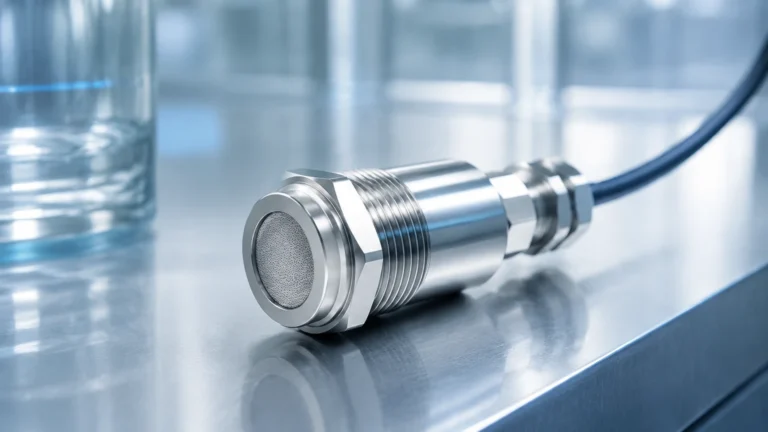
In practical terms, for every 2.31 feet of water height, the pressure at the base increases by 1 PSI (0.068 bar). By installing a pressure transmitter at the base of the tower or submersed in the tank, the system can convert pressure readings into height, and subsequently, volume.
2. Time-of-Flight (Radar and Ultrasonic)
Non-contact measurement methods use the "Time-of-Flight" (ToF) principle. A sensor mounted at the top of the tank emits a signal (either an electromagnetic pulse for radar or a sound wave for ultrasonic). The signal reflects off the water surface and returns to the sensor. The time taken for this round trip is used to calculate the distance to the water surface.
* Radar (80GHz): High-frequency radar is preferred for water towers because it is unaffected by temperature fluctuations, wind, or condensation inside the tank.
* Ultrasonic: More cost-effective but can be influenced by heavy fog or extreme temperature gradients within the air space of the tank.
3. Mechanical Displacement
While older, some systems still use float-and-tape or magnetic level gauges. These rely on a physical float that moves with the water level, mechanically or magnetically indicating the height on an external scale. While reliable, they lack the high-precision digital output required for modern SCADA (Supervisory Control and Data Acquisition) systems.
Selection Table: Level Measurement Technologies
When choosing an instrument to monitor how many gallons in a water tower, engineers must balance accuracy, maintenance requirements, and cost.
| Technology | Accuracy | Ideal Use Case | Maintenance | Cost |
| :— | :— | :— | :— | :— |
| Hydrostatic Transmitter | High (±0.1% to 0.5%) | Deep reservoirs and towers with stable density. | Low (if protected from silt). | Moderate |
| 80GHz Radar | Excellent (±1mm to 2mm) | All-weather municipal towers; high-precision needs. | Minimal (no moving parts). | Higher |
| Ultrasonic Sensor | Moderate (±0.25%) | Smaller industrial tanks; indoor storage. | Moderate (requires cleaning). | Low |
| Magnetic Level Gauge | Moderate | Visual local indication for maintenance crews. | Low to Moderate. | Moderate |
For a comprehensive look at specific hardware configurations and technical support for these technologies, you can visit the Main Page of Welk's industrial catalog.
Installation Considerations for Water Towers
Installing level sensors in a water tower requires careful planning to ensure the readings accurately reflect how many gallons in a water tower without interference from the structure itself.
Sensor Positioning
For top-mounted sensors (Radar/Ultrasonic), the device should be positioned away from the center of the tank if the roof is dome-shaped, as the dome can focus false echoes. It must also be kept clear of the inlet pipe to avoid measuring the turbulence of incoming water.
Stilling Wells
In towers where significant turbulence occurs—often during high-volume pumping cycles—a stilling well (a vertical pipe with vent holes) is installed. The sensor measures the level inside the pipe, which remains calm even if the rest of the tank is turbulent. This is particularly important for ultrasonic sensors.
Submersible Pressure Transmitters
When using hydrostatic sensors, the transmitter is often lowered to the bottom of the tank. It must be weighted to prevent movement from currents and should be positioned away from the "dead zone" where silt and sediment accumulate, which could clog the sensing diaphragm.
Surge Protection
Water towers are often the highest points in an area, making them targets for lightning. Any electronic instrumentation must be equipped with robust surge protection and proper grounding to prevent the electronics from being destroyed during a storm.
Limitations and Challenges in Volume Estimation
While calculating how many gallons in a water tower seems straightforward, several factors can complicate the accuracy of the reading:
1. Tank Geometry: Not all water towers are simple cylinders. Spheroids and fluted columns have complex curves. The level-to-volume conversion must be programmed into the controller using a strapping table or a complex geometric formula to ensure accuracy at different heights.
2. Temperature and Density: Hydrostatic sensors measure weight, not just height. If the water temperature changes significantly, its density changes. While water is relatively incompressible, extreme temperature swings in outdoor tanks can introduce small errors in pressure-based volume calculations.
3. Atmospheric Pressure: For non-sealed tanks, the sensor must be vented to the atmosphere to compensate for changes in barometric pressure. If the vent becomes blocked (e.g., by ice or insect nests), the level reading will drift.
Frequently Asked Questions (FAQ)
How often should water tower level sensors be calibrated?
Industrial best practices suggest checking calibration annually. However, many modern radar sensors are "maintenance-free" and only require a verification of the 4-20mA or digital output signal to ensure it matches the physical level.
Why do water towers need to be so high?
Height provides the pressure. For every 10 meters (approx. 33 feet) of elevation, the system gains roughly 1 bar (14.5 PSI) of pressure. This allows the system to deliver water to the upper floors of buildings without relying solely on active pumping.
Can I use a level switch instead of a continuous transmitter?
Level switches are excellent for high-level alarms (to prevent overflow) and low-level alarms (to protect pumps). However, they cannot tell you how many gallons in a water tower; they only indicate if the water has reached a specific point. Continuous transmitters are required for volume management.
Does ice inside the tank affect the reading?
Yes. In cold climates, a layer of ice can form on the surface. Radar can often penetrate thin ice or reflect off the top, but thick ice can trap floats or cause false readings for ultrasonic sensors. Hydrostatic sensors are generally the most resilient to surface ice as they measure the pressure of the liquid water beneath.
Conclusion
Determining how many gallons in a water tower is a critical task that combines structural engineering with advanced electronic instrumentation. Whether managing a 50,000-gallon industrial tank or a 2,000,000-gallon municipal reservoir, the accuracy of your volume data depends on selecting the right measurement principle—be it hydrostatic, radar, or ultrasonic. By understanding the geometry of the tank and the environmental challenges of the installation site, operators can ensure a steady, reliable water supply for their communities and processes. For those seeking specific instrument specifications and engineering support, reviewing the Main Page of a dedicated manufacturer is the recommended next step for procurement and system design.